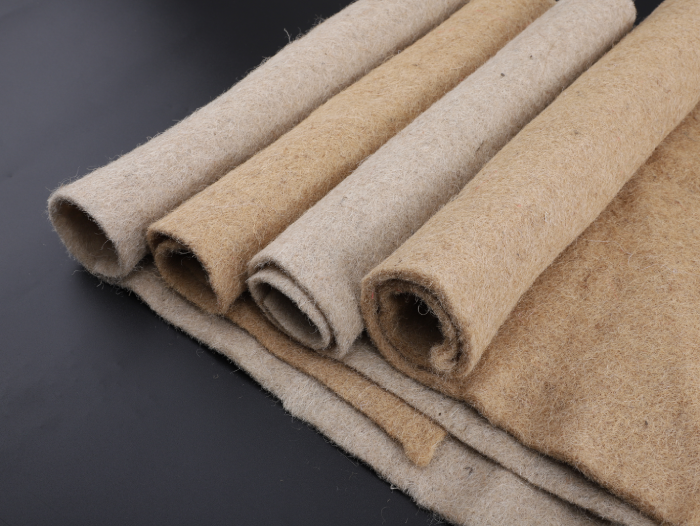
Polyester Acoustic Felt for Easy Disposal: A More Practical Choice for Environmentally Conscious Projects
When selecting acoustic materials for construction and interior projects, buyers often focus on sound absorption, thickness, appearance, and installation. However, another factor is becoming increasingly important: what happens to the material after its service life ends.
Traditional acoustic materials may contain multiple layers, adhesives, facing materials, or complicated structures, making them more difficult to handle when they are removed or replaced. For projects that generate a large amount of interior waste, difficult disposal can increase labor requirements and create additional waste-management challenges.
Polyester acoustic felt offers a simpler material structure and can be processed, cut, removed, and disposed of more easily at the end of its service life. Its combination of acoustic performance, lightweight construction, processing flexibility, and relatively simple material composition makes it an attractive option for modern interior projects.
For companies looking for a reliable nonwoven felt manufacturer or custom nonwoven products supplier, material selection should consider not only performance during use but also the entire product lifecycle.
Why Does Easy Disposal Matter for Acoustic Materials?
Acoustic materials are frequently installed in large areas such as walls, ceilings, studios, offices, entertainment venues, and commercial buildings. When these spaces are renovated, damaged materials may need to be removed in large quantities.
If acoustic products contain several permanently bonded materials, separating the components can be difficult. This can complicate waste handling and increase the amount of material that needs to be discarded.
A relatively simple polyester fiber acoustic material can make removal and subsequent handling more straightforward. The material can be cut into smaller sections before removal, which is particularly useful for large-area installations.
For contractors and interior material distributors, this can help simplify the replacement process and reduce unnecessary handling work.
How Is Polyester Acoustic Felt Made?
Polyester acoustic felt is manufactured from polyester fibers that are formed into a fibrous structure and consolidated through thermal bonding, mechanical processing, or other suitable nonwoven technologies.
Unlike some composite acoustic products that depend heavily on complex structures, polyester felt can be manufactured as a relatively uniform fiber-based material.
During production, factors such as fiber composition, GSM, thickness, density, and bonding conditions can be adjusted according to the intended application.
This manufacturing flexibility allows a professional needle punched nonwoven felt manufacturer or nonwoven production factory to develop different material specifications for different acoustic requirements.
Easy Disposal Does Not Mean Sacrificing Service Performance
A material that is easier to handle after use still needs to perform reliably during its working life.
Polyester acoustic felt is designed to provide a combination of sound absorption, dimensional stability, lightweight construction, and processing flexibility. Its fibrous structure creates numerous spaces within the material, allowing sound energy to interact with the fibers and helping reduce sound reflection in suitable applications.
The actual acoustic performance depends on thickness, density, installation method, air gaps, frequency range, and the surrounding structure. Therefore, selecting the correct specification is more important than simply choosing the thickest material available.
This is particularly important for commercial projects where material performance must remain consistent across a large installation area.
Why Is Polyester Felt Easier to Process During Renovation?
One of the practical advantages of polyester acoustic felt is its processing flexibility.
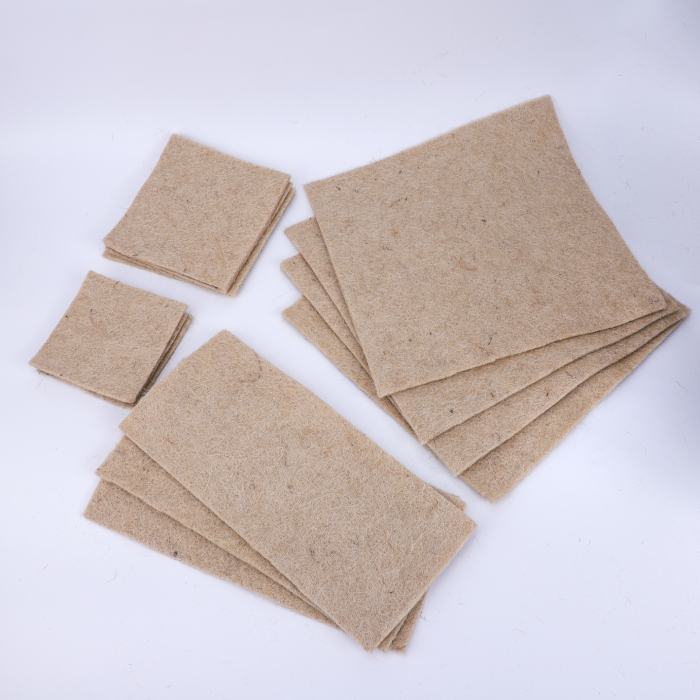
The material can generally be cut, shaped, laminated, or installed according to project requirements. Contractors can adapt panels or rolls to walls, ceilings, corners, equipment areas, and other irregular spaces.
When renovation is required, the material can also be divided into manageable sections before removal.
For distributors and project contractors, this flexibility can simplify installation as well as replacement. It also allows manufacturers to supply customized widths, thicknesses, densities, and shapes rather than forcing customers to work with one standard specification.
This is where cooperation with a custom nonwoven manufacturer becomes valuable.
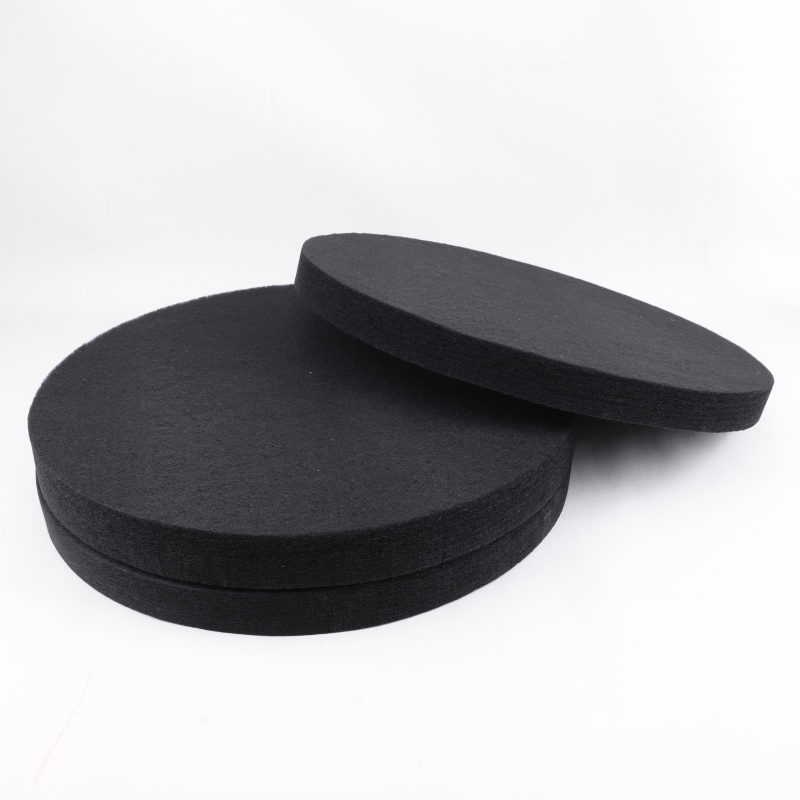
Where Can Easy-to-Handle Polyester Acoustic Felt Be Used?
Polyester acoustic felt can be used in a wide range of interior and commercial environments where sound absorption and flexible installation are required.
In residential interiors, it can be used for walls, ceilings, bedrooms, home theaters, music rooms, and other spaces where controlling sound reflection is important.
In commercial buildings, it can be applied to offices, conference rooms, meeting spaces, studios, and interior partitions.
Entertainment venues such as KTV rooms, cinemas, recording studios, and music spaces may also use polyester acoustic materials as part of their overall acoustic treatment system.
The material can also be incorporated into architectural decoration where designers want to combine acoustic functionality with a clean and lightweight interior solution.
Polyester Acoustic Felt Compared with More Complicated Composite Materials
Different acoustic materials are designed for different purposes. Some products use multiple layers, facings, adhesives, foams, or other components to achieve specific acoustic or structural properties.
These composite structures can be useful for specialized applications, but they may also make material handling more complicated when the product needs to be removed.
A fiber-based polyester acoustic material provides a comparatively straightforward construction approach. For projects where easy cutting, convenient installation, lightweight handling, and simpler end-of-life processing are important, this can be a practical advantage.
The right choice should still be based on the complete application rather than disposal alone.
Does Polyester Acoustic Felt Create Secondary Pollution?
The term “secondary pollution” is often used when a material or waste product generates additional environmental problems through decomposition, chemical reactions, burning, or other processes.
It is therefore important not to make absolute environmental claims simply because a material is described as “eco-friendly.”
For polyester acoustic felt, the more practical consideration is its material composition, processing method, service life, reuse potential, and disposal route.
A relatively simple polyester fiber structure can make the material easier to handle compared with some highly complex composite products. When removed from a project, appropriate local waste-management procedures should still be followed.
For environmentally conscious buyers, evaluating the complete material lifecycle is a more reliable approach than focusing on a single environmental claim.
How Can Manufacturers Improve the Environmental Value of Polyester Acoustic Felt?
Environmental performance begins before the product reaches the construction site.
Manufacturers can improve material efficiency by optimizing GSM, thickness, density, fiber utilization, production processes, and product dimensions according to the final application.
Using the correct specification can prevent unnecessary material consumption. A project does not always require the heaviest or thickest acoustic felt.
Customized production can also reduce unnecessary cutting waste during installation. By supplying appropriate roll widths, panel sizes, or customized shapes, manufacturers can help customers make better use of the material.
This is one reason why working directly with an experienced nonwoven manufacturer China can provide advantages for large-volume projects.
Why Choose a Professional Polyester Nonwoven Manufacturer?
For international buyers, acoustic material quality is determined not only by the product itself but also by production consistency.
A reliable nonwoven felt manufacturer should be able to control raw materials, fiber blending, GSM, thickness, density, bonding conditions, and finished-product quality.
Jinhaocheng has more than 20 years of experience in nonwoven manufacturing and operates a production base of approximately 26,000 square meters with 15 automated needle punching production lines.
As a professional needle punched felt manufacturer China and nonwoven manufacturer China, we provide customized nonwoven materials for different industrial and commercial applications.
Our production capabilities cover needle punched nonwoven, polyester felt, acoustic materials, floor protection felt, painter felt, anti-condensation felt, thermal bonded wadding, laminated foam fabric, and other customized nonwoven products.
For customers with specific requirements, OEM and ODM services can be used to develop materials according to target GSM, thickness, density, dimensions, structure, and application requirements.
Choosing Acoustic Materials with the Entire Lifecycle in Mind
The value of an acoustic material should not be measured only by its sound absorption performance.
For modern projects, buyers increasingly need to consider installation efficiency, transportation weight, processing requirements, service life, replacement procedures, and end-of-life handling.
Polyester acoustic felt offers a combination of lightweight construction, flexible processing, acoustic functionality, and relatively straightforward material handling. When the material eventually needs to be removed, its fiber-based structure can make cutting and disposal more convenient.
For projects that prioritize practical installation and responsible material management, polyester acoustic felt can therefore be a useful alternative to more complicated acoustic constructions.
If you are looking for a custom nonwoven manufacturer, needle punched felt manufacturer, or OEM nonwoven manufacturer for acoustic materials, Jinhaocheng can develop suitable nonwoven solutions according to your application and production requirements.