Jute Brooder Liners vs. Nesting Pads: Different Jobs, Different Requirements
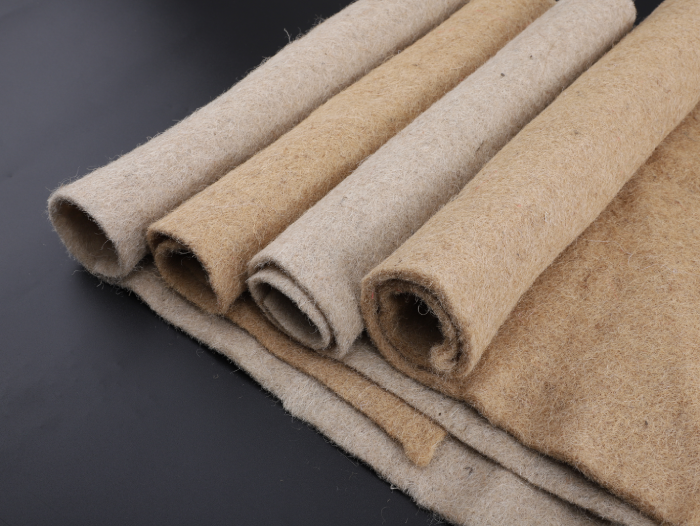
When sourcing poultry liners,brooder liners and chicken nesting pads may look similar, especially when both are made from fibrous materials. However, a similar appearance does not necessarily mean that they can be used interchangeably.
Brooders and laying nest boxes have different operating environments, equipment structures, and maintenance requirements. Buyers who judge suitability only by material name, thickness, or appearance may overlook practical factors such as surface grip, moisture absorption and cleaning, fiber shedding, and size compatibility.
Therefore, when purchasing chicken brooder liners, the first step is to confirm whether the liner is suitable for the specified brooder equipment and operating conditions, rather than simply treating an existing nesting pad as a substitute.
What Is the Difference Between a Brooder Liner and a Nesting Pad?
Brooder liners are generally used with specific brooder boxes or brooding equipment. Buyers should focus on whether the liner remains stable after installation, whether its surface characteristics meet the equipment's requirements, and whether routine inspection, cleaning, or replacement is practical. The exact requirements depend on the brooder design, the chicks' stage of development, and the actual management practices.
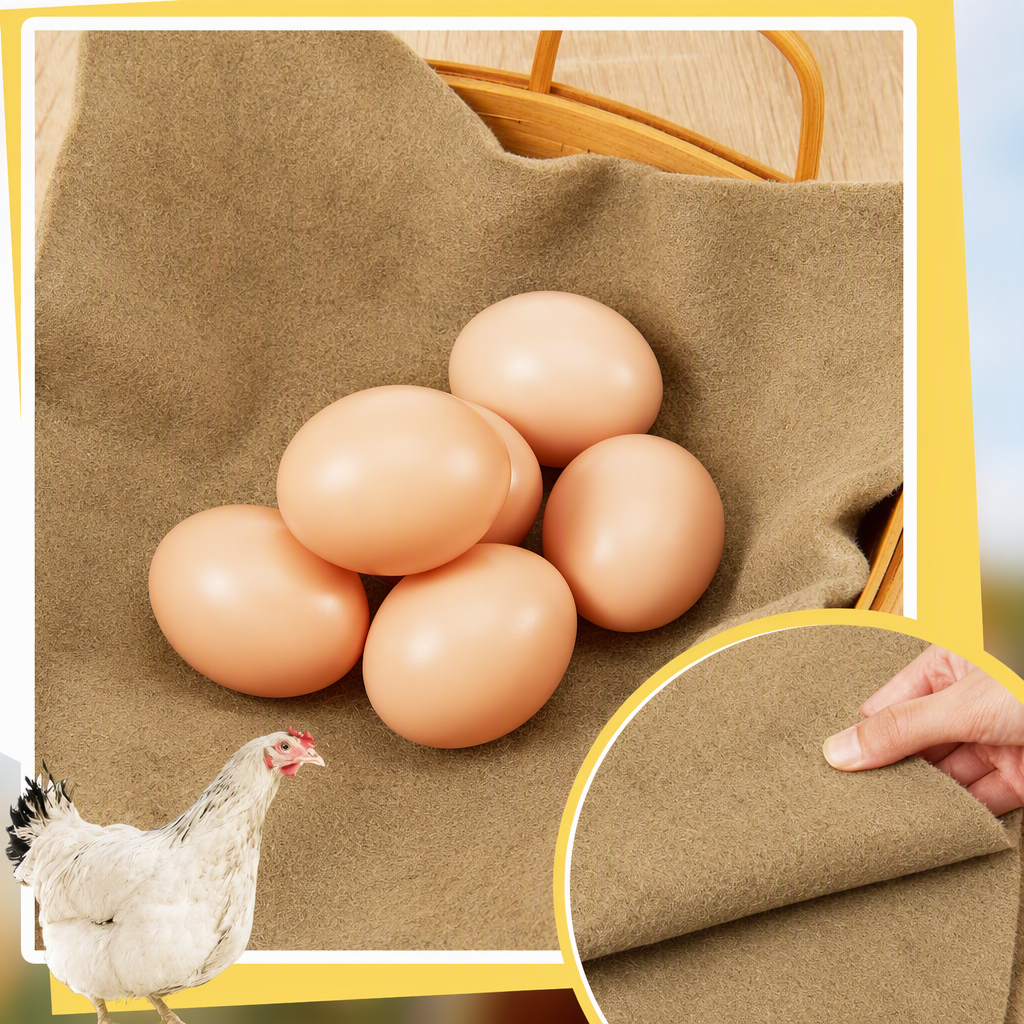
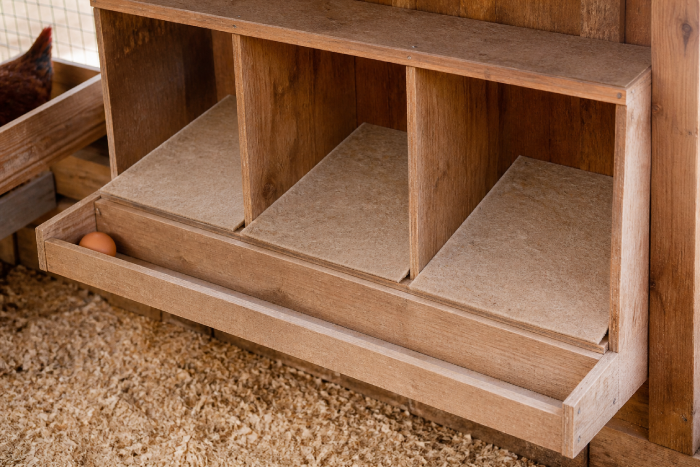
Chicken nesting pads, by comparison, are designed for laying nest boxes. Their purchasing requirements are generally related to nest box dimensions, installation methods, surface structure, frequency of use, and maintenance practices. Whether a particular product is suitable for a specific nest box must be assessed according to its structure and operating conditions.
The two products may use similar fibrous materials, but their design objectives are not necessarily the same. Even if a nesting pad performs well in a laying nest box, that alone does not establish that it is suitable for a brooder.
For wholesalers and brand buyers, a more reliable approach is to define the intended application first and then determine the required material structure and specifications.
Why Do Surface Grip and Stability Matter in a Brooder?
When evaluating chicken brooder liners, surface characteristics and liner stability are important factors to verify.
Buyers should check whether the liner lies flat after installation, whether it tends to curl, shift, or form folds, and whether its surface structure meets the requirements of the specified equipment. Texture, fiber structure, thickness, and softness may all affect performance in actual use. These characteristics cannot be fully evaluated from product photographs or material names alone.
It is also important to understand that a rough-looking surface does not automatically provide suitable grip, and a thicker material does not necessarily offer better stability. Actual performance depends on factors such as fiber structure, liner dimensions, the equipment's base surface, and the installation method.
If a purchasing project has specific requirements for surface grip or slip resistance, buyers should include them in the product specification and agree with the supplier on how they will be evaluated. Untested performance descriptions should not be treated as product guarantees.
How Should Absorbency, Cleaning, and Moisture Management Be Evaluated?
Both brooder liners and chicken nesting pads may require consideration of moisture and routine maintenance. However, the exact requirements depend on the application environment and management practices.
Buyers should first identify the types of moisture or contaminants the liner may encounter in the actual equipment, as well as the intended cleaning, drying, or replacement method. Different materials may behave differently in terms of absorption, liquid distribution, drying, and residue retention. Product descriptions such as “natural fiber” or “absorbent material” are not sufficient to determine suitability.
If a product is intended for repeated use, buyers should confirm whether the supplier can provide material information and supporting test evidence relevant to the intended cleaning method. If the product is designed for single use or scheduled replacement, the corresponding use and replacement requirements should be clearly defined.
For buyers, the goal is not simply to find the material with the “highest absorbency.” It is to ensure that moisture performance, cleaning procedures, and actual operating conditions are compatible.
What Should Buyers Check About Fiber Shedding and Material Suitability?
When comparing jute brooder liners, other natural-fiber liners, and pads made with different structures, buyers should check whether fibers loosen easily, whether the surface develops noticeable fuzzing, and whether the material structure remains within the agreed requirements after actual use or specified handling.
Fiber shedding may be influenced by raw materials, fiber length, web formation, bonding methods, and overall product structure. A material name such as “jute,” “natural fiber,” or “needle-punched felt” cannot, by itself, accurately predict how a product will perform in a particular brooding environment.
If the application has specific requirements for loose fibers, surface debris, or material integrity, buyers should define acceptance criteria with the supplier and verify them through sample inspection or appropriate testing.
In addition, natural materials are not automatically suitable for every poultry growth stage. For brooding applications, buyers should separately confirm the intended use, material, and product structure. A product designed for adult chickens should not automatically be assumed suitable for chicks.
Why Are Size and Compatibility With Brooder Equipment Important?
Even when the material itself meets the requirements, incorrect dimensions or an unsuitable installation method can affect practical use.
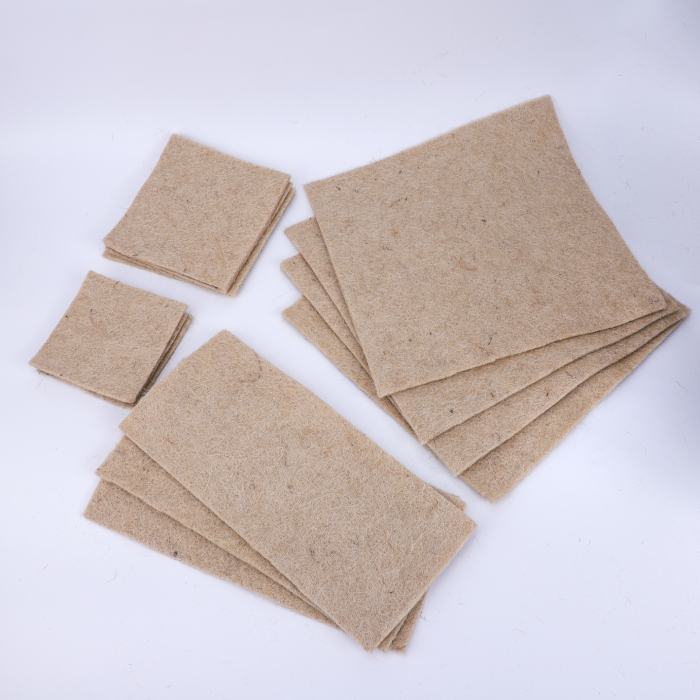
Buyers should provide the usable dimensions of the brooder or equipment and explain whether the liner must be installed as a single piece, cut to fit on-site, or used with a specific base panel or fixing structure. For equipment with borders, grooves, openings, or specially designed base surfaces, buyers should also confirm that the liner will not interfere with the equipment's existing structure or operation.
Before ordering, confirm the product's length, width, thickness, cutting tolerance, and packaging method. If on-site cutting is required, clarify the permitted dimensional deviation and any edge-finishing requirements in advance.
Buyers should also ask the supplier to confirm that samples and bulk production will use the same material structure and key specifications. The fact that a sample fits the equipment does not automatically guarantee that every production batch will fit consistently.
What Should Buyers Verify Before Ordering Brooder Liners?
Before requesting a quotation, buyers should prepare a clear application brief so that the supplier can evaluate whether a suitable product solution is available.
First, describe the intended application and equipment, including the type of brooder, available dimensions, installation method, and whether the liner will be used once or cleaned for repeated use.
Next, define the material and structural requirements, including raw material composition, GSM, thickness, surface characteristics, dimensional tolerances, and edge structure. If the project has specific requirements for fiber shedding, absorbency, or surface grip, explain the expected performance and acceptable verification methods.
Then, confirm the maintenance conditions. The supplier needs to understand whether the product will encounter moisture or contaminants during use and what cleaning, drying, and replacement methods the buyer intends to apply. Material compatibility with any cleaning procedure should not be assumed before it has been confirmed.
Finally, evaluate samples before finalizing the bulk order and acceptance criteria. Sample inspection can help buyers assess dimensions, surface characteristics, material structure, and basic application compatibility. If a particular performance characteristic is critical to the project, appropriate testing should be arranged under conditions agreed upon by both parties.
For long-term purchasing programs, buyers should also retain the approved sample and final specification documents so that subsequent batches can be checked against the same criteria.
Can a Nesting Pad Be Used as a Brooder Liner?
The answer is that a nesting pad should not be assumed suitable for brooding simply because its name, appearance, or raw material seems similar.
If the nesting pad manufacturer confirms that the product is suitable for the specified brooder equipment and stage of use, and sample inspection and any necessary performance verification meet the purchasing requirements, buyers can then assess whether substitution is feasible.
Conversely, if the intended application has not been confirmed, or if surface characteristics, cleaning methods, fiber shedding, and dimensional compatibility have not been verified, the product should not be used in a brooding application by default.
Buyers can provide the supplier with equipment dimensions, operating conditions, and target specifications, then ask whether an existing product is suitable. If the supplier cannot confirm its suitability, buyers should not skip the verification process simply to simplify procurement or reduce the unit price.
For importers, distributors, and brands developing different poultry liner products, working with a manufacturer with nonwoven R&D and production capabilities can help support discussions about material structure, thickness, dimensions, and customization requirements based on the intended application. HuiZhou JinHaoCheng Nonwovens Co., Ltd. provides nonwoven materials and customized manufacturing services. However, the suitability of any specific product for brooding must still be confirmed through product verification, sample evaluation, and technical requirements agreed upon by both parties.
Conclusion: Verify Application Compatibility Before Substitution
Brooder liners and chicken nesting pads may use similar materials, but they serve different applications. Buyers should not decide whether one can replace the other based only on product names, appearance, or natural-fiber content. Instead, they should evaluate surface grip and stability, moisture absorption and cleaning requirements, fiber shedding, dimensions, and equipment compatibility.
Before placing a bulk order for chicken brooder liners, confirm the intended application, request samples, define specifications, and agree on acceptance criteria. This provides a more reliable basis for purchasing decisions and helps reduce the risk of choosing a product that does not match the actual operating conditions.