
How to Check Bonding Durability in Oil- and Water-Exposed Floor Protection Fleece
For overseas importers, wholesalers, and brands sourcing heavy-duty composite painter's fleece, product selection should not be based solely on felt thickness, GSM, or whether the backing film is waterproof. A more important question is whether the felt layer and backing film remain securely bonded after exposure to water, specified oils, and repeated handling, bending, and rolling during normal use.
Composite floor protection fleece is typically made by laminating a needle-punched felt layer with PE film or another backing film. The felt layer can provide cushioning, surface protection, or a degree of liquid absorption, depending on the fibers, structure, and product design. The backing film may provide a liquid barrier, depending on the material construction. If the bond between the two layers is unstable, the material may develop lifted edges, localized separation, or more extensive delamination during use, potentially affecting its protective performance and handling.
When purchasing waterproof bonded floor protection fleece, buyers should therefore treat bonding durability as a separate acceptance requirement rather than relying only on the material's appearance or the supplier's waterproof claims. A practical approach is to define the test liquids, exposure conditions, and mechanical handling requirements based on the intended application, then inspect the sample for structural abnormalities and document the agreed requirements in the purchasing specification.
Why Does Layer Separation Affect the Service Life of Composite Floor Protection?
The performance of composite floor protection depends not only on the properties of the felt and backing film individually, but also on whether the two layers remain securely bonded under the intended conditions of use.
The felt layer and backing film serve different functions. Needle-punched felt can provide thickness, cushioning, and surface protection, while its absorption performance depends on the fiber composition, structure, and product design. PE or another suitable backing film can provide a liquid barrier in an appropriately designed composite structure. The two layers must be joined through a suitable lamination process to form an integrated material.
If the bond is inadequate, localized gaps may develop during unrolling, rolling, transportation, or normal site handling. Early signs may include lifted edges, localized bulging, or small areas of separation between the felt and backing film. If the problem progresses, the separated areas may expand, affecting flatness, ease of handling, and the integrity of the composite structure.
This does not mean that every composite material will delaminate after exposure to water or oil, nor can a specific cause be established simply because localized abnormalities appear. Bonding performance may also be affected by material compatibility, lamination processes, film integrity, contamination, and mechanical handling.
For buyers, the objective is not to demand a vague guarantee that the material will “never delaminate.” Instead, define the intended application, identify the relevant exposure conditions, and verify whether the sample maintains acceptable structural integrity under those conditions.
How Are Liquid Penetration and Interlayer Delamination Different?
Liquid penetration and interlayer delamination are two different problems and should be inspected separately.
Liquid penetration concerns whether liquid passes through the material structure and reaches the protected floor. For example, moisture beneath the backing film after testing may indicate that liquid has passed through the material, a defect in the film, an edge, or a seam. The actual pathway requires further inspection and cannot be determined from moisture alone.
Interlayer delamination concerns whether the felt layer and backing film remain bonded to each other. Even if the backing film shows no obvious leakage, the material may still develop lifted edges, localized separation, wrinkles, or gaps between the felt and film. Conversely, liquid penetration does not necessarily mean that the bond between the layers has failed, because liquid may enter through a damaged area or another pathway.
Therefore, when purchasing waterproof bonded floor protection fleece, buyers should not rely solely on a liquid penetration test or simply check whether the material has delaminated. These inspections address different purchasing questions.
For applications involving possible contact with water or specified oils, buyers should record separately whether liquid penetrated the material, whether the backing film remained intact, and whether the felt-to-film bond showed any abnormalities. Separating these findings makes it easier to discuss issues with suppliers and determine whether the construction meets the intended requirements.
How Can Liquids and Mechanical Handling Affect Bonding Durability?
Bonding durability must be evaluated in the context of the actual working environment. Different liquids, exposure conditions, and mechanical operations may have different effects, so one test result should not automatically be applied to every application.
Water exposure. Water can serve as a basic test liquid for certain applications, but the result only demonstrates performance under the defined conditions. Exposure time, material construction, backing integrity, and mechanical handling during testing may all affect the findings. The absence of visible abnormalities after brief exposure does not automatically prove suitability for prolonged or repeated liquid contact.
Oil exposure. “Oil” does not refer to a single liquid with uniform properties. Different oils, lubricants, and other liquids encountered on site may have different compositions and conditions of use, potentially affecting the felt, backing film, or interlayer bond differently. When sourcing oil-resistant floor protection fleece, specify the actual liquid the product is expected to encounter. Passing a test with one oil does not prove resistance to all oils, solvents, or chemicals.
Temperature and site conditions. Temperature may affect material condition and the performance of certain composite structures, but the impact depends on the materials and manufacturing process. Buyers should determine whether temperature-related verification is necessary based on actual storage, transportation, and use conditions rather than assuming that all composite felts perform identically.
Friction, bending, and handling. During use, material may be unrolled, moved, rolled up, and exposed to friction from tools, packaging, or the floor. Repeated mechanical handling may reveal weak areas that were not apparent during the initial visual inspection. In addition to liquid exposure, buyers should assess whether representative handling causes new edge lifting, wrinkles, localized separation, or other structural abnormalities.
These factors should not be combined into a single, universal durability score. A more practical approach is to select representative test conditions based on the product's intended use and record the observations for each test separately.
What Signs of Delamination Should Buyers Check in Samples?
Before sample testing, buyers should confirm that the material construction matches the purchasing requirements, including the felt type, backing film type, GSM, thickness, and other agreed specifications. If the sample differs from the intended production construction, its test results may not be a reliable basis for approving bulk production.
After confirming the basic specifications, inspect the following conditions.
Lifted edges or localized separation. Check whether the felt and backing film have separated at the edges or developed lifted areas or visible gaps. Edge abnormalities may indicate a bonding issue, but they should be assessed alongside the actual construction and other test results.
Film damage. Inspect the backing film for scratches, tears, or punctures. Film damage may affect liquid-barrier performance, but it is not the same as a failure of the bond between the felt and film. Record these issues separately.
Felt detachment or localized bulging. Look for unusual loosening of the felt layer, localized raised areas, or visible gaps between the felt and backing film. Where necessary, examine the affected areas more closely and take photographs for documentation.
Changes after liquid exposure and mechanical handling. After completing the predefined liquid exposure and relevant handling procedures, inspect the same areas again. Compare the condition before and after testing to identify any new separation, lifted edges, wrinkles, or other structural abnormalities.
If a problem is found, record the sample specifications, test conditions, location of the defect, and observations. Avoid vague descriptions such as “poor lamination quality,” and do not attribute the issue to a particular raw material or production parameter without further verification.
For buyers, sample inspection helps identify structural issues that may affect actual use and provides a basis for discussing the cause and potential corrective actions with the supplier.
How Should Buyers Define a Repeatable Bonding Durability Test?
Purchasing acceptance does not necessarily require a complex laboratory test from the outset. However, buyers and suppliers should clearly understand what is being tested, which conditions apply, and what constitutes an acceptable result.
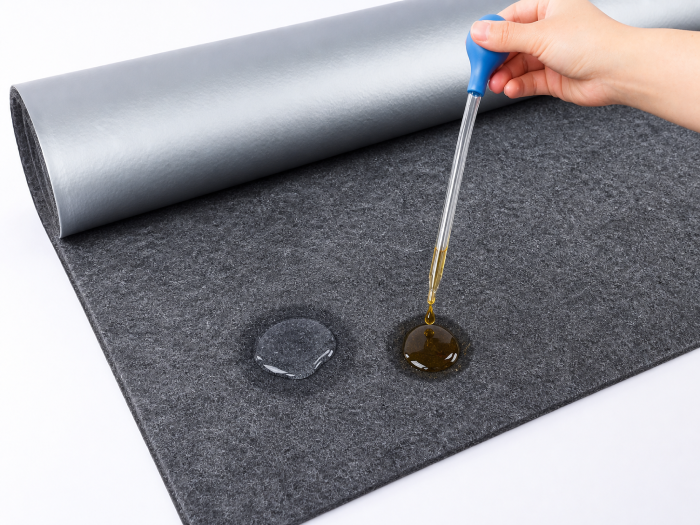
First, specify the test liquid. Identify the liquid relevant to the intended application. If the material may contact water and a particular oil during use, define the test conditions for each separately rather than treating “water- and oil-resistant” as an unlimited, universal requirement.
Second, define the exposure conditions. Record the test liquid, exposure method, and agreed contact time. The duration should reflect the actual application risks and should not be selected arbitrarily without a practical basis.
Third, define the mechanical handling conditions. If the material will be repeatedly unrolled, rolled up, bent, or transported during use, include representative handling steps in the sample evaluation where appropriate. The procedure should reflect the expected conditions as closely as practical and be documented in the test record.
Fourth, inspect liquid resistance and interlayer bonding separately. After liquid exposure, check whether there are signs of penetration beneath the material. Separately inspect the felt-to-film bond for lifted edges, localized separation, wrinkles, or other abnormalities. Record the two sets of findings independently rather than treating the absence of leakage as proof of acceptable bonding.
Fifth, agree on acceptance criteria in advance. Buyers and suppliers should define which defects are unacceptable, which findings require further assessment, and how the results will be recorded and approved. Specific requirements for peel strength, test duration, or other numerical values should be established based on the product construction, application risks, and a method agreed upon by both parties. Do not apply a universal numerical threshold without supporting validation.
If more rigorous evidence is required, buyers can discuss an appropriate standardized test method or third-party testing with the supplier. Whatever method is selected, the test specimen should match the construction of the product being purchased.
For overseas buyers, laminated felt bonding strength should not remain a vague marketing phrase. It should be translated into quality requirements that both parties can understand, perform, and document.
How Can Buyers Confirm That Bulk Production Matches the Approved Sample?
Once a sample passes testing, buyers should establish how the results will be used during subsequent production acceptance. Sample validation can help determine whether a product is suitable for its intended application, but it cannot by itself prove that every roll in a bulk order will perform identically.
When approving a sample, retain photographs, product specifications, descriptions of the felt and backing construction, test liquids, exposure conditions, mechanical handling procedures, and post-test inspection results. For customized composite products, also record the material and construction requirements agreed upon by both parties to reduce the risk of different interpretations during production.
During bulk inspection, check the product according to the agreed sampling procedure. Focus on the composite construction, backing film integrity, visible signs of delamination, and the key specifications approved for the order. For applications with higher risks, buyers may also agree in advance whether selected bulk samples should undergo specific durability tests again.
If bulk samples differ from the approved sample, record the relevant batch, roll number, or other traceability information and assess the findings against the agreed criteria. Do not assume that an entire batch has consistent bonding quality simply because one roll looks similar to the approved sample.
This process differs from general batch consistency management. The focus here is on the bonding durability of the composite structure after specified liquid exposure and mechanical handling, rather than creating a comprehensive batch inspection system covering every dimension, GSM, color, and packaging requirement.
How Can Manufacturers Support Clearer Composite Material Specifications?
For overseas importers, wholesalers, and brands, discussions about composite materials should begin with the actual application conditions rather than a general question about whether a product is “waterproof,” “oil-resistant,” or “durable.”
Buyers can provide the intended use, types of liquids likely to be encountered, exposure conditions, mechanical handling during use, and requirements for the integrity of the felt-to-film bond. The supplier can then help identify relevant verification items, sample configurations, and purchasing specifications based on the actual product construction.
As a Chinese manufacturer of needle-punched nonwovens and composite floor protection materials, HuiZhou JinHaoCheng Nonwovens Co., Ltd. can discuss material construction, GSM, thickness, backing configurations, and customized production requirements according to project needs, with support for OEM/ODM and bulk supply. For overseas customers sourcing durable floor protection felt, confirming the construction and acceptance criteria in advance can reduce misunderstandings and make sample validation more relevant to the final application.
Customization does not mean that a material will perform under every liquid exposure or environmental condition. The finished product must still be assessed based on its selected construction and actual test results. For applications involving specific oils or chemicals, buyers should clearly identify the liquids and environmental requirements rather than relying on a general oil-resistance claim.
Conclusion: Verify Bonding Durability Under Defined Conditions
When purchasing composite floor protection fleece, buyers should look beyond felt thickness, the presence of a waterproof backing, or an initially good appearance. The key question is whether the felt and backing film maintain acceptable structural integrity under the expected liquid exposure and mechanical handling conditions.
Buyers should distinguish liquid penetration from interlayer delamination, define the test liquids and exposure conditions, include mechanical handling that reflects the intended application, and inspect for lifted edges, localized separation, film damage, and felt detachment before and after testing.
The test conditions, observations, and acceptance criteria should also be documented, with a clear explanation of how they will be applied to bulk inspection. For projects involving different oils or other chemicals, suitability must be confirmed for the actual application rather than inferred from a test involving a different liquid.
For overseas importers, wholesalers, and OEM/ODM customers, the most valuable purchasing standard is not an unsupported promise of “no delamination ever.” It is a clearly defined, repeatable bonding durability verification process that matches the intended use.




