
When Does a Heavy-Duty Painter Fleece Make More Sense Than a Standard Protection Roll?
When purchasing floor protection materials for renovation projects, not every jobsite needs a heavy-duty specification. For short-term indoor painting or areas with limited foot traffic, a standard floor protection roll may be sufficient. However, when work continues across multiple stages, workers pass through the same area frequently, or tools and materials are moved repeatedly, buyers need to reassess whether the protection material is suitable for the actual jobsite demands.
The key to choosing heavy duty painter fleece is not simply to look for a higher GSM or greater thickness. Instead, buyers should determine whether the absorbent layer, cushioning structure, backing film, and overall construction match the conditions of the jobsite.
For contractors and bulk buyers, the right purchasing decision starts with understanding how the work will be carried out, followed by selecting the appropriate product construction and acceptance requirements. Simply asking a supplier for the thickest available product is not a reliable purchasing strategy.
1. When Is a Standard Floor Protection Roll Sufficient?
A standard specification does not necessarily mean inadequate protection. For projects with relatively light workloads, short usage periods, and limited foot traffic, a standard protection roll may be easier to install, handle, and replace while meeting the basic requirements.
For example, when painting the walls of an empty room, workers may mainly use rollers, brushes, and small tools. The floor may primarily be exposed to minor paint splashes, dust, and normal foot traffic. In this situation, buyers should first confirm whether the absorbent layer suits the painting requirements, whether the backing meets the required liquid-barrier needs, and whether the material can provide stable floor coverage.
Similarly, for short-term local repairs, light decorating work, or areas with limited worker movement, there may be no need to upgrade to a heavy-duty specification if the protection material is only required for a limited stage of the project and the existing product meets the actual requirements.
Before comparing product names, buyers should answer three questions: How long will the work continue? How will workers and tools move around the site? What types of damage are most likely to affect the floor? These details are more useful for specification selection than product descriptions alone.
2. When Is It Worth Upgrading to Heavy-Duty Painter Fleece?
When a jobsite shifts from simple painting to frequent foot traffic, repeated material handling, or multi-stage renovation work, the risks faced by the protection material also change. In these situations, a heavy-duty specification is worth evaluating.
2.1 Renovation Areas with Frequent Foot Traffic
In corridors, entrances, commercial space walkways, and areas shared by multiple construction teams, floor protection may be repeatedly exposed to shoe friction, moving tools, and continuous foot traffic.
For these jobsites, buyers should pay attention to surface integrity, the stability of the material after installation, and whether noticeable wear, tearing, or edge curling occurs after representative work activities. In areas with frequent traffic, choosing a construction designed for more demanding use may be more appropriate than selecting material intended only for brief, one-time coverage.
However, high-traffic renovation areas do not automatically require the same heavy-duty specification for every project. Traffic frequency, floor type, usage period, and material-handling methods must still be considered together.
2.2 Jobsites Where Tools and Renovation Materials Are Moved Repeatedly
During cabinet installation, interior remodeling, flooring work, and other projects that involve frequent material transport, floor protection may face more than foot traffic and dust. It may also experience friction or localized pressure when toolboxes, packaging materials, and other items are moved across the surface.
In these situations, buyers can assess whether cushioned floor protection fleece better suits the jobsite requirements. A product with an appropriate felt layer and cushioning structure may provide flexible cushioning during routine construction activities and help reduce the direct impact of some minor contacts on the floor.
However, flexible cushioning is not the same as structural load-bearing capacity. It cannot guarantee protection against every scratch, dent, or impact-related mark. If the site involves sharp objects, heavy equipment, concentrated loads, or significant impact risks, buyers should not assume that a product described as heavy-duty will provide sufficient protection on its own.
2.3 Multi-Stage Renovation Projects Where Protection Must Remain in Place
Some projects involve wall painting followed by window and door installation, cabinet fitting, or other interior work. Between construction stages, the protection material may remain in place while being exposed to repeated foot traffic, localized movement, and cleaning operations.
For these projects, buyers should assess whether the protection material is suitable for the expected usage period and whether the felt layer, backing film, and edges can remain in acceptable condition after actual handling.
If the product includes a PE backing film, buyers should also confirm its intended function and the required liquid-barrier performance. The absorbent layer and backing film serve different purposes. The felt layer is mainly associated with absorption, surface contact, and a degree of cushioning, while the backing film can provide liquid-barrier performance according to the product construction.
Therefore, whether a heavy-duty product is worth choosing should depend on the construction period and actual risks, rather than the assumption that a heavy-duty product can be used indefinitely.
3. What Can a Thick Absorbent Felt Layer Do on a Jobsite?
For painting and renovation protection, a thicker absorbent felt layer may provide a different user experience from lightweight materials in terms of handling liquid splashes, providing flexible cushioning, and protecting against everyday surface wear. However, these characteristics depend on the fiber material, structural density, actual GSM, overall thickness, and lamination method. They should not be judged by appearance alone.
First, the absorbent layer must suit the liquids likely to come into contact with it. Paint splashes, cleaning solutions, and other construction liquids have different properties. Buyers should identify the actual substances involved and verify absorption, liquid-barrier performance, and cleaning requirements as needed. Absorbing liquid and preventing liquid penetration are two different requirements. A thicker felt layer does not automatically provide better waterproof performance.
Second, a felt layer may provide some flexible cushioning against routine foot traffic and minor contact, but it cannot replace rigid protection boards. Without supporting test data, it should not be described as capable of supporting heavy machinery or withstanding concentrated impact loads.
Finally, everyday wear protection is not the same as a verified long-term abrasion-resistance rating. Buyers should evaluate the material under realistic jobsite conditions rather than infer its service life from descriptions such as “thick absorbent felt” or “heavy-duty.”
4. Why Should Backing Film and Overall Construction Also Be Evaluated?
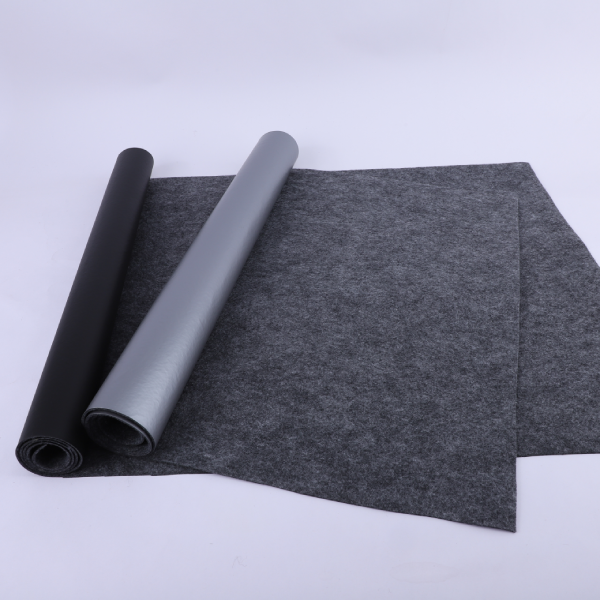
The actual performance of a heavy-duty protection roll is not determined by the felt layer alone. Different backing films and composite constructions may affect flexibility, liquid-barrier performance, installation, and how the roll handles during unwinding and use.
If a project requires reducing the risk of water-based liquids or paint reaching the floor, buyers can evaluate a composite construction with a PE backing film and specify the liquid types and conditions that need to be tested. If installation stability is a greater concern, they should also confirm whether the backing construction is compatible with the intended floor surface.
It is important to note that a backing film does not automatically guarantee reliable slip resistance on every floor. Actual stability may be affected by floor material, dust, liquids, installation methods, and the product's backing construction. For corridors, sloped surfaces, or other areas with additional slip risks, the specific application must be evaluated. Product labeling alone is not sufficient to establish safe use.
Buyers should also confirm the bond between the felt layer and backing film, as well as the integrity of the roll after unwinding, movement, and use. For projects requiring extended or repeated use, relevant visual inspections and bonding requirements can be included in sample approval and acceptance criteria.
5. Which Jobsite Risks Cannot Be Managed by Heavy-Duty Painter Fleece Alone?
Heavy-duty painter fleece can be used for temporary floor protection during painting and renovation when its construction and verified performance match the application. However, it is not a universal protective layer for every construction risk.
If a jobsite involves heavy machinery, load-bearing equipment, materials with sharp edges, concentrated pressure, or significant impact risks, buyers should first assess whether rigid protection boards, dedicated protective panels, or another suitable protection system is required.
If liquid penetration is the primary concern, buyers should focus on the backing construction, seams, perimeter edges, and cut edges. Even when a product has a liquid-barrier layer, liquids may still reach the floor through uncovered areas or gaps between adjoining sections.
If the main risk is scratching or denting the floor, buyers should consider the floor material, the shape of the contacting object, load distribution, and work methods. Flexible protection fleece may provide some cushioning under suitable conditions, but it cannot guarantee protection against every type of surface damage.
Stairs and sloped surfaces also require separate evaluation. Even when a product is designed with slip-resistant properties, this alone cannot guarantee safe movement under all conditions. Installation methods, edge securing, step coverage, floor conditions, and site management can all affect safety.
The correct purchasing approach is to identify the main risks first and then decide whether to upgrade the protection fleece or combine it with other protective materials.
6. What Should Contractors and Distributors Confirm When Purchasing Heavy-Duty Protection Rolls?
Before sending an RFQ, buyers should define the jobsite demands rather than simply asking a supplier for a “heavy-duty” product.
First, describe the type of work, such as indoor painting, commercial renovation, cabinet installation, multi-stage remodeling, or material handling. Different workflows create different protection requirements.
Second, explain traffic and handling conditions, including how frequently people will walk over the material, whether tools will be dragged across it, whether materials will be moved repeatedly, and how long the protection is expected to remain in place.
Third, specify the felt layer and overall construction requirements. These may include felt GSM, total thickness, fiber material, whether a PE backing film is needed, roll width, roll length, color, and packaging. GSM and thickness are related but distinct specifications and should be confirmed separately rather than using either one alone to determine suitability.
Fourth, list the required functions, such as absorbency, liquid-barrier performance, expected friction conditions, installation stability, and post-use inspection requirements. If a particular liquid or jobsite condition needs to be tested, define the test method and acceptance criteria during the sample stage.
Fifth, request samples that match the actual purchasing specifications and inspect them under representative jobsite conditions. For bulk orders, retain the approved sample and written specifications so that later deliveries are not judged solely by vague descriptions such as “heavy-duty” or “extra thick.”
With this information, buyers can make a more informed decision about whether thick absorbent painter fleece is needed and how the overall construction should be specified, instead of simply pursuing higher GSM or greater thickness.
7. How to Match Protection Materials to Jobsite Demands Instead of Automatically Choosing the Highest Specification
When selecting floor protection rolls, buyers can begin by grouping jobsites into typical categories and then identifying the performance requirements that need to be verified.
For short-term indoor painting with limited foot traffic, buyers can first determine whether a standard protection roll already meets the requirements for absorption, coverage, and liquid-barrier performance.
For jobsites involving frequent foot traffic, repeated tool movement, or multi-stage renovation, buyers should further evaluate felt construction, cushioning needs, surface integrity, and backing configuration for more demanding use. A heavy-duty specification may be worth considering, but the decision should still be based on samples and actual requirements.
For jobsites with heavy equipment, sharp objects, or significant concentrated-impact risks, buyers should first determine whether rigid protection boards or other specialized protection measures are necessary rather than assuming that heavy-duty fleece can handle every load.
For importers, wholesalers, and private-label distributors, product development should also account for common construction practices in the target market, product positioning, packaging specifications, and customer acceptance requirements. Different sales channels may need different product ranges rather than a single SKU with the highest specification.
As a manufacturer of needle-punched nonwovens and composite floor protection materials in China, HuiZhou JinHaoCheng Nonwovens Co., Ltd. can discuss material construction, GSM, thickness, roll dimensions, backing-film configuration, and customized production requirements according to each project. OEM/ODM services and bulk supply are also available. For overseas buyers sourcing heavy duty painter fleece, explaining jobsite demands and acceptance requirements in advance can help make sample evaluation more relevant to the final application.
Buyers can review our heavy-duty painter fleece roll product information first, then confirm the suitable construction, sample requirements, and detailed specifications with the supplier.
Conclusion: Choose Heavy-Duty Protection Fleece Based on Jobsite Demands, Not the Product Name
Not every renovation project requires a heavy-duty floor protection roll. Short-term painting jobs with limited foot traffic may only need a standard specification, while frequent traffic, repeated material handling, and multi-stage construction justify evaluating a protection structure designed for more demanding use.
When selecting a product, buyers should consider construction activities, usage period, absorption needs, backing configuration, and actual acceptance requirements. For risks involving heavy equipment, sharp objects, or concentrated impact, they should also assess whether rigid protection boards or other protective systems are necessary.
The ultimate goal is not to purchase the thickest or heaviest product, but to choose a protection roll that matches the jobsite risks, has clearly defined specifications, and can be evaluated through sample testing.




