
What Does Aquarium Filter Floss Remove? The Boundaries of Mechanical and Other Filtration Media
In an aquarium filtration system, different filter materials perform different functions. Some materials mainly capture suspended particles in the water, while others provide surfaces for beneficial microorganisms or help adsorb and treat specific dissolved substances.
For aquarium equipment manufacturers, filter media converters, and purchasing teams, understanding these differences is important. A material may provide effective mechanical filtration, but that does not mean it can independently perform every water treatment task required by an aquarium filtration system.
Aquarium Filter Floss, also commonly called Fish Tank Filter Floss or an Aquarium Filter Pad, is primarily a type of mechanical filtration media. Its main function is to capture suspended solids in the water, rather than replace biological or chemical filtration.
This article explains what Aquarium Filter Floss can remove, which filtration tasks require other media, and why different filter materials need to be selected according to their specific functions. The focus is on material selection and product development for aquarium equipment manufacturers and filter media buyers.
What Is Mechanical Filtration in an Aquarium System?
Mechanical filtration is the process of physically capturing suspended particles in water and separating some solid impurities from the water flow.
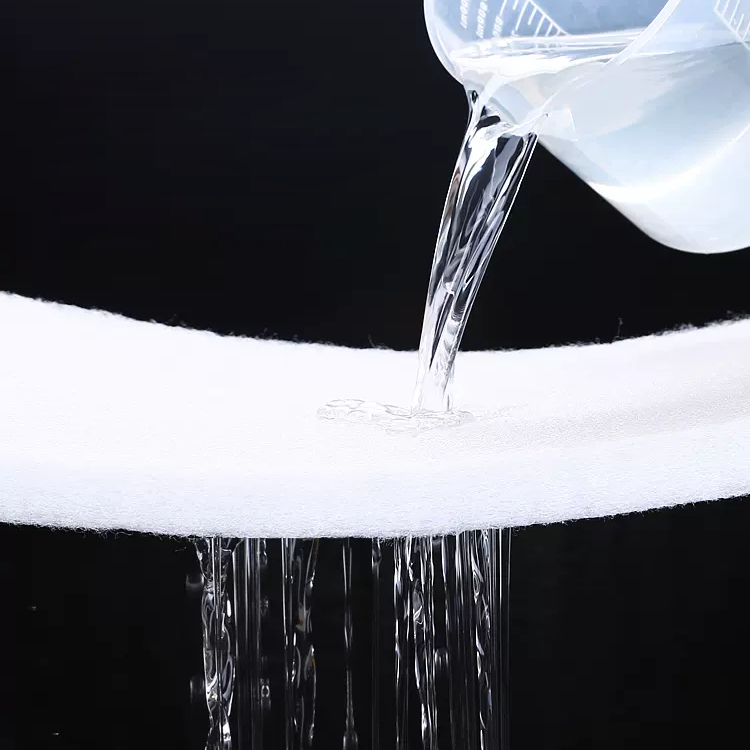
When water passes through filter floss or another porous filtration material, particles may be trapped on the material's surface or retained within its internal fiber network. The actual particle retention performance depends on particle size, material structure, fiber distribution, thickness, density, and water flow conditions.
This physical capture function is the main purpose of Aquarium Filter Floss.
Unlike filtration materials that mainly rely on microbial activity or adsorption, mechanical filter floss primarily uses its fiber structure to capture solid impurities that can be physically retained.
For aquarium equipment manufacturers, mechanical filtration media is not simply a consumable component inside a filtration system. It can also influence the internal filter design, media replacement method, and overall product experience. During product development, manufacturers need to define the specific task that the filter floss is expected to perform rather than judge its suitability based only on its product name.
What Impurities Can Aquarium Filter Floss Typically Capture?
Aquarium Filter Floss is mainly used to capture suspended solids in water. Typical examples include solid fish waste, uneaten fish food, plant debris, and other solid impurities that float in the water or move with the water flow.
Fish Waste
Fish waste contains portions that remain in solid particle form. When these particles enter the water flow, they become potential targets for mechanical filtration. Filter floss can help separate the physically retainable solid portions from the water.
However, fish waste may also release dissolved substances as it decomposes. These substances cannot all be removed simply by using filter floss. Other filtration processes and appropriate water management are still needed to handle them.
Uneaten Fish Food
Uneaten fish food may disperse, soften, or gradually break down into particles of different sizes. Mechanical filter floss can physically capture some of these particles while they remain suspended solids in the water.
If leftover food remains in the system for too long and begins to decompose, it may further affect water quality. Mechanical filtration is therefore valuable not only because it captures particles, but also because it helps reduce the accumulation of certain solid organic wastes in the system.
Plant Debris and Other Suspended Impurities
Small pieces of aquatic plants, plant residues, and other external solid particles may also enter the filtration equipment with the water flow. Depending on its material structure and actual operating conditions, filter floss can capture some of these particles.
The types and distribution of impurities can vary between aquarium systems. Therefore, it should not be assumed that all Aquarium Filter Floss products provide the same particle retention performance.
An Important Point: Filtration Performance Is Not Determined by the Product Name.
Even when two materials are both called Aquarium Filter Floss, they may differ in fiber structure, thickness, density, and fiber distribution. These factors can affect how particles are captured as water passes through the material.
Buyers should not assume a specific filtration rating simply because a product is described as "filter floss" or "high-efficiency filter floss." If a project has specific particle retention requirements, performance should be evaluated using the actual equipment, target particles, and agreed testing conditions. Unverified micron ratings or filtration efficiency figures should not be treated as guaranteed product specifications.
What Filtration Tasks Can Filter Floss Not Replace?
Aquarium filtration systems commonly rely on a combination of mechanical, biological, and chemical filtration. These functions have different working principles and target different substances. They cannot simply replace one another.
Mechanical Filtration: Mainly Handles Suspended Solids
Aquarium Filter Floss belongs to this category.
It mainly captures suspended particles through its fiber network, including solid portions of fish waste, leftover food, plant debris, and other suspended impurities. As solid waste accumulates, the material may need to be cleaned or replaced. The appropriate maintenance method depends on the product design and equipment requirements.
The main purpose of mechanical filtration is to separate physically retainable solid impurities from the water flow, not to directly treat every type of dissolved contaminant.
Biological Filtration: Uses Microorganisms to Process Nitrogenous Waste
Biological filtration works differently from mechanical filtration.
In a mature biological filtration system, beneficial microorganisms attach to suitable media surfaces and participate in the conversion of nitrogenous substances such as ammonia and nitrite. The nitrification process generally involves the conversion of ammonia into nitrite, followed by the conversion of nitrite into nitrate.
The key to biological filtration is providing a suitable environment for these microorganisms to grow while maintaining relatively stable operating conditions.
Microorganisms may also gradually attach to filter floss during use. However, this does not mean that ordinary mechanical filter floss can directly replace specially designed biological media. Nor does the presence of filter floss alone prove that a system has sufficient biological filtration capacity.
For equipment manufacturers, the functions of the mechanical filtration layer and biological media should be considered separately. The former mainly handles suspended solids, while the latter performs biological conversion.
Chemical Filtration: Targets Specific Dissolved Substances
Chemical filtration generally relies on materials with specific adsorption or reaction properties to treat certain dissolved substances in water.
For example, activated carbon can adsorb some dissolved organic compounds and, under suitable conditions, help reduce odors or discoloration in water. Other specialized chemical media may be designed for particular water treatment requirements.
However, the function of chemical media depends on the material type, target substance, water conditions, and method of use. Not all chemical filtration effects can be attributed to activated carbon, and ordinary polyester filter floss cannot be assumed to provide the same adsorption or chemical treatment functions.
Differences Between the Three Filtration Functions
Filtration Type | Main Working Principle | Main Target Substances | Typical Materials or Media |
Mechanical filtration | Physical capture and retention | Suspended solids, uneaten food, solid fish waste, and plant debris | Aquarium Filter Floss, filter cotton, and filter pads |
Biological filtration | Microbial attachment and biological conversion | Ammonia, nitrite, and other nitrogenous substances | Biological ceramic media, sintered glass, bio balls, and other suitable biological media |
Chemical filtration | Adsorption or specific chemical reactions | Certain dissolved organic compounds and other target substances | Activated carbon and other specialized chemical media |
These three filtration functions can work together in the same aquarium filtration system, but their material selection and design requirements are different.
Why Do Different Filtration Tasks Require Different Materials?
For aquarium equipment manufacturers and filter media buyers, material selection should not depend only on whether a particular filter floss can capture particles. It is also necessary to consider its position and function within the complete filtration system.
The Functional Roles of Different Filter Layers Affect Equipment Design
In some filtration equipment, mechanical filtration media is placed at an earlier stage of the water flow. Its purpose is to capture some suspended solids before they enter the following filtration areas.
If mechanical filter media accumulates a large amount of solid waste over time without being cleaned or replaced according to equipment requirements, it may affect the way water flows through the material. Equipment manufacturers therefore need to determine the configuration of the mechanical filtration layer based on equipment structure, maintenance methods, and application conditions.
This does not mean that every aquarium filtration system must use exactly the same filtration sequence. The actual design should still be determined by the water flow path, media types, and system operating requirements.
Material Function Determines Product Development Direction
If a product is mainly designed to capture suspended particles, its development should focus on whether the material structure is suitable for the target particles and actual water flow conditions.
If a product needs to perform biological filtration or specific chemical treatment, the material should be selected according to those functions. Simply increasing the weight or thickness of mechanical filter floss cannot replace other types of filtration media.
For filter media converters, clearly defining the intended function of the final product helps determine its material structure, product format, and downstream processing requirements. It can also reduce purchasing disputes caused by differences between product descriptions and actual applications.
Different Filter Media Need to Be Evaluated Under Actual System Conditions
Laboratory performance does not always represent how a material will perform in a complete filtration system. Water flow speed, filtration area, particle type, material thickness, and maintenance intervals can all influence actual results.
When developing a new product or changing suppliers, buyers should arrange testing using the target equipment or representative test conditions whenever possible. If a project has specific filtration requirements, the evaluation method should be agreed upon in advance rather than relying only on appearance or general product descriptions.
How Should Buyers Define the Function of Aquarium Filter Floss?
Before requesting a quotation or developing a new product, buyers should first identify the actual application and clarify the task that the filter floss needs to perform.
First, Confirm the Type of Filtration Equipment
Different aquarium filtration devices may have different structures and water flow patterns. For example, automatic roller filter systems, standard aquarium filters, and other filtration devices may use filter media in different ways.
Buyers should explain to the supplier where the material will be installed and whether it is intended for initial particle capture, general mechanical filtration, or another specific application.
Second, Identify the Types of Impurities to Be Captured
If the product is mainly intended to capture suspended solids such as fish waste, uneaten food, and plant debris, these particles should form the basis for evaluating the mechanical filtration material.
If the project requires treatment of dissolved organic compounds, ammonia, nitrite, or other specific water quality indicators, buyers should determine whether biological or chemical filtration media are also needed. These requirements should not all be assigned to filter floss.
Third, Evaluate Material Performance Under Actual Operating Conditions
The fiber structure, thickness, density, and overall material construction may affect particle retention and water flow through the material. Buyers should arrange sample testing based on the target equipment and intended operating conditions.
If you need to understand the raw material composition of PET filter cotton and how factors such as fiber structure, weight, and thickness affect the finished material, you can refer to this article about PET filter cotton material composition.
For projects with specific particle retention requirements, buyers should confirm the test objects, testing conditions, and evaluation methods with the supplier. Filtration ratings or efficiency figures that have not been verified should not be treated as fixed product specifications.
Finally, Confirm Whether the Supplier Understands the Actual Application
For OEM/ODM projects, a supplier needs to understand more than just the material a buyer wants to purchase. It is also important to understand the equipment in which the material will be used, the filtration task it is expected to perform, and whether it needs to work together with other filter media.
This helps reduce repeated discussions caused by unclear material functions and makes subsequent sample approval and product specification discussions more targeted.
Conclusion: Define the Filtration Task Before Selecting the Material
The main function of Aquarium Filter Floss is mechanical filtration. Through its fiber structure, it captures suspended solids in water, such as solid portions of fish waste, uneaten food, plant debris, and other particulate impurities.
However, mechanical filtration is not the same as complete water treatment. Nitrogenous substances such as ammonia and nitrite generally require biological filtration processes, while certain dissolved organic compounds and other target substances may require suitable chemical filtration media.
Therefore, aquarium equipment manufacturers, filter media converters, and purchasing teams should first define the filtration task a material needs to perform. They can then select suitable material combinations according to equipment structure, target impurities, and actual operating conditions.
As a nonwoven material manufacturer, HuiZhou JinHaoCheng Nonwovens Co., Ltd. provides customized polyester filter media and other nonwoven materials, as well as OEM/ODM manufacturing services based on project requirements. Established in 2005, the company has long been engaged in nonwoven material R&D and production and operates multiple automated production lines. Material specifications and supply solutions can be discussed according to customer applications, samples, and product requirements. For aquarium filtration projects, the specific material structure and application performance still need to be confirmed based on the target equipment and actual testing requirements.
For long-term purchasing projects, working with a needle-punched nonwoven and filter media manufacturer that understands material functionality and can support sample development and specification confirmation helps make product development and subsequent supply clearer and more manageable.




