
Processing Automotive Foam Laminated Fabric: Cutting, Sewing and Forming Considerations
When sourcing foam laminated fabric, automotive component manufacturers need to consider more than the fabric type, foam specifications, and material thickness. Once the material enters the production process, it must also be suitable for cutting, sewing, curved-surface wrapping, and, in some projects, forming and assembly.
One issue buyers can easily overlook is that a flat sample that meets the supplier's specifications does not necessarily mean the material will perform well on their own production line. Different laminated structures, foam thicknesses, fabric constructions, and processing equipment may affect the material's cutting edges, stitching areas, curved sections, and assembly performance.
Automotive Foam Laminated Fabric is generally an intermediate material made by laminating foam with fabric or another substrate. It can serve as one material layer in automotive interior component manufacturing, but it is not a finished automotive interior product that has already undergone cutting, sewing, wrapping, or forming.
Therefore, before bulk purchasing, automotive component manufacturers should combine material inspection with actual production-line trials. Only after confirming that the material structure is compatible with the intended processing workflow can buyers make a more reliable decision about its suitability for production.
Why Does Automotive Foam Laminated Fabric Need Processing Validation Before Mass Production?
After lamination, foam-backed fabric usually still needs downstream processing before it can become a specified material layer in an automotive component. For buyers, the supplier delivers a laminated material, but the final product's shape, dimensions, stitching, wrapping condition, and assembly results still depend on the customer's own manufacturing processes.
For example, an Automotive Foam Fabric Roll may first need to be slit to a specified width and then cut into different shapes according to component drawings. Some materials may also require sewing, edge folding, wrapping, or connection with other components. Different automotive component manufacturers use different equipment, processing sequences, and product structures. As a result, the same roll material may behave differently under different production conditions.
This is why processing suitability should not be judged solely by the material's flat appearance, hand feel, or supplier specification sheet.
Buyers need to distinguish between three different evaluation stages.
Material specification confirmation focuses on whether the fabric type, foam type, number of layers, overall thickness, width, and other agreed specifications meet the requirements.
Material structure inspection focuses on the arrangement of the fabric, foam, and auxiliary backing layers, as well as the edge condition and overall appearance of the laminated material.
Actual processing validation involves putting the material through production processes that are as close as possible to real manufacturing conditions, checking its performance during cutting, sewing, bending, wrapping, and assembly.
These three stages cannot replace one another. Meeting the material specifications does not guarantee suitability for complex cutting. Similarly, a flat sample with no obvious defects does not guarantee that the material will remain free from wrinkles, layer misalignment, or other issues after sewing or curved-surface wrapping.
For automotive interior material buyers, automotive foam laminated fabric rolls for component manufacturing should be treated as intermediate materials that require further validation, rather than standard finished materials that are automatically suitable for every automotive component production line.
What Should Be Checked When Cutting Automotive Foam Laminated Fabric?
Cutting is a common operation to consider after foam laminated fabric enters the automotive component production process. Buyers need to check more than whether the material can be cut. They should also confirm whether each layer maintains an appropriate condition after cutting and whether the cut edges meet the requirements of subsequent sewing, wrapping, and assembly.
Overall Composite Thickness and Number of Layers
Foam laminated fabric may consist of fabric and foam, or it may include an additional backing layer or other functional layers. Different structures have different overall thicknesses and material combinations, which also affect the number of layers that need to be handled during cutting.
If the material is relatively thick or the different layers have different degrees of flexibility, the cutting edges may behave differently from those of a single-layer fabric. Buyers should therefore confirm the actual thickness of the finished laminated material rather than judging cutting suitability based only on the foam thickness.
Foam Deformation and Edge Condition
Foam has a certain degree of flexibility and compression behavior. During cutting, the equipment and operating conditions may affect the material, potentially causing localized compression, edge deformation, or irregular cut surfaces.
Buyers can inspect whether the foam edges show obvious compression or irregularities, whether the fabric and foam have shifted relative to each other, and whether the cut edges meet the requirements of the next processing stage.
These conditions are related to the foam type, thickness, laminated structure, and actual cutting conditions. They cannot be predicted based on material names such as PU or EVA alone.
Cutting Shape and Material Direction
Automotive interior components may have curved edges, corners, or irregular outlines. Straight slitting, fixed-size cutting, and complex contour cutting do not place exactly the same requirements on the material.
For materials that need to be cut according to component drawings, buyers should provide actual cutting drawings, templates, or representative component samples. If the fabric has a warp and weft direction or an obvious structural orientation, the cutting direction should also be checked to determine whether it affects subsequent bending, sewing, and wrapping.
Whether the Cut Material Is Suitable for the Next Process
Completing the cutting operation does not mean the material has passed processing validation. Buyers should also check whether the cut material can proceed smoothly to sewing, wrapping, or assembly.
For example, additional edge treatment may be required. Foam may deform during handling, or the fabric and foam may shift relative to each other. These conditions can all affect the next processing stage.
Therefore, the key to confirming Foam Laminated Fabric Cutting is not simply whether the equipment can cut the material. It is whether the cutting results are compatible with the subsequent manufacturing processes.
What Should Be Considered When Sewing Foam Laminated Fabric?
For automotive interior components that require stitching, foam laminated fabric must meet not only the sewing requirements of the fabric itself but also the requirements arising from the foam layer and other composite layers, which affect the overall material thickness and sewing condition.
Material Thickness and Stitching Position
The fabric, foam, and auxiliary backing layers form a composite material with a certain overall thickness. Buyers should confirm whether the material is suitable for the intended stitching structure and position.
If the product requires multiple layers to be sewn together, the total thickness after stacking should also be evaluated, including any noticeable thickness variations in the stitching area.
The sewing performance of a single-layer fabric should not be used alone to determine whether the complete foam laminated material is suitable for sewing.
Relative Position of the Fabric and Foam
During sewing, the material may be affected by feeding, pressure, and needle penetration. Buyers should observe whether the fabric and foam show obvious misalignment, localized wrinkles, or other issues that may affect the finished appearance.
For composite structures with multiple backing layers, buyers should also check whether the layers maintain their intended arrangement as the needle passes through different sections.
Appearance and Structure Around the Stitching Area
Automotive interior materials may require decorative stitching, joining seams, or specific stitched shapes. Buyers should use samples that closely represent the actual product to check whether the stitching is even and whether the material shows obvious wrinkling, stretching deformation, or localized material buildup.
If the stitched material needs to undergo wrapping or assembly afterward, buyers should continue checking whether the stitching position affects the overall shape and installation of the component.
Sewing Performance of Different Laminated Structures
Single-sided lamination, double-sided lamination, and structures with additional backing layers involve different numbers and arrangements of layers during sewing. Double-sided fabric structures require attention to the condition of both fabric surfaces. If the composite material also contains a film or another functional layer, buyers should confirm whether these layers are damaged or separated after sewing.
Therefore, Foam Backed Fabric Sewing cannot be evaluated based only on the material name or a flat sample. Buyers should, whenever possible, conduct sewing trials using actual equipment, needle and thread configurations, and the intended component structure to confirm whether the laminated material meets their production requirements.
What Requirements Do Curved-Surface Wrapping and Subsequent Forming Place on Composite Materials?
Automotive interior components are not always flat. Some parts may require material to be wrapped around curved surfaces, corners, or structures with different height variations. For these products, the flat condition of foam laminated fabric does not fully represent its actual processing performance.
Curved Bending and Wrapping Suitability
During bending and wrapping, the material needs to accommodate changes in the shape of the target component. Buyers should observe whether the fabric surface develops obvious wrinkles, stretching marks, or uneven deformation, and check whether the foam layer maintains the intended coverage.
Different fabric constructions and foam thicknesses may affect the bending performance of the composite material. The same foam laminated with different fabrics does not necessarily produce the same wrapping results.
Corners and Edge Areas
For components with corners, grooves, or wrapped edges, the material needs to accommodate localized changes in shape. Buyers should pay particular attention to whether material buildup, localized foam compression, exposed foam edges, or layer misalignment occurs in these areas.
If the material performs normally on a flat sample but shows obvious problems around the corners of an actual component, the material structure or processing conditions need to be reevaluated.
Heat Pressing and Forming Requirements
Some automotive component projects may involve heat pressing or other forming processes. However, this does not mean that all foam laminated fabrics are suitable for heat pressing or three-dimensional forming.
Suitability for these processes needs to be evaluated according to the foam material characteristics, fabric heat resistance, laminated structure, processing temperature, pressure, and time. Materials made using different lamination processes should not be assumed to have identical forming compatibility.
If a project genuinely requires heat pressing or three-dimensional forming, buyers should explain the target component shape, forming method, and customer technical requirements in advance, then validate the actual material combination. Without the relevant testing, suitability for forming cannot be determined solely from the material name or a supplier's flat sample.
Assembly Performance After Forming
If the material needs to be assembled with a plastic substrate, support components, clips, or other parts after wrapping or forming, buyers should further check whether its thickness, edge positions, and overall shape affect assembly.
Therefore, curved-surface wrapping and forming should not be evaluated in isolation. They should be included in the same processing validation process as cutting, sewing, and final assembly.
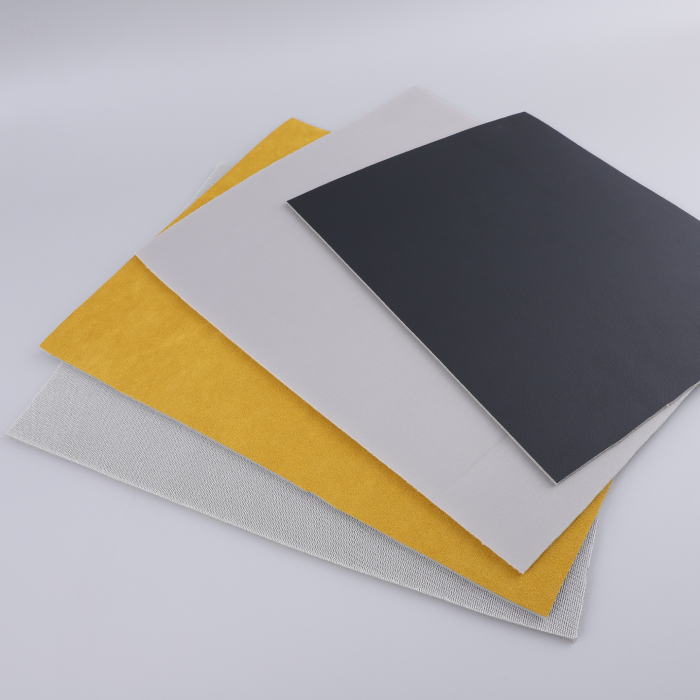
Should Automotive Foam Laminated Materials Be Supplied in Rolls, Sheets, or Pre-Cut Pieces?
Foam laminated materials can be supplied in different formats depending on project requirements. For automotive component manufacturers, choosing rolls, sheets, or pre-cut pieces is not simply a packaging decision. It also affects how the material is handled on the production line and who is responsible for subsequent processing.
Rolls
Rolls are generally suitable for production arrangements that require continuous material feeding, slitting, or further cutting according to component drawings.
Buyers should confirm the material width, roll diameter, roll length, and packaging method, as well as the requirements of their production line. If the production line requires continuous feeding, the material should also be checked against the actual equipment to determine whether unwinding, feeding, and subsequent processing can proceed smoothly.
Supplying material in rolls does not mean it is automatically suitable for every automated production line. Compatibility between material dimensions, winding condition, and processing equipment still needs to be confirmed before use.
Sheets
Sheets are suitable for handling and using materials in specified dimensions and may be more convenient for certain production arrangements that require individual pieces or batch processing.
Buyers should clarify the sheet length, width, thickness, and dimensional tolerances, and confirm whether the material meets actual handling, storage, and equipment requirements.
If the finished product requires complex contour cutting, the sheet material still needs to undergo the corresponding cutting and processing validation.
Pre-Cut Pieces
Pre-cut pieces are materials that have been processed in advance according to specified shapes or dimensions. For projects with clearly defined component shapes and dimensions, buyers can evaluate whether this format would help reduce subsequent cutting work.
However, whether pre-cut pieces can be supplied depends on actual processing capabilities, drawing requirements, material structure, and order arrangements. The ability of a material supplier to provide rolls does not automatically mean it can also provide automotive component pieces in every complex shape.
Buyers should also clarify who is responsible for cutting, which drawings or templates will be used, how dimensions will be confirmed, and how the cut materials will be packaged and delivered.
Supply Format Should Be Confirmed Together with Processing Responsibilities
Rolls, sheets, and pre-cut pieces involve different material handling and processing arrangements. Buyers should clarify which operations will be completed by the material supplier and which will be handled by the automotive component manufacturer or another processing partner.
When comparing different supply formats, buyers should also consider material utilization, handling methods, storage requirements, production-line equipment, and subsequent processing workflows rather than comparing only the material price per square meter or per roll.
How Can Automotive Foam Laminated Fabric Be Validated Through Processing Trials Before Bulk Purchasing?
For automotive foam laminated materials, sample approval should not stop at checking appearance, hand feel, or the specification sheet. A more effective approach is to arrange processing trials according to the actual production workflow of the finished product, using conditions that closely resemble real manufacturing.
Step 1: Confirm the Final Component and Material Installation Position
Buyers should identify which automotive interior component will use the foam laminated fabric and clarify its exact position within the overall component structure.
If the material needs to be combined with other fabrics, foam, backing layers, or structural components, buyers should provide the corresponding material cross-section, drawings, or samples. This prevents suppliers from understanding the application based only on the product name.
Step 2: Confirm That the Sample Structure Matches the Bulk Material
Samples should use the same fabric, foam, number of layers, and material combination as the expected bulk order whenever possible.
If the sample differs from the subsequent bulk material in structure or specifications, its processing results cannot directly represent the performance of the bulk material.
Buyers should record the sample's material structure, thickness, width, and other key specifications as a reference for subsequent confirmation.
Step 3: Conduct Processing Trials in the Actual Production Sequence
If the production workflow includes slitting, cutting, sewing, wrapping, forming, and assembly, validation should follow the actual production sequence rather than testing only one individual operation.
For example, buyers should check whether the material remains suitable for sewing after cutting, whether it can still be wrapped properly after sewing, and whether the wrapped shape affects final assembly. These checks need to be carried out using the actual product wherever possible.
Step 4: Record Issues After Each Processing Stage
Buyers should record the condition of cutting edges, foam deformation, fabric wrinkles, layer misalignment, stitching appearance, wrapping condition, and assembly fit.
If a problem occurs, buyers should try to distinguish whether it is caused by the material structure, material specifications, processing conditions, or component design rather than automatically attributing every issue to the foam laminated material.
Step 5: Confirm Sample and Bulk Order Acceptance Criteria
After sample approval, buyers should clarify the material structure, specifications, and acceptance requirements that must be maintained for subsequent bulk orders.
If the project involves specific peel strength, compression performance, durability, or other technical requirements, the test methods, testing conditions, and acceptance criteria should be defined in advance. Hand feel or the results of a single processing trial cannot replace every type of performance test.
For automotive projects, the customer's specified OEM standards and actual component requirements should also be followed. Passing a processing trial only indicates that the tested material combination meets the confirmed processing requirements under the conditions evaluated. It does not automatically prove suitability for other vehicle models, equipment, or production conditions.
What Should Automotive Component Manufacturers Confirm with Suppliers Before Purchasing?
Before purchasing automotive foam laminated fabric, manufacturers should explain their downstream processing workflows to suppliers in addition to confirming the basic material specifications. This helps suppliers understand the actual production requirements that the material must meet after delivery.
Final Component and Material Position: Specify whether the material will be used in automotive seats, door panels, headliners, or other interior components, and clarify its exact position within the component.
Complete Laminated Structure: Provide the arrangement and sequence of the fabric, foam, and auxiliary backing layers. Clarify whether the material has a single-sided, double-sided, or other multi-layer structure.
Cutting Requirements: Explain whether the material needs slitting, fixed-size cutting, or complex contour cutting, and provide the corresponding drawings or templates.
Sewing Requirements: Explain whether joining seams, decorative stitching, or other sewing methods are required, and provide samples or component structures that closely represent actual production.
Wrapping and Forming Requirements: Clarify whether the material needs curved-surface wrapping, heat pressing, or another forming process. If forming is involved, provide the specific method and technical conditions rather than simply stating that forming is required.
Supply Format: Specify whether rolls, sheets, or pre-cut pieces are required, together with the relevant dimensions, packaging, and delivery requirements.
Actual Processing Trial Conditions: Where possible, provide the equipment type, processing sequence, component drawings, and sample evaluation requirements so that the supplier can understand how the material will actually be used on the production line.
Acceptance and Testing Requirements: Provide the customer's specified technical standards, test methods, and acceptance criteria. If peel strength, compression, durability, or other performance properties are involved, clarify the corresponding testing requirements.
For foam composite material projects, HuiZhou JinHaoCheng Nonwovens Co., Ltd. has project experience in laminating PU and EVA foam with different materials. The processes involved include flame lamination, adhesive lamination, and hot-melt lamination. Different projects may use in-house processing or outsourced processing arrangements. This experience mainly reflects project experience in composite material development and lamination methods. It does not mean that all downstream automotive cutting, sewing, wrapping, or forming operations are completed by the material supplier.
Therefore, automotive component manufacturers should combine material specification confirmation with production-line processing trials when purchasing. First clarify the material structure and supply format, then validate cutting, sewing, wrapping, forming, and assembly requirements in the actual production sequence. Only after the specific material combination has been approved under the intended processing conditions can it move more reliably into subsequent bulk purchasing.




