
Automotive Foam Laminated Fabric Quality Checks: Bonding, VOC, Odor and Flame Requirements
When sourcing materials for automotive interiors, buyers should not assume that foam laminated fabric is ready for use simply because the fabric and foam have been successfully bonded together. For composite materials intended for automotive seats, door panels, headliners, or other interior components, buyers also need to verify the stability of the bonded layers, confirm whether the odor and emissions meet project requirements, and check whether the material complies with customer-specified flame-retardant and other performance standards.
A common sourcing mistake is to assume that a fabric test report and a separate foam material datasheet are sufficient to prove that the finished laminated material meets automotive project requirements. In practice, the final performance of a composite material may also be affected by the foam type, fabric construction, adhesive system, lamination method, and processing conditions. Test results for individual material layers cannot automatically represent the performance of the complete composite.
Therefore, automotive foam laminated fabric quality checks should focus on the final composite structure to be supplied. Buyers need to define the test specimens, test methods, and acceptance criteria during the sampling stage, then ensure that bulk production remains consistent with the approved sample.
Why Is Visual Inspection Alone Not Enough to Evaluate Automotive Foam Laminated Fabric Quality?
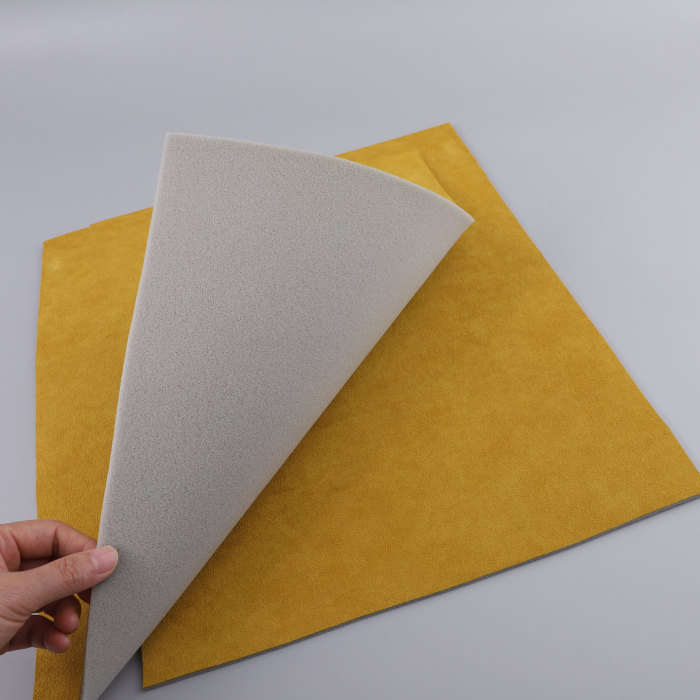
Foam laminated fabric is generally made by bonding textile fabric with foam. Depending on the product design, additional backing layers or functional layers may also be included. Different material combinations can produce different results in bonding stability, surface appearance, odor, and downstream processing performance.
From a purchasing perspective, visual inspection can identify some obvious defects. For example, buyers can check whether the surface is smooth, the color is consistent, and there are visible wrinkles, bubbles, or local bulges. These checks help identify visible quality problems, but they cannot independently confirm whether the internal bonding between layers is stable. Nor can they determine whether the material meets automotive project requirements for VOC, odor, or flame performance.
Quality verification should therefore be divided into three levels.
First, does the material structure match the approved specifications?
Buyers should check the fabric type, foam material, layer arrangement, thickness, weight, and other agreed specifications. If the actual composite structure differs from the approved sample, it should not automatically be treated as the same material, even if the appearance is similar.
Second, does the laminated material meet application and processing requirements?
The material should be checked for interlayer bonding stability and evaluated to determine whether delamination, deformation, or surface damage occurs during actual processing, such as cutting, sewing, bending, wrapping, or other operations.
Third, does the finished composite meet the performance requirements specified for the project?
If an automotive project involves requirements for VOC, odor, fogging, flame performance, abrasion resistance, or dimensional stability, buyers should clarify the specific test specimen, test method, sample condition, and acceptance criteria.
These three levels cannot replace one another. Passing a visual inspection does not mean that performance testing has been passed, and reports for individual raw materials do not necessarily prove that the finished composite meets project requirements.
For buyers comparing different composite structures, our guide to foam laminated fabric specifications and material requirements can help clarify the material layers and product structure before quality verification requirements are established.
How Should Bonding Quality Between Foam and Fabric Be Verified?
Bonding stability between foam and fabric is one of the basic quality checks for foam laminated fabric. If the interface between the layers is unstable, local separation may occur during subsequent cutting, sewing, bending, or use, affecting the processing and assembly of the final component.
However, simply pulling a sample by hand or checking whether the surface looks smooth does not provide a complete evaluation of bonding quality.
Check for local separation between layers.
The first step is to inspect the bonding area between the foam and fabric. Check for visible unbonded areas, local bulges, bubbles, edge delamination, or other abnormalities.
For roll materials, inspection should not be limited to one small sample or the outermost layer of a roll. Depending on the agreed sampling plan, samples can be taken from different roll numbers or positions to check the bonding condition across different areas of the material.
Use an appropriate peel or bonding test to evaluate adhesion performance.
If a project has specific requirements for interlayer bonding, peel strength or another suitable bonding test can be included in the verification plan.
Before testing, the material structure, specimen width, peeling method, test speed, environmental conditions, and result reporting method should be clearly defined. Different foam, fabric, and composite structures may produce different failure patterns. Therefore, test conditions or results from other laminated materials should not be applied indiscriminately to every type of foam laminated fabric.
The location of failure should also be considered during testing. For example, failure may occur within the foam itself, or separation may occur at the interface between the fabric and foam. These failure patterns do not necessarily indicate the same type of problem.
The specific peel test method and acceptance criteria should be determined according to the actual composite structure and customer requirements. For more information about test methods, specimen conditions, and purchasing acceptance agreements, refer to the guide on laminated nonwoven fabric peel strength and bonding quality.
Check whether the composite structure remains intact after processing.
Some materials may appear to have normal bonding when laid flat but may develop local delamination or layer displacement after bending, cutting, sewing, or wrapping.
Therefore, if the material is intended for an automotive component production line, sample validation should not stop at flat-surface inspection. Buyers should use processing methods that are as close as possible to actual production conditions to check whether the bonded interface remains stable.
It is important to note that bonding strength should not be judged using one unverified value as a universal standard for all materials. Buyers and suppliers should agree on acceptable results based on the actual application, test method, and project specifications.
Why Should VOC, Odor and Fogging Tests Be Conducted on the Final Composite Material?
VOC, odor, and fogging requirements are important considerations when developing materials for automotive interiors.
Foam, fabric, and any adhesive or additional functional layers may affect the final performance of the composite. Therefore, buyers should not rely only on separate test reports for the fabric or foam to conclude that the complete foam laminated fabric meets automotive interior project requirements.
VOC and FOG are not the same type of test.
VOC testing mainly concerns volatile organic compounds released from materials. FOG generally refers to the deposition formed when certain volatile substances condense on a cooler surface.
During automotive interior material development, buyers may encounter requirements involving VDA 278, which relates to the evaluation of organic emissions from materials. The specific substances to be evaluated, test conditions, and acceptance criteria should be determined according to the customer's project specifications.
Odor needs to be evaluated separately.
Low VOC does not necessarily mean that a material has no noticeable odor. Odor characteristics may be affected by the foam, fabric, adhesive system, and other composite layers.
For example, customers may require odor evaluation according to VDA 270 or a specified OEM internal test method. Buyers should confirm whether the test specimen represents the actual composite structure to be supplied, rather than an individual raw material before lamination.
Fogging tests require clear test specimen and method definitions.
Automotive interior materials may also be subject to fogging tests, such as ISO 6452 or another method specified by the customer. ISO 6452:2021 primarily specifies a method for determining the fogging characteristics of rubber- or plastics-coated fabrics used in automotive interiors. Its scope and specific specimen requirements should be checked against the material type.
For foam laminated fabric, buyers should first confirm whether this standard applies to the target composite material. They should not assume that every material intended for automotive interiors is automatically covered by the same test method.
Test reports must correspond to the actual material structure.
When reviewing test reports, buyers should pay particular attention to the following information:
Whether the test specimen includes the complete fabric, foam, and any additional composite layers.
Whether the test specimen uses the same material combination and lamination method as the bulk order.
Whether the material name, specifications, thickness, and sample condition in the report match the purchasing requirements.
Whether the test method, standard version, laboratory information, and test results are clearly documented.
Whether an existing report remains applicable if the foam, fabric, adhesive material, or other composite layer is changed.
For automotive projects, the value of a test report is not simply that it presents a test result. It should also demonstrate that the result corresponds to the actual material the buyer intends to approve and put into production.
How Should Flame Requirements for Automotive Interior Foam Laminated Fabric Be Confirmed?
Flame-retardant requirements for automotive interior materials are generally related to the specific installation position, vehicle project, target market, and customer technical specifications. Different automotive components may have different testing requirements. Therefore, buyers should not assume that all foam laminated fabrics must meet the same set of flame-retardant standards.
Before requesting quotations or submitting samples, buyers should confirm the following information.
Identify the applicable test standard.
For example, US FMVSS 302 is one of the standards related to the flammability performance of materials in motor vehicle occupant compartments. Other markets and automotive manufacturers may use different regulations, standards, or internal test methods.
If the customer provides a specific standard number, version, test direction, specimen dimensions, or acceptance limit, the project documents should be followed. Simply stating "Flame Retardant" or "Meet Automotive Standard" without identifying the specific requirement is not sufficient.
Confirm whether the test specimen represents the complete composite structure.
Foam laminated fabric consists of multiple material layers. The material composition and structure of the fabric, foam, and any additional composite layers may all affect the final test result.
Therefore, buyers should clarify whether the customer requires testing of the fabric alone, the foam material, or the complete foam laminated composite. If additional materials will be added to the final component, buyers should also confirm whether the required test specimen needs to include those materials.
Distinguish flame performance requirements from lamination processes.
Flame lamination is a material bonding process. It is not the same as flame-retardant treatment.
A foam laminated fabric should not be considered flame-retardant simply because it is manufactured using a flame lamination process. Nor should the material be described as having passed a specific automotive flammability test on that basis.
If a project requires flame-retardant performance, the relevant material structure must be evaluated according to the customer's specified test method. The decision should be based on a valid test report or an inspection result accepted by both parties.
What Should Buyers Check for Abrasion Resistance, Dimensional Stability, Color and Surface Quality?
In addition to interlayer bonding, VOC, odor, fogging, and flame performance, automotive foam laminated fabric may require other quality checks depending on the final component application.
Not every project requires every test. Buyers should first confirm the material's position in the finished component, contact conditions, processing requirements, and service environment before deciding which items should be included in the quality agreement.
Abrasion resistance.
If the fabric is used on a visible automotive interior surface or an area subject to frequent contact, customers may require abrasion resistance evaluation.
Buyers should clarify whether the test specimen is the fabric surface or the complete composite material. They should also confirm the test method, rubbing material, test conditions, and acceptance criteria. Abrasion requirements may vary according to fabric construction and application, so test results from other products should not automatically be treated as universal references.
Dimensional stability.
Foam laminated fabric may be affected by stretching, bending, temperature, or processing conditions during cutting, sewing, wrapping, or subsequent forming.
If the customer has requirements for dimensional changes, the measurement method before and after testing, measurement direction, environmental conditions, and allowable variation should be clearly defined. For fabrics with warp and weft directions or noticeable differences in stretch behavior, the measurement direction should also be confirmed.
Color and surface quality.
For exposed automotive interior fabrics, color, texture, and surface condition directly affect the appearance of the finished component.
During sample approval, buyers should check whether the color matches the approved sample and whether the surface has noticeable color variation, stains, scratches, wrinkles, bubbles, local bulges, or other appearance defects.
If the customer uses a color swatch or standard sample as the acceptance reference, the sample number, color requirements, viewing conditions, and mutually agreed evaluation method should be recorded.
Overall composite structure and thickness.
Buyers should also check whether the fabric, foam, and other layers are arranged correctly, whether the finished thickness meets the approved specifications, and whether the composite material has obvious deformation or local unevenness.
Foam thickness, fabric thickness, and total laminated thickness are different measurements. During quality inspection, each parameter should be linked to a clearly defined measurement object to avoid confusing individual material data with the finished composite thickness.
After Sample Approval, How Can Buyers Ensure Consistency in Bulk Production?
Automotive material purchasing should not stop at sample approval. The purpose of sample approval is to establish a quality reference that both parties can follow during subsequent production and inspection.
If the foam, fabric, adhesive material, or composite structure is changed during bulk production, the material performance may be affected even if the product name and appearance remain similar. Buyers should therefore establish continuous records from sample confirmation through batch inspection.
Keep the mutually approved reference sample.
After sample approval, both parties should retain the agreed physical sample and record its sample number, material composition, number of layers, layer arrangement, thickness, color, and other key specifications.
If the customer requires specific performance tests, the corresponding test reports, test methods, and acceptance criteria should also be stored with the approved sample records.
Define the material specifications for bulk production.
The purchase order or quality agreement should clearly identify the fabric, foam, and other material layers, together with their key parameters.
If the project involves a specific adhesive system or lamination method, the agreed structure and processing requirements should also be recorded. This helps prevent unapproved changes to the material combination in subsequent orders.
Establish batch sampling and inspection records.
For bulk orders, buyers can follow an agreed sampling plan to inspect material structure, appearance, thickness, dimensions, and other key items across different roll numbers or production batches.
If interlayer bonding is a critical acceptance requirement, the applicable bonding test should be included in the mutually agreed inspection plan rather than being decided only after a quality dispute occurs.
The specific sampling quantity, inspection frequency, and retesting procedure should be determined according to order volume, material risks, and the quality agreement between both parties. A fixed sampling ratio should not be applied indiscriminately to every order.
Re-evaluate the material after changes in materials or processes.
If the fabric source, foam model, adhesive material, composite structure, or another key material is changed, the impact of the change on the final composite should be evaluated first.
For changes that may affect VOC, odor, fogging, flame performance, or bonding, new samples or relevant tests may be necessary. Existing reports should not automatically be reused without checking whether they remain applicable.
This approach helps reduce differences between approved samples and bulk production. It also allows buyers and suppliers to trace issues through approved samples, specification documents, and test records when quality problems occur.
What Quality Acceptance Requirements Should Buyers Prepare Before Purchasing Automotive Foam Laminated Fabric?
Before requesting a quotation or submitting samples to a supplier, buyers should prepare a quality requirement list that reflects the actual automotive project.
If the customer already has a complete technical specification, the relevant documents can be provided directly. If the project is still under development, buyers can first confirm the basic material structure and mandatory performance requirements, then discuss a sample validation plan with the supplier.
Buyers are advised to prepare the following information.
Final application location: Explain whether the material will be used for automotive seats, door panels, headliners, armrests, or another component. Specify its position and function in the finished part.
Complete material structure: Provide the material types, layer arrangement, and known specifications of the fabric, foam, and any additional composite layers.
Basic physical specifications: Define requirements for fabric GSM, foam type, foam thickness, density, hardness, total laminated thickness, width, and dimensional tolerances.
Bonding quality requirements: Specify whether peel testing or another bonding test is required, and provide the designated test method, specimen conditions, and acceptance criteria.
Automotive project testing requirements: Identify which items are mandatory among VOC, odor, fogging, flame performance, abrasion resistance, and dimensional stability. Provide the corresponding standard numbers, versions, limits, or customer-specific internal specifications.
Reports and certification documents: Explain whether third-party laboratory reports, material declarations, conformity documents, or other project documents are required. Confirm which sample structure each report must represent.
Sample and bulk acceptance procedures: Confirm the sample quantity, reference sample retention method, bulk inspection items, inspection frequency, and procedures for handling nonconforming materials.
For customized foam laminated fabric projects, HuiZhou JinHaoCheng Nonwovens Co., Ltd. has experience combining PU and EVA foam with different materials. The processes involved include flame lamination, adhesive lamination, and hot-melt lamination. Processing arrangements may vary between projects, and the specific material combination and production method need to be confirmed according to the actual requirements.
For automotive interior projects, buyers should provide the target component, material structure, and customer testing specifications before sample submission. This makes it possible to determine which quality items need to be verified and what specimens and acceptance criteria should be used. The company's quality management certifications and manufacturing systems can serve as a reference for evaluating its quality management background. However, management system certifications do not mean that a specific foam laminated fabric product has passed the material performance certification of a particular automotive OEM.
If you are developing foam laminated materials for automotive applications, you can first provide the product drawings, existing samples, material structure, and customer testing requirements. Confirming the composite structure, test specimens, and acceptance criteria before sample approval and bulk purchasing is more reliable than simply asking a supplier for a general "automotive material compliance report."




