
How to Develop Private Label Floor Protection Fleece for Different Sales Channels
When developing private-label floor protection fleece, buyers should not start by deciding where to place the logo or what colors to use for the packaging. The first questions should be who will buy the product and why the target customers would choose it.
Professional contractors, building material distributors, wholesalers, and retail brands may all sell floor protection fleece, but they serve different customers and use different sales methods. If they all use exactly the same product range, the products may not fully meet the needs of each channel, and the brand may lack a clear market position.
For overseas buyers planning to develop private label floor protection fleece, a more effective approach is to define the target sales channel first, then plan the product range, brand identity, and long-term supply arrangements. This helps prevent buyers from investing too many resources in product development before establishing a clear sales direction.
Why Different Sales Channels Should Not Use Exactly the Same Product Strategy
The same floor protection roll can serve different commercial purposes across different sales channels.
For professional contractors, the product is usually a construction consumable. Purchasing decisions are more likely to focus on job-site requirements, product suitability, purchasing costs, and supply reliability.
For building material distributors and wholesalers, floor protection fleece is one category in a broader product portfolio. They need to consider whether the range meets different customers' needs, whether inventory is manageable, and whether the products are suitable for repeat sales.
For retail brands, products must also communicate their purpose, key features, and usage limitations clearly on store shelves, e-commerce pages, or product packaging. Consumers need to understand what the product is designed for and how it differs from other options using limited information.
Therefore, buyers should define their target sales channels before deciding on the product range and branding approach.
Channel positioning should guide product development—not the other way around. Buyers should not design a logo first and only then look for a product to sell.
What Should Floor Protection Products Prioritize for Professional Contractors?
Professional contractors use floor protection materials across different renovation and construction projects. They may purchase protective rolls for residential renovations, commercial fit-outs, painting jobs, or other interior work.
For this channel, product development should begin with practical job-site requirements.
First, identify the main types of work performed by the target customers. Painting contractors may pay closer attention to liquid protection, absorbency, and ease of use. Contractors working in high-traffic areas may be more concerned about wear resistance, installation stability, and how frequently the material needs to be replaced.
Next, consider how the product fits into contractors' existing purchasing processes. Professional customers may buy by the roll or purchase larger quantities according to project requirements. Product names, packaging labels, and specification information should make the product easy to identify and reorder.
If a brand targets professional contractors, its product information should clearly explain the intended applications, material construction, and verified performance characteristics. Claims about waterproofing, wear resistance, or slip resistance should be supported by the actual product construction and relevant test results. Marketing language alone should not be used to guarantee performance.
For the contractor channel, the value of a branded floor protection roll goes beyond printing a company name on the product. It should help customers identify the product, understand its intended use, and find the same product specification when they reorder.
How Can Distributors and Wholesalers Plan Standard and Branded Products?
Building material distributors and wholesalers typically need to consider product coverage, inventory turnover, and sales margins at the same time. For these buyers, developing a private label does not necessarily mean launching a large number of models from the beginning.
A more practical approach is to establish a clear product range first.
Standard Products: Meet Core Market Needs
Standard products can form the foundation of the range, covering the applications and customers that distributors encounter most frequently.
Buyers should determine which products deserve priority based on actual demand in their target markets. Preferences for roll dimensions, product construction, colors, and packaging may differ between markets. Demand in one region should not automatically be treated as evidence of demand elsewhere.
If a distributor already sells floor protection materials, it can begin by reviewing the products customers purchase most frequently, their common applications, and the improvements customers have requested.
Branded Products: Create Clear Product Differentiation
Building on the standard range, buyers can develop products with their own brand identity based on market feedback.
Differentiation does not necessarily require adding many product models. It can also come from clear product positioning, consistent branding, packaging suited to the target customers, and a reliable supply arrangement.
For example, a distributor might organize its range around professional construction applications and retail applications. The actual product categories should be determined by genuine customer needs and sales data, rather than by adding SKUs simply to make the catalog look larger.
For buyers developing wholesale floor protection fleece, the goal is to make products easier for sales teams to recommend, easier for customers to select, and easier for purchasing and warehouse teams to manage.
Why Do Packaging and Product Identification Matter in Retail Channels?
Retail channels differ from professional wholesale channels because end customers may not be familiar with technical terms used in floor protection materials.
When shopping in a physical store or on an e-commerce website, consumers need to understand the product's main purpose, intended applications, and basic usage conditions quickly. Retail products should not rely on the brand name or visual design alone to communicate this information.
Packaging or product listings should prioritize the details that directly support purchasing decisions.
Product name: Clearly identify the product and avoid suggesting functions that it does not actually provide.
Main applications: Help consumers determine whether the product suits their renovation or construction needs.
Product features: Describe verified material characteristics and performance rather than relying on promotional claims that cannot be substantiated.
Usage limitations and precautions: Where necessary, clearly explain whether the product is suitable for particular flooring types, whether the underlying surface conditions need to be checked, and whether inappropriate long-term coverage should be avoided.
Brand and product identification: Keep these details clear and consistent so consumers can distinguish between products and find the correct model when purchasing again.
For retail brands, packaging is not only a way to improve visual recognition. It also helps consumers understand the product correctly and reduces complaints caused by mismatched expectations.
How Should Buyers Prioritize the Brand Name, Logo, Product Purpose, and Packaging Information?
Private-label development usually involves several information elements, but they do not all need equal priority.
A more practical sequence is to make product information clear first, establish brand identity next, and refine the visual presentation afterward.
First, define what the product is, which applications it is intended for, and which performance characteristics have been verified. Distributors and consumers need to understand the product itself before evaluating its branding.
Next, establish the relationship between the brand name, logo, and product-line names. The brand name creates overall recognition, while product names should help buyers distinguish between products. Avoid naming different products so similarly that customers cannot easily tell them apart.
Then, confirm which information needs to appear on the packaging and how it should be organized. Professional channels may place greater emphasis on product identification and purchasing information, while retail channels may need more intuitive application descriptions and consumer-friendly language.
Finally, decide on the logo size, color scheme, visual hierarchy, and other design details.
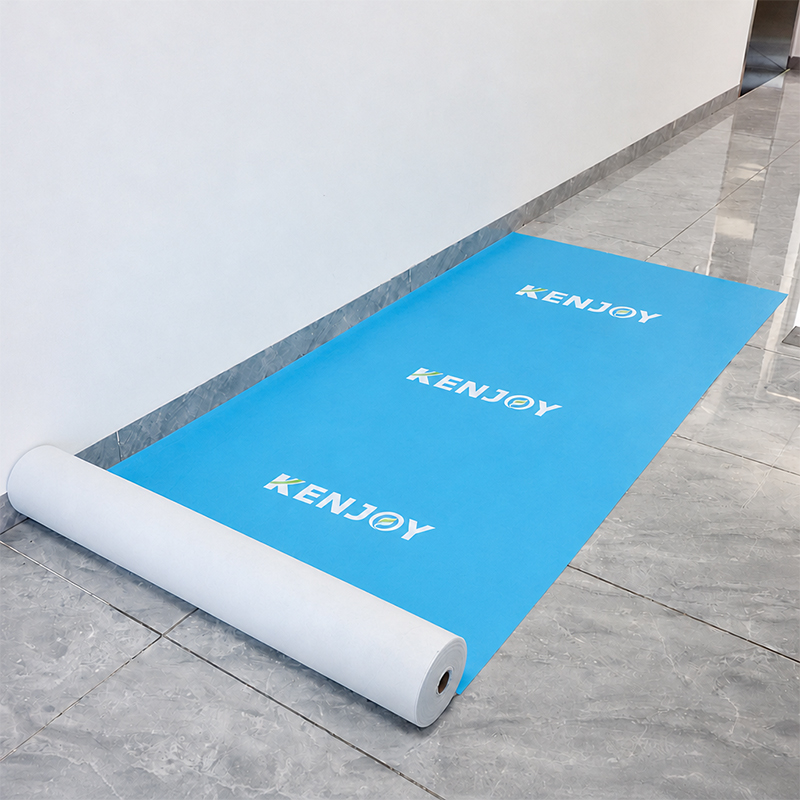
If the product requires logo printing, the artwork and physical sample should also be approved before mass production. Specific print placement, repeat spacing, color appearance, and print acceptance criteria belong to the artwork and sampling process. These details should be handled through a dedicated print approval procedure rather than making them the focus of channel planning.
Buyers who want to explore branded printing options can visit the private label floor protection fleece product page to learn more about the relevant product offering and customization direction.
How Can Buyers Plan a Product Range Without Launching Too Many SKUs?
More models do not automatically make a private-label product range better. Each additional SKU may create extra work in product management, inventory, packaging design, and replenishment coordination.
During the initial development stage, buyers can build a product range around their main customer groups and decide whether to expand it after reviewing actual sales feedback.
First, distinguish essential requirements from optional preferences. Essential requirements determine whether a product can serve the target market, while optional features can be considered after market demand has been validated.
Next, assess whether different products genuinely serve different customers or applications. If two models have almost identical uses, customer groups, and purchasing reasons, changing an unimportant visual detail may not create meaningful product differentiation.
Then, consider the practical complexity of inventory and replenishment. The product range affects not only sales but also demand forecasting, warehouse planning, and repeat-order management.
Finally, establish criteria for evaluating new products. These may include customer inquiries, actual orders, repeat-purchase performance, and customer feedback. Use these signals to decide whether the range should be expanded.
For distributors and retail brands, starting with a small number of clearly positioned products and expanding in response to market demand is generally easier to manage than launching many models without sales validation.
Why Must Initial Products and Repeat Orders Remain Consistent?
The value of a private label is built through ongoing sales, not simply by printing a logo on the first production batch.
If replenishment products differ noticeably from the original products, customers may find changes in color, dimensions, material construction, packaging, or product identification. This increases the explanation burden for distributors and may affect end customers' trust in the brand.
Buyers should therefore consider repeat-order management from the beginning of product development.
Core product identity information should be clearly documented, including the product model, intended applications, confirmed specifications, brand identity, and packaging version. Details that affect product use or sales identification should be recorded and agreed upon by both parties as a reference for future orders.
If the product construction, packaging, or brand design needs to change later, the changes should be clearly documented, and the effective date of the new version should be confirmed. This helps prevent different versions from being confused during sales and inventory management.
It is important to distinguish channel product planning from batch quality inspection. Product identity and brand information consistency are within the scope of this article. Detailed acceptance criteria for GSM, thickness, dimensions, and composite performance should be addressed through a dedicated quality-control process.
What Should Buyers Tell a Factory When Requesting a Private-Label Quotation?
If buyers contact a factory and simply ask for customized floor protection rolls, the factory may not fully understand the product's commercial positioning.
For a private-label project, buyers should first explain their target customers, sales channels, and product applications before discussing the specific product solution.
For example, they can clarify whether the products will mainly serve professional contractors, building material distributors, retail stores, or e-commerce consumers. They should also explain whether they want to brand an existing product or develop a new product line.
Next, describe the intended product positioning and any requirements that have already been established. If all material specifications have not yet been finalized, buyers can provide existing product samples, reference images, or examples of competing products in their target markets to help the factory understand their expectations.
For branding, explain whether the project requires a logo, brand labels, retail packaging, or other product identification elements. For products intended for ongoing sales, discuss repeat orders, product version management, and long-term supply arrangements in advance.
With this information, the factory can better assess the material options, manufacturing feasibility, sampling requirements, and quotation conditions.
For buyers seeking customized materials, working with a needle punched nonwoven felt manufacturer that has actual production capabilities, understands material construction, and supports OEM/ODM cooperation can help connect channel requirements with a suitable manufacturing solution.
Established in 2005, HuiZhou JinHaoCheng Nonwovens Co., Ltd. has long-term experience in nonwoven material development and manufacturing. Its product range includes floor protection rolls, needle-punched felt, and other customized nonwoven materials. Overseas importers, wholesalers, and distributors planning private-label products can discuss suitable product solutions and supply requirements according to their target applications and sales channels.
Conclusion: Start with the Sales Channel Before Defining the Private-Label Product
Developing private-label floor protection fleece is not primarily about adding a logo or designing packaging. The first priority is to align the product with the target customers, sales methods, and market needs.
Professional contractor channels should prioritize practical job-site requirements and purchasing convenience. Building material distributors and wholesalers should focus on product range planning, inventory management, and long-term sales. Retail channels need clear application information, product identification, and details that consumers can understand easily.
Once these priorities are established, buyers can decide on brand identity, product range, packaging, and replenishment arrangements. This creates a more focused development process and makes the product line easier to manage over time.
For importers, wholesalers, building material distributors, and retail brands planning to develop private label floor protection fleece, the recommended approach is to define the target market and main customer groups first, then discuss a suitable product solution with a factory that supports OEM/ODM cooperation. Connecting channel positioning, product identification, and long-term supply planning can help build a clearer and more sustainable private-label product range.




