
How to Check Print Consistency Across Bulk Orders of Floor Protection Fleece
For importers, wholesalers, and brand owners purchasing custom-printed floor protection fleece, sample approval is only the starting point of production quality control. It does not guarantee that every roll in a bulk order will have the same print appearance.
During bulk production, different rolls may show variations in logo placement, color appearance, print repeat spacing, or areas where the graphics are incomplete. Even if these differences do not affect the product's basic function, they may affect brand presentation, product identification, and customers' perception of batch quality.
After approving a sample, buyers therefore need to define inspection methods, sampling coverage, documentation requirements, and procedures for handling nonconformities. For printed floor protection fleece, effective batch control should be based on the approved sample and artwork, rather than on an inspector's subjective judgment alone.
Why Does Sample Approval Not Guarantee Consistency Across a Bulk Order?
Sample inspection is usually intended to confirm whether the design and print appearance meet the buyer's requirements. Bulk inspection must go further and establish whether actual production continues to meet those requirements.
A single sample roll may reflect the results from one production period, one section of material, or one particular set of production conditions. Full production involves continuous processing and multiple rolls, so buyers should not assume that approving one sample guarantees identical print results throughout the entire order.
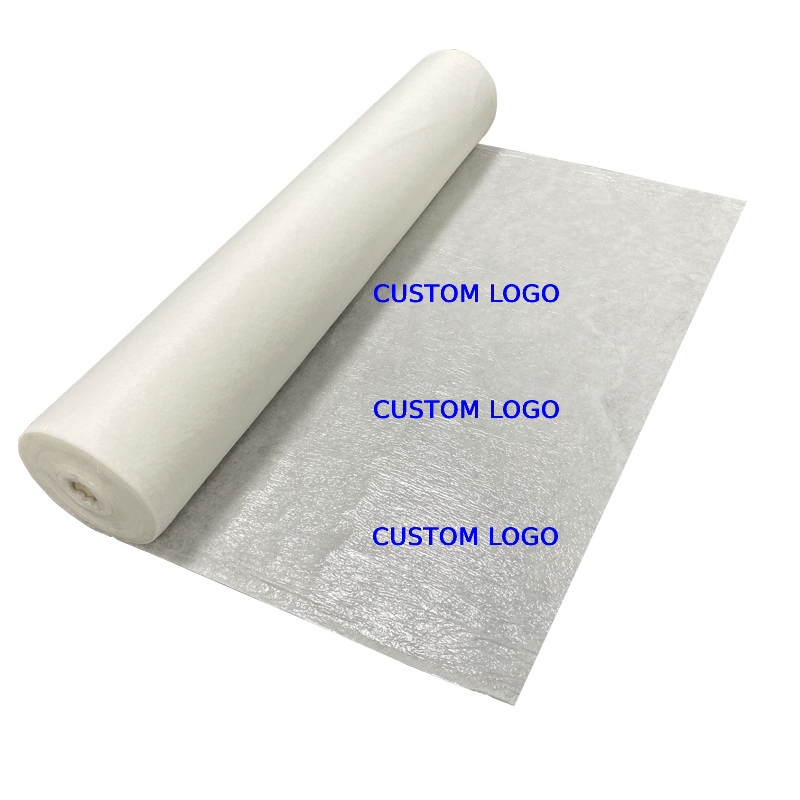
For branded floor protection rolls, variations may occur at different positions or between different rolls. For example, the logo position on the first roll may differ from that on subsequent rolls. Visible print variations may also appear between the beginning and the end of the same roll.
If buyers inspect the product only at the start of production, they may miss problems that develop later and discover them only after delivery or when customers begin unrolling the material.
This does not mean every order requires the same sampling rate. A suitable inspection plan should consider order quantity, production method, branding requirements, historical quality performance, and intended product use.
Sample approval establishes the acceptance reference; bulk inspection verifies whether production continues to meet that reference. These two stages are related, but neither can replace the other.
How to Establish a Reference Standard for Bulk Print Consistency
Before bulk production begins, the buyer and factory should agree on a clear reference standard for print inspection.
First, retain the final approved artwork and physical sample. The artwork confirms the required graphics, text, and layout, while the physical sample provides a reference for comparing the actual print appearance on the material.
Next, define which variations require correction. For example, an incorrect brand name, a significantly distorted logo, or missing essential text would generally be considered a problem that cannot be accepted as an ordinary visual variation.
For color, graphic position, and repeat spacing, buyers should agree with the factory on acceptable tolerances based on the brand requirements and the actual product. Without clear standards, different inspectors may reach different conclusions about the same batch.
Buyers should also distinguish critical requirements from minor visual variations. Errors involving the brand name, contact details, or other essential information should be handled separately from minor appearance differences. An overall visual assessment should not replace checks of individual requirements.
If an order includes different colors, material constructions, or print versions, each version should have its own applicable reference standard. Approval of one sample should not automatically be treated as approval of every product version.
Finally, document these requirements in a format that both parties can access. This allows production teams, inspectors, and purchasing staff to follow the same standards during bulk production, shipment inspection, and repeat orders.
Why Should Buyers Inspect More Than the First Roll or Its Opening Section?
A continuous roll of material has considerable length. Inspecting only a small section cannot provide a complete picture of the entire order.
If buyers check only the beginning of the first roll, they may overlook variations in the remaining sections or miss problems that appear on other rolls.
A more effective approach is to establish a sampling plan in advance. Define which rolls will be inspected, which positions on each roll will be checked, and who will record the results.
For orders with a relatively low risk and a stable quality history, buyers may inspect a selected portion of the rolls according to an agreed plan. For first-time orders, recently changed artwork, large orders, or projects with a history of print defects, buyers may consider increasing inspection frequency or adding checkpoints during production.
Where practical, buyers can ask the factory to inspect products from the beginning, middle, and end of production to determine whether the print appearance changes significantly as production progresses.
Inspection positions should also be representative. In addition to the beginning of a roll, buyers can select the middle, end, or other agreed positions according to roll length and risk. Checking only the easiest sections to access may leave other problems undetected.
These approaches are guidelines for designing an inspection plan, not fixed sampling rates that apply to every order. The actual sample quantity, inspection frequency, and acceptance criteria should be agreed upon based on order risk and the requirements of both parties.
What Print Variations Should Be Recorded During Bulk Inspection?
Batch consistency inspection should not simply record a result as “pass” or “fail.” If a problem occurs, buyers also need to know where it happened, how much product may be affected, and whether delivery could be impacted.
Logo position and orientation
Compare the product with the approved sample and check whether the logo position and orientation meet the agreed requirements. For continuously printed rolls, also look for visible shifts in the graphics at different positions and determine whether any deviation exceeds the agreed tolerance.
Color and overall appearance
Compare the printed colors and overall visual appearance with the approved sample under lighting conditions that are as consistent as possible. Do not rely solely on phone photographs to judge color consistency, because lighting, exposure, and screen settings can all affect how colors appear.
If color is an important part of brand recognition, inspection should follow the agreed color reference or sample-comparison method.
Print repeat pattern
Check the repeat pattern of logos or other graphics along the length of the roll. Look for significant changes in spacing, irregular arrangements, or missing sections.
The purpose of this check is to verify that bulk production follows the approved layout requirements, not to reopen the original design discussion during bulk inspection.
Text and brand information
Check whether the brand name, website, telephone number, and other required information are complete. If bulk production contains missing text, incorrect information, or graphics that cannot be properly identified, record the specific location and determine which rolls may be affected.
Localized print defects
Record visible stains, incomplete graphics, missing print sections, or other defects. Whenever possible, document the location, appearance, and frequency of each issue.
Use photographs, roll numbers, production batch references, or other traceability information rather than relying on vague descriptions such as “poor printing.”
Consistent records help buyers and factories discuss problems more accurately, identify their possible causes, and determine whether additional inspection, rework, or a review of acceptance results is necessary.
How Should Buyers Handle Print Deviations Found During Bulk Production?
When a deviation is found, buyers should not immediately assume that the entire order is defective. However, they should not ignore the issue simply because most of the rolls appear acceptable.
The first step is to identify the type of problem. Determine whether it involves incorrect brand information, missing graphics, position changes, color differences, or another agreed inspection requirement.
The second step is to establish the extent of the problem. Buyers should distinguish between a defect limited to one roll or section and a recurring issue affecting multiple rolls. If the scope remains unclear, expand the inspection rather than drawing conclusions about the entire order from a few samples.
The third step is to compare the findings with the approved standard and production records. Buyers can ask the factory to review the approved sample, artwork, and relevant production records to determine whether the observed deviation exceeds the agreed acceptance criteria.
The fourth step is to agree on a resolution. Depending on the severity of the problem, the affected quantity, and the contractual requirements, possible actions may include additional inspection, isolating affected products, rework, replacement production, or another mutually agreed solution. The appropriate response should be determined by both parties based on the actual situation.
Errors in brand names or missing essential information should not automatically be accepted simply because the rest of the product looks satisfactory.
After the issue has been resolved, retain the problem description, relevant photographs, affected product range, and final disposition. These records help both parties determine whether the problem recurs and provide a reference for improving future orders.
How to Maintain Print Records for Repeat Orders
For private-label products intended for long-term sales, print consistency affects not only the current order but also future replenishment and customer recognition of the brand.
Buyers should therefore retain approved samples and inspection records as part of their product management process.
First, assign a clear version identifier to the final approved artwork. If the logo, color, text, or layout changes later, document the differences between the old and new versions and confirm whether the changes require another sample review.
Next, record which artwork version and product version are used for each order. If the same brand includes different colors, material constructions, or roll specifications, purchasing and production records should clearly distinguish between them.
Then, retain bulk inspection results, including the sampling coverage, inspected positions, detected problems, and final actions. If the same deviations occur repeatedly, use historical records to adjust the inspection plan for future orders.
If the buyer changes suppliers or production arrangements, confirm that the new production conditions can meet the existing print requirements. Previous approval records alone do not guarantee that a new product will achieve the same results.
These records do not need to become a complicated document system. They simply need to be clear enough for purchasing staff, factory teams, and inspectors to determine which standards apply to the current order.
What Should Buyers Ask Factories to Confirm About Bulk Print Quality?
Before placing an order, buyers should ask how the factory manages print quality from sample approval through bulk production and delivery.
First, confirm whether the factory can retain the final approved artwork and physical sample and use them as inspection references during production.
Next, discuss the bulk inspection plan, including sampling coverage, inspection checkpoints, recordkeeping methods, and procedures for handling deviations. The plan should be based on order quantity and risk rather than relying on vague statements such as “strict quality control” without defined procedures.
Then, confirm how print defects will be reported. Buyers should understand what information the factory will record, how it will determine the affected quantity, and how both parties will approve rework or other corrective actions.
For repeat orders, also confirm how artwork versions and related product requirements will be communicated to subsequent production teams. This helps prevent unapproved changes to the same branded product across different orders.
For buyers looking for a needle-punched nonwoven felt manufacturer that can support branded customization and bulk production, manufacturing capabilities are only one consideration. Clear communication about sample approval, bulk inspection, and repeat-order management is also important.
Established in 2005, HuiZhou JinHaoCheng Nonwovens Co., Ltd. specializes in nonwoven material development and manufacturing, with experience in needle-punched nonwovens, composite materials, and customized processing. Overseas buyers sourcing custom-printed floor protection rolls can discuss bulk print inspection standards and future replenishment requirements alongside product construction, brand artwork, and order specifications.
Conclusion: Turn Sample Approval into an Actionable Bulk Inspection Standard
Print consistency across floor protection rolls cannot be established by checking only the first roll or a short section of material. Buyers need a clear acceptance reference before bulk production and a practical sampling plan based on order risk.
During production and before shipment, inspect representative rolls and positions. Record variations in logo placement, color, repeat patterns, text, and other agreed requirements. When a deviation is found, determine its scope, compare it with the approved standard, and agree with the factory on an appropriate resolution.
For branded products intended for long-term sales, retain artwork versions, approved samples, and bulk inspection records so that future replenishment has a clear reference.
By connecting sample approval, bulk inspection, and deviation handling, buyers can manage the brand consistency of printed floor protection fleece more effectively and reduce communication costs caused by unclear acceptance standards.




