
PP Needle-Punched Cool Cloth for Furniture Production: How to Check Roll and Converting Compatibility
For sofa, mattress, and other upholstered furniture manufacturers, purchasing PP needle-punched cool cloth involves more than comparing the weight per square meter or the price per roll. Whether the material can run smoothly on a production line also depends on its roll specifications, fiber structure, mechanical properties, and compatibility with the actual converting processes.
Even when two materials are both made from PP needle-punched nonwoven fabric, differences in GSM, thickness, width, and fiber structure can affect their softness, strength, tear resistance, and processing behavior. If the material does not match the production equipment or the requirements of the finished component, problems may occur, such as unstable cutting dimensions, material deformation during processing, edge tearing, or inconsistent performance between batches.
Therefore, when sourcing PP needle-punched cool cloth, furniture manufacturers should first identify the material's position in the finished product and the processes it will go through. The specifications should be selected according to these requirements rather than copied directly from another supplier's standard product.
What Is PP Needle-Punched Cool Cloth?
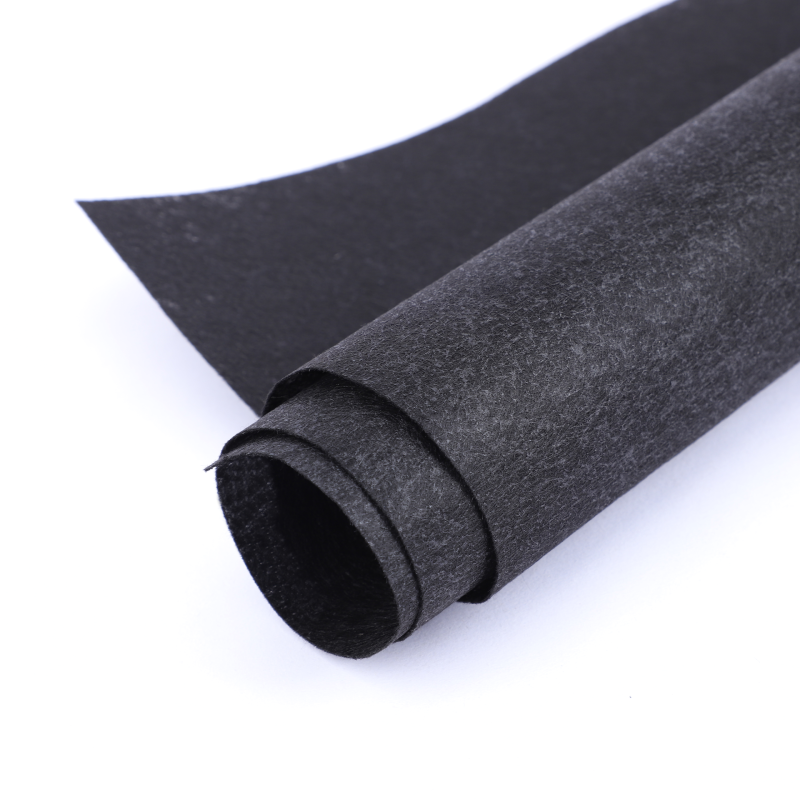
PP needle-punched cool cloth is a nonwoven material mainly made from polypropylene (PP) fibers. It is manufactured through a needle-punching process in which fibers are mechanically entangled to form a fabric structure.
Unlike conventional woven fabrics, needle-punched nonwovens are not formed by interlacing warp and weft yarns. Instead, barbed needles repeatedly penetrate a fiber web, causing fibers in different areas to become entangled and creating a material with a certain thickness, structure, and mechanical properties.
In furniture manufacturing, PP needle-punched nonwoven fabric can be considered as an auxiliary material. Whether it is suitable for a particular sofa or mattress component depends on the product design, material requirements, and actual processing methods.
Buyers should understand that PP needle-punched nonwoven fabric is not a product with one fixed specification. Different fiber compositions, GSM levels, thicknesses, and needle-punched structures can result in different material characteristics.
Therefore, the product name alone is not enough to determine whether a particular material is suitable for a furniture production line.
Why Should Furniture Manufacturers Evaluate the Material by Its Production Process?
Furniture manufacturers usually purchase roll materials not for direct use in their original form, but for further processing into components that meet the requirements of the finished product.
This means the material must meet both the requirements of the final component and the practical needs of the manufacturing process.
Before placing an order, buyers should identify whether the material will go through continuous unwinding, width cutting, contour cutting, sewing, stapling, or other fixing processes.
Different processes have different material requirements.
If the material needs to be continuously unwound and cut, buyers should pay attention to roll width, edge condition, thickness uniformity, and whether the material tends to shift during unwinding.
If the material needs to be sewn, buyers should check whether it can withstand needle penetration without excessive tearing, enlarged needle holes, or edge damage.
If the material needs to be fixed with a staple gun, samples should be tested using the actual equipment and fixing method to determine whether the material meets production requirements.
If the manufacturing process involves bonding, heat sealing, or ultrasonic processing, buyers should not assume that ordinary PP needle-punched nonwoven fabric is automatically suitable. The material structure, processing conditions, and equipment requirements should be checked before conducting practical trials.
The key purchasing question is not simply whether the material can be processed, but whether it can still meet the finished-component requirements after going through the customer's actual production process.
Which Roll Specifications Affect Furniture Manufacturing?
When purchasing PP needle-punched cool cloth, GSM, thickness, width, and roll length are basic specifications that need to be confirmed.
These parameters affect not only the material itself but also downstream production efficiency, material waste, and finished-product consistency.
GSM: Does the Fabric Weight Meet the Component Requirements?
GSM refers to the weight of the material per square meter. It is one of the most commonly used specifications when purchasing nonwoven fabrics.
Different furniture components may require different material weights. A lighter material can help control overall material consumption, while a higher-GSM material has more weight per unit area.
However, a higher GSM does not necessarily mean that the material is more suitable for furniture manufacturing.
If buyers select a material based only on GSM while ignoring thickness, fiber distribution, and actual processing requirements, the material may turn out to be too soft, too thick, too stiff, or unsuitable for the production equipment.
Buyers are advised to provide an existing material sample or explain the intended application and processing method. This allows the supplier to evaluate a suitable GSM range based on the actual requirements.
Thickness: Does It Match the Product Structure and Equipment?
Thickness affects the overall material structure, feel, and behavior during processing.
For furniture manufacturers, the material thickness must not only meet the component design requirements but also be compatible with the equipment used in subsequent processing.
If the material needs to be stacked in multiple layers, sewn, or fixed, its thickness should be evaluated in the actual product structure.
Buyers should also clarify the thickness measurement conditions. Different measurement pressures and methods may produce different results.
When approving samples, it is therefore advisable to record GSM, thickness, and the corresponding measurement method together. This helps prevent disagreements in later bulk orders caused by different measurement standards.
Width: Is It Suitable for the Production Equipment?
Roll width directly affects whether the material can match the customer's production equipment and cutting layout.
If the roll width is smaller than the actual production requirement, additional joining or changes to the cutting layout may be necessary. If the width is too large, material waste may increase.
Buyers should determine the required width according to the actual component dimensions, cutting layout, and effective processing width of their equipment.
They should also confirm whether the supplier's stated width is the nominal width or the actual usable width, and check the roll edges for obvious irregularities during sample inspection.
Roll Length and Packaging: Are They Suitable for Continuous Production?
In addition to width, roll length and packaging specifications can also affect production planning.
For production lines that require continuous unwinding, buyers should confirm the following details:
Whether the length of each roll meets the production plan.
Whether the weight of each roll is convenient for handling and installation.
Whether the paper core inner diameter matches the unwinding equipment.
Whether the roll outer diameter fits within the equipment's available space.
Whether the roll edges are neat and whether there are obvious problems such as loose winding, telescoping, or uneven winding.
These details may not be material performance properties, but they can directly affect actual production efficiency.
For long-term purchasing, buyers are advised to include the approved roll specifications in their purchasing requirements to avoid differences in packaging and equipment compatibility between batches.
Why Do Tensile Strength, Tear Resistance, and Fiber Uniformity Matter?
When purchasing PP needle-punched cool cloth, furniture manufacturers should look beyond GSM and thickness. They should also consider the material's mechanical behavior during processing and handling.
Tensile Strength
Tensile strength indicates the material's ability to resist breaking when subjected to a pulling force.
During roll unwinding, feeding, and processing, the material may be exposed to a certain amount of tension. If its strength is insufficient, continuous processing may be affected.
However, the material may perform differently in the machine direction and cross direction.
Buyers should therefore confirm whether the tensile properties need to be evaluated separately in the machine direction and cross direction according to the material's actual use and processing method.
Tear Resistance
Tear resistance refers to the material's ability to resist the propagation of a tear when local stress is applied.
If the material tears easily during cutting, sewing, or fixing, it may affect subsequent processing and finished-component quality.
For applications involving stitching, punching, or stapling, buyers should not rely only on the appearance of an unprocessed sheet. The material should be tested using the actual processing method.
For example, samples can be tested with the customer's actual stitch length, thread, staple gun, or fixing structure. The processed areas should then be checked for visible damage.
Fiber Distribution and Surface Uniformity
The fiber distribution in needle-punched nonwoven fabric affects its overall structure and appearance.
If there are obvious variations in thickness, uneven fiber distribution, or changes in surface condition across the same roll, cutting and subsequent processing may become less consistent.
Therefore, buyers should not inspect only one small area when approving samples.
It is advisable to take samples from different positions along the roll and compare their GSM, thickness, surface condition, and basic mechanical performance.
For long-term bulk purchasing, buyers should also confirm whether different production batches can be controlled according to the approved sample and specifications.
It is important to emphasize that tensile strength, tear resistance, and fiber uniformity must be evaluated using clearly defined test methods and actual samples. They cannot be determined from the product name or marketing description alone.
How Should Buyers Check Cutting, Sewing, and Fixing Compatibility?
This is an important step that furniture manufacturers should consider before purchasing.
A material that looks flat and intact at the supplier's factory is not necessarily suitable for the customer's production equipment.
For this reason, actual processing trials should be included in the sample approval process.
Cutting Tests
If the material needs continuous cutting or contour cutting, buyers should conduct trial cutting using their actual equipment.
The main points to check are whether the cut edges are neat, whether the material stretches or deforms easily, and whether cutting dimensions remain consistent in different areas.
If the customer uses automatic cutting equipment, it is also necessary to check whether the material shifts or wrinkles during feeding.
Sewing Tests
If the finished component requires sewing, the material should be tested using the actual sewing machine, needle type, stitch length, and thread.
Buyers should check whether tearing occurs around the stitching, whether needle holes become noticeably enlarged, and whether the material deforms after sewing.
Manual pulling of a sample is not a substitute for an actual sewing test.
Stapling and Mechanical Fixing Tests
Some furniture components may require a staple gun or another mechanical fixing method.
For these applications, samples should be tested according to the actual fixing position, spacing, and equipment settings.
During testing, buyers can check whether cracks, material separation, or visible deformation occur around the fixing points.
Bonding and Heat Processing Tests
If customers need adhesive bonding, heat pressing, or ultrasonic processing, they should inform the supplier of the specific process in advance.
The surface condition, structure, and processing conditions of PP materials can all affect the final result.
Therefore, ordinary needle-punched nonwoven fabric should not be assumed to be compatible with every bonding or heat-processing machine. Verification using actual samples and the customer's equipment is necessary.
For furniture manufacturers, the most reliable way to approve a material is to run it through the actual production process and then inspect whether the processed component meets the requirements.
Why Is Roll and Batch Consistency Important for Long-Term Purchasing?
For a one-time, small-volume order, the main purchasing consideration may be whether the sample meets the immediate requirements.
However, for importers, furniture manufacturers, and long-term buyers, a more important question is whether subsequent bulk orders can maintain the same material standards.
Significant differences in GSM, thickness, width, or surface condition between batches may affect production equipment settings, cutting layouts, and finished-component quality.
When placing the first order, buyers are advised to confirm and record the following items:
Inspection Item | What Buyers Should Confirm |
Raw material | PP fiber composition and whether other fibers are included |
GSM | Target GSM and allowable tolerance |
Thickness | Measurement method and allowable tolerance |
Width | Nominal width, usable width, and tolerance |
Roll length | Length per roll and allowable tolerance |
Appearance | Color, surface condition, and criteria for visible defects |
Mechanical properties | Required tensile and tear resistance tests |
Roll packaging | Paper core specifications, roll diameter, and packaging method |
Processing compatibility | Cutting, sewing, or fixing processes verified through sample testing |
Not every item is necessarily relevant to every order. Buyers should select the inspection requirements according to their actual manufacturing processes and quality standards.
For repeat purchasing, it is also advisable to keep approved samples and specification records as references for the inspection of future orders.
What Information Should Buyers Provide Before Requesting a Quotation?
If buyers provide only a product name such as "PP needle-punched nonwoven" or "cool cloth", the supplier may not have enough information to determine the required specifications accurately.
To make the quotation process more efficient, furniture manufacturers are advised to provide the following information:
Quotation Information | Details to Provide |
Final application | Sofa, mattress, or another furniture component |
Installation position | The specific position of the material in the finished product |
Material requirements | 100% PP or whether mixed fibers are acceptable |
GSM | Target GSM or reference sample |
Thickness | Required thickness or existing material sample |
Width | Equipment requirements or component dimensions |
Roll length | Required length per roll |
Color | Black, white, gray, or other requirements |
Processing method | Cutting, sewing, stapling, bonding, or another process |
Mechanical properties | Specific tensile, tear resistance, or other testing requirements |
Order quantity | Initial order quantity and estimated long-term demand |
Packaging requirements | Roll weight, paper core specifications, labels, and packaging method |
If customers have existing material samples, product drawings, or information about their processing equipment, these should also be provided.
Such information helps the supplier understand the purchasing requirements more accurately and determine whether the material specifications need to be adjusted or further sample testing is required.
For furniture manufacturers seeking a stable long-term supply, it is advisable to complete sample approval before bulk production and record the final approved material specifications, processing requirements, and acceptance criteria.
Conclusion: Confirm Production Compatibility Before Finalizing PP Needle-Punched Cool Cloth Specifications
When purchasing PP needle-punched cool cloth, furniture manufacturers should not focus only on GSM, thickness, and price.
Whether the material is suitable for actual production also depends on its fiber structure, mechanical properties, roll specifications, processing equipment, and the design requirements of the finished component.
A more practical purchasing process is to identify the material's intended application and production processes first, then determine the required GSM, thickness, width, roll length, and mechanical properties. Finally, actual sample testing should be used to verify processing compatibility.
Furniture manufacturers interested in sourcing PP needle-punched nonwoven rolls can provide their intended application, existing samples, equipment requirements, and purchasing specifications to HuiZhou JinHaoCheng Nonwovens Co., Ltd. for further discussion of a suitable material solution.
Remember: A material suitable for furniture production must not only meet the required specifications but also maintain consistent performance during actual processing.




