
Cleaning Cloth Lint and Surface Marks: What Should Buyers Check Before Choosing a Wiping Material?
When sourcing a nonwoven cleaning cloth, buyers often focus on absorbency, material composition, weight, thickness, and price. However, another important factor can affect the user experience: whether the cloth leaves loose fibers, lint, streaks, or water marks after wiping.
These issues are particularly noticeable when cleaning glass, stainless steel, furniture, and other smooth surfaces. A cloth may feel soft and absorb water well, but that does not automatically mean it will leave a clean surface after use.
For importers, wholesalers, distributors, and cleaning product brands, evaluating these details during sample approval can help reduce product complaints and avoid problems after bulk production.
This article explains the differences between common wiping residues, the factors that may affect cleaning performance, and how buyers can evaluate a wiping cloth before placing a bulk order.
Are Lint, Fiber Residue, Streaks, and Water Marks the Same Problem?
Not necessarily. Although these issues may all appear as unwanted marks after cleaning, they have different causes and should be evaluated separately.
Lint or fiber shedding refers to small fibers becoming detached from the cloth during wiping. These fibers may remain on the cleaned surface or become visible under certain lighting conditions.
Fiber residue refers to loose fibers left behind on the surface after wiping. It may come from the cloth itself, particularly when fibers are not sufficiently secured within its structure. Fiber residue is often more noticeable on glass, dark surfaces, and polished materials.
Streaks or smearing are visible lines or uneven marks left after wiping. They may result from grease, cleaning agents, dirt, moisture, or the way the cloth interacts with the surface. They should not automatically be treated as evidence of fiber shedding.
Water marks are marks left when moisture dries unevenly on a surface. Water quality, the amount of water used, surface conditions, and wiping methods can all influence their appearance.
For buyers, distinguishing these problems is important. A cloth that leaves streaks may not necessarily be shedding fibers, while a cloth that absorbs water effectively may still leave visible residue.
Therefore, sample evaluation should record each type of result separately instead of using a general description such as “poor cleaning performance.”
Why Does a Cleaning Cloth Leave Fibers or Marks on a Surface?
Several factors may contribute to fiber residue or visible wiping marks. Buyers should consider the cloth's material, surface structure, construction, and actual cleaning conditions.
First, fiber composition can influence the behavior of a cleaning cloth. Different fibers have different characteristics in terms of softness, strength, water absorption, and surface interaction. Polyester, viscose, bamboo fiber, and blended materials may perform differently depending on their specifications and manufacturing structure.
Second, surface structure affects how the cloth contacts the surface being cleaned. A flat surface and a more textured surface may behave differently during wiping. The structure can influence contact, friction, and how dirt or moisture is picked up.
Third, fiber stability matters. If loose fibers are not adequately retained within the nonwoven structure, they may become detached during repeated wiping. The degree of fiber integration and the consistency of the material can therefore affect the amount of visible residue.
Finally, cleaning conditions also matter. Dry wiping, damp wiping, repeated friction, the use of cleaning agents, and the condition of the target surface can all influence the result.
A single visual inspection or hand-feel assessment cannot reliably determine whether a cloth will leave lint or marks during actual use. Buyers should evaluate samples under conditions that reflect their intended applications.
Which Surface Characteristics Matter When Choosing a Wiping Cloth?
A suitable cleaning cloth should be evaluated according to the surface it is intended to clean. Different materials may have different requirements for softness, surface contact, and visible residue.
Glass surfaces
Glass makes loose fibers, streaks, and water marks relatively easy to notice, especially under direct light. Buyers selecting a cloth for glass should pay attention to fiber residue, wiping marks, and the appearance of the surface after it dries.
Stainless steel surfaces
Stainless steel may show fingerprints, smearing, water marks, and wiping lines. Its surface finish and wiping direction can influence the final appearance. Buyers should test the cloth on the actual type of stainless steel used in their application.
Furniture and coated surfaces
Furniture may have painted, laminated, polished, or coated finishes. In these applications, softness and surface compatibility are important considerations. Buyers should check whether the cloth causes visible marks or unwanted friction during use.
Other smooth or sensitive surfaces
Some applications involve surfaces where small fibers, scratches, or residue are especially noticeable. In these cases, buyers should confirm the intended application and test the selected material before approving it for production.
There is no single cloth structure that is automatically suitable for every surface. The most appropriate material depends on the target surface, cleaning method, and performance requirements.
How Should Buyers Test a Cleaning Cloth for Lint and Surface Residue?
Before placing a bulk order, buyers can carry out a simple sample evaluation using the actual surface they intend to clean.
The purpose is not to replace professional laboratory testing. It is to identify visible differences between samples and determine whether a material is suitable for the intended application.
1. Prepare the target surface
Select a representative surface, such as glass, stainless steel, or a furniture finish. Clean it before testing so that existing dirt, grease, or fibers do not affect the results.
2. Conduct a dry wiping test
Use the cloth without adding water or cleaning agents. Wipe the surface under consistent conditions and observe whether loose fibers, lint, or visible marks remain.
3. Conduct a damp wiping test
Moisten the cloth with a consistent amount of water and repeat the wiping process. Observe whether the cloth leaves fibers, streaks, or water marks after wiping.
4. Check the surface under suitable lighting
Inspect the surface from different angles. Direct light or side lighting can make small fibers and streaks easier to identify, particularly on glass and polished surfaces.
5. Repeat the wiping process
A single wipe may not reveal all potential issues. Repeat the test using the same cloth and wiping method to see whether fiber residue or visible marks become more noticeable.
6. Record and compare the results
When comparing different samples, keep the test surface, wiping method, moisture level, and observation conditions as consistent as possible. Record lint, loose fibers, streaks, and water marks separately.
This makes it easier to compare materials objectively and discuss the results with the supplier before confirming the final specification.
How Can Buyers Tell Fiber Residue from Streaks and Water Marks?
When a surface does not look clean after wiping, buyers should identify what has actually been left behind before deciding that the cloth is unsuitable.
Loose fibers may appear as small strands or particles on the surface. They may be more visible on dark or smooth materials and can sometimes be removed by another wipe.
Streaks usually appear as lines or uneven areas. They may be associated with grease, cleaning agents, dirt, or uneven moisture distribution rather than loose fibers.
Water marks often become visible after the surface dries. They may appear as spots, rings, or irregular marks, depending on the water and surface conditions.
A useful way to distinguish these results is to compare the surface before wiping, immediately after wiping, and again after it has dried.
If necessary, buyers can repeat the test using a clean, dry cloth or a different cleaning method to help identify whether the residue comes from the cloth, the cleaning agent, the water, or the surface itself.
This distinction is important when discussing sample results with a supplier. Instead of simply reporting that a cloth “leaves marks,” buyers should describe the appearance, location, and conditions under which the marks occur.
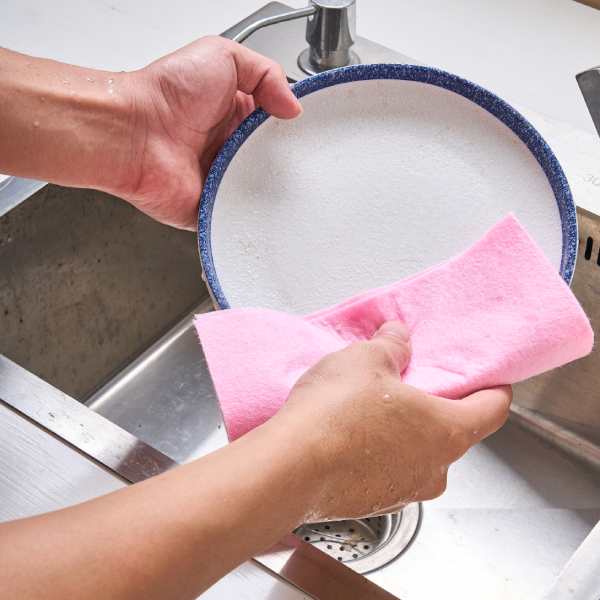
How Do Fiber Composition and Surface Structure Affect Wiping Performance?
The composition and construction of a nonwoven cloth can influence its wiping behavior. However, no single material characteristic can guarantee that a cloth will be lint-free or leave no visible marks.
Fiber composition
Polyester, viscose, bamboo fiber, and blended materials have different physical characteristics. These differences may influence softness, water absorption, strength, and the way fibers interact with a surface.
The most suitable composition depends on the intended cleaning application. Buyers should evaluate the finished cloth rather than selecting a material based only on its fiber name.
Surface structure
The surface structure determines how the cloth contacts the target material. Different surface structures may provide different levels of texture and contact during wiping.
For this reason, buyers should confirm whether the supplier can provide different surface structures and whether the selected structure is appropriate for the target application.
Weight and thickness
Weight and thickness affect the overall construction and handling characteristics of a cloth. However, higher GSM or greater thickness does not automatically mean better wiping performance or lower fiber shedding.
Buyers should consider these specifications together with the material composition, surface structure, and actual sample results.
Manufacturing consistency
Consistency between samples and bulk production is also important. Even when an approved sample performs well, buyers should confirm that the material specifications and production requirements can be maintained throughout the order.
The existing needle-punched cleaning cloth product range from HuiZhou JinHaoCheng Nonwovens Co., Ltd. includes polyester, viscose, bamboo fiber, and customized blended materials. Options such as GSM, thickness, dimensions, color, surface structure, and packaging can be customized. Actual specifications and performance should be confirmed according to the selected product model and mutually approved sample.
How Should Buyers Set Lint and Surface Residue Requirements Before Bulk Orders?
If linting and surface residue are important to the final application, buyers should include these requirements in the sample approval process rather than relying only on general product descriptions.
Before confirming an order, buyers should clarify the following points with the supplier:
Target cleaning surface: Specify whether the cloth will be used on glass, stainless steel, furniture, or another material.
Wiping conditions: Explain whether the cloth will be used dry, damp, or with a cleaning agent. If repeated wiping is expected, include that condition in the sample evaluation.
Visible residue requirements: Describe the acceptable level of loose fibers, lint, streaks, and water marks. Avoid using vague descriptions such as “perfect cleaning” without defining what should be observed.
Sample approval method: Confirm the sample size, test surface, wiping method, and observation conditions. Both parties should understand how the sample will be evaluated.
Product specifications: Confirm fiber composition, GSM, thickness, dimensions, surface structure, and other relevant specifications.
Bulk production consistency: Clarify which approved specifications and appearance requirements should be maintained during production and inspection.
For applications requiring particularly strict particle or lint control, buyers should also ask whether the supplier has relevant test reports, inspection records, or certifications.
Ordinary cleaning cloth sample evaluations should not be confused with cleanroom wiping cloth testing. If the application requires controlled particle levels or specialized contamination standards, buyers should specify the applicable requirements and request supporting documentation.
Clear acceptance criteria help reduce misunderstandings and make it easier to evaluate whether the delivered product matches the approved sample.
What Should Buyers Confirm When Sourcing Nonwoven Cleaning Cloth?
When comparing nonwoven cleaning cloth suppliers, buyers should look beyond price and basic absorbency. The following information can help determine whether a product is suitable for the intended application:
Material composition: Confirm whether the cloth is made from polyester, viscose, bamboo fiber, or a blended material.
Weight and thickness: Check whether the specifications meet the requirements for the intended cleaning task.
Surface structure: Ask which surface structures are available and whether they can be customized.
Wiping performance: Evaluate the cloth on the actual target surface under dry and damp conditions.
Fiber residue and visible marks: Record whether the sample leaves lint, loose fibers, streaks, or water marks.
Customization options: Confirm available sizes, colors, packaging, and other product specifications.
Quality consistency: Discuss how the supplier controls material specifications, appearance, and batch consistency during production.
Buyers can also compare different cleaning cloth products to understand the available material and construction options before selecting a suitable product.
The key is to connect product specifications with actual application requirements. A cloth that performs well for general household cleaning may not automatically be suitable for glass, polished stainless steel, or other surfaces where visible residue is a concern.
Conclusion: Test the Cloth on the Surface It Is Intended to Clean
A cleaning cloth should not be judged only by its softness, absorbency, or appearance. Lint, loose fiber residue, streaks, and water marks are different issues, and each should be evaluated separately.
For buyers, the most practical approach is to test samples on the actual target surface, compare dry and damp wiping results, repeat the wiping process, and record visible residue under consistent conditions.
Before bulk purchasing, confirm the material composition, surface structure, product specifications, and acceptance requirements with the supplier. If low-lint or particle-control performance is essential, request relevant test evidence rather than relying on general marketing descriptions.
A clear sample approval process helps buyers select a more suitable wiping cloth, communicate requirements accurately, and reduce the risk of performance-related complaints after delivery.




