
What Benefits Does Wool Add to Needle Punched Felt?
When buyers are considering needle punched felt, adding wool can change the material’s feel and performance. But what does wool actually add to needle punched felt? For buyers developing products that require warmth, softness, resilience, or natural fiber content, understanding the role of wool can help determine whether a wool blend needle punched felt is suitable.
What Changes When Wool Is Added to Needle Punched Felt?
Wool is a natural fiber with different characteristics from commonly used synthetic fibers. When wool is incorporated into needle punched felt, it can influence the material’s thermal comfort, hand feel, resilience, cushioning properties, and natural fiber content.
The actual result depends on the wool content, fiber blend, material structure, and production requirements. Therefore, adding more wool does not automatically mean the finished felt will be better for every product.
Wool Can Improve Thermal Comfort
One of the main reasons buyers consider wool is its contribution to thermal comfort.
Wool fibers can help create a material structure that provides good warmth and insulation. This makes wool-containing needle punched felt worth considering when the finished product needs a warmer and more comfortable material.
For buyers developing products where thermal comfort is important, wool needle punched felt can provide a different material option from standard synthetic needle felt.
However, thermal performance should still be evaluated according to the actual product requirements rather than judged only by the presence of wool.
Wool Adds Softness and Natural Hand Feel
Wool can also change how needle punched felt feels when touched.
Compared with some synthetic fibers, wool can provide a softer and more natural hand feel. This can be valuable for products where surface comfort and material feel are part of the product experience.
For manufacturers and brands developing products that need a more natural-feeling textile material, wool blend felt can therefore provide an additional material choice.
The final hand feel is not determined by wool alone. Fiber blending, needle punching, density, thickness, and finishing can also affect the finished material.
Wool Can Contribute to Resilience and Cushioning
Wool fibers can also contribute to the resilience and cushioning characteristics of needle punched felt.
When the material is designed with an appropriate fiber blend and structure, wool-containing felt can provide a combination of softness and resilience. This can be useful when the finished product needs a material that feels comfortable while maintaining its structure during use.
For buyers evaluating wool needle felt properties, it is therefore important to consider the overall material structure rather than looking at wool content alone.
Natural Wool Content Can Add Product Value
Another reason buyers consider wool is the natural fiber content itself.
Wool is a natural fiber, and incorporating it into needle punched felt can give manufacturers an option for products where natural material content is an important part of the product concept.
For some brands, the use of wool can also support a more natural material positioning compared with products made entirely from synthetic fibers.
However, the value of wool should still be considered together with the product’s actual functional requirements, material composition, and target market.
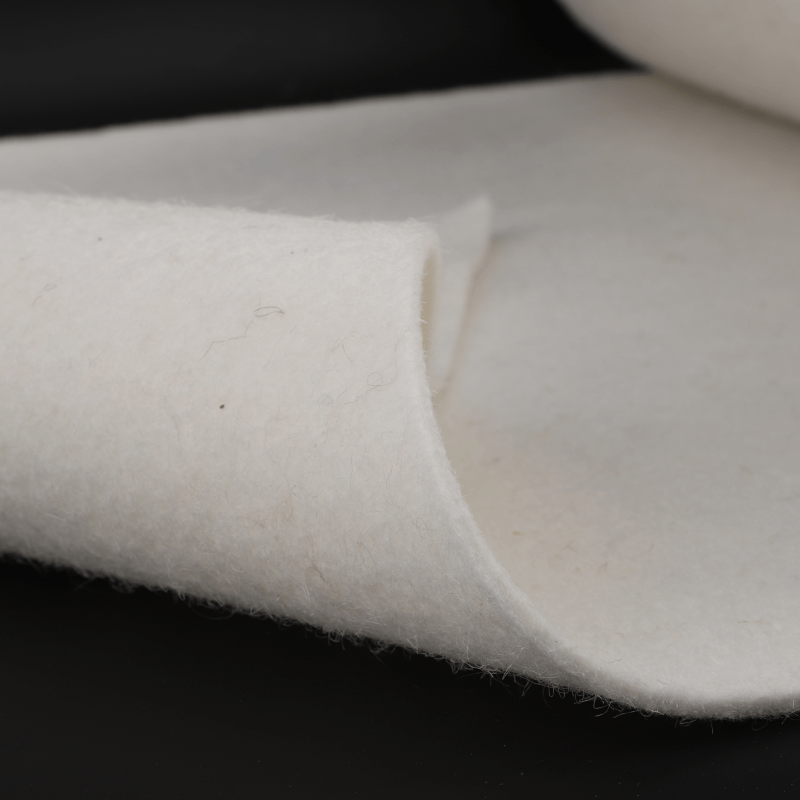
Does More Wool Always Mean a Better Material?
No. A higher wool content does not automatically mean better performance for every product.
Different products have different requirements for softness, resilience, thermal comfort, durability, structure, and cost. A material with a higher wool percentage may not be the most suitable option if the product requires characteristics that depend on other fibers.
For this reason, buyers should evaluate the wool blend needle punched felt as a complete material rather than selecting it only according to wool percentage.
The right fiber blend should be determined by the intended product requirements and the performance expected from the finished felt.
When Should Buyers Consider Wool Blend Needle Punched Felt?
Buyers can consider wool blend needle punched felt when their product may benefit from the characteristics that wool can add to the material.
It may be worth considering when the product requires:
Warmth or thermal comfort
A softer and more natural hand feel
A combination of softness and resilience
Natural wool fiber content
A wool-based material concept
The purpose is not simply to use as much wool as possible, but to find a fiber composition that provides the right balance for the finished product.
What Should Buyers Confirm Before Ordering Wool Blend Felt?
Before placing an order, buyers should confirm several basic material requirements with the supplier.
First, confirm the wool content and overall fiber composition. The wool percentage can affect the characteristics of the finished material, so the composition should be clearly defined.
Second, confirm the required GSM and thickness according to the product’s actual requirements.
Third, discuss the expected softness, resilience, and firmness of the material. These characteristics can vary depending on the fiber blend and production structure.
Finally, confirm whether the supplier can consistently produce the required material according to the agreed specifications.
These points help buyers make sure that the wool blend felt they order matches the material they evaluated during product development.
How Jinhaocheng Develops Wool Blend Needle Punched Felt
At HuiZhou JinHaoCheng Nonwoven Co., Ltd., wool blend needle punched felt can be developed according to different product requirements.
With experience in needle punched nonwoven production, the company can work with different fiber compositions and material structures to develop wool-containing felt for specific product requirements.
The focus is not simply on increasing wool content. Instead, the material needs to be developed around the required combination of fiber composition, GSM, thickness, softness, resilience, and finished-product requirements.
For overseas buyers, this approach can make it easier to discuss material requirements directly with a manufacturer and develop a suitable wool blend felt material.
Conclusion
Wool can add several characteristics to needle punched felt, including thermal comfort, softness, resilience, cushioning, and natural fiber content.
However, more wool does not automatically mean a better material. The right wool needle punched felt depends on the product requirements, fiber composition, material structure, and expected performance.
For buyers considering wool blend felt, the key is to understand what wool can contribute and then confirm the appropriate material composition and specifications with the supplier before ordering.




