Which Microgreens Grow Well on Jute Mats? Start with the Seed Type
When choosing jute microgreens grow mats, buyers should not rely solely on whether a product is labeled for microgreens cultivation. Radish, broccoli, pea shoots, sunflower shoots, wheatgrass, and selected micro herbs differ in seed size, root development, sowing density, and growth habits. These differences can affect seed-to-mat contact, seedling support, and subsequent growing performance.
For microgreens growers, growing mat distributors, and private-label buyers, a more practical approach is to identify the target crop first and then evaluate the mat's fiber structure, thickness, support properties, and moisture-management requirements. Whether a jute growing mat is suitable for a particular crop depends on the specific product structure and actual growing conditions, not simply on the material name.
What Seed Characteristics Should You Check Before Choosing Jute Microgreens Grow Mats?
Three factors are particularly useful when evaluating whether seeds are compatible with a growing mat.
Seed Size and Contact with the Mat
Seed size can affect sowing methods and the degree of contact between seeds and the mat surface. Smaller seeds generally need to be distributed evenly to avoid excessive concentration in certain areas. Larger seeds may require more space and stable contact with the moist growing medium. Specific requirements can also vary by crop variety and sowing method.
Root Development and Seedling Support
Different crops have different root structures and development rates. When purchasing growing mats, buyers should consider whether the fiber structure can provide suitable contact and support for seeds and emerging roots. They should also check for noticeable structural looseness or difficulty keeping seedlings supported during normal use.
Root development is also affected by temperature, moisture, seed vigor, and other growing conditions. It should not be attributed to the mat material alone.
Sowing Density and Growing Space
Microgreens do not all require the same sowing density. Seed size, the desired harvest form, cultivation methods, and ventilation conditions can all influence how densely seeds should be distributed. The growing mat should match the intended sowing method rather than being selected on the assumption that a thicker mat, denser structure, or greater water absorption is always better.
What Type of Growing Mat Works for Radish and Broccoli Microgreens?
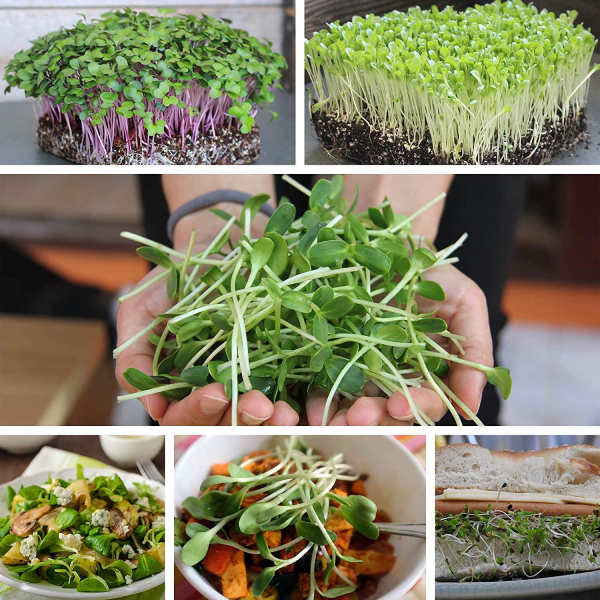
Radish and broccoli are common microgreens crops. Their seeds are generally smaller than pea and sunflower seeds, making sowing uniformity an important factor when evaluating growing mats.
For these crops, buyers can check whether seeds can be distributed evenly across the mat, whether they maintain good contact with the material, and whether emerging roots receive relatively stable support. If the mat structure is excessively loose, seeds tend to collect in certain areas, or noticeable dry spots develop during cultivation, buyers should investigate whether the mat structure, placement method, and moisture-management routine are compatible.
However, this does not mean that all radish or broccoli varieties require the same type of jute mat. Different varieties, seed batches, sowing densities, and growing environments can produce different results. Buyers should conduct small-scale trials with their target seeds before deciding whether a product is suitable for bulk use.
What Different Requirements Do Pea Shoots and Sunflower Shoots Have?
Pea and sunflower seeds are generally larger than radish and broccoli seeds. Their size can lead to different requirements for placement, water uptake, and early growth. Therefore, buyers should not automatically apply the same sowing approach used for smaller seeds.
When evaluating a growing mat, buyers should consider whether the material allows seeds to remain stable and provides suitable contact conditions for early root development. They should also consider the actual seed dimensions, growing container, sowing density, and cultivation method. During testing, observe whether seeds move easily, become overcrowded in certain areas, or cause the mat to lose the structural stability required as seedlings develop.
For these larger seeds, mat thickness and support performance should be evaluated according to the intended application rather than judged by thickness alone. Focusing on a single specification may overlook the relationship between seed-to-mat contact, sowing methods, and the overall growing system.
What Should You Consider When Growing Wheatgrass and Selected Micro Herbs?
Wheatgrass is often sown relatively densely. Its seed distribution, coverage, and root development can differ from those of other microgreens. Buyers looking for wheatgrass growing mats should therefore check whether the mat is suitable for their intended sowing density and whether its structure remains appropriate when wet.
For selected micro herbs, seed size, germination characteristics, and seedling growth rates can vary considerably. Results from testing one herb variety should not automatically be applied to all herb varieties. When sourcing micro herb growing mats, buyers should identify the specific seed variety, intended sowing method, and growing environment before arranging appropriate trials.
For wheatgrass and herb crops alike, the growing mat is only one part of the cultivation system. Seed quality, temperature, humidity, light, watering methods, air circulation, and routine management also influence the final results.
How Can You Use Small-Scale Trials to Evaluate Jute Microgreens Grow Mats?
Before placing a bulk order, buyers should conduct small-scale trials using their target seeds. Where possible, use the same seed batch, sowing density, container, and growing conditions to reduce the influence of other variables.
First, observe seed placement and initial contact. Record whether seeds can be distributed evenly and whether the mat surface shows noticeable gaps, accumulations, or unstable contact.
Next, monitor germination and root development. Record germination patterns across different areas, whether roots can establish stable contact, and whether seedlings show obvious support problems. Uneven germination does not necessarily mean that the growing mat is unsuitable; seed vigor and environmental conditions must also be considered.
Then, examine moisture distribution and mat structure. Observe whether some areas remain consistently drier or wetter than others, and whether the material develops unexpected deformation, looseness, or other structural changes when wet. Do not conclude from a single observation that the material is responsible for a problem. Consider the entire growing process before making a judgment.
Finally, record the results and repeat the trial when practical. Depending on the target crop, buyers can evaluate germination uniformity, seedling support, root condition, ease of handling, and batch consistency. When comparing products from different suppliers, keep testing conditions as consistent as possible and retain sample specifications and trial records.
These tests can help buyers assess whether a particular growing mat suits a specific crop and cultivation method. However, they cannot guarantee the same yield or growing performance across all varieties and environments.
What Should Buyers Confirm with Suppliers Before Bulk Purchasing Jute Microgreens Grow Mats?
After preliminary trials, buyers should confirm product specifications and bulk production requirements. For growing mat projects that require a reliable long-term supply, the following details deserve particular attention.
Material Composition and Product Structure. Confirm the fiber composition, whether other materials are included, and whether the actual structure meets the project's requirements. If the product must meet specific natural fiber content requirements or other material declarations, request the relevant information from the supplier.
GSM, Thickness, and Dimensions. Confirm that the product can meet the requirements of the intended growing system, and clearly define the agreed ranges for dimensions, GSM, and thickness. Do not assume that products sold under the same generic name by different suppliers have identical structures or performance.
Moisture Performance and Support Requirements. If the cultivation method has specific requirements for wetting behavior, wet-state structure, or seedling support, communicate them during quotation and sample approval. Verify them through appropriate testing rather than relying solely on broad product claims.
Sample and Bulk Production Consistency. Confirm the approved sample specifications, acceptance criteria, and bulk production requirements. For distributors, importers, and private-label buyers, defining critical specifications in advance can help reduce unexpected variations between production batches.
Customization and Supply Capacity. If the project requires specific dimensions, GSM, packaging, or other processing requirements, explain the intended application and order quantity in advance. A manufacturer with nonwoven R&D and production capabilities can discuss material structures and processing options based on clearly defined application requirements. Final performance should still be verified against approved samples and agreed product specifications.
For projects requiring customized growing mats or other nonwoven materials, HuiZhou JinHaoCheng Nonwovens Co., Ltd. can discuss material specifications and processing options based on the customer's application requirements. Before placing an order, buyers should confirm the specific product composition, specifications, testing requirements, and bulk delivery conditions.
Conclusion: Match the Mat to the Seed Before Confirming Bulk Specifications
Whether a jute growing mat is suitable for a particular microgreens crop cannot be determined by the crop name alone. Radish and broccoli require attention to small-seed distribution and contact. Pea shoots and sunflower shoots require consideration of larger seed placement, growing space, and support needs. Wheatgrass and selected micro herbs should be evaluated according to their sowing density, seed characteristics, and specific cultivation methods.
For growers and buyers, a more reliable process is to define the target crop and growing method first, then conduct small-scale trials to observe seed contact, root development, moisture distribution, and mat structure. The next step is to confirm the product specifications required for bulk production.
If you are sourcing jute microgreens grow mats for a specific crop, identify the seed variety, growing container, sowing density, and intended application before discussing samples and specifications with a supplier. Verifying compatibility through practical testing provides a more useful basis for purchasing decisions than relying solely on a material name or general product claims.