Uneven Microgreens Germination? Check Your Growing Mat and Watering Routine
When growing microgreens, some seeds in the same tray may begin to germinate while others show little or no visible change. This uneven germination can affect crop uniformity and make it difficult for growers to identify the underlying cause.
For growers using microgreens growing mats, the mat’s wetting condition and moisture distribution are worth checking first. However, uneven germination is not necessarily caused by the growing mat. Watering methods, seed distribution density, differences between seeds, temperature, and other germination conditions may also affect the results.
Instead of immediately replacing the growing mat or increasing the amount of water, first observe where the uneven germination occurs and check the actual condition of the mat and seeds. Then investigate the possible causes one by one.
Why Do Seeds in the Same Tray Germinate Unevenly?
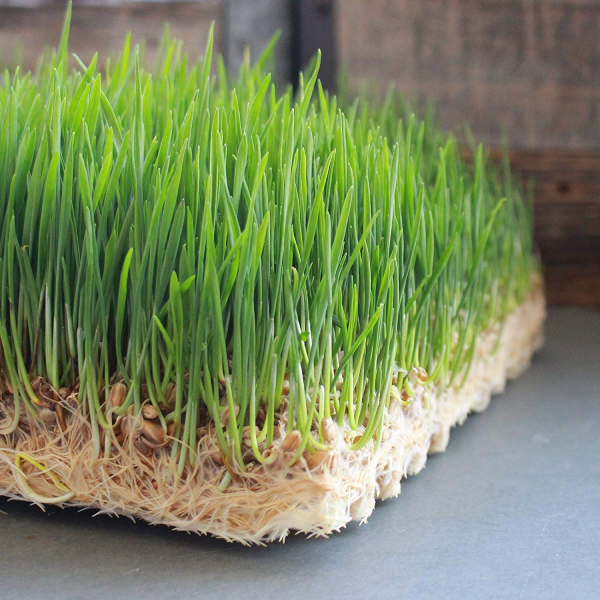
Seeds in the same tray may share similar environmental conditions, but that does not mean every seed receives exactly the same moisture or germination conditions. Local variations in the growing mat, seed distribution, and microenvironment may lead to differences in germination timing and development.
If areas with slower germination correspond to parts of the mat that are insufficiently wetted, visibly dry, or not in consistent contact with the tray, it is worth investigating moisture management. However, this spatial relationship is only a clue and does not prove that the growing mat is responsible.
If uneven germination does not appear to correspond to differences in moisture across the mat, also consider whether the seeds were distributed evenly, whether they came from a consistent batch, and whether other environmental conditions varied.
The first step is therefore not to change every part of the growing routine immediately. Record where the problem occurs and observe the actual condition of the growing mat and seeds.
How Can You Check Whether the Growing Mat Is Wetted Evenly?
For growers using a microgreens growing medium, checking moisture distribution is more informative than simply asking whether the tray has been watered.
Check the wetting condition in different areas of the mat.
Observe the center, edges, and corners of the tray to determine whether the growing mat has been adequately wetted throughout. A visibly wet area does not necessarily mean moisture is distributed evenly across the entire mat. If the mat can be safely lifted, you may also inspect different areas without significantly disturbing the seeds or roots.
Look for localized dry spots.
If one area of the mat is noticeably drier than the others, check whether it was adequately wetted and whether moisture reached the entire growing surface. Do not judge the mat’s moisture condition solely by whether water has collected in the tray. Water at the bottom does not prove that every part of the mat has the same moisture level.
Observe the contact between the seeds and the growing mat.
If seeds are concentrated around folds, raised areas, or places where contact with the mat is incomplete, check whether the mat lies flat and whether the seeds have appropriate contact with the moist growing medium. Contact conditions may affect how seeds receive moisture, although the actual effect depends on the seed type and growing conditions.
If uneven wetting is identified, confirm the likely cause first. Then adjust watering practices according to the seed requirements and growing system rather than applying a fixed watering volume to every situation.
Why Can Parts of a Growing Mat Become Dry?
Even if a growing mat is thoroughly wetted at the beginning, that does not mean moisture will remain uniform throughout the entire tray during subsequent growing stages.
Moisture distribution may be uneven within the mat.
Moisture distribution can be affected by the material structure, initial wetting condition, and actual contact conditions. If some areas are not adequately wetted at the beginning, they may develop a different moisture condition over time. Checking whether the mat was initially wetted evenly is therefore an important part of troubleshooting.
Environmental conditions may vary across the tray.
Areas near the tray edges, ventilation points, or locations exposed to different light and airflow conditions may lose moisture at different rates. Even when the same growing mat is used throughout the tray, every area may not remain equally moist.
Contact between the tray and the growing mat may affect local conditions.
If the tray bottom is uneven or the mat is not lying flat, some areas may not make consistent contact with the tray. Check the tray structure, mat placement, and actual moisture distribution instead of immediately concluding that the material itself is defective.
Localized dryness does not necessarily mean that the growing mat has insufficient moisture retention. It may also result from initial wetting, environmental conditions, or differences in handling. Observing and comparing the mat under consistent conditions provides a more reliable basis for deciding whether the material or its use needs to be adjusted.
How Can Watering Methods and Seed Distribution Affect Germination?
Uneven germination may be related to the growing mat, but it may also result mainly from growing practices. Distinguishing between these possibilities can help avoid unnecessary material replacement or repeated changes to watering amounts.
Inconsistent watering methods.
If water is applied mainly to certain areas or flows unevenly across the tray, the growing mat may become unevenly wetted. Different watering practices may also lead to different rates of moisture change. During inspection, check whether water reaches the entire growing area rather than simply confirming that watering has taken place.
Watering frequency does not match the actual moisture condition.
A fixed watering schedule may not suit every seed variety, mat structure, or growing environment. If watering follows a timetable without checking the mat’s actual condition, localized dryness or excessive moisture may go unnoticed. A more practical approach is to adjust management based on the seed requirements, growing system, and direct observations.
Uneven seed distribution.
If more seeds are concentrated in some areas than others, the final germination density and visual appearance may differ even when moisture conditions are similar. Seed clustering may also change local seed contact and available growing space. Therefore, differences in germination density should not automatically be attributed to the growing mat.
Differences between seeds.
Seed variety, batch, viability, and storage conditions can all affect germination. Even when moisture is relatively uniform across the same tray, not every seed will necessarily germinate at the same time. If germination differences do not clearly correspond to wet and dry areas of the mat, investigate the seeds themselves and other environmental conditions.
How Can You Distinguish a Growing Mat Problem from Seed or Environmental Issues?
An effective troubleshooting method is to focus on one factor at a time and record the results. This reduces the difficulty of identifying the cause when several growing practices are changed simultaneously.
Step one: Record where uneven germination occurs.
Observe areas with faster and slower germination, and note whether they correspond to differences in mat moisture, tray-edge locations, or tray structure. If several trays show similar patterns, also record whether they use the same growing mat, seed batch, and management practices.
Step two: Inspect the actual condition of the growing mat.
Check whether different areas are adequately wetted, whether localized dry spots are present, and whether the mat lies flat. If there are no obvious differences in wetting, do not conclude that the mat is defective based on uneven germination alone.
Step three: Check whether the seeds were distributed evenly.
Determine whether seeds are concentrated in particular areas or whether obvious clusters and gaps are present. If seed distribution itself is uneven, investigate the sowing process before replacing the growing medium.
Step four: Check the seeds and environmental conditions.
Confirm the seed variety, batch, and storage conditions. Also review temperature, ventilation, and other germination requirements relevant to the specific seeds. Different varieties may have different germination requirements, so a single germination time or watering volume should not be used to assess every seed type.
Step five: Compare samples under controlled conditions.
If the cause remains unclear, compare different growing mat samples or wetting methods using the same seed batch and similar environmental conditions. Keep other factors as consistent as possible and record germination patterns and mat conditions. This type of comparison provides more useful evidence than changing several factors at once.
For seed germination mats and other soil-free growing medium products, suitability should be assessed under the intended growing conditions and through actual observation, rather than judged solely by the product name or a single measure of water absorption.
What Moisture-Related Features Should Buyers Check When Purchasing Growing Mats?
For growing supply distributors, brand owners, and bulk buyers, selecting a growing mat involves more than confirming its dimensions and material type. Buyers should also understand how the product wets under actual use conditions.
Check how the material behaves when wetted.
When evaluating a sample, observe whether the material can be wetted evenly and whether it lies flat after wetting under the intended growing setup. These characteristics should be checked using an actual sample rather than inferred from the material name alone.
Evaluate moisture management in the intended growing system.
Growing mat performance depends not only on the material itself but also on the tray structure, watering method, environmental conditions, and seed requirements. Whenever possible, evaluate samples using the intended tray and growing practices instead of relying only on the appearance of the dry material.
Check consistency between production batches.
For brand owners and distributors planning repeat orders, it is important to assess not only an individual sample but also whether subsequent products remain consistent with the agreed specifications and use conditions. Clear product specifications, sample approval, and batch quality control help reduce uncertainty when reordering.
If an existing product does not meet the actual application requirements, buyers can discuss whether the material structure or specifications need adjustment. As a manufacturer providing needle-punched nonwoven fabrics and customized material solutions, HuiZhou JinHaoCheng Nonwovens Co., Ltd. can discuss material specifications and processing requirements based on specific applications. For bulk buyers, defining the actual growing conditions before confirming product requirements provides a more reliable basis for selection than relying on the product name alone.
Conclusion: Identify the Cause Before Adjusting the Mat or Growing Routine
Uneven microgreens germination may be related to uneven wetting, localized dry spots, or watering methods. It may also result from seed distribution, seed characteristics, or other germination conditions. The result alone is not enough to conclude that the growing mat is defective.
Start by recording where germination differences occur. Then check the mat’s moisture condition, placement, and seed distribution before evaluating the seeds and environmental conditions. If further verification is needed, compare samples while keeping other conditions as consistent as possible.
If you are selecting microgreens growing mats, you can review our jute microgreens grow mats product information and assess suitability based on your tray, seed type, and actual growing setup. For bulk purchasing, testing an actual sample before confirming the final product specifications helps support more informed purchasing decisions.