
Waterproof but Breathable? How to Verify Barrier Performance in Laminated Nonwoven Fabric
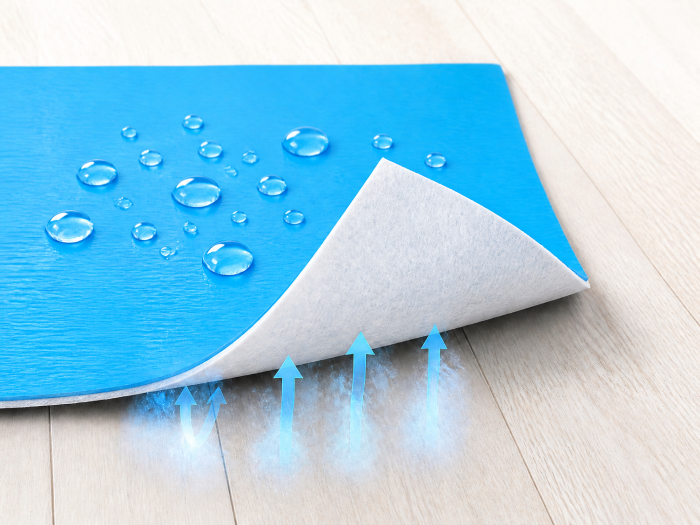
When sourcing laminated nonwoven fabric, buyers sometimes face a requirement that appears straightforward but requires careful consideration during material development: the material must prevent liquid water from penetrating while still allowing water vapor to pass through.
For example, certain industrial protective materials, building materials, and moisture management products need to provide liquid water resistance without completely restricting water vapor transmission. Choosing a conventional waterproof film may not meet the required moisture transmission performance. On the other hand, focusing only on breathability may result in insufficient liquid water resistance.
This is a common point of confusion when purchasing film laminated nonwoven fabric.
Waterproofing, water vapor transmission, and air permeability are not the same properties. Even when a supplier offers a breathable film, this does not automatically mean that the finished nonwoven composite meets both waterproof and breathable performance requirements.
For buyers, the important question is not simply what the material is called, but whether the complete laminated structure can meet both performance requirements under the intended conditions of use.
What Is the Difference Between Liquid Water Resistance and Water Vapor Transmission?
Before selecting waterproof breathable laminated nonwoven fabric, it is important to understand that liquid water and water vapor move through materials in different ways.
Liquid water resistance refers to a material's ability to prevent water in liquid form from penetrating from one side to the other.
For example, when a laminated nonwoven fabric is used for building protection or industrial covering, buyers may require it to resist rainwater, cleaning water, or other liquid penetration. In this case, hydrostatic pressure resistance or another suitable liquid barrier test may be necessary.
Water Vapor Transmission Rate (WVTR) measures a material's ability to allow moisture in vapor form to pass through it.
When a water vapor pressure difference exists between the two sides of a material, water vapor may move from one side to the other. This transmission depends on the material composition, film structure, temperature, relative humidity, and testing conditions.
Therefore, these two properties must be evaluated separately.
A material may provide good liquid water resistance while having very limited water vapor transmission. Another material may allow water vapor to pass through but fail to provide the required liquid water resistance under specific pressure conditions.
Buyers should also distinguish between air permeability and water vapor transmission.
Air permeability measures how easily air passes through a material, while WVTR measures the transmission of water vapor. A membrane may allow water vapor to pass through without allowing air to flow freely.
This means that when a supplier describes a material as breathable, buyers should clarify exactly what the term means.
For projects requiring both waterproofing and breathability, liquid water resistance, water vapor transmission, and air permeability should be treated as separate technical requirements rather than being represented by a general description such as "breathable waterproof."
What Is the Difference Between PE Film and Breathable Waterproof Membranes?
Laminated nonwoven fabric is commonly made by combining a nonwoven substrate with a functional film. The film structure directly affects the liquid water barrier and water vapor transmission properties of the finished product.
However, different functional films work in different ways.
Conventional PE Film: Primarily Designed for Liquid Water Protection
PE (Polyethylene) film is a commonly used functional layer in laminated nonwoven fabric.
When a continuous and intact conventional PE film is used as the laminated layer, it can generally provide liquid water barrier properties. Actual performance also depends on film integrity, thickness, material formulation, and lamination quality.
This structure is suitable for products that need to prevent liquid penetration, including certain floor protection materials, packaging materials, and industrial protective composites.
However, conventional waterproof PE film should not automatically be described as a breathable waterproof membrane.
If a project requires continuous water vapor transmission, buyers need to confirm whether the selected PE film has verified moisture transmission properties. The product name PE film laminated nonwoven fabric alone is not enough to establish this performance.
Breathable Waterproof Membranes: Allowing Water Vapor Transmission While Restricting Liquid Water
Breathable waterproof film generally refers to a specially engineered membrane structure.
Two common technical approaches are microporous membranes and hydrophilic non-porous membranes. They use different mechanisms to transport water vapor.
Microporous membranes allow water vapor to pass through microscopic pores. Under appropriate material and testing conditions, liquid water can be resisted due to factors such as pore size, surface properties, and liquid entry pressure.
Hydrophilic non-porous membranes do not rely on interconnected pores. Instead, water vapor moves through the membrane through absorption, diffusion, and desorption processes.
Therefore, microporous and hydrophilic non-porous membranes should not be treated as the same material.
Their performance depends on the specific polymer, membrane structure, thickness, and operating environment.
For buyers, selecting the appropriate membrane structure requires consideration of liquid exposure conditions, water vapor transmission requirements, temperature and humidity conditions, and the intended application.
Why Film Names Cannot Guarantee Finished Product Performance
Materials labeled PE Film, Breathable Film, or Waterproof Membrane may have different performance characteristics depending on the supplier, film formulation, thickness, and manufacturing process.
More importantly, the performance of a film may change after it is laminated with a nonwoven substrate.
Therefore, material names can help with preliminary selection, but they cannot replace testing of the complete laminated product.
Why Can Breathability Change After Lamination?
When evaluating laminated nonwoven fabric, buyers sometimes focus only on the film itself and overlook the effects of the lamination process.
In practice, the nonwoven substrate, functional film, adhesive layer, and lamination method work together to determine the final product performance.
Film Thickness and Structure
Film thickness may affect liquid water resistance, flexibility, and water vapor transmission. However, thicker film does not automatically mean better waterproof and breathable performance.
For the same type of functional membrane, changes in thickness may alter the resistance to water vapor transmission.
For different film materials or structures, even membranes with the same thickness may have different moisture transmission and waterproof performance.
Therefore, buyers should not compare films based on thickness alone. The film type and the performance requirements of the complete laminated product must also be considered.
Adhesive Layer Coverage
The adhesive layer is an important part of the laminated structure.
When continuous adhesive coating is used, the water vapor transmission characteristics of the adhesive and the adhesive layer thickness may affect the overall moisture transmission performance.
When dot or partial adhesive bonding is used, areas not covered by adhesive may retain more potential pathways for water vapor transmission.
However, this does not mean that dot lamination is always better.
Reducing adhesive coverage or changing its distribution may also affect bonding strength, local delamination risks, and product stability during actual use.
For breathable waterproof composites, buyers should consider both moisture transmission and interlayer bonding strength rather than focusing only on increasing the uncovered area.
Lamination Processes and Material Compatibility
Different materials may require different temperatures, pressures, adhesives, and lamination conditions.
For example, certain functional films may be sensitive to lamination temperature. If processing conditions are unsuitable, the film structure, material surface, or bonding condition between layers may be affected.
In addition, the fiber composition, thickness, basis weight, and surface structure of the nonwoven substrate can influence lamination processing and finished product performance.
Therefore, laminated nonwoven fabric is not simply a matter of attaching a film to a nonwoven surface.
During material development, the substrate, film, adhesive layer, and lamination conditions should be evaluated together. The performance of the complete laminated sample should be the basis for final evaluation.
How to Verify the Waterproof and Breathable Performance of Laminated Nonwoven Fabric
This is one of the most important aspects for buyers.
When a project requires both liquid water resistance and water vapor transmission, requesting a general waterproof test report is not sufficient.
Buyers should confirm the following test items separately.
Liquid Water Resistance Testing
The Hydrostatic Pressure Test is a commonly used method for evaluating a material's resistance to liquid water penetration.
During the test, increasing water pressure is applied to the specimen. The pressure at which water first penetrates the material may be recorded, or the specimen may be evaluated against a specified pressure requirement under an agreed testing standard.
Buyers should confirm the following information:
What testing method and standard were used?
What was the measured pressure or final test result?
What specimen and testing conditions were used?
Was the test performed on a single film layer or the complete laminated nonwoven fabric?
Does the result meet the requirements of the intended application?
It is important to understand that a hydrostatic pressure result does not automatically represent waterproof performance under every actual application condition.
If the product will be exposed to continuous standing water, repeated water pressure, or other special liquid contact conditions, additional testing may be necessary based on the intended application.
Water Vapor Transmission Testing
Water Vapor Transmission Rate (WVTR) is an important indicator for evaluating a material's moisture transmission performance.
Buyers can request a corresponding WVTR test report from the supplier.
ASTM E96/E96M is one commonly referenced testing standard. It includes different test methods, and the results can be affected by temperature, relative humidity differences, testing methods, and specimen conditions.
Therefore, when comparing WVTR data from different suppliers, buyers should not compare the numerical values alone.
The following information should also be checked:
Which specific testing method was used?
What were the testing temperature and relative humidity?
What humidity conditions were maintained on both sides of the specimen?
What unit was used to report the result?
Was the test performed on the functional film or the finished laminated nonwoven fabric?
Does the report clearly identify the specimen structure and testing direction?
If two suppliers use different testing conditions, their results cannot automatically be considered directly comparable, even when both are reported in g/m²·24h.
Is Air Permeability Testing Necessary?
If the finished product also needs to allow air to pass through, a separate air permeability test should be included.
Air permeability cannot replace WVTR and cannot independently prove that a material has breathable waterproof performance.
For products that require water vapor transmission but do not require air to pass through, low air permeability should not automatically be interpreted as poor moisture transmission.
Buyers should determine whether this test is necessary according to the intended application.
Interlayer Peel Strength Testing
In addition to waterproof and breathable performance, lamination bonding strength should also be considered.
If the bond between the nonwoven substrate and functional film is unstable, the material may develop bubbles, delamination, or local separation during winding, transportation, cutting, or actual use.
Therefore, depending on the product structure and application conditions, buyers should consider requesting interlayer peel strength or other suitable lamination bonding test results.
It is important to note that peel strength, waterproof performance, and water vapor transmission are separate properties. Passing a bonding strength test does not automatically prove that the material meets the required liquid water resistance and water vapor transmission specifications.
Why Should the Complete Laminated Product Be Tested Instead of Only the Film?
This is an important consideration when purchasing laminated nonwoven fabric.
Suppose a supplier provides a breathable waterproof membrane along with its WVTR and hydrostatic pressure test reports.
These reports can demonstrate the performance of the membrane under the specified testing conditions. However, they do not automatically prove that the finished laminated nonwoven fabric will retain exactly the same performance.
The final product contains additional material layers and a specific lamination structure.
For example, the adhesive layer may change the water vapor transmission pathways.
Lamination temperature and pressure may affect the structure or integrity of the functional film.
The surface structure of the nonwoven substrate may influence adhesive distribution and bonding performance.
The bonding condition between layers may also affect product stability during repeated bending or actual use.
Therefore, buyers should ask suppliers to distinguish clearly between two types of test reports.
Single-film test report: Used to understand the performance of the raw film material itself.
Finished laminated product test report: Used to evaluate the actual performance of the final composite material.
If the main project requirement is to achieve both waterproof and breathable performance, the final acceptance criteria should be based on the agreed complete laminated structure and its corresponding test requirements.
For long-term supply projects, buyers should also retain approved samples and specification documents. This helps prevent performance changes if the film material, adhesive, or lamination method is changed in subsequent production.
How to Select a Laminated Structure Based on the Final Application
Not every laminated nonwoven fabric needs to provide both high-level waterproof and breathable performance.
The material structure should be selected according to the actual application rather than simply adding more functional layers.
Products Primarily Designed for Liquid Water Protection
If the product is mainly intended to prevent paint, water, or other liquids from penetrating, and there is no specific water vapor transmission requirement, a conventional waterproof film laminated with a nonwoven substrate may be considered.
For example, some floor protection materials use a combination of nonwoven fabric and PE film.
The nonwoven layer can provide functions such as absorption, cushioning, or surface protection, while the PE film mainly helps reduce liquid penetration.
Because the nonwoven layer itself has some air permeability, this does not mean that the complete product should automatically be described as a breathable waterproof structure.
If the project also requires water vapor transmission, the film layer must be evaluated separately to confirm whether it meets that requirement.
Products Requiring Both Liquid Water Resistance and Water Vapor Transmission
If a project requires the material to prevent liquid water penetration while allowing water vapor to pass through, a breathable waterproof membrane should be evaluated.
Buyers should clearly specify both performance requirements during the RFQ stage and provide the target testing methods, conditions, and acceptance criteria.
Simply telling a supplier that a project requires breathable waterproof material is not enough.
The compatibility between the membrane and nonwoven substrate, adhesive layer coverage, and test results of the complete laminated product should also be evaluated.
Products Requiring Flexibility and Repeated Use
Some industrial materials need to be repeatedly rolled, bent, cut, or installed.
In these cases, buyers should consider not only waterproof and breathable performance but also overall flexibility, dimensional stability, and interlayer bonding strength.
Increasing film thickness does not necessarily provide a better overall user experience.
Buyers should evaluate how easily the laminated material can be rolled, whether there is a risk of delamination, and whether long-term use conditions may affect the functional layer.
Products Designed for Special Environmental Conditions
If the material is used in high-humidity environments, areas with significant temperature changes, or applications involving continuous liquid contact, standard laboratory results may not fully represent actual performance.
Buyers should provide suppliers with specific information about operating temperature, humidity range, liquid contact type, exposure duration, and loading conditions.
Where necessary, additional sample validation should be arranged to simulate the intended application environment.
Material selection should always be based on the final product structure and actual conditions of use.
What Should Buyers Confirm Before Sampling and Placing Bulk Orders?
For overseas importers, brand buyers, and industrial material manufacturers, it is advisable to define performance requirements clearly at the RFQ stage rather than waiting until after receiving a quotation.
The following information can serve as a starting point for laminated nonwoven fabric inquiries and sample confirmation.
Basic Material Structure
Specify the type of nonwoven substrate, such as PET, PP, or another material.
Identify the functional film type, such as conventional PE film or a breathable waterproof membrane.
Confirm whether the product requires single-side or double-side lamination and whether any additional functional layers are needed.
Product Specifications
Confirm the nonwoven basis weight, total basis weight, finished thickness, width, roll length, and color.
If the project has specific requirements for flexibility, density, or surface appearance, these should also be communicated before sampling.
Performance Requirements
Liquid water resistance: Specify the testing standard, target hydrostatic pressure, or another applicable acceptance indicator.
Water vapor transmission: Specify the target WVTR, testing method, temperature and humidity conditions, and measurement unit.
Air permeability: Provide a separate target specification if this property is required.
Interlayer bonding: Depending on the application, specify whether peel strength or another lamination bonding test is necessary.
Sample Approval and Bulk Order Acceptance
When approving samples, buyers should retain complete information about the laminated structure, including the substrate, film, adhesive, lamination method, and key specifications.
If the sample passes the required tests, the corresponding performance indicators, testing methods, and acceptable tolerances should be included in the technical documents approved by both parties.
During bulk production, buyers should pay attention to material batches, structural changes, key specifications, and inspection records.
If the supplier changes the film material, adhesive, or lamination process, these changes should be evaluated again to determine whether they affect the finished product performance.
For long-term purchasing projects, using mutually approved reference samples and acceptance documents is more reliable than depending only on product names or verbal assurances.
Frequently Asked Questions
Is PE Film Laminated Nonwoven Fabric Always Breathable?
No.
Conventional continuous PE film is primarily used for liquid water protection and should not automatically be considered a breathable waterproof membrane. Its ability to transmit water vapor must be verified through the specific film structure and WVTR testing of the finished product.
Is a Breathable Film Always Waterproof?
No.
A breathable or moisture-permeable description does not automatically prove sufficient liquid water resistance. Buyers should also confirm hydrostatic pressure resistance or another suitable liquid barrier test result.
Why Can WVTR Decrease After a Breathable Waterproof Membrane Is Laminated?
Because the water vapor transmission performance of the finished composite depends not only on the membrane itself but also on the adhesive layer, lamination coverage, substrate, and processing conditions.
Therefore, buyers should prioritize the test results of the complete laminated product.
Is a Higher WVTR Always Better?
Not necessarily.
A higher WVTR indicates a higher water vapor transmission rate under the specified testing conditions, but it does not mean that the product is more suitable for every application.
Buyers should determine the target range according to the intended environment while also verifying liquid water resistance.
Is a Test Report for the Breathable Film Alone Sufficient?
If the final purchase is laminated nonwoven fabric, a report covering only the single film layer is generally insufficient to demonstrate the performance of the finished product.
Buyers should request test results for the corresponding complete laminated structure, especially when both waterproof and breathable performance are required.
Should Air Permeability Also Be Tested When Purchasing Laminated Nonwoven Fabric?
Not necessarily.
If a product only needs to allow water vapor to pass through but does not require air permeability, an air permeability specification may not be necessary.
WVTR and air permeability requirements should be determined separately according to the actual application.
Conclusion: Look Beyond the Labels Waterproof and Breathable
Whether laminated nonwoven fabric can provide both waterproof and breathable performance depends on the membrane structure, nonwoven substrate, adhesive layer coverage, lamination process, and intended application environment.
Conventional PE film, microporous breathable membranes, and hydrophilic non-porous membranes have different transmission mechanisms and should not all be described as the same type of waterproof breathable material.
For projects requiring both liquid water resistance and water vapor transmission, buyers should define these two performance requirements separately and request test results corresponding to the complete laminated structure.
Before placing bulk orders, buyers should also confirm samples, check interlayer bonding, and finalize product specifications to ensure that delivered materials remain consistent with the approved sample.
HuiZhou JinHaoCheng Nonwovens Co., Ltd. offers customized discussions and OEM/ODM services for different nonwoven substrates, functional films, and laminated structures. Specific material combinations, manufacturing feasibility, and performance requirements need to be confirmed according to individual project specifications.
If you are sourcing film laminated nonwoven fabric, we recommend providing the intended application, substrate type, film requirements, WVTR target, liquid water resistance requirements, and product dimensions when submitting an inquiry. Clearly defining these requirements makes it easier to evaluate a suitable laminated structure rather than making a purchasing decision based only on product labels such as Waterproof or Breathable.




