Does Thicker Polyester Acoustic Felt Provide Better Sound Absorption? How to Choose the Right Thickness
In bars, KTV venues, cinemas, conference rooms, music rooms, recording studios, and home entertainment spaces, acoustic materials are commonly installed on walls and ceilings to reduce echo, control reverberation, and improve indoor acoustic comfort.
Among different acoustic materials, polyester acoustic felt has become a popular choice for modern interior acoustic projects because of its lightweight structure, flexible processing, environmental advantages, and good sound absorption performance.
However, many buyers have the same question: Does thicker polyester acoustic felt always provide better sound absorption?
The answer is not simply “the thicker, the better.” The ideal thickness depends on the sound frequency, room structure, installation method, material density, and acoustic requirements of the project.
As an experienced needle punched nonwoven felt manufacturer and nonwoven manufacturer China, Kenjoy can provide polyester acoustic felt in different GSM, thicknesses, densities, and functional specifications, with OEM, ODM, and custom nonwoven products services available for global customers.
How Does Polyester Acoustic Felt Absorb Sound?
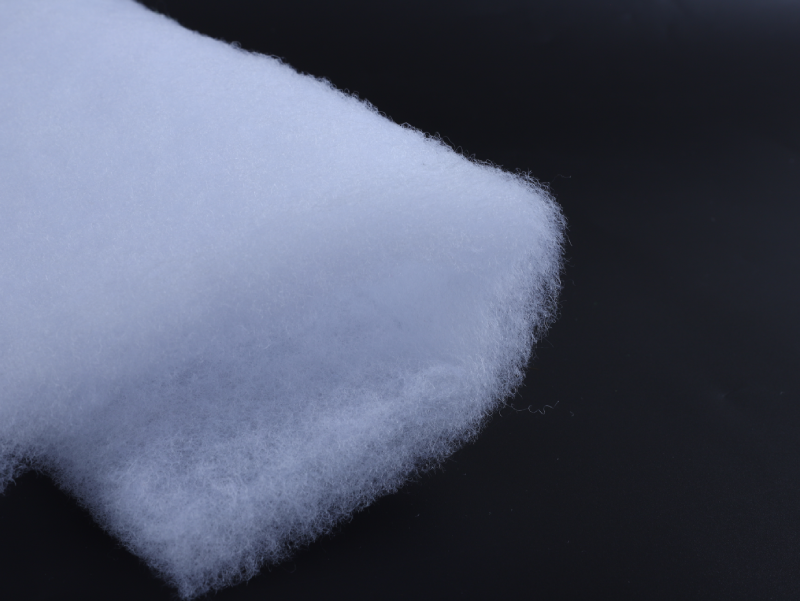
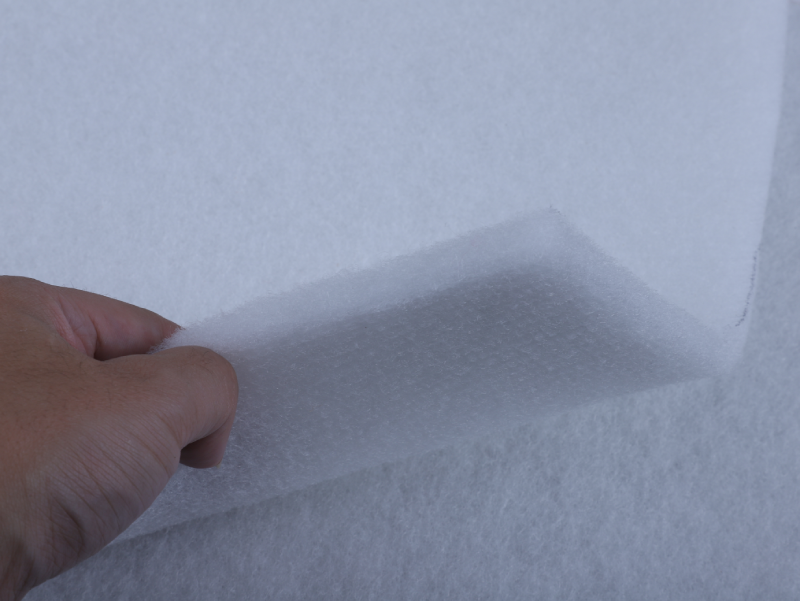
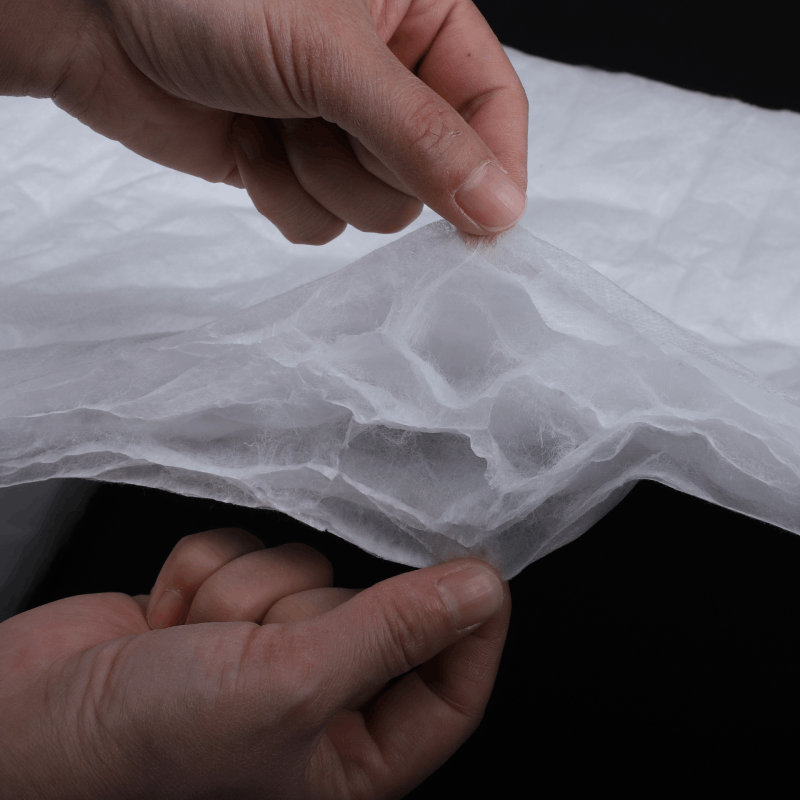
Polyester acoustic felt is mainly manufactured from polyester fibers through processes such as needle punching, thermal bonding, and heat setting.
These processes create a three-dimensional fiber structure containing numerous interconnected pores.
When sound waves enter the material, they travel through the small spaces between the fibers. During this process, sound energy is repeatedly reflected and dissipated through friction between the air and fiber network.
Part of the acoustic energy is converted into heat energy, reducing the amount of sound reflected back into the room.
For this reason, polyester acoustic felt is considered a typical porous sound-absorbing material.
Its acoustic performance is influenced by several factors, including thickness, density, porosity, fiber structure, installation method, and air cavity, rather than GSM alone.
Is Thicker Polyester Acoustic Felt Always Better?
This is one of the most common questions asked by acoustic material buyers.
The answer depends largely on the frequency of the sound that needs to be controlled.
High-frequency sound has a relatively short wavelength and can enter porous acoustic materials more easily. Therefore, thinner polyester acoustic felt can already provide effective absorption for many high-frequency applications.
Low-frequency sound has a much longer wavelength and is more difficult to absorb with thin materials. Increasing the thickness of polyester acoustic felt can provide a deeper acoustic path and improve its ability to dissipate low-frequency energy.
Therefore, increasing thickness can generally be beneficial for low-frequency sound absorption, but simply making the material thicker without considering the overall acoustic structure is not always the most effective solution.
Professional acoustic design focuses on matching the material thickness, density, air gap, installation position, and target frequency range.
Why Can Thicker Polyester Acoustic Felt Improve Low-Frequency Absorption?
Low-frequency noise is common in KTV venues, bars, cinemas, music rooms, mechanical environments, and home theater systems.
Because low-frequency waves have longer wavelengths, they can pass through or around relatively thin acoustic materials more easily.
When polyester acoustic felt is designed with greater thickness, sound waves have a longer path through the porous fiber structure. This creates more opportunities for friction and energy dissipation.
As a result, thicker polyester acoustic felt can provide improved low-frequency sound absorption when properly designed and installed.
This is why professional acoustic projects often consider thickness together with an air cavity and mounting structure rather than simply increasing GSM.
For buyers, selecting the right thickness for the application is usually more valuable than simply purchasing the thickest available material.
Which Applications Are Suitable for Different Polyester Acoustic Felt Thicknesses?
Thin Polyester Acoustic Felt for Offices and Conference Rooms
Offices and conference rooms generally focus on reducing speech reflection, echo, and excessive reverberation.
Thin or medium-thickness polyester acoustic felt can help absorb reflected sound while maintaining a lightweight structure.
Its low weight also makes transportation, cutting, and wall or ceiling installation easier.
For commercial office projects, lightweight acoustic materials can provide a practical balance between acoustic performance and installation efficiency.
Medium-Thickness Felt for Homes and Home Theater Rooms
Residential spaces, bedrooms, piano rooms, and home theaters often require both acoustic improvement and attractive interior design.
Medium-thickness polyester acoustic felt can help reduce indoor reflections while maintaining a relatively compact installation structure.
The material can also be cut into customized sizes and shapes to match different wall and decorative designs.
Thicker Polyester Acoustic Felt for KTV and Cinema Projects
KTV venues, cinemas, music rooms, and recording spaces often contain more low-frequency acoustic energy.
For these environments, thicker polyester acoustic felt can work together with air cavities and other acoustic structures to improve reverberation control and low-frequency absorption.
However, buyers should understand that sound absorption and sound insulation are not the same thing.
Acoustic felt mainly helps control sound reflections and reverberation inside a room. Preventing sound from traveling between rooms requires a complete sound insulation structure involving walls, doors, ceilings, and other building components.
Why Is Polyester Acoustic Felt Easy to Process?
Acoustic performance is not the only factor that matters in commercial projects.
For contractors and material distributors, processing efficiency can have a major impact on installation costs.
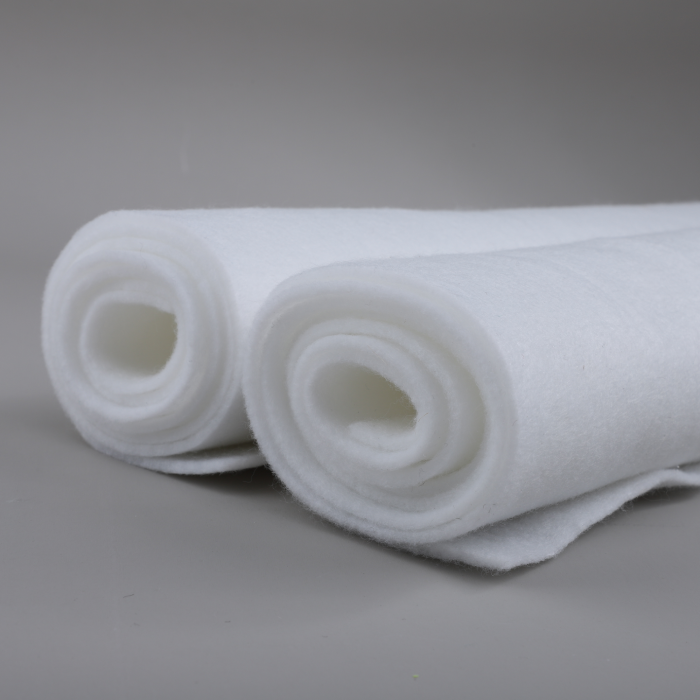
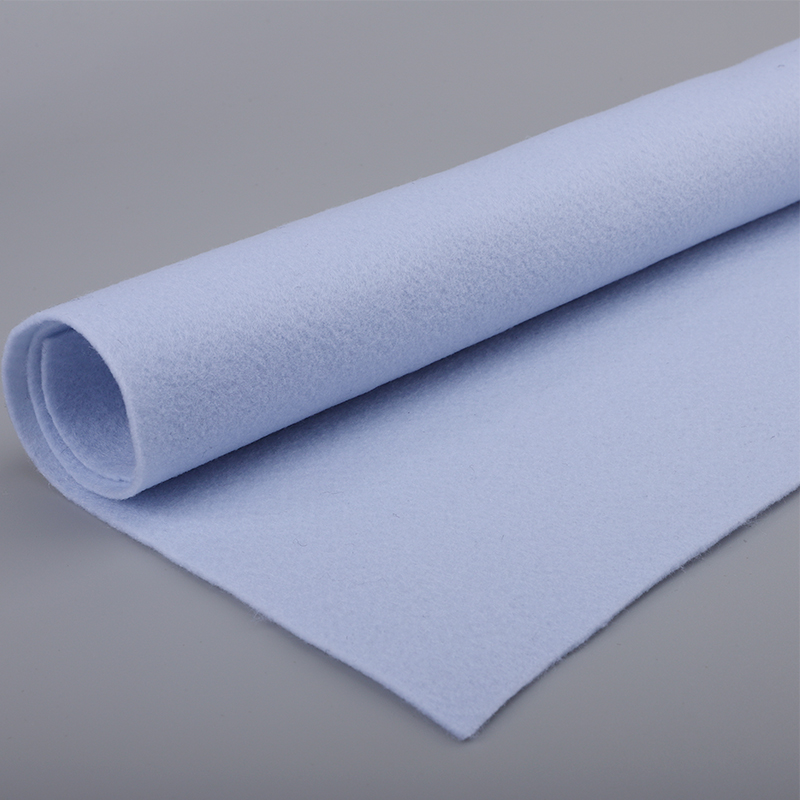
Polyester acoustic felt has a flexible fiber structure and can be customized through cutting, die cutting, perforation, lamination, and other processing methods.
It can be manufactured into different dimensions and shapes for wall panels, ceiling systems, partitions, acoustic boards, and customized interior structures.
For brands and acoustic contractors, working with a custom nonwoven manufacturer provides greater flexibility in material thickness, density, GSM, width, and finished dimensions.
This flexibility is one reason why polyester fiber acoustic materials are increasingly used in modern interior acoustic applications.
Why Are Environmental Performance and Flame Resistance Important?
Modern acoustic materials need to provide more than sound absorption.
For residential and commercial interiors, buyers increasingly consider environmental performance, odor, safety, flame resistance, and regulatory compliance when selecting materials.
Polyester acoustic felt is lightweight and suitable for a wide range of indoor applications. Depending on the product design, functional treatments can also be introduced to meet specific flame-retardant requirements.
For public buildings and commercial projects, buyers should confirm the required flame-retardant grade, testing standards, and environmental requirements before placing a bulk order.
This makes it important to work with an experienced nonwoven felt manufacturer with stable production and quality control capabilities.
How Should Buyers Choose the Right Polyester Acoustic Felt?
When sourcing polyester acoustic felt, buyers should avoid choosing a product based only on GSM.
A more accurate selection process starts with the actual application.
First, determine whether the material will be used in a conference room, residential space, KTV, cinema, recording studio, or other acoustic environment.
Next, determine the installation position, such as a wall, ceiling, partition, decorative panel, or internal filling layer.
Then confirm the required thickness, density, GSM, dimensions, flame-retardant performance, and installation method.
For long-term projects, buyers should also evaluate material consistency, production capacity, delivery stability, and OEM capability.
A professional manufacturer should be able to recommend an appropriate specification according to the project instead of simply selling the highest-GSM product.
Why Choose a Professional Polyester Acoustic Felt Manufacturer?
For long-term supply projects, consistent quality is often more important than the lowest initial price.
Kenjoy has more than 20 years of experience in nonwoven manufacturing and operates an approximately 26,000 m² production facility with 15 automated needle punching production lines.
As an experienced needle punched felt manufacturer, nonwoven felt manufacturer, and nonwoven manufacturer China, we can customize polyester acoustic materials according to different GSM, thickness, density, width, and flame-retardant requirements.
Our nonwoven product range includes polyester acoustic felt, needle punched felt, floor protection felt, painter felt, anti-condensation felt, and thermal bonded wadding.
We also provide OEM nonwoven manufacturer, ODM nonwoven manufacturer, and custom nonwoven products services for international brands, distributors, contractors, and industrial customers.
From sample development to mass production, our goal is to provide stable and customized nonwoven material solutions for different applications.
Conclusion: Choosing the Right Thickness Matters More Than Simply Choosing the Thickest Material
The value of polyester acoustic felt does not come from thickness alone.
For high-frequency sound control, relatively thin materials may already provide effective absorption. For spaces with stronger low-frequency sound, such as KTV venues, cinemas, music rooms, and home theaters, appropriately thicker polyester acoustic felt can provide better acoustic performance when combined with suitable installation structures.
The best acoustic solution is therefore not necessarily the thickest one.
Instead, buyers should consider sound frequency, material thickness, density, installation method, air cavity, and overall room structure to select the right acoustic material.
If you are looking for a reliable polyester acoustic felt manufacturer, needle punched nonwoven manufacturer, or custom nonwoven products supplier, Kenjoy can provide customized polyester acoustic felt solutions according to your project requirements.