Why Can Lightweight Polyester Acoustic Felt Deliver Excellent Sound Absorption? A Guide to Low-GSM Acoustic Materials
In architectural acoustics, interior decoration, KTV venues, cinemas, recording studios, and commercial buildings, many buyers assume that heavier acoustic materials always perform better. In reality, the sound absorption performance of an acoustic material depends far more on its fiber structure, porosity, thickness, and density than on GSM alone.
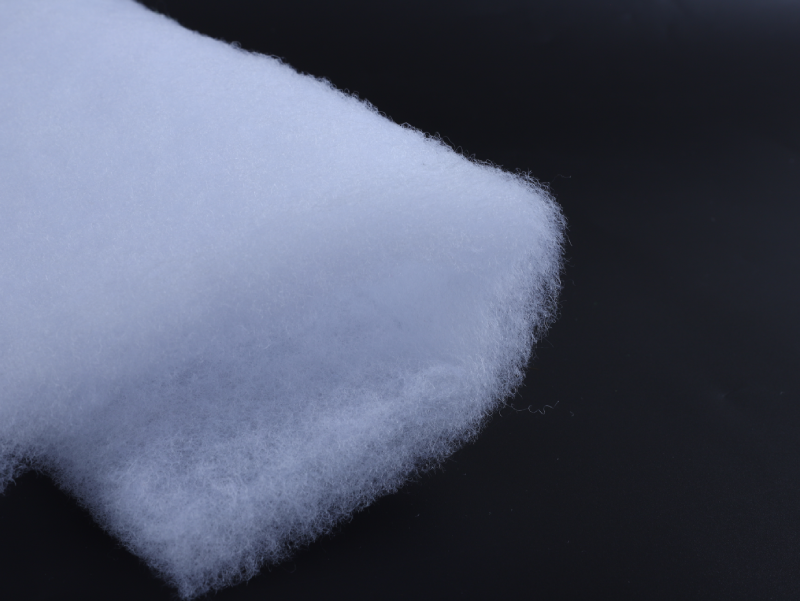
Modern polyester acoustic felt is designed with a three-dimensional porous fiber network that allows sound waves to enter the material and dissipate through friction between the fibers. This enables a well-designed low-GSM acoustic felt to achieve impressive sound absorption while remaining lightweight, easy to install, and cost-efficient for transportation and processing.
For distributors, importers, acoustic contractors, and building material brands, the real purchasing value lies in sound absorption efficiency per square meter, not simply in choosing the highest GSM available.
As a professional needle punched nonwoven felt manufacturer and nonwoven manufacturer China, Kenjoy supplies customized polyester acoustic materials with different GSM, thicknesses, densities, and flame-retardant options for OEM and ODM projects worldwide.
What Is Polyester Acoustic Felt?
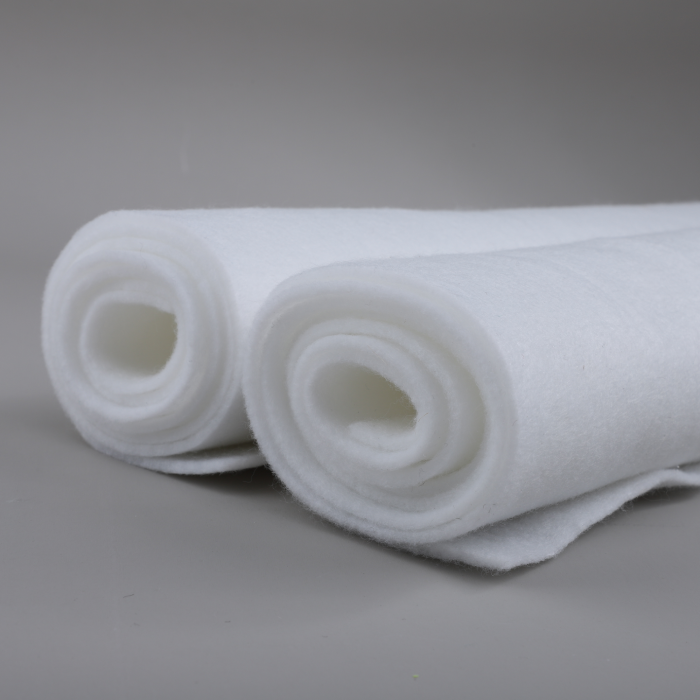
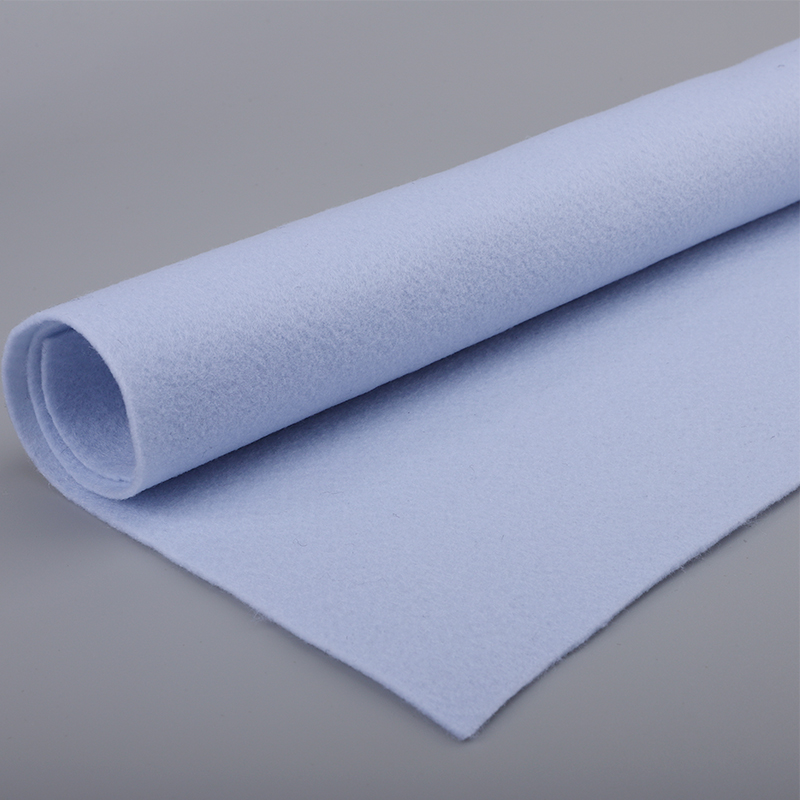
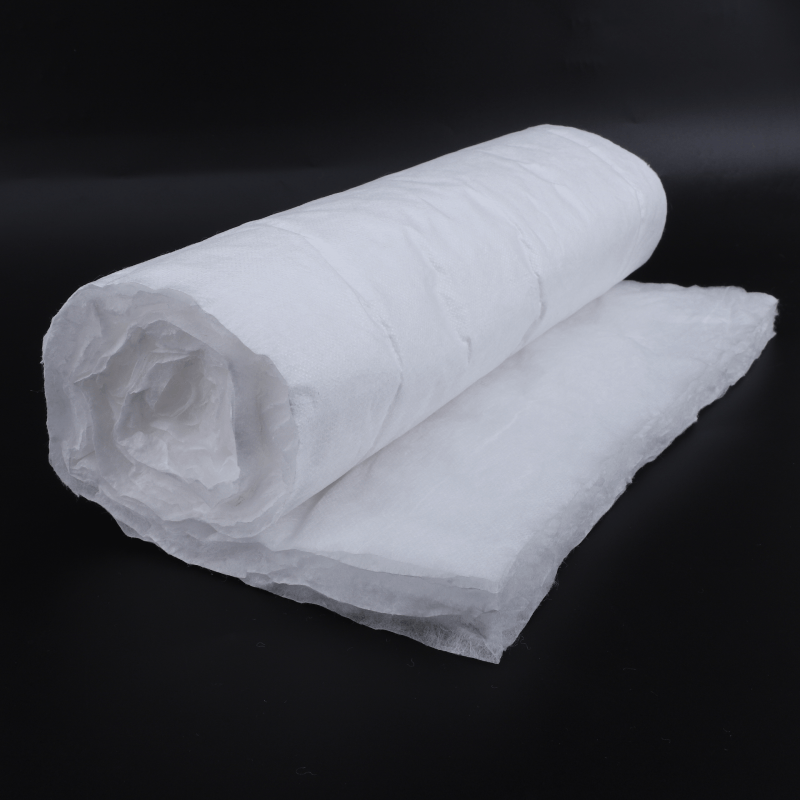
Polyester acoustic felt is a nonwoven sound-absorbing material manufactured from polyester fibers through needle punching, thermal bonding, and heat-setting processes.
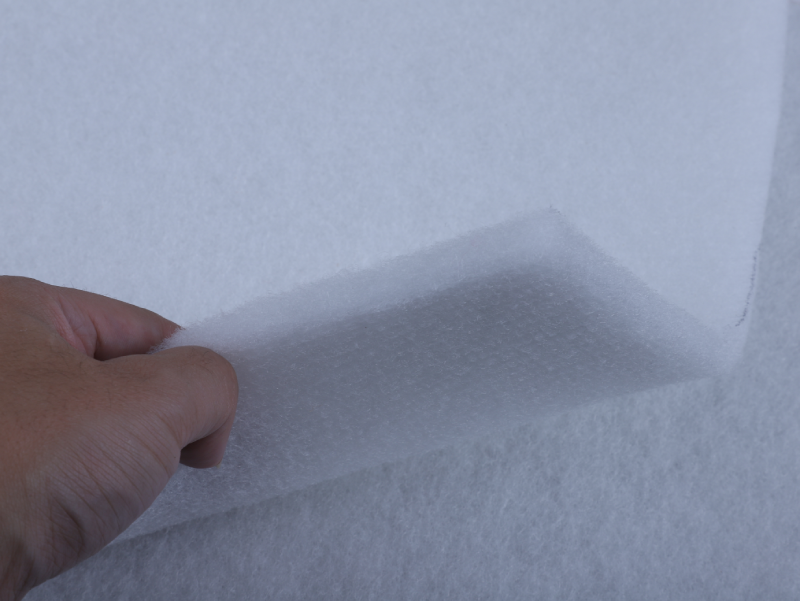
Unlike dense solid materials, polyester acoustic felt contains thousands of interconnected microscopic air pockets. When sound waves enter these porous spaces, acoustic energy is gradually converted into heat through friction within the fiber network, reducing echo and reverberation.
This lightweight construction makes polyester acoustic felt suitable for applications requiring both acoustic performance and easy installation, including wall systems, ceilings, decorative panels, and interior sound treatment.
Why Doesn't Higher GSM Always Mean Better Sound Absorption?
One of the most common misunderstandings in acoustic material sourcing is that higher weight automatically means better performance.
In fact, sound absorption and sound insulation are different concepts. Acoustic felt works by allowing sound to penetrate its porous structure rather than by simply blocking sound with mass.
A properly engineered low-GSM polyester acoustic felt can outperform some heavier materials because its optimized fiber arrangement creates more effective sound energy dissipation.
For buyers, this means the focus should shift from material weight to the combination of thickness, density, porosity, and fiber structure.
Choosing the right specification often provides better acoustic results than simply selecting the heaviest product.
Advantages of Lightweight Polyester Acoustic Felt
Higher Acoustic Efficiency Per Unit Weight
The engineered porous structure allows lightweight polyester felt to absorb sound efficiently without unnecessary material weight.
This helps improve acoustic performance while reducing overall project weight, making it especially suitable for large interior installations.
Lower Transportation and Storage Costs
For international shipments and wholesale orders, lighter materials reduce freight weight and improve container loading efficiency.
Importers and distributors can often optimize logistics costs by selecting lightweight acoustic materials instead of unnecessarily heavy alternatives.
Easier Cutting and Installation
Polyester acoustic felt is flexible and easy to process into customized sizes and shapes.
It can be cut, laminated, die-cut, or fabricated for wall panels, ceiling systems, partitions, and decorative acoustic structures, improving installation efficiency on site.
Eco-Friendly and Safe for Interior Applications
Polyester fiber acoustic materials are widely used in residential and commercial interiors because they are lightweight, odor-controlled, and suitable for modern green building projects.
For environmentally conscious buyers, material consistency, production quality, and compliance with project requirements are equally important when selecting an acoustic material supplier.
Can Polyester Acoustic Felt Replace Traditional Acoustic Materials?
Many modern interior projects are gradually replacing traditional acoustic materials with polyester acoustic felt.
Compared with mineral wool, polyester felt offers easier handling and cleaner installation. Compared with fiberglass materials, it avoids loose glass fibers in interior environments. Compared with some foam products, polyester felt provides greater flexibility for decorative applications and customized fabrication.
Rather than serving as a universal replacement, polyester acoustic felt offers a practical solution for many architectural and decorative acoustic projects where lightweight construction and processing flexibility are priorities.
Typical Applications of Low-GSM Polyester Acoustic Felt
Residential Walls and Bedrooms
Lightweight acoustic felt helps reduce indoor echo and improve acoustic comfort in bedrooms, home theaters, TV rooms, and residential wall systems.
KTV, Music Rooms, and Entertainment Venues
Entertainment spaces require effective reverberation control.
Polyester acoustic felt can be installed on walls and ceilings as part of a complete acoustic treatment system, improving speech clarity and music quality.
Cinemas and Auditoriums
Large public spaces often experience excessive sound reflection.
Lightweight acoustic materials make large-area ceiling and wall installations more efficient while supporting modern architectural acoustic design.
Recording Studios and Conference Rooms
Professional acoustic environments require carefully selected thicknesses and densities rather than one standard specification.
Customized polyester acoustic felt allows designers to optimize materials according to room size, frequency range, and installation method.
How Should Buyers Choose the Right GSM and Thickness?
There is no universal GSM suitable for every acoustic project.
Wall cavity applications may require different thicknesses than suspended ceilings. Recording studios and cinemas often require materials selected according to target frequencies and overall acoustic design rather than weight alone.
When requesting quotations, buyers should provide the intended application, required thickness, installation method, dimensions, estimated quantity, and flame-retardant requirements.
A professional custom nonwoven manufacturer can then recommend the most appropriate specification based on the actual project.
Why Choose a Professional Polyester Acoustic Felt Manufacturer?
For long-term supply projects, consistency is often more valuable than the lowest purchase price.
Kenjoy operates approximately 26,000 m² of manufacturing facilities with 15 automated needle punching production lines and an annual production capacity exceeding 10,000 tons.
As an experienced needle punched felt manufacturer, nonwoven felt manufacturer, and nonwoven manufacturer China, we customize GSM, thickness, density, width, and functional performance according to customer requirements.
Our product portfolio includes polyester acoustic felt, needle punched felt, floor protection felt, painter felt, anti-condensation felt, thermal bonded wadding, and other industrial nonwoven materials.
We also provide OEM nonwoven manufacturer, ODM nonwoven manufacturer, and custom nonwoven products services from sample development to mass production.
Conclusion: Lightweight Design Creates Greater Value Than Simply Increasing GSM
The future of acoustic materials is moving toward lightweight, sustainable, high-performance, and customized solutions.
A properly engineered low-GSM polyester acoustic felt can achieve excellent sound absorption while reducing transportation costs, improving installation efficiency, and supporting modern architectural design.
Instead of choosing acoustic materials based solely on weight, professional buyers should evaluate fiber structure, thickness, density, acoustic performance, and manufacturing consistency.
If you are looking for a reliable polyester acoustic felt manufacturer, needle punched nonwoven manufacturer, or custom nonwoven products supplier, Kenjoy offers customized nonwoven acoustic solutions for residential, commercial, and industrial projects.