How to Handle Moisture Damage to Nonwoven Rolls After Ocean Freight
For overseas buyers importing nonwoven rolls from China, successful factory dispatch does not mean that delivery risks have ended. During container loading, ocean freight, port handling, and inland transportation, rolls may still arrive with damaged packaging, water stains, localized moisture, unusual odors, or suspected delamination in composite materials.
In these situations, buyers usually need to answer three questions: Did the problem originate during manufacturing, packaging, or transportation? Should the investigation or claim involve the factory, logistics provider, or cargo insurer? What evidence should be collected to prevent the parties involved from making responsibility decisions based on assumptions alone?
Nonwoven shipment moisture damage should not be attributed to a particular cause based only on the condition of the goods upon arrival. A more reliable approach is to protect the affected goods, document the original condition, review the order and transport documents, and then investigate the cause using verifiable evidence.
This article focuses on how to investigate moisture damage, contamination, packaging damage, and suspected structural defects in nonwoven rolls after ocean freight. It helps importers establish a more evidence-based process for managing delivery risks.
Why Can Nonwoven Rolls Arrive Wet, Stained, or Damaged After Ocean Freight?
Nonwoven rolls differ in their packaging, material structure, and end-use requirements. Therefore, arrival damage cannot always be attributed to the same cause. Buyers should document the actual condition first and then investigate the possible causes.
Container Condensation and Humidity
During ocean freight, temperatures inside and outside a container may change. When moisture in the air comes into contact with a cooler container wall or another surface, condensation may form. If water droplets fall onto the packaging or rolls, they may cause dampness, localized water stains, or packaging damage.
This phenomenon is sometimes associated with container rain or container sweat. However, damp packaging alone does not prove that condensation inside the container was the source of the moisture. Buyers should also inspect the container walls, roof, floor, cargo placement, and packaging condition, while reviewing loading and transportation records.
External Water Ingress or Physical Damage During Transportation
If a container, transport vehicle, or storage area is exposed to water ingress, the cargo may be affected by external moisture. During loading, unloading, stacking, or handling, packaging may also be torn, crushed, struck, or damaged along the roll edges.
Buyers should check whether the damage is concentrated near the container walls, doors, floor, or particular stacking positions, and record the distribution of the affected goods. The location of damage can provide useful clues, but it cannot independently establish liability.
Packaging Protection or Loading Methods Unsuitable for Actual Shipping Conditions
Nonwoven rolls may appear intact when they leave the factory, but this does not necessarily mean that their packaging is suitable for the actual ocean freight conditions. Inner and outer packaging, sealing methods, moisture protection, pallets or separation materials, and contact between the cargo and container walls may all affect the condition of the goods upon arrival.
If packaging is damaged, sealing is incomplete, or moisture protection is unsuitable for the cargo risks, the investigation should examine the packaging design, how the packaging requirements were implemented, and the transportation environment. It should not immediately conclude that the product itself is defective.
Manufacturing or Lamination Problems
Not every case of moisture damage, unusual odor, or delamination originates during transportation. Some abnormalities may already have existed before shipment, including weak bonding in certain areas of a laminated material, residual odors, surface contamination, or specification deviations.
For rolls involving film lamination, coatings, adhesives, or other composite structures, buyers should compare the affected areas with factory inspection records, approved samples, and the agreed product specifications. They should also investigate whether the problem may have existed before shipment.
The objective is to establish when and where the abnormality may have developed and what caused it, rather than assuming that the factory must be responsible simply because the problem was discovered upon arrival.
How Can Buyers Distinguish Factory Defects, Packaging Problems, and Transit Damage?
For imported nonwoven materials, an effective investigation compares on-site observations with the purchase requirements, factory records, and transportation evidence. The following table is intended for preliminary investigation; it is not an automatic rule for assigning legal liability.
Arrival Issue | Evidence to Check | Possible Causes to Investigate |
Water stains on outer packaging, with no visible damage to the material inside | Packaging photos, water marks inside the container, loading photos, container condition | Condensation, external water ingress, localized packaging moisture |
Several rolls are damp in similar positions | Affected roll numbers, stacking positions, container walls and roof | Container conditions, loading positions, or moisture-protection problems |
Only a few rolls have torn packaging or crushed edges | Roll numbers, direction of packaging damage, handling and delivery records | Handling, stacking, or insufficient localized packaging protection |
Unusual odor or localized discoloration | Unopened samples, packaging materials, unaffected rolls from the same batch, retained product samples | Material characteristics, packaging, storage or transit conditions, or contamination |
Delamination or blistering in composite materials | Delamination locations, bonding condition, approved samples, factory inspection and shipping records | Bonding problems, environmental effects, or mechanical damage |
GSM, thickness, or width differs from the order requirements | Purchase specifications, agreed tolerances, measurement methods, batch inspection records | Production variation, differences in measurement methods, or inconsistent interpretation of specifications |
For measurable properties such as GSM, thickness, and width, buyers should use the measurement methods and tolerances agreed upon by both parties in advance. For conditions such as unusual odor, delamination, or moisture damage, the original condition should be preserved and the material examined further under appropriate conditions. One photograph or one measurement should not be used to determine responsibility for an entire shipment.
Buyers should also distinguish between goods confirmed to be affected and goods that have not yet been inspected. If only a few rolls show abnormalities, the entire shipment should not automatically be classified as defective without an investigation. However, materials suspected of being affected should not be put into production before the relevant risks have been assessed.
What Evidence Should Buyers Collect When Shipping Damage Is Discovered?
The quality of a damage investigation depends heavily on whether the original condition has been documented. Buyers should record the situation before moving, repacking, or treating the goods whenever possible, while avoiding any action that could increase the loss simply for the purpose of collecting evidence.
Record the Original Condition of the Container and Cargo
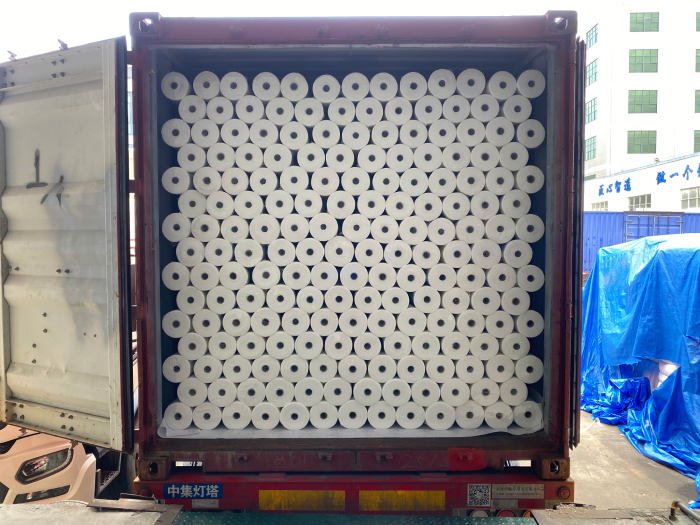
Where conditions permit and it is safe to do so, record the exterior of the container, container number, seal number, the condition inside the container when it is opened, the condition of the walls and roof, and the cargo's position inside the container.
If standing water, water droplets, visible water stains, or damaged packaging are found, take both wide-angle and close-up photographs. Include images that show the relationship between the affected goods and their surrounding environment. Do not photograph only the defect on an individual roll while ignoring the broader conditions.
If abnormalities are discovered when the container is opened, try to record the opening time, the personnel present, how the damage was discovered, and any relevant observations. If the carrier, freight forwarder, insurer, or inspection agency needs to participate in the investigation, contact the relevant parties promptly to confirm arrangements for inspection and evidence preservation.
Record the Affected Roll Numbers, Quantities, and Batches
Where possible, each affected roll should be linked to its product identification, roll number, production batch, packaging label, and purchase order.
If the rolls come from different production batches or packaging units, record them separately. Avoid descriptions such as "the whole container was wet" or "all goods were damaged" without supporting details. Clear records of the affected quantities and locations help the factory and other relevant parties determine the scope of the investigation.
Preserve Purchase, Packaging, and Transport Documents
Evidence usually includes more than photographs. Buyers should organize the agreed product specifications, purchase order, packaging requirements, loading records, packing list, bill of lading, delivery or receipt records, and communications related to the damage.
If cargo insurance is involved, promptly review the insurance certificate, applicable policy terms, notification requirements, required claim documents, and relevant deadlines. Requirements may vary between policies, so buyers should not assume that every policy uses the same document checklist or notification period.
Retain Representative Samples
If the issue involves unusual odor, material performance, bonding, or another property requiring further testing, buyers should agree with the relevant parties on sample selection, sealing, identification, storage, and testing methods.
Samples should be traceable to specific roll numbers or production batches. Where possible, record the sampling location and time. If the dispute concerns moisture condition, composite bonding, or another property that may be affected by storage conditions, clarify how the samples should be preserved and which test methods will be used before testing begins.
For moisture-damaged materials, first assess safety and the risk of further deterioration before deciding whether to dry, repackage, or otherwise treat the goods. Treating the cargo without documenting its original condition may make it difficult to reconstruct what happened during a later investigation.
What Should Buyers Do in the First 24–48 Hours After Discovering Damage?
The first 24–48 hours can serve as an internal target for initial response, but they are not a universal statutory deadline for every transportation contract or insurance policy. Buyers should prioritize the notification periods specified in the actual contract, carrier requirements, and policy terms. If a shorter deadline applies, the relevant requirement should take priority.
Response Stage | Recommended Action | Purpose |
Immediately after discovering the damage | Photograph the scene, record the container and seal numbers, and identify affected rolls | Preserve original evidence |
Complete an initial count as soon as possible | Record roll numbers, batches, quantities, damage types, and locations | Establish the preliminary scope of damage |
Notify relevant parties promptly | Contact the supplier, freight forwarder, carrier, or insurer as required by the contract and policy | Avoid missing notification or inspection requirements |
Before and after on-site inspection | Cooperate with joint inspections and preserve inspection records and each party's observations | Establish verifiable investigation evidence |
Before taking further action | Assess isolation, temporary protection, repackaging, or other mitigation measures | Prevent further loss while preserving evidence |
After investigation records are assembled | Compare the order, factory records, transport documents, and test results | Support subsequent discussions about responsibility and resolution |
Buyers should avoid two extremes. The first is immediately discarding or treating all damaged goods after discovering an abnormality, making it impossible to verify the cause. The second is taking no action at all in order to preserve evidence, allowing the materials to remain exposed to moisture, mold, contamination, or other risks.
A more reasonable approach is to document the original condition first, take necessary and traceable mitigation measures, and preserve photographs, quantities, and records from before and after the treatment. If an insurance survey or third-party inspection is required, confirm the inspection requirements where possible. If a safety risk exists or immediate action is necessary to mitigate further loss, document the reasons and the actions taken.
How Do Incoterms and Cargo Insurance Affect a Damage Claim?
When nonwoven rolls are damaged during international transportation, buyers need to understand three separate issues: the allocation of delivery obligations and risk between the buyer and seller, the responsibilities of transportation service providers, and whether the cargo insurance covers the relevant loss.
These issues are related, but they should not be treated as the same thing.
Check the Trade Terms and Contractual Requirements First
The trade term and its named place or port in the purchase order or sales contract can affect the buyer's and seller's obligations concerning delivery, transportation arrangements, costs, and the transfer of risk. The rules differ between terms, so buyers should check the complete wording, named place, and applicable version rather than relying on abbreviations such as CIF, FOB, or DDP to determine every party's responsibility.
Risk transfer is also not the same as transfer of ownership, nor does it guarantee that a party will receive insurance compensation. The contract may contain additional provisions covering packaging, quality warranties, notification, inspection, and claims.
If moisture damage is discovered after ocean freight, buyers should first confirm how the contract allocates transportation risk, who arranged the transportation, who was responsible for purchasing insurance, and whether the contract specified particular packaging and protection requirements.
Review the Cargo Insurance Coverage
Whether cargo insurance pays for a loss depends on the actual policy terms, covered risks, exclusions, deductibles, insured value, supporting evidence, and applicable procedures. Not every case of moisture, unusual odor, or packaging damage is automatically covered.
Buyers should review the insurance certificate and full policy wording, then promptly ask the insurer or insurance broker about notification procedures, inspection requirements, claim documentation, and applicable deadlines. Do not assume that every case of moisture damage during ocean freight will be covered without checking the policy.
If the damage may be related to inadequate packaging, the inherent characteristics of the goods, a transportation incident, or other factors, preserve the relevant evidence so that the insurer and other potentially responsible parties can investigate the circumstances.
Do Not Assign Responsibility Based Only on the Condition of the Goods Upon Arrival
For example, finding damp packaging when nonwoven rolls arrive does not, by itself, prove that the factory used inadequate packaging. It also does not prove that the carrier caused the damage. The investigation should consider the packaging condition at loading, container condition, transport records, arrival photographs, retained product samples, and other relevant evidence.
Likewise, a factory's willingness to cooperate with an investigation does not mean that it has admitted responsibility for the entire loss. Responsibility should be discussed on the basis of the applicable contract, relevant terms, and verifiable facts, rather than relying solely on whether a party responds to an email first or agrees to provide information.
What Should Buyers Confirm Before the Next Nonwoven Shipment?
The value of investigating shipping damage lies not only in resolving the current incident, but also in reducing the likelihood of similar risks affecting future orders. For importers who regularly purchase nonwoven rolls, the following items should be included in order confirmation and delivery preparation before the next shipment.
First, confirm a suitable packaging and protection plan based on the material structure, moisture-related characteristics, composite layers, and end use. Packaging should be selected according to the actual transportation route, transit time, loading method, and cargo requirements. A packaging method that worked for one previous shipment should not automatically be considered suitable for every future order.
Second, specify requirements for outer packaging, sealing, pallets or separation materials, labels, and batch identification. If the product requires special moisture or contamination protection, confirm these requirements before production and packaging rather than waiting until the goods have been loaded into the container.
Third, determine which records should be retained before loading according to the order's risk level. These may include photographs of completed packaging, loading-process photos, roll-number lists, packing lists, and relevant inspection records. Documentation requirements may vary by product, but the records should make it possible to trace the specific goods if an abnormality occurs.
Fourth, confirm the applicable trade term, named place or port, insurance arrangements, packaging responsibilities, inspection requirements, and notification procedures in the purchase contract or related order documents. If insurance is involved, review the actual policy before shipment rather than waiting until a loss occurs to find out whether insurance was purchased or whether the damage is covered.
Fifth, confirm that the factory can manufacture according to the agreed product specifications, approved samples, and quality requirements, and can reasonably cooperate in providing relevant production and inspection information. Advance confirmation is particularly important for projects involving customized GSM, width, composite structures, or special packaging.
For overseas buyers, choosing a nonwoven manufacturer that can communicate specifications, cooperate with inspections, and help trace relevant batches can reduce information gaps when an abnormality occurs. HuiZhou JinHaoCheng Nonwovens Co., Ltd. has been engaged in nonwoven R&D and production since 2005 and can discuss the specifications and production requirements of needle-punched nonwovens, composite nonwovens, and related customized materials according to specific applications. Actual packaging methods, inspection records, and delivery documents should follow the requirements agreed upon by both parties for each order.
Conclusion: Investigate the Cause Before Discussing Responsibility and Compensation
When nonwoven rolls arrive after ocean freight with moisture damage, unusual odors, damaged packaging, or suspected delamination, buyers should not assign responsibility to the factory, packaging process, or transportation provider based only on appearance.
A more reliable sequence is to document the original condition, identify affected roll numbers and batches, preserve purchase and transport documents, notify the relevant parties promptly, cooperate with necessary joint inspections, and then discuss further action based on the contract, insurance terms, and investigation evidence.
For long-term import operations, confirming packaging requirements, delivery terms, insurance arrangements, and evidence-preservation procedures in advance is more effective than trying to identify the responsible party only after a loss occurs.
For further guidance on handling quality disputes in bulk nonwoven procurement, buyers can refer to the existing nonwoven quality claim process guide. The distinction is that this article focuses specifically on investigating damage discovered after ocean freight, preserving on-site evidence, and identifying transportation risks, rather than repeating general compensation options for all types of quality complaints.