
High-Density Felt for Automotive Interiors: Backing, Support, and Fit
Automotive interior components are not always made up of decorative surface materials alone. Automotive carpets, trunk liners, door panels, and other interior components may also require backing, lining, or support layers to meet structural, processing, and assembly requirements.
For automotive component manufacturers and material buyers, selecting high density felt is not simply a matter of comparing GSM or thickness. More importantly, buyers need to determine whether the material is suitable for the target component's structural design, whether it can be cut or formed as required, and whether its dimensions and shape after processing will meet the available assembly space.
High density felt can be a candidate material for certain automotive interior components, but different parts have different support requirements, contours, installation spaces, and processing methods. Buyers should evaluate material structure, thickness, dimensions, and processing conditions according to the requirements of the finished component rather than assuming that the term "high-density" automatically means the material is suitable.
Why Do Automotive Interior Components Need a Suitable Felt Support Layer?
Automotive interior components may contain multiple material layers, each serving a different function. The surface layer may provide appearance and feel, the backing layer may provide structural support, and other lining or reinforcement layers may be used to meet specific assembly requirements.
Within these structures, needle-punched felt can be considered as a potential backing or support material. Its suitability depends on the component design and actual processing conditions.
For example, automotive carpet backing needs to be compatible with the carpet structure and subsequent processing. Trunk liners may need to follow specific contours and mounting locations, while door panel linings may be constrained by installation space, edge profiles, and adjacent components.
Buyers should understand that a material's suitability for one type of automotive interior application does not mean the same specification can be used directly across all vehicle models and components.
To select suitable high-density needle-punched felt, buyers should first define the material's function in the finished component, then confirm the specifications against the component drawings, assembly space, and manufacturing process.
Which Automotive Interior Components May Use High-Density Felt?
High-density polyester needle-punched felt may be suitable for certain automotive interior components that require backing, lining, or structural support. Its suitability for a specific application should be evaluated against the component's design requirements and manufacturing process.
Automotive Carpet Backing
Automotive carpets need to meet surface appearance requirements, but their backing structure must also be compatible with subsequent processing and installation.
In some carpet constructions, needle-punched felt can serve as a backing or supplementary support layer. Buyers should confirm how the material will be combined with the carpet, the target thickness, the cutting dimensions, and whether the subsequent lamination or assembly process is suitable for the material.
If the component must fit a defined floor area, buyers should also check the relationship between the finished contour and the actual installation area to prevent material dimensions or structure from affecting final assembly.
Trunk Liners and Luggage Compartment Components
Trunk liners may include floor panels, side panels, local reinforcement pieces, or other interior components with different shapes.
These components are not always flat. Some may have curves, recesses, corners, or mounting locations. Therefore, buyers should confirm the material specifications and provide component drawings or existing samples to show the required coverage area and final shape.
If the material needs die cutting, blank cutting, or other forming processes, the processed contour, edges, and dimensions should be checked during sample development.
For these applications, whether structural felt is suitable cannot be determined simply by how thick or substantial the material feels. Buyers also need to verify whether it meets the structural and assembly requirements of the target component.
Door Panels and Other Interior Support Components
Automotive door panels and other interior components often have limited installation space. The support material must fit the surrounding components, mounting points, and internal contours.
Buyers should confirm whether the material thickness, shape, and local dimensions are suitable for the intended installation location. If the component includes curved surfaces, folded edges, or specific recesses, the material's ability to accommodate the required shape during processing and assembly should also be considered.
The same material specification should not automatically be applied to different door panel designs or interior support components. A more reliable approach is to determine the required material structure and processing specifications according to the actual component drawings and manufacturing method.
How Should Buyers Match Felt Thickness and Structure to the Component?
The thickness, material structure, and finished dimensions of high-density needle-punched felt should be evaluated together with the target component. Buyers should not assume that a thicker material or a more compact structure is automatically more suitable for automotive interiors.
First, confirm the available space within the component. Where installation space is limited, material thickness may directly affect the fit between adjacent components. Buyers should use the component drawings to establish the required space after installation and define the acceptable thickness range and tolerance.
Second, consider structural stability. For backing or support layers that need to maintain a specific shape, buyers should check whether the material continues to meet the component's shape and dimensional requirements after cutting, handling, and installation. Actual performance should be verified through samples and appropriate inspection methods rather than inferred from appearance or hand feel alone.
Third, confirm the relationship between the component contour and the material dimensions. If the material needs to be cut to fit, the finished dimensions, edges, and positioning should be checked against the drawing requirements.
For high density polyester felt projects, the polyester material designation and high-density description are only starting points for material selection. The final specifications should be determined by considering fiber material, thickness, structure, component shape, and processing conditions together.
If buyers have not yet finalized all parameters, they can provide existing material samples, component drawings, intended applications, and known dimensions. These details allow the supplier to discuss potential material options and identify specifications that require further confirmation.
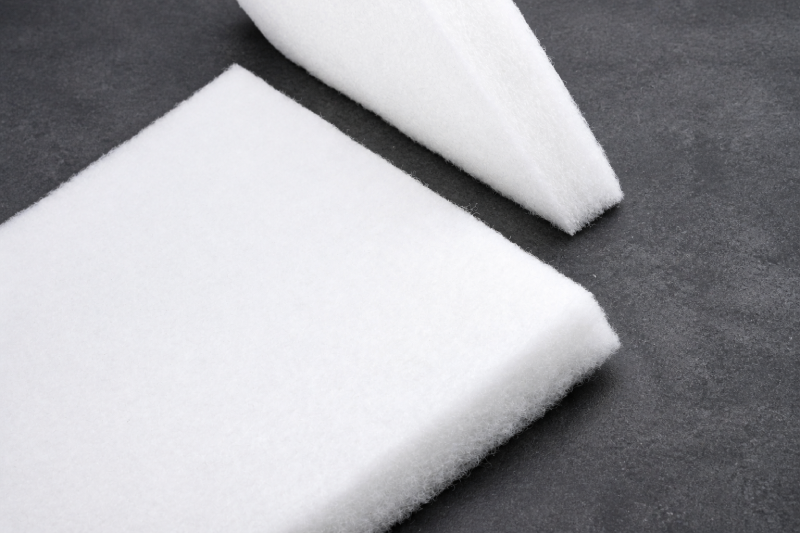
What Should Be Confirmed Before Die Cutting, Forming, or Lamination?
Automotive interior felt is often not used directly as an unprocessed roll or sheet. Depending on the project, the material may require die cutting, blank cutting, lamination, bonding, or other secondary processing.
Therefore, buyers should confirm the material's compatibility with the actual manufacturing process before mass production.
Die-Cutting and Cutting Requirements
If the material needs to be die-cut into a specific contour, buyers should provide a clear two-dimensional drawing or sample and define critical dimensions, edge profiles, and acceptable tolerances.
For components with holes, recesses, or complex contours, particular attention should be paid to whether the processed shape meets installation requirements. The suitability of the final cut part cannot be determined from the raw material's width and thickness alone.
Forming and Shape-Retention Requirements
If an automotive interior component requires pressing or another forming process, buyers should explain the actual processing method and confirm whether the material needs to meet specific forming conditions.
Different material structures may behave differently during processing. Appropriate sample processing or trial production should therefore be used to verify whether the resulting dimensions, contour, and shape meet the requirements. The fact that a type of needle-punched felt can be used for flat backing does not automatically mean it is suitable for a complex three-dimensional formed component.
Lamination and Composite Structure Requirements
If the support layer needs to be combined with carpet, surface fabric, film, or other materials, buyers should specify the material composition of each layer, the layer sequence, and the processing method.
For projects involving bonding or lamination, the combined thickness, edge condition, and assembly dimensions should be checked during sample development. Evaluating the needle-punched felt alone cannot fully represent the performance of the finished composite component.
Automotive Material Requirements Must Be Confirmed Separately
Automotive projects may have specific requirements for flame resistance, VOC emissions, odor, or other material properties. These requirements depend on the vehicle model, component, and customer specifications.
Buyers should provide the applicable technical documents, test methods, and acceptance criteria in advance, then confirm which validations are required for the material or finished component. A product described as high-density felt for automotive use should not automatically be assumed to meet a particular automotive manufacturer's certification or testing requirements.
How Can Buyers Verify Fit Before Mass Production?
Sample validation should establish whether the material, after actual processing and installation, meets the target component's requirements. It should not be limited to checking whether the raw material matches a specification sheet.
First, use the project drawings to confirm the sample's material composition, thickness, dimensions, and structure. For critical parameters, define the measurement methods and acceptable tolerances so that the sample and subsequent bulk orders are evaluated against the same technical requirements.
Second, conduct trial processing that reflects the actual manufacturing method whenever possible. If the finished component requires die cutting, lamination, or forming, inspect the processed contour, edges, and dimensions instead of evaluating only the unprocessed material.
Next, install the processed sample in the target component or a representative assembly structure. Check whether it fits the adjacent components, mounting points, and available space. If interference, uneven edges, or dimensional deviations occur, determine whether the issue comes from the material specifications, cutting dimensions, processing conditions, or component design before deciding what needs to change.
Finally, retain the approved sample, final drawings, and confirmed specification records. If the material structure, thickness, or processing method changes before mass production, reassess whether the revised component still meets the original assembly requirements.
For important automotive component projects, buyers should also confirm the necessary material tests, processing validations, and batch acceptance criteria according to customer requirements. Successful sample installation does not automatically verify every performance requirement.
What Information Should Buyers Provide When Requesting a Quote?
Material selection for automotive interiors usually requires information about the finished component. The clearer the information provided by the buyer, the easier it is to reduce repeated specification changes and sample mismatches.
Component application and installation location: Specify whether the material will be used for automotive carpet backing, trunk liners, door panel components, or another interior support structure. Explain the function the material must perform in the finished component.
Drawings and dimensions: Provide component drawings, critical dimensions, contours, installation space, and required dimensional tolerances. If complete drawings are not yet available, an existing sample or component photographs may be provided for initial evaluation.
Material specifications: Provide the known fiber material, GSM, thickness, hardness, or structural requirements. Identify which parameters have already been finalized and which still need discussion.
Processing methods: Explain whether the material requires die cutting, blank cutting, press forming, lamination, or bonding, and whether there are special requirements for edges, holes, or assembly.
Customer technical requirements: If the project involves an automotive manufacturer's or customer's specified material standards, test items, flame-resistance requirements, VOC requirements, or other acceptance criteria, provide the relevant documents in advance. This allows the supplier to confirm their applicability and identify the required validation steps.
Samples and purchasing plans: Specify sample requirements, estimated order quantities, supply format, and the validations that must be completed before mass production.
For automotive interior material projects, the general term industrial felt is not sufficient to describe the full purchasing requirements. Final material selection should be based on the actual component application, drawings, processing method, and acceptance criteria.
For overseas buyers developing customized automotive interior support materials, HuiZhou JinHaoCheng Nonwovens Co., Ltd. can discuss polyester needle-punched felt structures, thickness, dimensions, and related customization requirements according to the specific project, and provides OEM/ODM manufacturing services. As a needle-punched nonwoven manufacturer, the company can discuss material options based on customer-provided component drawings, samples, and processing requirements. Whether a particular product meets the requirements of an automotive project must still be verified through mutually agreed specifications, samples, and applicable validation procedures.
Conclusion: Match the Felt to the Component, Not Just the Material Name
High-density needle-punched felt may be a candidate material for certain automotive carpet backing, trunk liners, door panel components, and other interior support structures. However, its suitability for a specific project depends on the component design, installation space, material structure, and subsequent processing methods.
For automotive component manufacturers and buyers, a more reliable approach is to define the material's function in the finished component first, confirm thickness, dimensions, contours, and processing requirements against the drawings, and then evaluate suitability through sample processing and assembly validation.
If the project also involves flame resistance, VOC emissions, or other automotive material standards, these should be treated as separate technical requirements to be confirmed rather than assumed from the material name.
Once the material specifications, processing conditions, and assembly requirements have been clearly confirmed, buyers can make better-informed decisions when comparing suppliers, approving samples, and arranging mass production. This helps reduce the risk of material-component mismatches and establishes a clearer technical basis for repeat purchasing.




