
How to Plan Floor Protection Runners for Construction Material Transport Routes
In commercial renovation, building construction, and interior installation projects, floor damage does not always come from people walking across the surface. Delivering materials, moving toolboxes, transferring components, and relocating equipment can expose the same route to repeated rolling friction, localized pressure, and scratches from material edges.
When selecting a construction floor protection runner, buyers should look beyond the color, GSM, or the label “heavy duty.” More importantly, they need to understand what will be transported, what types of carts will be used, whether the route includes turns, and what conditions the protection material will face in actual use.
Planning transport routes carefully and inspecting the condition of the protection material throughout the project can help reduce the risk of scratches, abrasion, and localized surface damage. However, flexible floor protection rolls are not equivalent to load-bearing protection boards. Their suitability must be assessed against the actual working conditions.
Why Are Material Transport Routes Different from Ordinary Walkways?
Ordinary walkways mainly experience repeated contact between footwear and the floor. Material transport routes may also be affected by cart wheels, the bottoms of toolboxes, packaging edges, and dragging operations.
These activities do not create exactly the same risks.
First, cart wheels repeatedly travel along relatively fixed paths. When a route is long and used frequently, certain areas may experience continuous friction and pressure. Second, turning, reversing, and temporarily stopping a cart may cause its wheels to change direction repeatedly within a small area, increasing the possibility of localized wear.
In addition, when metal profiles, boards, equipment components, or other building materials are moved, their edges may come into direct contact with the floor and cause scratches or localized abrasion. Even when the floor is covered with protective material, the protective layer itself may be dragged, punctured, or torn, reducing its ability to protect the surface.
Therefore, floor protection for material transport should be planned around the actual handling methods rather than by simply applying ordinary walkway installation practices.
How to Identify Material Delivery Routes, High-Frequency Transport Paths, and Temporary Storage Areas
Before installing floor protection rolls, identify the main transport routes across the construction site instead of simply starting at the entrance as soon as the material arrives.
The first step is to identify material delivery routes. Determine where materials are unloaded and which entrances, corridors, rooms, or connecting areas they pass through before reaching their destinations. Record areas with thresholds, narrow turns, or changes in floor level separately, as these locations may require different handling methods or additional protection measures.
The second step is to identify high-frequency transport paths. If different construction teams repeatedly use the same route, or carts pass through a particular area many times a day, mark it for closer inspection. Compared with areas used only occasionally, these locations require greater attention to repeated rolling, wear, and material displacement.
The third step is to mark temporary storage areas. Materials may stop briefly during transport or be placed together in designated locations. Buyers and project managers should confirm whether materials will rest directly on flexible floor protection rolls, whether they will be dragged, and whether storage operations could cause indentations, tears, or localized movement of the protective layer.
The fourth step is to check whether transport routes intersect with other construction activities. For example, material delivery paths may overlap with painting areas, cleaning zones, or personnel entrances. In these situations, the risks include not only mechanical wear but also liquid contamination, debris getting underneath the protective material, and repeated lifting or disturbance of the covering.
Once these areas have been identified, buyers can more accurately determine where roll protection may be suitable, where additional measures may be needed, and which conditions should be validated before use.
What Floor Damage Can Be Caused by Cart Wheels, Toolboxes, and Material Edges?
Different handling methods affect floor protection materials in different ways. Buyers should pay particular attention to the following risks.
Repeated rolling of cart wheels
Cart wheels may repeatedly travel along the same route, creating ongoing localized friction and pressure. Wheel material, wheel size, contact area, load, and movement patterns can all affect the actual impact. The effect on floor protection cannot be accurately determined from the cart’s appearance or total load alone.
Turning and changing direction in place
When carts turn, reverse, or change direction in confined spaces, their wheels may move repeatedly over a small area. If these movements are concentrated in one location, that area should be treated as a separate risk point rather than inspected in the same way as a straight section of the route.
Dragging toolboxes and packaged materials
When a toolbox or package is dragged rather than fully lifted, its base, straps, fasteners, or exposed edges may rub against the protective layer. Pulling forces can cause the roll to wrinkle, shift, or suffer localized damage.
Sharp corners and protruding components
Metal parts, board edges, fasteners, and other protruding components may puncture or cut the protective material. Flexible protection rolls cannot be assumed to resist every sharp object, so handling practices and the condition of material packaging are also important.
Concentrated loads and equipment beyond the product’s design limits
Heavy equipment, heavily loaded carts, or other concentrated loads may exceed the intended use of ordinary flexible rolls. A product should not be assumed to withstand such loads simply because its name includes “heavy duty.” The project team should confirm the product’s intended application and, where necessary, use a rigid protection board or another protection system suitable for the load.
The purpose of identifying these risks is not to assume that one type of protection material can solve every problem. It is to help buyers clarify actual working conditions before requesting quotations, rather than judging suitability by appearance or product name alone.
How to Plan Roll Direction, Seams, and Turns Along the Route
Once the transport route has been confirmed, plan the roll layout according to the roll width, site configuration, and direction of material movement. The goal is not to establish one installation rule for every project, but to reduce the chance that vulnerable areas will be repeatedly disturbed.
First, plan continuous coverage along the main transport route. Measure the route length and width, identify turning points, estimate the required quantity of rolls, and determine where cutting will be necessary. For narrow corridors or route intersections, plan the layout before deciding how to cut and join the material.
Next, position seams carefully. If a seam is located where carts repeatedly pass, turn, or stop, it may be exposed to continuous disturbance. Where conditions allow, adjust the layout to reduce repeated operations directly over seams. The appropriate roll direction should still be determined by the product construction, supplier instructions, and site conditions; no single layout should be treated as a universal standard for every product.
Then, pay particular attention to turns and route intersections. These areas often involve changes in cart direction, adjustments to material positions, and pulling forces on the edges of the protective layer. Check that connections remain stable, edges lie flat, and no sections are likely to be lifted by wheels or transported materials.
Finally, confirm compatibility between the protective layer and the floor. The backing structure and adhesion characteristics of self-adhesive protection rolls need to be suitable for the floor surface. Do not use unapproved tape or other fixing methods simply to secure the material, especially on floors that are sensitive to adhesive residue, coating changes, or surface damage.
If the site involves heavy equipment, concentrated wheel loads, or frequent dragging of sharp materials, changing the direction of a flexible roll may not be enough. The project team should first confirm whether the protection system is suitable for those conditions rather than attempting to solve load-bearing limitations through seam placement alone.
What Signs of Wear and Movement Should Be Checked During Construction?
Once a transport route is in use, the condition of the protective material may change as handling frequency and construction activities increase. Inspections should focus on the actual areas used for material transport.
Surface wear and localized thinning
Inspect straight sections frequently used by carts, turning points, and temporary stopping areas. Look for noticeable abrasion, fiber damage, or localized thinning. If the protective layer can no longer meet the intended requirements, reassess whether it needs to be adjusted or replaced.
Tears, punctures, and seam damage
Material corners, tool edges, or unsuitable dragging methods may cause localized tears and punctures. For products with composite backing layers, also check for delamination or backing damage. When damage is found, determine whether the affected area can still meet the project requirements. Simply flattening the damaged section and continuing to use it may not be sufficient.
Curling, wrinkles, and localized displacement
If cart wheels catch the edges of the roll or turning movements cause the material to shift, subsequent transport may be affected. Check intersections, seams, and turns for noticeable curling, wrinkles, or changes in coverage, and address them promptly.
Contamination and sharp debris
Construction debris, metal fragments, and other hard particles that get underneath the protective material may increase the risk of scratching during subsequent rolling or foot traffic. In areas where debris tends to accumulate, cleaning should be included in routine site management.
The condition of the floor beneath the protective material
Where site safety and the construction schedule permit, inspect the floor beneath the protection in selected areas according to a planned schedule. If scratches, indentations, moisture, or other anomalies are found, record the location, time of discovery, and handling conditions at the time, then take appropriate action based on the floor type.
Inspection frequency should depend on transport frequency, load, material type, and site risk. A single fixed interval is not suitable for every construction project. Areas with intensive transport, frequent turning, or repeated dragging should receive more targeted inspections.
Why “Heavy Duty” or High GSM Does Not Mean a Product Suits Every Transport Condition
“Heavy duty” is often a product positioning term or commercial description, while GSM is only one material specification. Neither alone proves that a product can withstand a particular cart, concentrated wheel load, or heavy machine.
First, materials with the same GSM may have different fiber compositions, needle-punched structures, and composite constructions. Their abrasion resistance, tear resistance, and response to localized pressure may therefore differ. The surface material, backing structure, and fixing method can also affect performance along an actual transport route.
More importantly, floor protection rolls are generally intended to protect floor surfaces. That does not mean they function as load-bearing platforms or protection boards. Flexible rolls should not be assumed to distribute every concentrated load or prevent sharp objects from puncturing the material.
When evaluating a heavy duty floor protection runner, buyers should clearly define the handling conditions the product must face and ask the supplier to explain its intended applications and known limitations. If a project involves heavy equipment, high concentrated loads, or high-risk transport activities, validate suitability under conditions relevant to the actual application before use. Where necessary, select a rigid protection board or another protection system specifically suited to the task.
Even for ordinary cart transport, buyers should not make a decision based solely on the “heavy duty” label. A more reliable assessment considers product construction, floor type, handling conditions, and validation results together.
What Actual Transport Conditions Should Buyers Provide When Requesting a Quotation?
The more closely the information supplied by the buyer reflects real working conditions, the easier it is for the supplier to assess whether an existing product is suitable and whether the material structure or specifications need to be adjusted.
When requesting a quotation, buyers should provide the following information.
Construction environment and floor type
Describe whether the protection material will be used in a commercial building, interior renovation, installation project, or another setting. Provide the floor type and surface condition. If the floor has a sensitive coating, scratches easily, or has specific adhesion requirements, explain these conditions in advance.
Materials being moved and transport equipment
Identify the main items being transported, such as toolboxes, packaged materials, metal profiles, boards, or equipment components. Also describe the cart type, wheel characteristics, handling method, and whether the operation involves dragging, turning, or changing direction in place.
If heavy equipment is involved, provide available equipment and load information, and clarify whether concentrated wheel loads are expected. Avoid using descriptions such as “heavy-duty cart” or “heavy materials” as substitutes for specific working conditions.
Transport route and frequency of use
Provide the approximate route length and width, entrance and turning locations, possible seam positions, and the frequency of major transport activities. Mark any areas where carts repeatedly turn or materials are temporarily stored.
Protection objectives and risk limitations
Explain whether the main objective is to reduce surface scratches, abrasion, contamination, or other risks. Also disclose any sharp materials, liquid exposure, sensitive floor coatings, or other special requirements.
If the project requires the protection material to withstand a specified load, list this requirement separately and confirm whether the supplier has relevant technical information or validation evidence. The basic purpose of flexible floor protection rolls should not be interpreted as a guarantee of load-bearing capacity.
Specifications, samples, and validation requirements
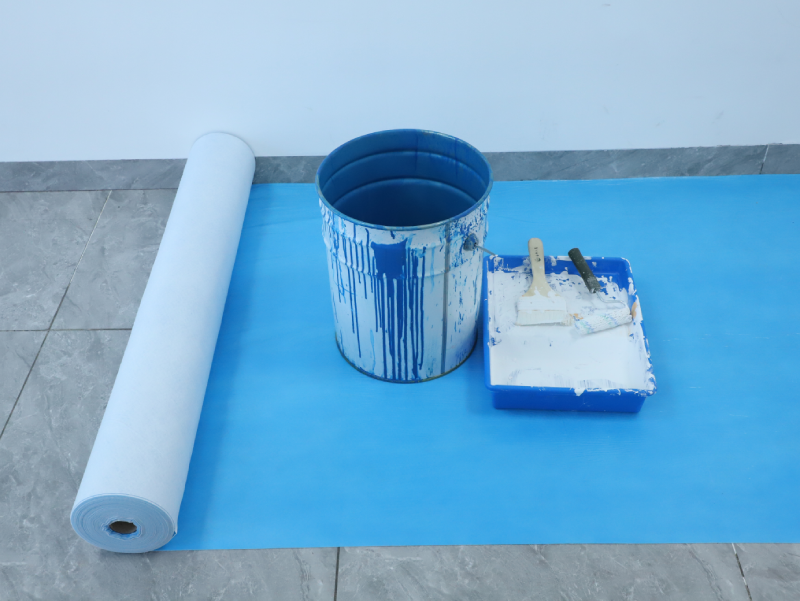
Provide the required roll width, length, color, packaging, and estimated order quantity. For a specified product type such as blue floor protection fleece, confirm the actual construction and intended application rather than judging performance by color alone.
If the suitability of an existing product is uncertain, discuss sample evaluation or an on-site simulation with the supplier. Where possible, reproduce the main handling movements, route turns, and localized wear conditions. Record the conditions and observations during validation, and do not treat a simple trial installation as comprehensive proof for every load or type of equipment.
For projects requiring long-term supply, buyers can also ask the supplier to clarify product specifications, construction, and batch quality-control requirements. This helps establish a clearer specification basis for consistent repeat orders.
Conclusion: Select Floor Protection Runners According to Actual Transport Conditions
Planning protection for construction material transport routes should not be based solely on roll thickness or whether a product is labeled heavy duty. Repeated cart-wheel movement, route turns, dragging materials, sharp edges, and concentrated loads can all affect how the protection material performs.
Buyers should first identify transport routes and high-risk areas, then assess whether the protection plan meets project requirements by reviewing the layout, seam positions, and wear during construction. For equipment loads beyond the intended design limits of flexible rolls, confirm suitability through appropriate validation and, where necessary, use a purpose-designed rigid protection system.
For projects requiring customized roll dimensions, composite structures, or colors, a blue heavy duty floor protection runner can be a starting point for procurement discussions. The final selection should still be based on the specific product information and actual working conditions.
HuiZhou JinHaoCheng Nonwovens Co., Ltd. has long been engaged in the development and production of needle-punched nonwovens and composite materials. The company can discuss material structures, roll specifications, and customization options according to project requirements. Providing clear transport conditions, floor information, and protection objectives at the quotation stage helps both parties confirm the intended application, establish reasonable validation requirements, and create a clearer specification basis for future bulk purchases.




