Emergency Rescue Blankets for First Aid and Patient Warming: What Should Buyers Specify?
For first aid equipment suppliers, an emergency rescue blanket is more than just a piece of material designed to provide warmth. It also needs to fit into specific equipment configurations. Can it be folded and stored easily in a first aid kit? Is it convenient to access when stored in an ambulance? Does it have a suitable coverage area and weight for field rescue equipment? Can individual packaging meet storage and distribution requirements?
These factors directly influence product design and purchasing specifications.
When sourcing a wool rescue blanket, buyers need to define the intended application, material softness, fiber composition, GSM, thickness, finished dimensions, and packaging format before requesting a quotation. Different rescue equipment configurations may require different specifications.
For first aid kit manufacturers, ambulance equipment suppliers, rescue equipment brands, and importers developing their own products, confirming these requirements in advance can help reduce sample revisions and specification differences during bulk orders.
What Should an Emergency Rescue Blanket Do?
Emergency rescue blanket is a broad product category. Different buyers may use these blankets in first aid kits, ambulance equipment, outdoor rescue kits, or other emergency supply packages.
This article focuses on blankets designed for body coverage and general emergency warming applications. It does not cover fire blankets used to cover flames, nor does it describe products with specific clinical functions as medical devices.
From a procurement perspective, several factors should be considered.
First, material feel is important. If a blanket is intended for direct body coverage, buyers may pay attention to softness, surface texture, and comfort. Material selection should not be based on GSM alone. Actual samples should be evaluated before specifications are finalized.
Second, size and weight matter. First aid kits, ambulances, and outdoor rescue equipment have different storage capacities. Blanket dimensions and folded size can affect how easily a product fits into existing equipment.
Third, packaging needs to be considered. Individual packaging, product labels, and outer carton dimensions may all affect storage, transportation, and distribution.
Finally, bulk supply consistency is important. For brands and wholesalers, material composition, GSM, thickness, dimensions, and packaging requirements should be recorded in a product specification document after sample approval.
It is important to distinguish general thermal comfort from medical treatment. A standard rescue blanket may be described according to its actual material properties and intended emergency warming use, but it should not be claimed to treat hypothermia or replace professional medical care.
Where Are Wool Rescue Blankets Used?
The requirements for rescue blankets vary depending on the application. Buyers should first identify where the product will be stored, who will use it, and whether it needs to be accessed and unfolded quickly.
First Aid Kits and First Aid Supply Sets
For a first aid emergency blanket, the product usually needs to be stored together with other first aid supplies.
Buyers should consider folded dimensions, individual weight, package thickness, and packaging format. If the blanket needs to fit into a specific first aid kit, the available internal space should be confirmed before selecting the unfolded blanket dimensions.
For first aid kits developed under a specific brand, buyers should also check whether the individually packaged blanket will affect the arrangement and accessibility of other supplies.
Ambulance Equipment
When sourcing an ambulance wool blanket, buyers generally need to consider coverage dimensions, material feel, weight, and storage arrangements.
Specifications should be determined according to the intended use and storage method. For example, will the blanket be stored as a backup warming item, or will it need to fit alongside other onboard emergency equipment?
If the product needs to be stored or replaced regularly, packaging, labeling, and batch identification requirements should also be clarified.
For products that may come into direct contact with the body, buyers should evaluate material softness and surface texture through actual samples. The final user experience cannot be determined by fiber names or wool content alone.
Mountain and Outdoor Rescue
For mountain rescue and outdoor search and rescue activities, portability is often an important consideration.
Buyers should evaluate the unfolded dimensions, individual weight, folded volume, and packaging durability together. An oversized product may occupy too much storage space, while a product that is too small may not provide the intended coverage.
If the blanket needs to fit into an individual rescue pack or team equipment bag, buyers should first confirm the available storage space before deciding on the unfolded dimensions and packaging size.
Search and Field Rescue
For search and field rescue equipment, blankets may need to be accessed, unfolded, and distributed quickly.
Buyers should therefore consider whether the packaging is easy to identify, whether the product can be taken out conveniently, and whether individual packaging suits the intended distribution method.
If rescue equipment is carried by different personnel, the package dimensions and weight should also be suitable for the existing equipment configuration.
Emergency Care and Temporary Warming
For emergency care and temporary warming applications, material feel, coverage area, and ease of use are all worth considering.
If the product is intended for body coverage, buyers should specify the contact conditions, intended users, and target-market requirements. Samples can then be evaluated for softness, surface condition, and overall comfort.
This article addresses general emergency warming applications only. It does not claim that a blanket can treat hypothermia, maintain a patient's body temperature for a specified period, or provide any other clinical medical effect.
How Should Buyers Evaluate Wool Blend Materials?
For buyers sourcing a wool rescue blanket, material selection should not be based on wool content alone.
The final characteristics of a wool blend material are also influenced by fiber combinations, material structure, GSM, thickness, and finished product processing.
Fiber Composition and Material Feel
If a blanket is intended for body coverage and general emergency warming, buyers can begin by defining their preferred material feel and user experience.
For example, buyers can specify whether the material should have a softer surface, whether a particular wool content or fiber blend ratio is required, whether surface roughness needs to be controlled, and whether the product is intended for direct body coverage.
Wool content alone does not determine the final comfort level. Even when two products use similar fiber ratios, differences in GSM, thickness, and material structure may result in different surface feels.
Therefore, when developing an emergency wool blanket, buyers should first define the target material requirements and then confirm them through samples.
GSM and Thickness
GSM refers to the weight of material per square meter. It is a commonly used specification for nonwoven fabrics and needle-punched felt.
For rescue blankets, GSM affects the weight per unit area, while thickness is related to the material structure and overall volume.
If buyers want a lightweight product that is easy to store, they should consider GSM, thickness, and finished dimensions together rather than simply choosing a higher GSM.
If a thicker material feel and greater coverage weight are more important, different material samples should be compared before making a decision.
It is important to note that GSM or thickness alone cannot determine a specific thermal performance level. Without relevant test data, a particular GSM should not be linked to a specific temperature, warming duration, or clinical warming effect.
Softness and Surface Condition
For body coverage applications, buyers can pay particular attention to whether the material surface meets the requirements of the intended product during sample evaluation.
Different samples can be compared based on hand feel, softness, surface uniformity, and condition after folding.
If the product is intended for direct body contact, buyers should also confirm the applicable material requirements and necessary testing according to the target market and final application.
For brands, it is advisable to keep an approved sample as a reference for subsequent bulk production and record fiber composition, GSM, thickness, and other key parameters in the product specification document.
How Do Size and Weight Affect Rescue Equipment?
The dimensions of a rescue blanket should not be selected solely according to common blanket sizes. They should be determined by the actual equipment configuration and intended use.
Buyers should consider three separate specifications: unfolded dimensions, individual weight, and packed dimensions.
Unfolded Dimensions
If the product is intended for a first aid kit or rescue pack, buyers should determine the unfolded dimensions according to the intended coverage requirements.
For ambulance equipment, the coverage area should be considered in relation to the actual use of the product.
For outdoor rescue applications, buyers should also consider whether a larger coverage area is required and how to meet the intended application without adding excessive carrying weight.
When requesting a quotation, buyers should provide the target finished length and width instead of using vague descriptions such as small, medium, or large.
Individual Blanket Weight
Individual weight affects product handling, carrying, and storage.
For products stored in first aid kits, weight may be an important purchasing consideration. For blankets mainly stored in ambulances or fixed equipment compartments, buyers may place greater emphasis on coverage dimensions and material feel.
During product development, it is advisable to record material GSM, finished dimensions, and individual blanket weight together.
This makes it easier to compare different samples and evaluate whether the finished product meets equipment requirements, rather than judging the product by GSM alone.
Folded Dimensions
Two blankets with the same unfolded dimensions may have different folded volumes.
Material thickness, softness, and folding methods can all affect the final package size.
If a blanket needs to fit into a first aid kit with fixed dimensions, buyers should provide the available length, width, and height of the storage space. The supplier can then confirm the folded and packaged dimensions using an actual sample.
What Packaging Is Suitable for First Aid and Rescue Kits?
For a first aid emergency blanket and other rescue equipment products, packaging is not just an appearance-related decision. It also affects storage and handling.
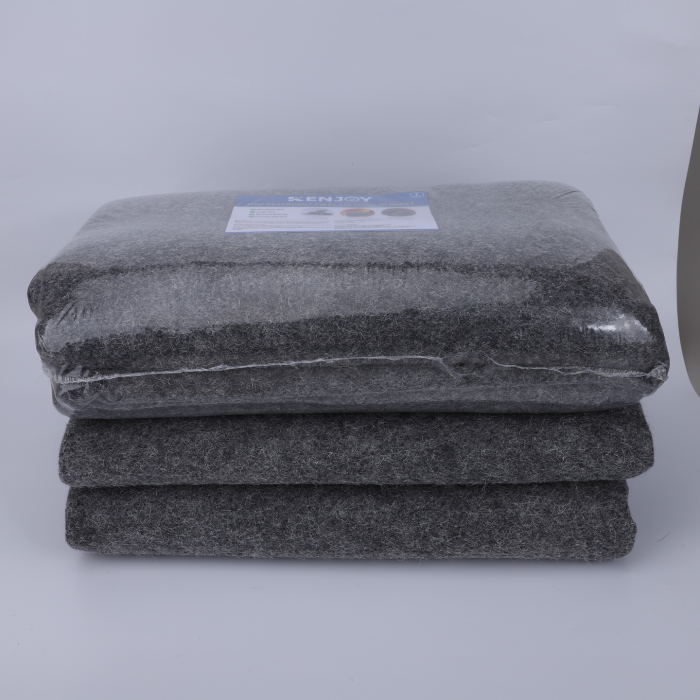
Buyers should specify whether each blanket needs individual packaging and whether the packaging must fit into a first aid kit, ambulance equipment compartment, or retail distribution channel.
Individual Packaging
If each blanket needs to be stored and distributed separately, individual packaging can be considered.
Buyers should confirm the packaging material, package dimensions, sealing method, and label information.
If the product is intended for a first aid kit, the dimensions of the individually packaged blanket should also be checked against the available internal space.
The specific packaging format should be determined according to the product structure, target market, and actual storage requirements.
Brand Labels and Product Information
Buyers developing private-label products can provide their brand name, logo, packaging design, and label information in advance.
Product descriptions, material information, intended uses, and performance claims on labels must be consistent with the actual product and available verification documents.
This is particularly important for products targeting medical or professional rescue markets. Ordinary warming blankets should not be presented as medically certified products simply through packaging descriptions.
Storage and Transportation
Buyers should also consider packaging requirements during warehousing, transportation, and long-term storage.
For example, do they need to control the dimensions of each individual package? Are outer carton markings required? How many blankets should be packed in each carton? Do different specifications and batches need separate identification?
These details should be confirmed before bulk orders to reduce later adjustments to packaging and carton arrangements.
If the product has specific moisture protection, sealing, or storage requirements, buyers should provide those requirements and confirm whether the proposed packaging can meet them. Standard packaging should not automatically be assumed to provide these properties.
What Should Rescue Equipment Buyers Confirm Before Ordering?
For first aid equipment importers, rescue equipment brands, and wholesalers, providing clear RFQ information makes it easier to receive relevant material recommendations and quotations.
The following information should be included in the purchasing inquiry whenever possible.
Purchasing Item | Information to Confirm |
Intended application | First aid kits, ambulances, outdoor rescue, search and rescue, or other emergency warming applications |
Material composition | Wool, other fibers, and target blend ratio |
Material feel | Softness, surface condition, and comfort requirements for body coverage |
GSM | Target GSM or acceptable range |
Thickness | Target thickness or sample reference |
Finished dimensions | Unfolded length and width |
Individual weight | Target weight or acceptable range |
Packaging | Individual packaging, labels, logo, and outer carton requirements |
Order quantity | Sample quantity, initial order quantity, and estimated future demand |
Target market | Country or region where the product will be sold |
Compliance requirements | Specific material, labeling, and product-use requirements in the target market |
Sample approval | Whether samples need to be produced and approved before bulk production |
If buyers have not finalized all material specifications, they can begin by providing the intended application, reference pictures, target dimensions, and expected weight.
The supplier can then discuss possible material options based on this information, followed by further confirmation through samples.
For professional medical or patient care applications, buyers must also confirm the applicable product classification, regulations, standards, and required testing in the target market. General material information provided by a supplier cannot replace finished-product compliance assessment.
How Can Rescue Equipment Brands Customize Wool Rescue Blankets?
For companies developing private-label products, OEM wool rescue blanket customization involves more than changing the packaging or printing a logo. The product positioning and material requirements need to be defined first.
JHC has experience in needle-punched nonwoven materials and wool blend needle-punched felt. The factory can discuss different material customization options according to customers' intended applications.
If the product is intended for body coverage and emergency warming, buyers can specify softness, comfort, fiber composition, GSM, thickness, finished dimensions, and individual weight.
If the product is intended for fire protection or safety applications, flame-retardant treatment, material structure, heat resistance requirements, and relevant testing standards need to be discussed according to the specific application. Fire protection materials should not automatically use the same specifications as ordinary warming blankets.
For rescue equipment brands, the following points should be confirmed during customization.
First, define the final product application and target market.
Second, provide the target fiber composition, dimensions, weight, and packaging requirements, or supply a reference sample.
Third, evaluate material feel, thickness, structure, and actual dimensions through material samples.
Fourth, organize the approved material parameters and finished product requirements into a specification document.
Fifth, confirm packaging, labels, order quantity, and acceptance requirements before bulk production.
The factory can discuss material specifications and related processing options according to customer requirements. The actual finished product format, packaging method, and performance requirements must be confirmed based on the specific order. Performance claims should not be made before samples and relevant testing have been confirmed.
If you are looking for a custom wool rescue blanket or planning to develop wool blend warming blankets for first aid kits, ambulances, or field rescue equipment, you can provide the intended application, material requirements, finished dimensions, estimated quantity, and packaging requirements to discuss a suitable customization solution.
Conclusion: Match Blanket Specifications to the Intended Rescue Use
When sourcing a wool rescue blanket, the most important consideration is not simply choosing a particular wool ratio or a higher GSM. The material, dimensions, weight, and packaging need to match the intended rescue equipment.
Products for first aid kits should focus on folded volume and individual weight. Blankets for ambulance equipment need to be evaluated according to coverage dimensions, material feel, and storage arrangements. Products for outdoor rescue should balance portability, coverage requirements, and packaging format.
For brands, importers, and rescue equipment suppliers, confirming fiber composition, GSM, thickness, finished dimensions, individual weight, and packaging requirements before bulk purchasing, followed by sample verification, is an important step in reducing product development and order communication risks.
HuiZhou JinHaoCheng Nonwovens Co., Ltd. can discuss wool blend needle-punched materials and related specification customization according to different emergency warming and functional blanket applications. The specific material solution and finished product requirements should be confirmed according to the customer's intended use through samples and necessary testing.