Custom Printed Floor Protection Fleece: What Should Buyers Approve Before Mass Production?
For importers, wholesalers, and distributors preparing to launch their own branded floor protection products, receiving a printed sample is an important step before mass production.
The logo may look clear in the design file, and the colors may appear correct on screen. However, this does not guarantee that the final print on floor protection fleece will deliver the same result. The fiber structure of the felt surface, print area, pattern repeat spacing, and friction during handling and use can all affect the final appearance.
If these details are not confirmed during sampling, problems may only become apparent after the bulk order has been delivered. Before approving custom printed floor protection for mass production, buyers should therefore turn their expectations into clear, verifiable acceptance requirements rather than relying on a screen preview or simply deciding that the logo “looks fine.”
Why Is It Not Enough to Check Whether the Logo Looks Clear?
There can be differences between a digital design file and the actual printed product. A screen can display fine lines, vivid colors, and readable small text, but the final printing result is also affected by the material surface, printing process, and actual design size.
Floor protection fleece is commonly made from needle-punched nonwoven material and may incorporate different backing structures. Unlike smooth paper or film, the fiber texture of felt can affect pattern edges, fine details, and the visual appearance of colors. Even when the design file is correct, the printed sample may show unclear fine lines, difficult-to-read small text, or irregular pattern edges.
Buyers should therefore review the design file and the physical printed sample separately. The design file helps confirm the content and layout, while the physical sample shows whether the design meets expectations when printed on the specified material.
Before reviewing the sample, identify the brand elements that must be reproduced accurately, such as the main logo outline, brand name, and contact details. Also clarify which details may be reasonably adjusted to accommodate the actual printing result. This can reduce repeated revisions and help the supplier understand which elements must not be changed without approval.
Logo Size and Repeat Spacing: Does the Design Still Look Right Across the Roll?
For printed rolls, logo size and repeat spacing are not just design considerations. They also affect the visual consistency of the entire product.
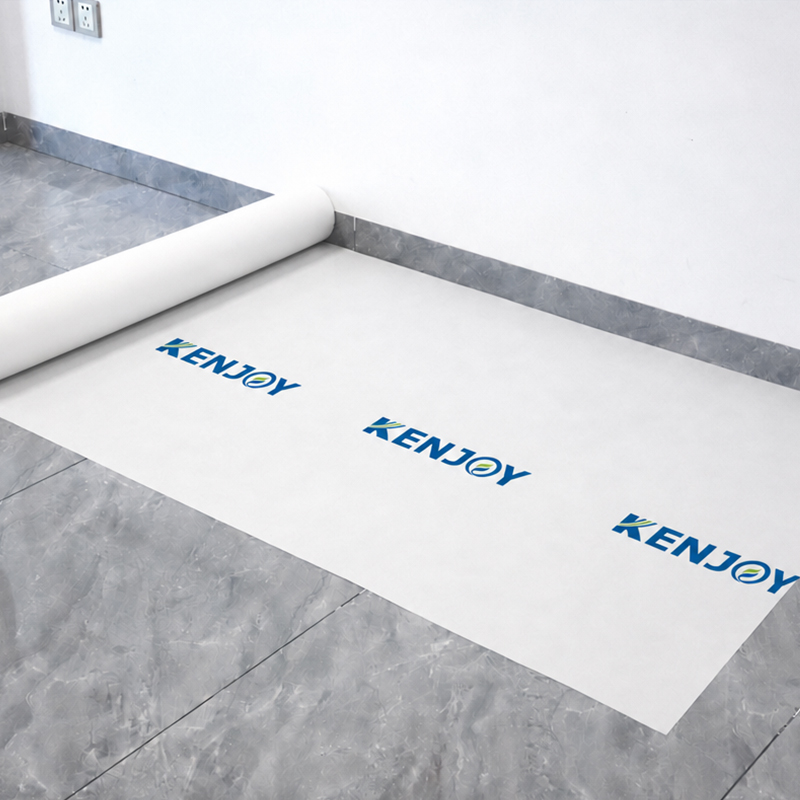
First, confirm the actual printed size of each logo. Compare the sample with the approved design file to check whether the logo is too large or too small, whether the brand name is easy to read, and whether the proportions have changed noticeably.
Next, confirm the repeat spacing along the length of the roll. If the logos are too far apart, the unfolded material may look too sparse. If they are too close together, the surface may appear crowded, changing the overall layout expected by the buyer.
If the product will be cut into shorter sections during use, consider how the design will look after cutting. Unroll the sample or simulate typical cutting lengths to check whether logos are cut off, whether important text remains intact, and whether individual sections retain a clear and recognizable brand appearance.
During approval, confirm the size of each logo, the repeat spacing, and the orientation of the pattern. For products that will be reordered regularly, these details should form part of the final approved specification rather than remaining informal agreements between the design team and supplier.
Color and Print Position: Does the Sample Meet Brand Requirements?
Color accuracy should not be judged entirely by how a design looks on a computer screen. Different monitors, screen brightness levels, and color settings can make the same design file appear different. The final printed color may also be affected by the material surface and the specific printing process.
If the brand has defined color requirements, buyers should specify a mutually accepted color reference or an approved physical sample during the sampling stage. The physical sample should be viewed under suitable lighting, rather than relying solely on photographs that may have been compressed or color-adjusted.
Print position also needs to be confirmed. Check whether the logo is within the agreed area, whether there is any noticeable misalignment, whether the pattern orientation is correct, and whether the position remains consistent across continuous printing.
For roll products, inspect samples from different areas instead of checking only one small, easily accessible section. Noticeable differences in print position across the roll may affect the overall appearance when the material is unfolded.
Before final approval, buyers and suppliers should define the acceptable color and position tolerances. If no tolerances have been agreed upon, it may be difficult to determine what degree of variation is acceptable when a dispute arises over the bulk order.
QR Codes and Contact Details: Can Customers Actually Read Them?
Some brands print website addresses, telephone numbers, QR codes, or short product information on floor protection fleece. These elements may occupy only a small area, but they require separate checks.
For text and contact details, confirm that all characters are complete, the lettering is legible, and the printed size is sufficient. Small telephone numbers, website addresses, and brand slogans deserve particular attention. Clear text in a design file does not automatically mean that the same text will be readable on the physical sample.
If the printed design includes a QR code, test it on the actual sample. Use a common smartphone and scan the code under normal lighting conditions and from a reasonable operating distance. Confirm that it can be read and opens the intended website or page.
QR code readability may be affected by its size, pattern edges, print clarity, and the texture of the material surface. If the code cannot be scanned reliably, buyers should adjust its size or design details before approval and test the revised physical sample again.
Also confirm that the QR code, website address, and contact details are up to date. For a branded printed protective fleece roll, even a technically acceptable print can fail to serve its purpose if the printed information is incorrect.
Is the Print Compatible with the Felt Surface and Backing Structure?
Print quality depends not only on the design file but also on how the design interacts with the material surface.
Needle-punched nonwoven fabric has a fibrous texture. Differences in surface condition, density, and structure may affect print edges, fine details, and visual color consistency. Buyers should not assume that a sample printed on one material will produce the same result on another.
If the product has a noticeably textured surface, pay particular attention to small text, fine lines, pattern edges, and color coverage. For designs containing intricate graphics or small lettering, inspect these details closely instead of focusing only on the overall logo shape.
The approved sample should also match the product structure intended for mass production. For example, if the product uses different backing structures, the supplier should clarify which surface will be printed and which material combination will be used. This helps prevent differences between the sample and the bulk-production configuration.
If buyers plan to use the same brand design on different product versions, such as a gray waterproof-backed version or a white breathable-backed version, the print should be confirmed separately on each version. A sample approved for one structure should not automatically be treated as proof that every other structure will deliver the same printing result.
Will the Print Meet Requirements After Friction, Moisture, and Handling?
During transportation, unrolling, repositioning, and use at construction sites, floor protection fleece may be exposed to friction, bending, compression, or moisture. Buyers sourcing printed products for real working environments should consider these conditions during sample approval.
First, check whether the printed pattern shows noticeable fading, flaking, or blurring during normal handling and unrolling. Representative rubbing or repeated-contact tests can be performed according to the expected use conditions, with any differences recorded before and after testing.
Second, if the product is expected to encounter moisture, conduct an appropriate wet-condition check based on its intended use. Observe whether the print shows noticeable color transfer, blurring, or other unacceptable changes. Test conditions should reasonably reflect the expected application. A single informal wipe test is not enough to establish performance under every possible condition.
Third, consider the relationship between the test conditions and the product structure. The felt surface, printing process, and backing combination may all affect the result. Test findings should therefore apply to the specific product version tested, rather than being generalized to every product.
Buyers and suppliers should agree in advance on the test method, inspection items, and acceptable results. The purpose is not to require the print to remain completely unchanged under every extreme condition, but to verify that it meets the agreed requirements for its intended use.
How Should Buyers Record Final Approval Before Mass Production?
Once the physical sample passes inspection, the next step is to ensure that the buyer and supplier share the same understanding of the final production version.
First, retain the final approved design file and clearly identify its version. If the logo, colors, text, QR code, or pattern layout is changed later, the revised details should be reviewed and approved again. This prevents multiple file versions from circulating at the same time.
Second, keep a record of the approved printed sample. The record can include logo size, repeat spacing, print position, color reference, pattern orientation, QR code test results, and any agreed requirements for friction or moisture testing.
Third, define how the bulk order will be checked against the approved sample. For items requiring tighter control, specify the inspection method and acceptable range of variation. This gives both parties a clear reference during mass production and repeat orders, instead of relying on subjective judgments that the result “looks close enough.”
For long-term orders of private label painter fleece, keeping approval records also helps manage future production. If the brand design or product structure changes, the relevant printing requirements should be reviewed again rather than assuming that an old sample represents the new version.
Conclusion: Turn Printed Sample Approval into a Clear Production Standard
Approving custom printed floor protection fleece before mass production should involve more than checking whether the logo looks clear. Buyers should also confirm the design size, repeat spacing, color, print position, readability of contact details, and print performance under expected handling and use conditions.
Most importantly, the final approved physical sample and design file should become a shared production reference for both parties. Recording the key requirements clearly can reduce misunderstandings and provide a consistent basis for bulk-order inspection.
Importers, wholesalers, and distributors developing their own branded products can first explore our custom printed floor protection products to understand the available options, then confirm sampling requirements with the supplier based on their actual design files and product structure.
HuiZhou JinHaoCheng Nonwovens Co., Ltd. specializes in nonwoven material development and manufacturing and can discuss material structures, composite processing, and custom printing requirements according to project needs. For overseas buyers planning regular orders, defining clear sample approval criteria in advance can improve communication efficiency and establish a consistent quality reference for future bulk production and repeat orders.