
What Quality Records Should Buyers Request from a Nonwoven Supplier for Repeat Orders?
For overseas nonwoven importers, wholesalers, distributors, and OEM product manufacturers, successfully receiving the first order does not mean that every subsequent purchase can be managed simply by sending an old quotation and waiting for shipment.
As purchasing continues, buyers face a more practical question: if the next batch differs from the previous order, what records should both parties use to verify the original product requirements? If a customer raises a quality concern, can the corresponding production batch, inspection records, and packaging information be identified? If the product specifications have been revised, can the factory confirm which version applies to the current order?
Solving these problems requires more than adding inspection items. It requires a quality record system for repeat nonwoven orders.
For long-term purchasing, quality records connect product requirements, order information, production batches, inspection results, and delivery documents. This helps buyers avoid explaining all their requirements again for every repeat order and makes it easier to identify the scope of a problem when a quality issue occurs.
Why Should Repeat Orders Not Rely Only on Previous Quotations?
A quotation is generally used to confirm the price, product name, specifications, quantity, and trade terms. However, it may not contain all the information required for production and quality acceptance.
For example, when purchasing needle punched nonwoven for the first time, a buyer may confirm the GSM, thickness, width, color, material structure, and packaging requirements through email. Several months later, when placing another order, the buyer may simply refer to the previous quotation without confirming the final approved specification version. This can lead to different interpretations of the order requirements.
The buyer may expect the factory to reproduce the previous product exactly, while the factory may schedule production based on an updated specification, a different packaging requirement, or information from another discussion.
Therefore, repeat orders need more than historical transaction records. They need documents that clearly answer the following questions:
First, what product standard did both parties finally approve?
Second, which specification version should be used for the current order?
Third, which production and inspection records correspond to this batch?
Fourth, which information should be used to trace the relevant batch if a problem occurs?
These records should be established before production begins, rather than being collected only after a quality dispute arises.
Record 1: Retain the Final Approved Product Specifications and Sample Version
For buyers who purchase nonwoven materials regularly, an approved sample is an important reference for establishing the product standard. However, the physical sample alone cannot document every production requirement.
Buyers should work with their suppliers to maintain an approved product specification sheet with a clearly identified version number or approval date.
Depending on the product, the specification sheet may include the following information:
Product identification: Product name, product code, material type, and intended application.
Basic specifications: GSM, thickness, width, roll length, color, and other applicable dimensional requirements.
Material structure: Fiber type, single-layer or composite structure, backing, lamination, and other confirmed processing requirements.
Functional requirements: Absorbency, flame resistance, abrasion resistance, bonding strength, or other performance requirements relevant to the intended application.
Appearance and packaging: Surface condition, color requirements, roll packaging, and label information.
Not every nonwoven product requires all these items. Buyers should select the specifications that are genuinely important to the final application.
In addition to the specification sheet, buyers should record the approved sample number, approval date, relevant photos, and the specification version associated with the sample. A physical reference sample can also be retained when necessary.
If the product is adjusted later, the old document should not simply be overwritten without leaving a record. A more reliable approach is to retain both the previous and updated versions and clearly identify which purchase order or production batch first uses the new version.
This allows both parties to determine which standard should be used to inspect a particular batch.
Record 2: Link the Purchase Order to the Final Product Requirements
A purchase order is not only a commercial transaction document. It should also identify the product standard that applies to the current production run.
For repeat orders, buyers should check whether the purchase order clearly states the following information:
Product code and specification version.
Order quantity and unit of measurement.
Confirmed material structure and key specifications.
Packaging method, labeling requirements, and shipping information.
Applicable quality documents or inspection requirements.
Reference number for the approved sample or specification sheet.
If the same factory produces several types of nonwoven materials for one buyer, a general product name such as “needle punched nonwoven” or “composite nonwoven” may not be sufficient to identify the exact order requirements.
A more practical approach is to assign an internal product code to each product and reference the corresponding specification version in the purchase order.
For example, a buyer might identify a customized material as product code NW-001 and label its approved specification sheet Rev.02. The next purchase order can then refer to that product code and version.
These identifiers are examples only. Businesses can establish their own numbering rules according to their ERP, purchasing system, or document management process.
The important point is not which numbering format is used, but whether the purchase order, specification sheet, approved sample, and actual production records can be accurately linked.
Record 3: Connect Raw Material, Production Batch, and Finished Roll Numbers
For roll-based nonwoven materials, batch traceability should go beyond knowing the date when a batch was produced.
If a quality problem occurs later, buyers may also need to identify the affected products, the relevant rolls, and whether those products belong to the same production batch.
Therefore, buyers can confirm whether the supplier can establish a connection between the following records:
Raw material batch → Production work order → Production batch → Finished roll number → Packaging label → Shipment record.
Different factories may use different production systems and have different traceability capabilities. Buyers do not necessarily need to require every supplier to use exactly the same system. What matters is whether the factory can use reasonable records to identify the relevant production batch and delivered products when a problem occurs.
For customized nonwoven materials, appropriate records may also include raw material type, key production conditions, lamination batch, or other information relevant to product quality.
For example, if a batch of composite nonwoven develops localized bonding problems, the buyer can first use the roll number and production batch to identify the potentially affected products, then review the corresponding production and inspection records with the supplier.
This does not mean that every problem must be caused by raw materials or production conditions. Batch records help both parties narrow the investigation; they do not establish the cause without supporting evidence.
For overseas customers who import materials over the long term and distribute them in separate shipments, the relationship between roll numbers and production batches is particularly important. Products from the same batch may be assigned to different packaging units, pallets, or shipments.
Record 4: Retain Inspection Records That Correspond to Product Requirements
The product specification explains what the material is required to meet. Inspection records help document what was actually checked during production and what the results were.
Buyers do not necessarily need to request large quantities of repetitive documents for every order. However, according to product risk, order volume, and customer requirements, they should define which inspection records must be retained or provided with the shipment.
Applicable inspection records may include the following:
Dimensional and weight records: GSM, thickness, width, roll length, or other measurements specified for the product.
Visual inspection records: Findings related to visible stains, damage, foreign matter, edge defects, or other conditions that do not meet the agreed requirements.
Functional or performance test records: Results and test conditions for product functions that actually need to be verified.
Lamination inspection records: For composite nonwoven materials, inspection results related to bonding, lamination, or other composite structures, where required by the product specification.
Pre-shipment inspection records: The inspection scope, results, and relevant batch information for the current order.
These items should be selected according to the product application. Not every nonwoven material requires every inspection listed above.
Buyers should also distinguish between internal factory inspection records and third-party test reports. They serve different purposes and are not interchangeable. If an end customer, target market, or specific industry requires an independent laboratory report, the applicable test items, standards, and reporting requirements should be confirmed in advance.
If a product is subject to specific certification or regulatory requirements, buyers should also verify whether the relevant documents apply to the actual product and order. A factory holding a particular certification does not automatically mean that every product meets the same requirements.
Record 5: Connect Packaging Labels, Roll Identification, and Shipping Documents
Quality records are useful for traceability only when they can be linked to the actual goods delivered.
If an inspection report identifies a production batch but the packaging labels cannot identify the roll numbers or batch, buyers may have difficulty determining whether a problem roll belongs to the batch covered by the report.
Therefore, repeat orders should include clear requirements for packaging and product identification.
Depending on the product and packaging method, buyers may consider the following information:
Product name or product code.
Specification information, such as applicable GSM, width, or roll length.
Production batch, roll number, or another traceability identifier.
Quantity, packaging unit, and necessary handling information.
Purchase order number or other identification required by the customer.
The actual label content should be determined according to the order, product, and shipping requirements. Every product does not need to use exactly the same label fields.
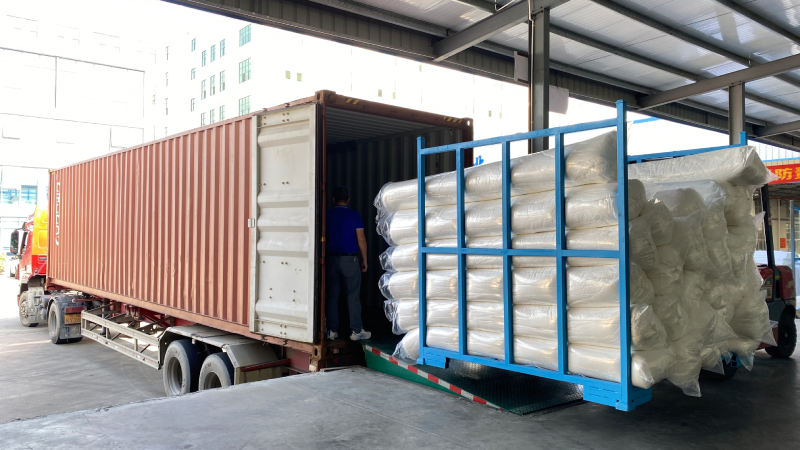
Buyers can also ask suppliers to retain pre-shipment packaging photos, packing lists, and relevant shipping records so that the product information can be checked after the goods arrive.
If one order contains multiple specifications or production batches, the packaging and packing documents should clearly distinguish the different products wherever practical. This helps reduce confusion during warehousing, distribution, and subsequent quality investigations.
Record 6: Document Specification Changes Instead of Keeping Only the Latest Version
During long-term cooperation, a product does not necessarily remain identical to its original specification forever.
Buyers may request changes to width, color, GSM, packaging, or composite structure. Suppliers may also propose adjustments because of production arrangements, raw materials, or process changes.
These changes do not necessarily indicate a quality problem. The important questions are whether the change was confirmed by both parties and which version should apply to the current order.
Buyers can establish a simple product change record containing at least the following information:
Change item: Which material, specification, structure, or packaging requirement has changed.
Previous and revised requirements: What the original requirement was and what the new requirement is.
Reason for the change: The background and purpose of the adjustment.
Approval information: Who approved the change and when it was approved.
Effective scope: The purchase order, production batch, or date from which the change applies.
Related documents: Whether the specification sheet, sample, inspection standard, or packaging label needs to be updated.
This is particularly important for OEM/ODM projects. During product development, several sample rounds and adjustments may take place. If old samples, previous specifications, and new orders are not clearly linked, the factory and buyer may have different understandings of the final approved version.
Therefore, change records are not merely administrative documents. They are also a practical way to prevent version confusion during repeat orders.
Record 7: Link Nonconformity Records to the Relevant Production Batch
For repeat orders, another purpose of quality records is to help both parties identify relevant information quickly when a problem occurs.
When buyers discover an issue with a batch of nonwoven material, they should record the actual situation rather than simply writing “unstable quality” or “different from the previous order.”
A useful nonconformity record should normally identify the following information:
The relevant product code, purchase order number, and production batch.
When and where the problem was discovered, including the relevant roll numbers or quantities.
The observed difference and the corresponding specification or acceptance requirement.
Relevant photos, measurement results, inspection records, or other evidence.
The confirmed investigation findings and the status of subsequent actions.
If the problem affects multiple rolls, buyers should distinguish between products confirmed to be affected and products that still require further inspection. The appropriate isolation, reinspection, or disposition procedure should depend on the nature of the problem and the agreement between both parties.
It is important to distinguish a nonconformity record from a quality claim. A nonconformity record documents the problem and preserves evidence for investigation. A claim process may also involve responsibility determination, claim deadlines, loss calculations, and the final resolution.
For a detailed explanation of what to do after a quality problem occurs, refer to the existing guide on the nonwoven quality claim process for bulk orders, rather than repeating the entire claim procedure in this article.
How Can Buyers Build a Quality Record Checklist for Repeat Nonwoven Orders?
For overseas purchasing teams, the most practical approach is not to create large numbers of unrelated files for every repeat order. Instead, establish a reusable document checklist.
Purchasing teams can review the following items in sequence:
Step 1: Confirm product identity. Verify the product code, product name, and final approved specification version.
Step 2: Confirm order requirements. Check that the purchase order references the correct specifications, packaging requirements, and quality criteria.
Step 3: Confirm production traceability. Verify that production batch numbers, roll numbers, or other identifiers can be linked to the actual products.
Step 4: Confirm inspection records. Check that the required inspections, records, and reports for the current order have been completed or provided as agreed.
Step 5: Confirm packaging and shipping documents. Verify that labels, roll numbers, packing lists, and order information are consistent.
Step 6: Check for changes. If product or packaging requirements have changed, confirm that the new version has been approved and that its effective scope is clear.
Step 7: Review unresolved nonconformities. If previous orders still have issues under investigation, confirm whether they affect the current order and whether both parties have agreed on the necessary actions.
Buyers can integrate this checklist into purchase order approval, supplier management, or internal ERP processes. The specific format—whether a spreadsheet, shared folder, or formal quality management system—can be selected according to the company's purchasing volume and management capabilities.
For businesses that purchase frequently, manage many specifications, or supply end customers on an ongoing basis, consistent file naming, version control, and record retention rules are generally more effective than reorganizing documents from scratch every time.
What Should Buyers Confirm with a Supplier Before the Next Repeat Order?
Before issuing the next purchase order, buyers can confirm several points directly with the supplier.
Product standard: Will the current order still be produced according to the final approved specifications and sample version?
Batch traceability: Can finished roll numbers or batch identifiers be linked to the relevant production records?
Quality documents: Which inspection records or test reports can be provided for the current order? Which documents are maintained only for internal quality management?
Change management: Have the material, structure, production method, or packaging requirements changed since the previous order? If so, has the change been approved?
Delivery verification: Can the packaging labels, packing list, and purchase order be matched accurately?
Record retention: Have both parties agreed on how quality records will be retained, when they will be provided, and what confidentiality requirements apply?
These questions do not need to be discussed from the beginning every time a repeat order is placed. During the initial cooperation or when establishing a long-term purchasing arrangement, buyers can agree on the basic rules. Subsequent orders then need to confirm only the applicable specifications, batches, and documentation requirements.
For customers who require customized GSM, width, material structure, or lamination, quality record requirements can also be integrated into the OEM/ODM specification approval process. This helps reduce information gaps between different departments.
Why Should Buyers Consider Quality Record Management When Choosing a Nonwoven Supplier?
A supplier's value is not limited to its ability to manufacture a product according to requirements. It also includes the ability to carry those requirements forward into subsequent orders and provide clear, verifiable production and quality information when needed.
For overseas customers with long-term purchasing needs, supplier evaluation can include production capability, customization and processing capabilities, specification management, inspection procedures, and batch traceability.
For example, HuiZhou JinHaoCheng Nonwovens Co., Ltd. provides needle-punched nonwoven, needle-punched felt, and composite nonwoven materials, and supports discussion of material and processing requirements according to different product applications. For customers with long-term purchasing needs, it is advisable to confirm product specifications, sample approval, quality records, and change management procedures at the beginning of a project so that subsequent orders can be produced according to mutually agreed requirements.
It is important to emphasize that having more documents does not automatically mean that quality management is more effective. Buyers need records that are accurate, relevant to the product's risk and purchasing requirements, and clearly linked to the actual order.
Conclusion: Repeat Orders Need Reusable Quality Records, Not Just One Approved Shipment
For overseas importers, wholesalers, and product manufacturers purchasing nonwoven materials over the long term, the purpose of keeping quality records is not to increase paperwork. It is to reduce repeated communication and ensure that every order can be linked to a clear product standard, production information, and inspection evidence.
When establishing an effective record system, buyers should prioritize approved specifications and sample versions, purchase orders, production batches, inspection records, packaging labels, product changes, and nonconformity records.
These documents do not need to be managed through a complicated system, but they must be connected, with clear responsibilities for maintenance, updating, and use in subsequent orders.
When product standards, production records, and delivery documents are clearly linked, buyers can manage long-term purchasing with greater confidence and investigate differences more efficiently when they occur.
If you are looking for a nonwoven manufacturer that can support long-term purchasing and customized projects, discuss quality documentation and traceability requirements during the initial order instead of waiting until a later batch shows differences.




