What Are the Different Types of Thermal Bonded Wadding? A Complete Guide to Materials, GSM & Applications
What Are the Different Types of Thermal Bonded Wadding? A Complete Guide to Materials, GSM & Applications
Many manufacturers and product developers discover the same problem when sourcing thermal bonded wadding: samples that look similar often perform completely differently. Some materials feel exceptionally soft, while others are stiffer; some offer excellent loft and resilience, while others shrink or lose thickness after production.
The reason is simple—thermal bonded wadding is not a single product. Different fiber compositions, bonding technologies, GSM ranges, denier specifications, and surface finishing processes all determine its final performance.
Whether you're producing garments, bedding, automotive interiors, filtration products, or hygiene materials, understanding the different categories of thermal bonded wadding helps you select the most suitable custom nonwoven products and reduce costly material mistakes.
What Is Thermal Bonded Wadding?
Thermal bonded wadding, also called heat bonded nonwoven wadding,is a type of nonwoven material manufactured by melting low-melting-point fibers under hot air instead of using chemical adhesives.
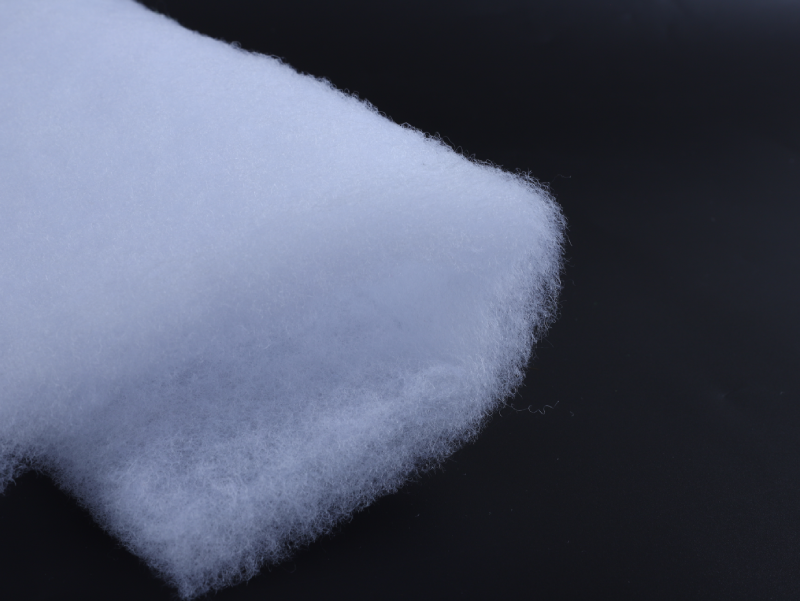
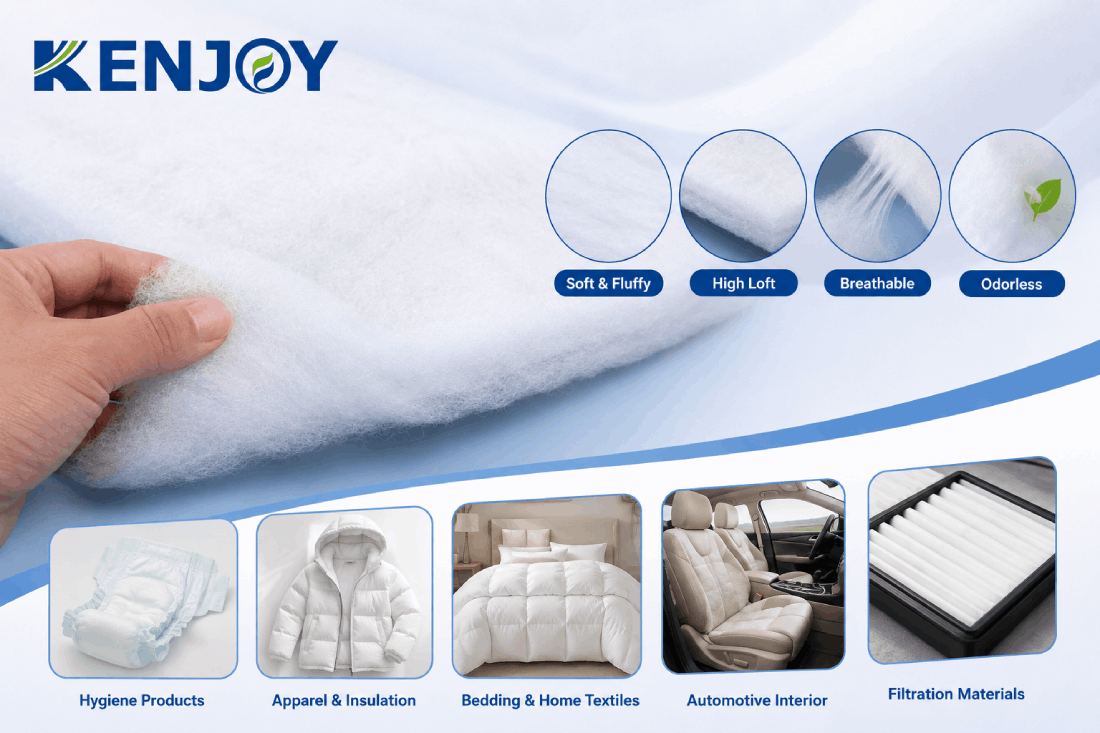
During production, the outer layer of bicomponent or bonding fibers softens and forms thousands of bonding points between fibers, creating a lightweight yet stable three-dimensional structure. Because no glue is added, quality thermal bonded wadding offers excellent softness, breathability, loft, and odor-free performance.
Compared with spray-bonded padding, thermal bonded wadding is cleaner, more environmentally friendly, and better suited for products that come into direct contact with skin.
As a professional nonwoven manufacturer China, Kenjoy provides OEM and ODM thermal bonded wadding in multiple fiber compositions, weights, and functional finishes.
Four Main Types of Thermal Bonded Wadding by Raw Material
1. ES Bicomponent Fiber Thermal Bonded Wadding
This premium category is manufactured entirely from PE/PP bicomponent ES fibers. The polyethylene sheath melts at relatively low temperatures to create bonding points, while the polypropylene core maintains structural strength.
Its greatest advantages are exceptional softness, skin-friendly touch, and uniform breathability, making it ideal for products requiring direct skin contact.
Typical specifications range from 15–80 gsm, and common applications include baby diapers, sanitary napkins, nursing pads, disposable hygiene products, and protective materials.
For export hygiene products, buyers should always verify that virgin ES fibers are used rather than recycled materials.
2. Polyester Thermal Bonded Wadding
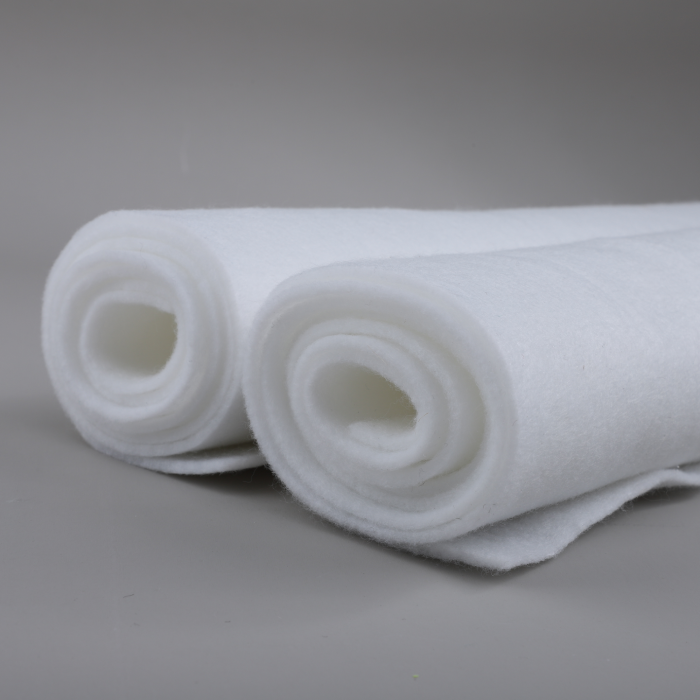
Polyester thermal bonded wadding is the most widely used material in home textiles and industrial filling products.
It combines PET polyester fibers with low-melting bonding fibers, producing a material with excellent resilience, dimensional stability, washability, and structural support.
Unlike ES wadding, polyester wadding performs better under higher temperatures and repeated use.
Common specifications include 40–1000 gsm with thicknesses ranging from 5–50 mm, making it suitable for quilt filling, winter garments, mattresses, sofas, footwear, automotive insulation, and filtration products.
3. Functional Modified Thermal Bonded Wadding
Functional thermal bonded wadding is developed by adding performance-enhancing fibers or additives during manufacturing.
Depending on the application, manufacturers can produce antibacterial wadding for healthcare products, flame-retardant wadding for furniture and automotive interiors, activated carbon composite wadding for odor filtration, and viscose-blended wadding for improved moisture absorption.
These materials are typically supplied as OEM custom nonwoven products with tailored technical specifications.
4. Recycled Fiber Thermal Bonded Wadding
Some low-cost products incorporate recycled polyester fibers to reduce manufacturing costs.
Although economical, recycled materials may cause inconsistent GSM, unpleasant odors, fiber shedding, and unstable quality between production batches.
For baby care, hygiene, and premium export products, virgin fiber materials are generally the safer long-term choice.
Choosing the Right GSM for Different Products
GSM directly influences thickness, loft, insulation, and filling performance.
GSM Range | Typical Applications |
15–30 gsm | Hygiene products, protective layers, lightweight wipes |
30–70 gsm | Garment interlining, disposable protection, primary filtration |
70–120 gsm | Furniture padding, HVAC filter media, thin mattresses |
120–1000 gsm | Quilts, automotive insulation, industrial cushioning and thermal insulation |
Rather than selecting material based only on thickness, buyers should evaluate GSM together with fiber density and resilience.
Three Finishing Processes of Thermal Bonded Wadding
Plain Surface Wadding
Plain thermal bonded wadding retains its natural fluffy surface and offers the highest loft and softness. It is widely used for bedding, garment insulation, and hygiene products.
Calendered Thermal Bonded Wadding
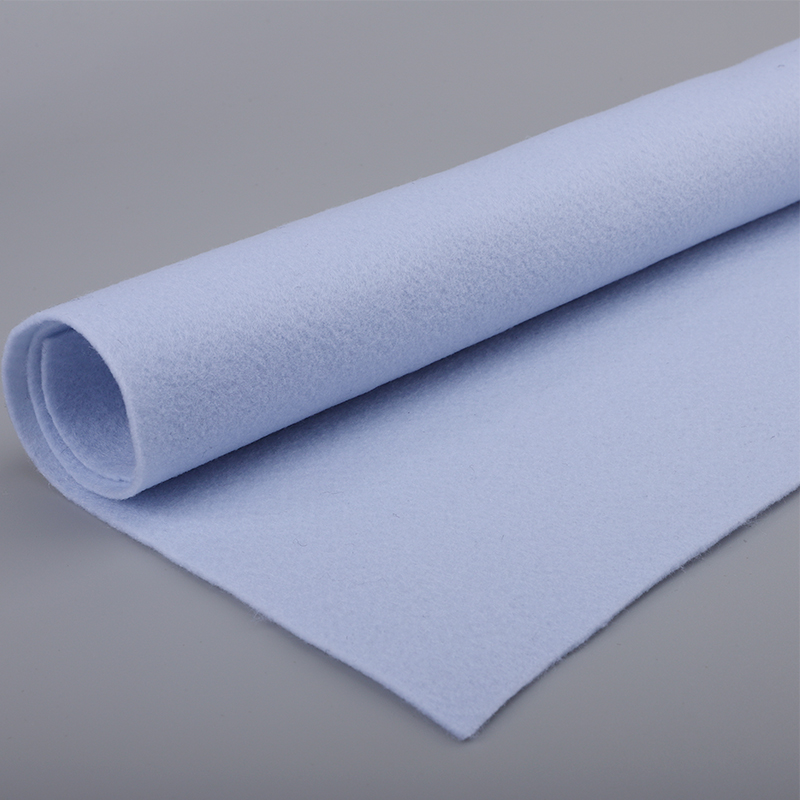
After passing through heated rollers, the surface becomes smoother and denser while tensile strength increases. This finish is commonly used for composite materials and filtration applications.
Embossed Thermal Bonded Wadding
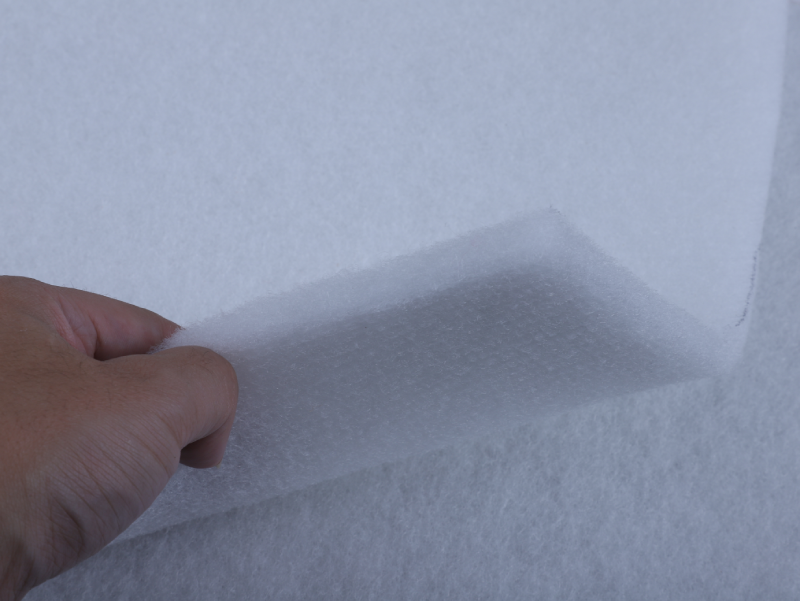
Embossing creates patterned bonding areas that stabilize the internal fiber structure and reduce layer shifting. It is especially popular in washable nursing pads, mattresses, and laminated textile products.
How Does Fiber Denier Affect Softness?
Fiber fineness is another important specification that significantly changes product feel and support.
Fiber Denier | Material Characteristics |
0.9–1.5D | Ultra-soft, premium baby products |
2–3D | Soft general-purpose apparel and hygiene materials |
4–6D | Balanced loft and support for home textiles |
7–12D | Firm structure for automotive and industrial applications |
Finer fibers create a softer hand feel, while coarser fibers improve compression resistance and structural stability.
Thermal Bonded Wadding vs Spray-Bonded Padding
Many buyers confuse these two filling materials during sourcing.
The biggest difference is the bonding method. Thermal bonded wadding uses melted bonding fibers without glue, while spray-bonded padding relies on chemical adhesives to hold fibers together.
As a result, thermal bonded wadding generally provides better breathability, cleaner production, improved skin safety, and superior wash durability, making it the preferred material for baby, medical, and reusable hygiene products.
What Should Buyers Confirm Before Ordering?
Successful material sourcing begins with complete technical specifications rather than price alone.
The first priority is identifying the fiber composition—ES fiber, polyester, or blended fibers. Buyers should also confirm GSM, thickness, width, fiber denier, and whether special treatments such as hydrophilic, antibacterial, flame-retardant, or calendered finishes are required.
For international projects, requesting certifications including ISO 9001, OEKO-TEX, REACH, RoHS, and GRS helps ensure compliance and reduces export risks.
Most importantly, production should always begin with sample evaluation before bulk orders.
Why Choose Kenjoy as Your Thermal Bonded Wadding Manufacturer?
Huizhou Jinhaocheng Nonwovens Co., Ltd. is an experienced nonwoven felt manufacturer and needle punched felt factory in China, specializing in engineered nonwoven materials for global OEM and ODM customers.
Our 26,000㎡ production facility operates 15 fully automated production lines with an annual capacity exceeding 10,000 tons. We manufacture thermal bonded wadding, needle punched felt, floor protection rolls, painter felt, anti-condensation felt, meltblown nonwoven fabric, and many other industrial nonwoven materials.
We support custom GSM, width, thickness, embossing, functional modification, and complete export documentation, providing flexible solutions for distributors, converters, and international brands.
Conclusion
There is no universal “best” thermal bonded wadding—only the material that best matches your product requirements.
ES fiber wadding excels in hygiene and skin-contact applications, polyester thermal bonded wadding offers durability for bedding and industrial products, and functional modified materials provide customized performance for filtration, automotive, and medical industries.
Working with an experienced thermal bonded wadding manufacturer allows brands to improve product quality, simplify material development, and build a more reliable long-term supply chain.
Partnering with an experienced thermal bonded wadding manufacturer ensures stable quality, flexible customization, and reliable long-term supply for your business.