
What Should Buyers Check When Sourcing Recycled Polyester Craft Felt Rolls?
For craft material wholesalers, DIY material brands, art supply distributors, and craft product manufacturers, sourcing craft felt rolls involves more than comparing the price per roll.
Does the roll width and length fit your cutting plan? Are the color and surface appearance suitable for retail sales? Will the material perform well during cutting, sewing, or bonding? Can bulk orders maintain an appearance and feel similar to the approved sample?
These factors can affect downstream processing efficiency, customer experience, and repeat-order planning.
When sourcing recycled polyester craft felt, buyers should not judge suitability based only on product photos, material names, or the word “recycled.” A more practical approach is to define the intended application first, then evaluate the material through specification checks, sample testing, and clear bulk-order acceptance criteria.
This guide focuses on what buyers should check when purchasing craft felt by the roll. It does not cover industrial felt hardness selection or repeat a general guide to custom cutting needle punched felt.
Why Should Buyers Look Beyond Product Photos and Unit Prices When Sourcing Craft Felt Rolls?
For wholesalers, craft felt rolls are usually not the finished products delivered directly to end users. After purchasing, the material may be divided into smaller rolls or sheets, cut into shapes, sewn, bonded, or used to make decorations, DIY kits, fabric crafts, and other products.
Therefore, a material that looks suitable in a product photo may not necessarily meet the requirements of actual production.
Before purchasing, buyers should clarify three important points.
First, what will the material be used for? Different craft projects may have different requirements for color, surface appearance, thickness, softness, and processing methods. Material used for decorative collage may not be the same as material used for sewn craft products.
Second, will the material require further processing? If buyers plan to slit, cut, sew, or bond the material themselves, they should confirm its performance under those actual processes rather than relying only on the supplier’s specification sheet.
Third, is this a one-time purchase or a product that will need regular replenishment? For DIY brands and wholesalers that sell products over the long term, color, appearance, roll specifications, and consistency between batches can be just as important as whether the first sample is acceptable.
The first step in sourcing craft felt rolls is therefore not simply to compare the lowest quotation. It is to determine whether the material fits your processing workflow and sales plan.
Why Should Buyers Confirm Roll Width and Length Before Purchasing Craft Felt?
For buyers purchasing felt by the roll, width and length directly affect cutting plans, packaging, storage, and the amount of material available for use.
For example, if a wholesaler plans to divide a large roll into smaller rolls or sheets, the original roll width needs to fit the intended cutting plan. If the width does not match the required dimensions, additional offcuts or processing steps may be necessary.
Before placing an order, confirm the following details.
Roll width: Confirm the nominal width, acceptable dimensional tolerance, and whether the same width standard will be used for repeat orders.
Roll length: Confirm the nominal length per roll, the acceptable length tolerance, and how the supplier determines or verifies roll length.
Supply format: Confirm whether the material will be supplied as continuous rolls, segmented rolls, or pre-cut sheets. Each format involves different processing and packaging arrangements.
Roll appearance: Inspect the sample for neatly wound edges, consistent winding, and obvious creases, pressure marks, or other conditions that could affect subsequent use.
If the product will be sold in fixed retail sizes, provide the planned selling dimensions to the supplier along with the required original roll specifications.
The goal is not to require every buyer to use one particular width or length. It is to ensure that the purchased specifications match the intended downstream processing method.
How Should Buyers Check Color Consistency and Surface Appearance?
Color and surface appearance are important factors that craft material buyers can easily overlook.
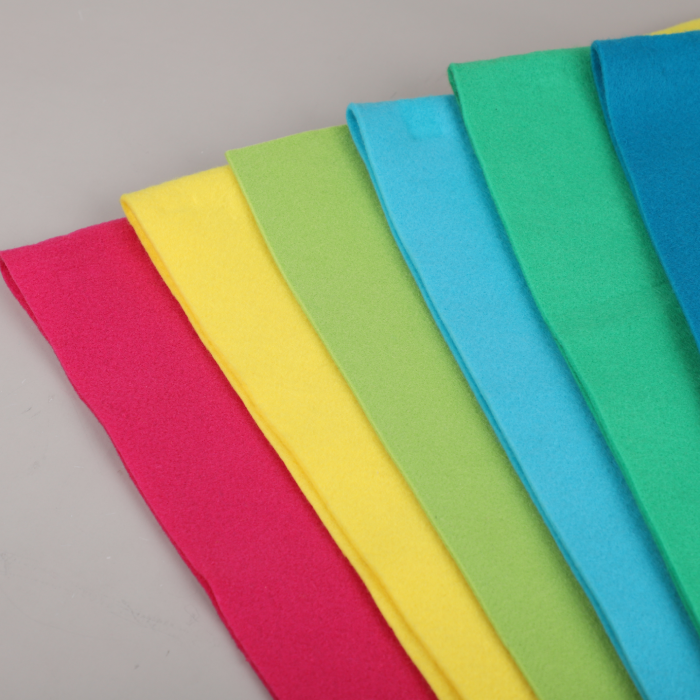
For DIY brands, art supply distributors, and wholesalers, customers often select materials based on color, texture, and visual effect. If the sample looks suitable but bulk deliveries show noticeable color differences, this may affect DIY kit combinations, retail displays, or repeat purchases.
Therefore, buyers should not rely on a product photo alone as the color reference.
A more practical approach is to confirm an actual sample and establish a color reference that both parties can identify. For product ranges containing multiple colors, confirm color names, codes, or other repeatable identifiers to avoid different interpretations across orders.
Buyers should also inspect the surface for visible color spots, stains, uneven fiber distribution, locally sparse areas, or other defects that may affect appearance.
If the material will be used in DIY kits or branded retail products where visual consistency is important, define which appearance variations are acceptable during sample approval and which should be checked during bulk inspection.
For repeat orders, retain the approved sample or another mutually agreed color standard as a reference instead of confirming each order using photos alone.
Different fiber materials, production conditions, and surface structures may affect the final appearance. Buyers should establish acceptance criteria based on the actual product requirements rather than assuming that every craft felt roll will have an identical surface appearance.
Are the Thickness and Feel Suitable for Your Craft Product?
Craft material does not always need to be thicker or softer to be better.
For some decorative projects, buyers may care more about whether the material can bend, layer, or conform to a surface. For products that need to be sewn, joined, or maintain a particular shape, the actual feel, thickness, and condition after processing may be more important.
When sourcing a DIY felt roll, buyers should evaluate the material according to the finished product rather than directly applying industrial felt hardness or load-bearing requirements.
During sample evaluation, confirm the following details.
Thickness: Record the sample thickness and measurement method. Confirm the specification and acceptable tolerance for bulk orders. Different measurement pressures or methods may produce different readings, so both parties should use consistent measurement conditions whenever possible.
Feel: Check whether the material feels suitable for the intended product. For example, determine whether it is too soft, too firm, or unsuitable for the finished design after bending or folding.
Appearance and structure: Inspect both sides if necessary. If the finished product exposes its edges or uses both sides, checking only one surface may not be sufficient.
Performance after processing: For products that require sewing, bonding, or forming, evaluate the material after the relevant process instead of judging it only in its original roll form.
If buyers have not yet determined the exact thickness or feel required, they can provide finished-product photos, an existing sample, or a description of the intended use. This helps the supplier discuss a suitable specification range.
What Should Buyers Test Before Cutting, Sewing, or Bonding Craft Felt?
A craft felt roll that appears suitable for one application will not necessarily perform the same way under every processing method.
If buyers plan to process the material themselves, they should test a sample using the actual tools and methods intended for production.
Cutting: Cut the sample to the planned finished dimensions and inspect the edges. Check whether they meet the product requirements and whether obvious fraying, loose fibers, or other appearance issues occur.
Sewing: If the material needs to be sewn, use the intended thread, stitch spacing, and sewing method to check whether the finished appearance and structure meet expectations.
Bonding: If the product requires glue or adhesive tape, first confirm compatibility between the adhesive and the material. Different adhesives, surface conditions, and application methods can produce different results, so bonding performance should not be assumed from the material name alone.
Layered construction: If the craft product consists of multiple materials, test the felt together with the actual companion materials to evaluate the combined appearance, thickness, and processing behavior.
For buyers with an established production workflow, retain tested samples and record the tools, processing methods, and results. This can reduce communication problems caused by different interpretations of the required process in future orders.
If buyers need material that has already been cut to specific dimensions or shapes, rather than a roll for their own processing, they should discuss a custom-cut supply option separately. These are different purchasing requirements.
Why Should Buyers Check Fiber Shedding, Edges, and Surface Condition?
For craft materials, fiber shedding and edge condition can affect processing efficiency and the appearance of finished products.
However, a small amount of visible fiber does not automatically mean the product is defective. Acceptability should be evaluated according to the material structure and intended application.
During sample inspection, buyers can make several simple observations.
First, gently rub the material surface and check whether obvious fiber shedding or surface changes occur.
Second, cut the material according to the intended use and inspect whether the cut edge meets the finished-product requirements. Check for loose fibers or edge conditions that would be undesirable in the final product.
Third, if the material will be repeatedly bent, sewn, or bonded, inspect its condition after those processes rather than checking only an unprocessed sample.
For projects requiring a consistent appearance or high-volume processing, buyers can include fiber shedding, edge condition, and surface defects in the sample approval criteria and discuss acceptable limits with the supplier.
These checks do not replace professional material performance testing, but they can help identify some practical issues before a bulk order is placed.
What Packaging and Labeling Details Should Wholesalers Confirm?
For craft material wholesalers and DIY brands, packaging is not only for transportation protection. It also affects warehouse management, distribution, and repeat ordering.
When confirming a packaging plan, first clarify whether the material will be sent to a factory for further processing or delivered directly to a wholesale warehouse, retail channel, or branded packaging operation.
For standard rolls, buyers can confirm the following details.
Individual roll packaging: Determine whether each roll needs separate packaging and whether the packaging can help reduce stains, moisture exposure, or surface damage during transportation and storage.
Label information: According to storage and sales requirements, confirm whether labels should include the product name, color, specifications, roll length, batch number, or the buyer’s internal product code.
Cartons or pallets: If the order will be shipped in cartons or on pallets, confirm the packing quantity, outer-carton labels, and packing arrangement in advance to meet storage and transportation requirements.
Branded packaging: If buyers require their own brand, custom labels, or retail packaging, communicate these requirements during the quotation stage. Printed packaging, label content, and the final packing method should be confirmed before production.
Condition after transportation: For materials that are sensitive to pressure or surface appearance, inspect the rolls after unpacking during sample evaluation or a trial order. Assess whether the packaging is suitable for the actual transportation conditions.
Not every purchasing project needs complex customized packaging. The important point is to match the packaging method to the product application, order quantity, transportation method, and sales channel.
How Can Sample Approval Help Reduce Bulk Purchasing Risks?
For buyers purchasing a particular craft felt roll for the first time, sample approval should be an important step before placing a bulk order.
The purpose of a sample is not merely to confirm that the material looks acceptable. It is also to establish a clear reference for subsequent bulk production.
Consider dividing sample approval into three steps.
Step 1: Check the basic specifications. Confirm the fiber material, color, width, length, thickness, packaging format, and other agreed requirements.
Step 2: Simulate actual processing. Test the sample using the real cutting, sewing, bonding, or assembly process to determine whether the material meets the finished-product requirements.
Step 3: Keep an approval record. Retain the approved sample and record the relevant specifications, color, processing method, and important appearance requirements. If multiple colors or specifications are involved, record them separately to avoid treating different products as if they shared the same standard.
For repeat-purchase products, buyers should also confirm how bulk production will be compared with the approved sample and how noticeable differences will be communicated and handled.
Sample approval does not guarantee that every bulk roll will be exactly identical. Bulk orders should still have clear specifications and a reasonable inspection method.
What Information Should Buyers Provide Before Requesting a Craft Felt Roll Quotation?
If buyers send only a short message such as “I need craft felt rolls,” the supplier may have difficulty identifying the appropriate material and preparing an accurate quotation.
To make communication more efficient, provide as much of the following information as possible.
Product application: Explain the type of DIY, decorative, textile craft, or other product for which the material will be used.
Material requirements: If already confirmed, provide the fiber type, thickness, color, and other known specifications. If these details are not yet confirmed, an existing sample or finished-product photo can still be useful.
Roll dimensions: Specify the required width, length per roll, planned cutting dimensions, and whether alternative standard roll sizes can be considered.
Processing methods: Explain whether the material will be cut, sewn, bonded, or processed in another way.
Purchase quantity: Provide the estimated initial order quantity and indicate whether regular replenishment is expected. This helps the supplier assess the appropriate supply and packaging arrangements.
Packaging and labeling: Explain whether individual packaging, carton labels, private labeling, or other customized requirements are needed.
Documentation requirements: If a brand customer or purchasing process requires documentation related to recycled materials, specify the documents needed and their intended purpose. Do not assume that the description “recycled polyester” automatically means that a product meets a particular certification, regulation, or customer audit requirement.
Target market: If the product will be sold in a specific market and has defined material safety, labeling, or compliance requirements, inform the supplier during the quotation stage and confirm those requirements separately.
Buyers do not need to know every technical parameter before making an initial inquiry. A clear application, sample, product photo, and description of the intended processing method can also help the supplier understand the requirements.
How Can Buyers Move from Sample Approval to Bulk Purchasing and Repeat Orders?
After a sample has been approved, the purchasing process is not yet complete. The agreed requirements need to be translated into practical standards for the bulk order.
For craft material wholesalers and DIY brands, confirm the following before placing the order.
Specification records: Record the approved color, width, length, thickness, fiber material, and other important requirements in the purchasing documents or product specification sheet.
Sample reference: Confirm whether both parties will retain an approved sample and how it will be used as a reference for subsequent production.
Bulk inspection: Define which items need to be checked, such as roll dimensions, color, surface appearance, packaging, and labeling. For products with strict appearance or color requirements, discuss mutually agreed acceptance criteria before ordering.
Order arrangements: Confirm the order quantity, packaging requirements, lead time, and shipping arrangements. If repeat orders are expected, also discuss how the same specifications will be maintained across future supplies.
Change management: If later orders require changes to the fiber material, color, specifications, or packaging, confirm those changes before production. This helps prevent different product versions from being treated as identical.
For long-term purchasing, clear product specifications and sample records are often more useful than keeping only a previous quotation, because a price quotation does not fully describe the material’s appearance and processing requirements.
Conclusion: Confirm Processing and Sales Requirements Before Comparing Craft Felt Roll Prices
When sourcing craft felt rolls, the key question is not whether one material is suitable for every DIY project. It is whether the material meets the processing, appearance, packaging, and sales requirements of a specific product.
For wholesalers, craft material brands, and art supply distributors, roll width and length, color consistency, thickness and feel, cutting and sewing performance, fiber shedding, and packaging are all worth checking during sample evaluation.
If the product will be sold over the long term or replenished regularly, retain the approved sample, specification records, and bulk acceptance criteria as references for future orders.
As a manufacturer engaged in nonwoven material research and production, HuiZhou JinHaoCheng Nonwovens Co., Ltd. can discuss needle punched felt rolls and related customization requirements according to specific product applications. For recycled polyester craft felt projects, buyers can provide the intended use, color, roll dimensions, downstream processing method, and estimated purchase quantity to support further discussion of available specifications and sample approval.
If you are sourcing craft felt rolls, first clarify how the finished product will be used, how the material needs to be processed, and which requirements must be maintained during bulk sales. Confirm samples and quotations against those requirements rather than comparing only the price per roll.




