
OEM Recycled PET Felt: What Specifications Should Buyers Provide?
When sourcing OEM recycled PET felt from a Chinese manufacturer, simply saying “I need recycled PET felt” is usually not enough for an accurate quotation or sample development. Overseas buyers should provide key information about the material, recycled content, certification requirements, dimensions, physical specifications, application, packaging, and order quantity.
A clear RFQ helps the supplier understand the actual product requirements, provide a more appropriate quotation, develop the right sample, and reduce specification changes before bulk production.
Why Is “OEM Recycled PET Felt” Not Enough for a Factory to Quote?
For a manufacturer, “OEM recycled PET felt” only describes the general product category. It does not tell the factory what material structure, recycled content, size, thickness, density, hardness, color, or application the buyer actually needs.
For example, a buyer may need recycled PET felt for furniture protection, acoustic panels, protective pads, packaging, or another finished product. These applications may require different material structures and specifications. Even when two buyers request recycled PET felt with the same nominal thickness, their actual requirements may still be different.
Therefore, the more complete the RFQ information is, the easier it is for the manufacturer to determine the appropriate specification, calculate the cost, prepare a sample, and quote the order accurately.
For overseas buyers, the purpose of an RFQ is not necessarily to provide every technical parameter themselves. If some specifications are not yet confirmed, buyers can clearly mark them as “to be confirmed” and provide the application and required performance instead.
Material: First Confirm Which Type of Recycled PET Felt You Need
The first part of the RFQ should identify the basic material requirement. Buyers should clearly state that the product needs to be made from recycled PET fiber and, if applicable, specify whether they require recycled polyester fiber from post-consumer PET bottles or another defined recycled source.
This is important because “recycled felt” is a broad term and does not always mean the same raw material. Clearly identifying recycled PET as the required material helps prevent misunderstandings during quotation and sample development.
If the buyer already has an existing material or supplier sample, it can also be sent to the manufacturer for reference. A physical sample can help the supplier understand the expected appearance, structure, softness, firmness, and general material characteristics.
For a formal RFQ, buyers can write the material requirement in a simple format such as:
Material: Recycled PET fiber
Product: Needle punched recycled PET felt
Application: To be confirmed
This gives the manufacturer a clear starting point without requiring the buyer to define every technical parameter in advance.
Recycled Content: How Should the Requirement Be Written?
The recycled content requirement should also be clearly stated if it is important to the project. Different buyers may have different requirements for the percentage or source of recycled material.
For example, the RFQ can state a specific recycled content requirement if the buyer already has one. If the percentage has not yet been confirmed, the buyer can simply state that recycled PET content is required and ask the supplier to provide the available options.
This information can affect the material specification and the documentation that the buyer may need later. Therefore, it is better to discuss the recycled content requirement at the beginning of the sourcing process rather than after the sample has already been developed.
For buyers with sustainability or recycled-content requirements, the RFQ should distinguish between the general requirement for recycled PET material and any formal certification requirement.
GRS Requirement: Do You Need GRS?
If the buyer requires GRS recycled PET felt, the GRS requirement should be stated directly in the RFQ.
A buyer may need recycled PET material for sustainability purposes without requiring GRS certification. Another buyer may need GRS-certified material because the finished product or customer project requires relevant certification documentation.
These are different procurement requirements and should not be treated as the same thing. Stating the GRS requirement at the inquiry stage allows the manufacturer to confirm whether the requested material and certification scope can meet the project requirements.
If GRS is required, buyers can include a simple statement such as:
GRS: Required
or
GRS: Not required
If the buyer is not sure, they can ask the supplier to explain which certification documents are available for the proposed recycled PET material.
How Should GSM, Thickness, Density and Hardness Be Written in the RFQ?
GSM, thickness, density, and hardness are important specifications, but buyers do not always need to have all four parameters fully confirmed before contacting a manufacturer.
If the buyer already has a target specification, it should be included in the RFQ. For example:
GSM: 1,500 g/m²
Thickness: 5 mm
Density: To be confirmed
Hardness: Semi-hard
If the buyer only knows the required thickness but does not know the appropriate GSM or density, the application should be provided as well. The manufacturer can then evaluate the requirements and recommend a suitable material structure for sample development.
For example, a buyer can state:
Target Thickness: 5 mm
Target GSM: To be confirmed
Density / Structure: According to application
Application: Furniture protection
Required Performance: As required for the finished product
This is more useful than sending only “5 mm recycled PET felt,” because the manufacturer can evaluate the complete requirement rather than treating thickness as the only specification.
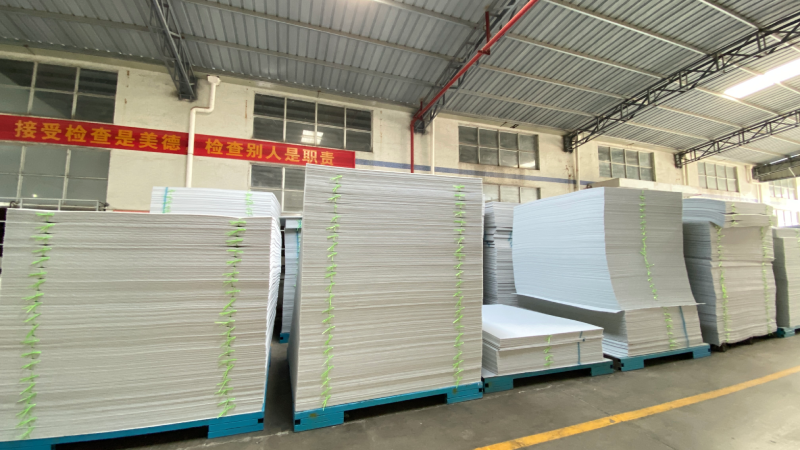
Width, Roll or Sheet: What Form Do You Need?
Buyers should also tell the manufacturer whether they need recycled PET felt rolls or sheets.
For roll material, the RFQ should ideally include the required width and, if known, the roll length. For sheet material, buyers should provide the required sheet dimensions.
For example:
Width: 1.5 m
Form: Roll
Roll Length: To be confirmed
or:
Sheet Size: 1,220 × 2,440 mm
Form: Sheet
This information affects production planning, cutting, packaging, transportation, and quotation. If the buyer needs custom dimensions, providing the actual finished-product size or drawing can make the quotation and sample development more accurate.
Why Should Color and Application Also Be Included?
Color and final application are often overlooked in the first inquiry, but they can be important for customized recycled PET felt projects.
If a specific color is required, the buyer can provide a color reference, color card, Pantone number, or existing sample where applicable. If the color is not confirmed, the buyer can simply state the preferred color range.
The final application is even more important when some technical specifications are still unknown. A manufacturer can better understand the required material structure when the buyer explains whether the felt will be used for furniture protection, acoustic products, packaging, protective pads, interior components, or another application.
For example:
Application: Furniture component
Color: Grey
Final Product: Drawer liner
This allows the supplier to consider the application together with the material requirements instead of quoting a generic recycled PET felt specification.
What Packaging and Quantity Information Should Be Included?
The RFQ should also include the expected packaging requirement and purchase quantity when these are known.
Packaging requirements may include individual packing, roll packing, sheet packing, carton packing, woven bags, labels, or customized packaging. If the buyer has specific packaging instructions, these should be stated before quotation so the supplier can include the relevant cost.
The estimated order quantity is also important because production costs and quotation levels may depend on order volume. Buyers should provide the expected quantity in the most practical unit, such as rolls, sheets, square meters, or kilograms.
For example:
Packaging: Export standard packaging
Quantity: 5,000 m²
Order Type: Trial order / regular bulk order
If the final quantity has not yet been confirmed, the buyer can provide an estimated range instead.
What Should Buyers Provide If They Do Not Know the Complete Specifications?
Not every overseas buyer has a complete technical specification when starting a new recycled PET felt project. This is common when the material is being developed for a new product.
If GSM, thickness, density, or hardness are not yet confirmed, buyers can provide other information that helps the manufacturer understand the requirement.
Useful information can include an existing sample, product drawing, product photo, final application, required function, target product size, current material specification, or competitor sample.
For example, instead of saying only “We need recycled PET felt,” a buyer can explain:
“We are developing a furniture component and need recycled PET felt as a protective liner. We currently use a similar felt material and can provide a sample for reference.”
This gives the manufacturer a practical starting point for material evaluation and sample development.
A formal RFQ can include at least the following information:
Recycled PET fiber requirement
Recycled content requirement
GRS requirement
Target GSM or acceptable GSM range
Target thickness or thickness range
Density or required material structure
Hardness
Width and roll length
Roll or sheet format
Color
Final application
Packaging requirement
Estimated quantity
The goal is not to make the RFQ unnecessarily complicated. The goal is to provide enough information for the supplier to understand what needs to be quoted and developed.
What Is the Purchasing Process From RFQ to Sample and Bulk Production?
For an OEM recycled PET felt project, the purchasing process normally begins with the buyer sending an RFQ with the available specifications and application information.
The manufacturer then reviews the requirements, confirms the material and specifications, and provides a quotation. If some parameters are not yet finalized, the buyer and supplier can discuss them before sample development.
After the quotation is accepted, the manufacturer develops the sample according to the confirmed requirements. The buyer evaluates the sample based on appearance, dimensions, material structure, application performance, and other project-specific requirements.
Once the sample is approved, the final specification should be confirmed before bulk production. The approved specification becomes the reference for the production order so that the buyer and manufacturer have a clear basis for subsequent bulk manufacturing.
The overall process can therefore be understood as:
RFQ → Quotation → Sample Development → Sample Approval → Final Specification → Bulk Production
For overseas buyers, keeping the final approved specification clearly documented is important for future repeat orders and batch consistency.
How Can HuiZhou JinHaoCheng Nonwovens Co., Ltd. Support OEM Recycled PET Felt Projects?
For overseas importers, distributors, and product manufacturers looking for a recycled PET felt supplier, HuiZhou JinHaoCheng Nonwovens Co., Ltd. can support OEM and ODM projects based on customer requirements.
The company has more than 20 years of experience in nonwoven manufacturing and provides customized needle punched nonwoven and felt products. For recycled PET felt projects, buyers can provide the available material requirements, recycled content, application, dimensions, and target specifications during the inquiry stage, then confirm the final material structure through sample development.
For buyers who have not yet finalized every specification, providing the final application and an existing sample, drawing, or product reference can also help the manufacturer understand the project requirements and develop a suitable customized material.
Conclusion
For OEM recycled PET felt, a useful RFQ should provide more than the product name. Buyers should clearly communicate the recycled PET material requirement, recycled content, GRS requirement, GSM, thickness, density, hardness, width, roll or sheet format, color, application, packaging, and quantity where these specifications are already known.
If some parameters are still uncertain, buyers do not need to delay the inquiry. Providing the final application, required function, existing sample, drawing, or product reference can give the manufacturer enough information to begin the specification discussion.
A clear RFQ helps both sides move more efficiently from quotation to sample approval and finally to bulk production, while reducing misunderstandings about the final recycled PET felt specification.




