
What Should Buyers Verify Before Ordering Meltblown Filter Media?
For overseas filtration material importers, filter manufacturers, industrial product manufacturers, and wholesalers, a common question when purchasing meltblown filter media is whether a supplier's claim of “high filtration efficiency” means the material is suitable for their product.
The answer is not necessarily yes.
Filtration efficiency is an important performance indicator, but a single percentage cannot prove that a material is suitable for a specific filtration system. Buyers also need to consider the target particles, test method, test conditions, pressure drop, material specifications, and whether the test results represent the product they intend to purchase.
For long-term purchasing and OEM/ODM projects, the key is not to find the highest number in a supplier's marketing materials. It is to understand how the data was obtained, whether supporting test evidence is available, and whether samples and subsequent bulk production can meet the agreed requirements.
This guide explains which information buyers should verify before ordering meltblown filter media, helping them avoid purchasing decisions based solely on claims of “high filtration efficiency.”
Why Should Buyers Not Rely Only on “High Filtration Efficiency” Claims?
When introducing meltblown nonwoven fabric, suppliers may provide filtration efficiency, GSM, thickness, or promotional descriptions such as “high-efficiency filtration” and “low resistance.”
These details can help buyers understand a product initially, but they do not constitute a complete basis for purchasing decisions.
First, filtration efficiency results may be obtained using different test methods, target particles, test conditions, and sample states. Even if two suppliers both provide a filtration efficiency percentage, the results cannot automatically be used to determine which material performs better or worse when the test conditions differ.
Second, filtration efficiency is not the only performance requirement. While capturing particles, the material may also need to meet the airflow resistance or pressure drop requirements of the application. A material that performs well in one test may not be suitable for every piece of equipment or product structure.
Finally, marketing materials, product specification sheets, and formal test reports do not provide the same type of evidence. Marketing materials offer an initial product overview, specification sheets define product requirements, and test reports document results associated with particular samples and test conditions.
Therefore, buyers should not simply ask:
“What is the filtration efficiency of your meltblown fabric?”
A more useful question is:
“Which test method and conditions were used to obtain this result, and is the result relevant to my product?”
First, Define the Target Particles and Final Product Application
Before verifying test data, buyers should clarify how the meltblown filter media will be used.
Even when two projects use meltblown filtration materials, their requirements for target particles, filtration performance, airflow resistance, and operating environments may differ significantly.
For example, a buyer may be developing an air filtration component, an industrial filtration product, or an OEM product that requires filtration media. These products have different designs and operating conditions, so the fact that a material is intended for “filtration” does not automatically mean it meets the requirements.
Before requesting a quotation, clarify the following information.
Final product: What product or filtration component will use the meltblown media? Where will the material be positioned within the product?
Target particles: What type of particles need to be captured? If applicable, what is the target particle size range?
Filtration requirements: What filtration performance must the product achieve? Is there a specified test standard, test method, or customer acceptance requirement?
Operating conditions: Under what temperature, humidity, airflow, or other environmental conditions will the material operate? Will it encounter oil mist, liquid contact, or other special conditions?
Final product standards: Must the product meet performance requirements specified by the end customer, industry standards, or applicable regulations?
If some parameters have not yet been determined, buyers can provide existing product samples, drawings, equipment models, or application details and work with the supplier to identify the information that needs to be confirmed.
One important point is that material-level test results do not necessarily represent the performance of the finished product. If the filter media will be laminated, pleated, processed, or installed in specific equipment, the final product may still require separate validation.
Verify the Test Conditions Behind Filtration Efficiency Data
Filtration efficiency is one of the key indicators buyers need to verify when evaluating meltblown filter media. However, results obtained under different test conditions cannot be compared directly without further confirmation.
When receiving filtration efficiency data from a supplier, buyers should first check whether the report or technical document identifies the test method and relevant conditions.
Test standard or method: Which test standard or method was used? Is the standard number and version clearly identified? Is the method suitable for the buyer's product and application?
Target particles: What type or size range of particles was used in the test? Is it relevant to the actual filtration requirement?
Test conditions: What airflow conditions, sample state, and other key parameters were used? Does the report provide enough information to understand the scope of the results?
Sample identification: Can the tested material be identified? Are the product model, specifications, sample number, or other relevant details recorded?
Presentation of results: Under which test conditions and sample state was the reported filtration efficiency obtained? Are there abbreviations or promotional descriptions that could be misunderstood?
If two reports use different methods or conditions, their filtration efficiency percentages alone cannot establish which material is more suitable.
For example, Supplier A provides a filtration efficiency percentage, and Supplier B provides another percentage. If the two results were not obtained using comparable test methods and conditions, the figures do not support a fair performance comparison.
Therefore, buyers should confirm that the test conditions are comparable before comparing the results.
Filtration Efficiency and Pressure Drop Must Be Evaluated Together
When purchasing filter media, buyers should also confirm the pressure drop or airflow resistance requirements of the product design.
Pressure drop represents the loss of pressure as air passes through the filter media. In air filtration applications, the material needs to capture particles while remaining within the resistance limits required by the system.
If buyers pursue higher filtration efficiency without checking pressure drop, they may overlook a mismatch between the material and the actual equipment.
Therefore, buyers should confirm the following information.
Pressure drop data: Has the supplier provided pressure drop results corresponding to the sample?
Test conditions: Under what airflow or test conditions was the pressure drop measured? Are the relevant conditions clearly stated in the report?
Basis for comparison: Were the pressure drop results from different suppliers obtained using comparable test methods and conditions?
System requirements: What pressure drop range can the final product or filtration equipment accept? Has this requirement been confirmed by the engineering or product design team?
Filtration efficiency and pressure drop should be evaluated together according to the actual application, rather than treating either indicator alone as the basis for a purchasing decision.
Similarly, a lower pressure drop does not mean that the material necessarily meets the filtration efficiency requirement. Buyers need to verify that the material satisfies all performance criteria specified for the project.
If the target filtration efficiency and pressure drop have not yet been established, buyers should confirm the requirements with their product engineering team or filtration system designer before requesting the corresponding data from the supplier.
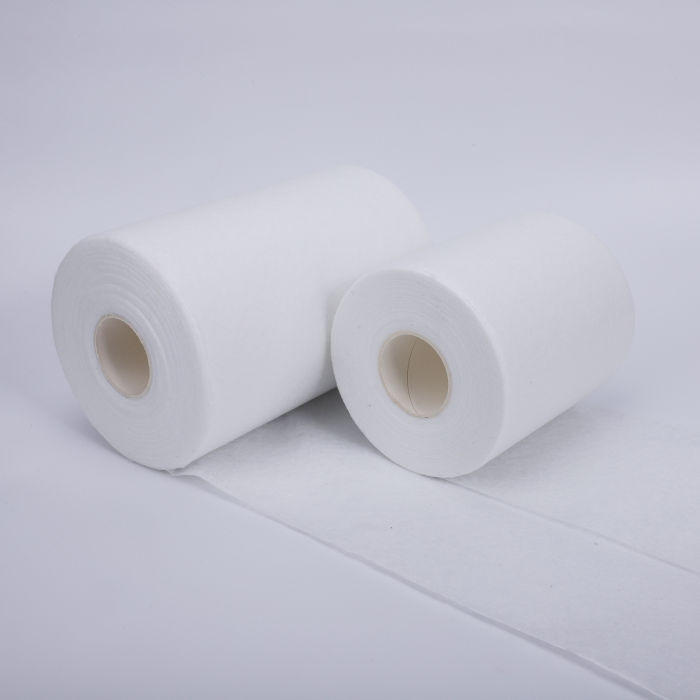
How Should GSM, Thickness, and Width Be Used to Verify Material Specifications?
Filtration efficiency and pressure drop help buyers understand filtration performance, while GSM, thickness, and width help confirm the specifications of the material being purchased.
These specifications cannot replace filtration performance testing, but they remain important for product identification, downstream processing, and repeat purchasing.
GSM (basis weight): Confirm the required mass per unit area and its permitted tolerance. If the project specifies a GSM range, clarify the measurement method and acceptance limits.
Thickness: Confirm the thickness requirement, measurement method, and measurement conditions. Different measurement pressures or methods may affect the result, so test conditions should be considered when comparing data.
Width: Confirm the roll width, permitted tolerance, and actual processing requirements. For automated production lines or products requiring lamination, width can affect material utilization and downstream processing.
Roll length and supply format: Confirm whether the material will be supplied in rolls, sheets, or another format, together with the corresponding dimensions and packaging requirements.
Material identification: Confirm the product code, specification version, sample number, or batch identification so that the test report can be linked to the material supplied for subsequent orders.
It is important to emphasize that a higher GSM or greater thickness does not automatically mean higher filtration efficiency, nor does either parameter independently prove that the material is suitable for a particular filtration application.
Buyers should first identify the performance requirements and applicable test methods for the final product, then verify whether GSM, thickness, width, and other specifications meet the production and purchasing requirements.
What Information Should Buyers Verify in a Test Report?
When a supplier provides a test report, buyers should look beyond the result figures on the first page. They also need to confirm whether the report demonstrates that the relevant sample achieved the stated results under specified conditions.
The following information should be reviewed.
Report source: Which organization or laboratory issued the report? Is it an internal factory test record or a report from an independent third-party laboratory?
Test method: Does the report identify the test standard, method number or version, and necessary test conditions?
Sample identification: Does the report specify the sample name, specifications, number, or other identifying information? Can these details be matched to the material supplied by the manufacturer?
Test results: Which properties were tested? Are the results, units, and applicable conditions clearly stated?
Report date: When was the report issued? If the material has since been improved or changed, does the tested sample still correspond to the product currently being offered?
Scope of applicability: What conclusions does the report support? Does it incorrectly extend a result from one test to an entire product, product series, or finished product?
If a project requires third-party testing, buyers should confirm the laboratory requirements, test standards, sample preparation method, and product specifications that the report must cover.
Buyers should also distinguish between company management system certifications, product-related certifications, and specific performance test reports. These documents serve different purposes and cannot replace one another.
The absence of a report does not necessarily mean that a material is noncompliant, and having a report does not mean that every purchasing requirement has been proven. What matters is whether the report is applicable, whether its information is complete, and whether the results satisfy the project requirements.
Before bulk purchasing, if a particular performance property is critical to the finished product, buyers should confirm whether the supplier can provide the corresponding test documentation. If the data is not currently available, this limitation should be made clear and appropriate testing can be discussed, rather than assuming that the material already meets the target.
How Should Buyers Validate Samples?
Document review helps buyers determine whether the supplier's performance evidence is sufficient. However, for important filtration projects, sample validation is often also necessary to confirm whether the material is suitable for the actual product.
Sample validation should follow the agreed purchasing requirements rather than relying solely on touch, appearance, or the supplier's verbal descriptions.
Step 1: Confirm sample identity. Record the supplier, product model, specifications, sample number, and any necessary batch information so that the tested sample can be traced.
Step 2: Check sample specifications. Verify that GSM, thickness, width, material structure, and other agreed items meet the requirements.
Step 3: Define the test plan. Confirm the necessary test items, such as filtration efficiency, pressure drop, and other relevant properties, together with the test methods and acceptance conditions.
Step 4: Test under consistent conditions. Where possible, use the same or confirmed comparable test conditions for samples being compared, avoiding misleading conclusions caused by differences in methodology.
Step 5: Check finished-product compatibility. If the material will undergo lamination, pleating, forming, or other processing, evaluate whether these processes affect the required performance of the final product.
Step 6: Retain validation records. Record the sample number, test conditions, results, approval date, and final confirmed specification version as references for subsequent orders.
If samples will be sent to a third-party laboratory, confirm the sample quantity, sampling method, test items, and report requirements before testing begins.
One important point is that a single sample test demonstrates the performance of the tested sample under the relevant conditions. It does not automatically prove that every subsequent production batch will have identical performance. After sample approval, buyers should still establish specifications and acceptance rules suitable for bulk production.
How Should Buyers Establish Quality Acceptance Criteria for Bulk Orders?
After sample validation is completed, buyers also need to define how subsequent bulk orders will be accepted.
If the initial sample passes but the bulk order has no clear acceptance criteria, the buyer and supplier may still disagree about what constitutes an acceptable product.
The following items should be specified in the purchasing specification or quality agreement.
Product specifications: Define the material model, GSM, thickness, width, roll length, and other applicable specifications.
Performance requirements: Specify the required filtration efficiency, pressure drop, or other performance properties, together with the applicable test methods and conditions.
Inspection documents: Confirm which inspection records, test reports, or batch documents must be provided for each order.
Sampling and acceptance methods: Agree on the sampling method, inspection scope, acceptance criteria, and procedures for handling nonconforming products.
Batch identification: Ensure that production batches, finished roll numbers, packaging labels, and shipping documents can be linked to one another.
Change management: If changes to the material structure, raw materials, production process, or specifications could affect performance, define the notification, evaluation, and approval requirements.
These requirements should be determined according to product risk, customer standards, and purchasing volume. Not every meltblown filter media product requires exactly the same acceptance plan.
For buyers with long-term purchasing needs, approved samples, final specifications, test reports, and batch acceptance requirements should be retained together. This allows subsequent deliveries to be checked against the standards agreed by both parties instead of relying on a subjective judgment that the material is “close enough to the previous order.”
What Should Buyers Prepare Before Requesting a Meltblown Filter Media Quotation?
Buyers who want more relevant quotations and technical responses should prepare a concise technical requirement sheet before sending an inquiry.
Application information: What is the final product, and where will the material be installed?
Target particles and performance requirements: What particles need to be filtered? Are specific filtration efficiency or other performance targets required?
Testing requirements: Is a test standard, test method, laboratory, or report format specified?
Pressure drop requirements: Does the product or equipment have an acceptable pressure drop range? Have the relevant test conditions been established?
Material specifications: Are GSM, thickness, width, roll length, and material structure already defined?
Sample requirements: Is a sample required for internal testing or third-party testing before an order is placed?
Bulk acceptance: Are batch inspection records, product identification, a sampling plan, or other quality documents required?
Order information: What are the expected purchasing quantity, delivery format, packaging requirements, and future purchasing plans?
If some parameters have not yet been determined, buyers can provide an existing product sample, drawing, or application description and work with the supplier to identify the missing information.
For customized projects, buyers should also confirm whether the supplier can support the required material specifications, sample development, and downstream processing. Different suppliers may have different testing, documentation, and customization capabilities, so these should be verified rather than assumed.
Conclusion: Verify the Performance Evidence Before Placing a Bulk Order
When purchasing meltblown filter media, filtration efficiency is an important reference point, but it cannot be evaluated independently of the test method, target particles, and specific test conditions.
Buyers should first confirm the final product application and filtration requirements. They should then verify whether the supplier's filtration efficiency, pressure drop, and other performance data are supported by clearly defined test conditions. Next, they should review the sample identification, test method, results, and scope of applicability in the test report, followed by sample validation to confirm that the material meets the actual product requirements.
After sample approval, material specifications, performance requirements, inspection documents, batch identification, and acceptance criteria should be incorporated into the management of subsequent bulk orders.
For overseas importers, filter manufacturers, wholesalers, and OEM/ODM customers, this approach helps reduce the risk of choosing materials based only on promotional figures and makes comparisons between suppliers more evidence-based.
HuiZhou JinHaoCheng Nonwovens Co., Ltd. provides meltblown nonwoven fabric and other customized nonwoven materials. For customers with filtration projects, it is advisable to clarify the intended application, performance requirements, and required test documentation during the inquiry stage, then confirm sample validation and subsequent purchasing requirements according to the information actually available.
Before the test evidence has been verified against your product requirements, do not make a bulk purchasing decision based solely on a “high filtration efficiency” claim or a single performance figure.




