Wound Dressing Materials: How Nonwoven Fabrics Support Medical Absorption Performance
Choosing materials for wound dressings involves more than liquid absorption. Material selection also affects product softness, structural stability, liquid retention, and compatibility with downstream manufacturing processes. For wound dressing manufacturers, selecting the right wound dressing material is not simply a matter of finding a nonwoven fabric that can absorb liquid. Buyers need to understand the role of the absorbent layer within the complete dressing structure and determine whether it is compatible with the other material layers and the intended manufacturing process.
When developing surgical absorbent pads, wound dressings, and related medical consumables, different material layers may perform different functions, such as receiving liquid, absorbing and retaining liquid, providing a contact surface, or acting as an external barrier. Even when two materials can both absorb liquid, they may differ considerably in softness, thickness, structure under compression, liquid distribution, and processing compatibility.
Therefore, buyers should start with the intended product structure and performance requirements before defining the absorbent layer's material composition, physical specifications, and sample acceptance criteria.
Why Should Buyers Look Beyond Absorption Capacity When Selecting the Absorbent Layer for Wound Dressings?
Absorption capacity is an important property of wound dressing materials, but comparing absorption capacity alone is not enough to determine whether a material is suitable for a particular product.
First, the absorbent layer must match the intended function of the finished product. Different dressings may have different structures, dimensions, liquid management requirements, and use conditions. As a result, the tasks assigned to the absorbent layer may also vary.
Second, the material needs to maintain a structure that is suitable for the product design after absorbing liquid. If it deforms significantly, experiences excessive local thickness changes, or distributes liquid in a way that does not meet the design requirements, it may not be suitable even if its initial absorption performance is good.
Finally, the absorbent layer is usually not used in isolation. It may need to be combined with a surface layer, backing layer, or other functional layers and then undergo cutting, lamination, bonding, or other processing operations. The performance of the material itself should therefore be evaluated separately from the performance of the assembled product.
For buyers, a more effective approach is to define the primary function of the absorbent layer first and then determine which properties need to be verified, rather than relying solely on the product name or a single absorption value.
What Functions Do Different Material Layers Perform in Wound Dressings?
Wound dressings may contain multiple functional layers, but the specific structure depends on the product design. There is no fixed number of layers or universal material combination suitable for every dressing.
Surface Layer: Meeting the Product's Contact Requirements
The surface layer is one of the key components to evaluate in a dressing structure. Depending on the product design, it may need to balance softness, surface integrity, liquid passage characteristics, and compatibility with the other layers.
For products intended for direct wound contact, softness or liquid absorption alone does not establish that a material is suitable for such use. Buyers should confirm whether the material meets the applicable biocompatibility, cleanliness, and other relevant requirements for the intended application, following the validation plan for the finished product.
Absorbent Layer: Receiving, Absorbing, and Retaining Liquid as Designed
The primary role of the absorbent layer is to receive liquid entering the dressing structure and absorb and retain it according to the finished product's design requirements.
When developing absorbent pads or multilayer dressings, buyers need to assess whether the absorbent layer can work effectively with the other layers, rather than comparing only the liquid absorption values obtained from testing the material on its own.
For example, a product may require liquid to enter the absorbent layer and remain relatively stable within it. Another design may require liquid to be distributed within a particular area. The specific requirements should be determined by the finished product design and verified through appropriate material and finished-product testing.
Backing and Other Functional Layers: Supporting the Overall Product Design
Depending on the product structure, a dressing may also contain a backing layer, barrier layer, fixation layer, or other functional layers. These materials may affect liquid migration, overall softness, finished thickness, and interlayer bonding.
Buyers should not select each material in isolation. Instead, they should check whether every layer has a clearly defined function, whether the materials are compatible with one another, and whether the combined structure meets the finished product's requirements.
The key principle is that each layer should have a clearly defined function, and the absorbent layer should be selected according to its actual role within the complete dressing structure.
How Can Buyers Balance Softness and Structural Stability When Selecting an Absorbent Layer?
Softness is an important consideration in wound dressing material development, but a soft material is not automatically suitable for every dressing. Buyers also need to consider whether the material can maintain the required structure during cutting, handling, layer fixation, and product assembly.
Softness Must Be Evaluated in the Context of the Finished Product
Material hand feel may be affected by fiber type, fiber arrangement, material density, thickness, and forming process. Even materials with similar GSM values may have different softness and compression characteristics.
Buyers can include softness in their sample evaluation criteria, but relying on touch alone is not an adequate basis for purchasing decisions. A more effective approach is to compare samples against the intended product structure, planned processing methods, and clearly defined acceptance requirements.
Structural Stability Affects Downstream Processing
If the absorbent layer frays easily during cutting, deforms during handling, or develops uneven thickness after lamination, production adjustments may become more difficult.
For designs using needle-punched nonwoven fabric, fiber composition and the mechanically entangled fiber structure influence material integrity and physical performance. Actual results still depend on the specific formulation, manufacturing process, and specifications. The term needle-punched nonwoven alone is not enough to determine suitability.
Buyers should confirm whether the sample can be processed under the intended manufacturing conditions and inspect cut edges, overall uniformity, and structural condition after processing.
GSM and Thickness Should Support the Finished Product Design
GSM and thickness are important parameters for specifying an absorbent layer, but neither parameter alone determines absorption performance, softness, or compatibility with the finished product.
When defining specifications, buyers should consider the maximum permitted finished thickness, the space allocated to the absorbent layer, compatibility with the processing equipment, and the material's behavior under actual assembly conditions.
If a specification performs well in an isolated material test but makes the finished product too thick, causes unstable interlayer bonding, or creates processing difficulties, the material combination may need to be reassessed rather than simply increasing GSM or thickness.
How Does the Absorbent Layer Affect Liquid Retention and Finished-Product Performance?
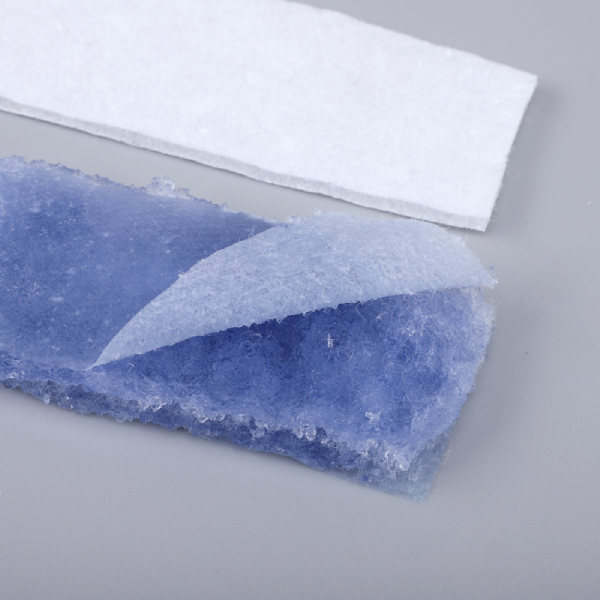
Absorption and retention are not exactly the same. A material's ability to receive liquid does not necessarily mean it will keep the liquid in the intended location after absorption.
For wound dressing procurement, liquid retention should be evaluated in relation to the material structure, the combination of dressing layers, and the intended product use conditions.
Do Not Rely Only on Initial Absorption Results
Testing an individual material can help buyers screen candidate materials, but it cannot fully represent how the material will perform once incorporated into a dressing. Other material layers, interlayer contact conditions, and the overall product structure may affect liquid migration and distribution.
After initial material screening, buyers should evaluate the combined structure according to the product design. For products that need to control liquid migration or reduce liquid transfer back to another surface, buyers should define the relevant test conditions and acceptable results in advance rather than relying on general claims such as "high absorption."
Validate Liquid Management Under the Intended Design Conditions
Liquid management requirements vary among wound dressings. A single test method or absorption value should not be treated as a universal standard for every product.
Buyers should work with their product development teams to define the test liquid, test method, contact conditions, test duration, and evaluation criteria. Depending on the product design, the evaluation may also need to cover liquid distribution, performance under compression, or other relevant indicators.
If the material will be combined with other layers, buyers should evaluate both the individual material and a representative finished-product structure whenever practical. This helps distinguish whether a performance issue originates in the absorbent layer itself or in the layer combination and overall design.
How Can the Absorbent Layer Be Matched to Dressing Lamination and Processing Requirements?
Material selection should also take downstream manufacturing into account. For wound dressing manufacturers, a suitable material must meet the design requirements and fit consistently into the intended production process.
Cutting and Dimensional Stability
The absorbent layer needs to be cut to the dimensions specified by the product design. Buyers should check whether the material can be cut efficiently, whether the cut edges meet production requirements, and whether the material deforms during handling and assembly.
If the product includes multiple sizes or different shapes, representative samples should be used to validate actual processing performance rather than relying solely on the appearance of the material roll.
Lamination and Interlayer Fixation
In multilayer dressings, the absorbent layer may need to be joined to other materials using an appropriate process. Differences in surface properties, thickness, and compression behavior may affect lamination and the final structure.
During quotation, buyers should explain the intended lamination or fixation method and verify compatibility with the target process during sample testing. Good standalone material performance does not guarantee compatibility with every surface layer, backing material, or bonding method.
Batch-to-Batch Consistency
Consistent material specifications are also important for volume production. Variations in GSM, thickness, appearance, or structural uniformity may affect downstream processing and finished-product performance.
In addition to evaluating the initial sample, buyers should confirm the specification definitions, inspection items, batch acceptance criteria, and quality control arrangements for repeat orders.
For overseas buyers, working with a supplier that can support specification discussions, sample evaluation, and customized production can help translate product development requirements into clearer purchasing documents and bulk production standards.
With years of experience in nonwoven R&D and manufacturing, and capabilities across various nonwoven processing and customization services, HuiZhou JinHaoCheng Nonwovens Co., Ltd. can discuss candidate material options based on customer application requirements, material specifications, and processing conditions. Whether a particular material is suitable for a wound dressing must still be validated by the customer in accordance with the intended use and applicable requirements.
If you are developing wound dressings, surgical absorbent pads, or other medical consumables, you can review our medical needle-punched nonwoven fabric product information. When requesting a quotation, provide the product structure, target specifications, intended processing methods, and sample evaluation requirements to support further discussion of material compatibility.
Conclusion: Select Wound Dressing Absorbent Materials Based on the Finished Product Structure
Selecting an absorbent layer for wound dressings should involve more than measuring how much liquid a material can absorb. Buyers also need to define the layer's role in the finished product and consider softness, structural stability, liquid retention, interlayer compatibility, and downstream processing requirements.
A more reliable selection process starts with the finished product structure and its intended functions, followed by material specification, candidate sample evaluation, and validation in a representative product structure. When material performance, processing requirements, and bulk quality standards are aligned, buyers can make better-informed decisions before moving forward with production.