
What Information Should Buyers Provide When Requesting a Nonwoven Geotextile Quote?
When overseas buyers request a quotation from a nonwoven geotextile supplier, a common approach is to send a brief message: “We need nonwoven geotextile. Please send us your price.”
However, for engineering projects, a product name alone is often insufficient for an accurate quotation. Different projects may have different material applications, technical specifications, performance requirements, roll dimensions, order quantities, and documentation standards. If these details are not clarified in advance, different suppliers may quote based on their own assumptions, making the resulting prices difficult to compare.
This does not mean buyers must finalize every material parameter before making their first inquiry.
A more effective approach is to provide the project information already available, identify which technical requirements are confirmed and which still need engineering approval, and ask suppliers to clearly state the conditions on which their quotations are based.
This guide explains what information buyers should prepare when requesting a nonwoven geotextile quote before all specifications have been finalized, how to handle unresolved technical parameters, and how to make quotations from different suppliers easier to compare.
1. Explain the Project Application Instead of Simply Asking for Geotextile
Nonwoven geotextile can be used in different civil engineering applications. If buyers provide only the product name “nonwoven geotextile,” suppliers may still have difficulty understanding what the project actually requires.
Therefore, the first step in a quotation request is to explain the intended application and engineering context.
For example, will the material be used for road base separation, filtration in a drainage structure, drainage behind a retaining wall, slope protection, or another civil engineering application?
If the application is already known, buyers can also explain where the geotextile will be installed within the engineering structure and what primary function it is expected to perform.
For example, does the design require the material to provide separation? Must it allow water to pass while limiting soil particle migration? Is it part of a drainage or erosion control system?
These questions do not require buyers to perform engineering design themselves. Instead, they help suppliers understand the intended use and avoid assuming technical requirements based on the product name alone.
If the project is still at an early stage, buyers can also provide a project brief, site photographs, relevant drawings, or existing material descriptions from the design team.
When the exact specifications are not yet available, explaining the project application is generally more useful than guessing a GSM value.
2. Provide Available Design Documents, Technical Specifications, and Performance Requirements
If the project already has design drawings, technical specifications, material schedules, or contractual technical requirements, buyers should provide the relevant documents with their inquiry.
These documents help suppliers identify which requirements have already been established by the project design team rather than independently recommending specifications that have not been approved.
Buyers should prioritize the following information.
Project design documents. These may include drawings related to the geotextile, material layout plans, technical notes, bills of quantities, or material schedules. Buyers do not need to provide every document unrelated to the purchase, but the supplier should receive the sections directly relevant to the material's intended use and requirements.
Specified material standards. If the project identifies a particular material type, product category, or applicable test standard, provide the exact standard name, number, and applicable version. Avoid vague descriptions such as “comply with international standards.”
Performance requirements. If the design specifies unit weight, tensile properties, tear or puncture resistance, water permeability, filtration requirements, or other performance criteria, provide the relevant clauses to the supplier.
Inspection and testing requirements. If the project requires specific test methods, third-party testing, material approval, or incoming inspection documents, state these requirements during the quotation stage so the supplier can confirm whether the necessary information can be provided.
Not every geotextile project requires the same performance indicators. The specific requirements should be determined by the intended application, design documents, and applicable specifications.
If buyers do not yet have formal technical specifications, they should not invent parameters simply to obtain a quotation. They can provide the available engineering information and list the unresolved technical requirements as items requiring clarification.
3. Separate Confirmed Specifications from Parameters That Are Still Undecided
In actual procurement, buyers may not be able to provide a complete specification when first contacting a supplier.
For example, the engineering design may already define the intended application and applicable standards, while the exact GSM, roll width, or other technical parameters are still being confirmed.
In this situation, the priority is not to fill in every blank. It is to make the status of each requirement clear to the supplier.
Confirmed requirements. These may include the material type specified by the project, mandatory performance criteria, approved roll dimensions, or standards explicitly stated in the contract.
Requirements awaiting engineering confirmation. These may include performance values that have not yet been finalized by the design team, installation details, or final material specifications.
Items for supplier evaluation. If the design documents allow the supplier to recommend feasible material options based on the available information, buyers can identify which parameters they would like the supplier to evaluate.
However, buyers must distinguish technical recommendations from engineering approval. Matters involving slope stability, drainage design, filtration compatibility, or other professional engineering judgments should not be considered approved simply because a supplier has included them in a quotation.
If some specifications remain undecided, the supplier may provide a preliminary quotation or quotations for different options based on the confirmed information. The assumptions and outstanding requirements should be clearly stated.
This approach allows buyers to obtain an early budget indication while reducing repeated quotation revisions caused by subsequent specification changes.
4. Specify the Order Quantity, Roll Dimensions, and Supply Format
In addition to the engineering application and technical requirements, order quantity and supply format are important information for preparing a quotation.
Buyers should provide the estimated purchase quantity wherever possible and specify the unit of measurement.
For example, is the project quantity measured in square meters, kilograms, rolls, or another unit? If a bill of quantities is available, buyers can provide the estimated area, material quantity, or number of rolls.
For roll goods, buyers should also specify the confirmed roll width, roll length, and any special dimensional requirements.
If these parameters have not yet been finalized, this should be stated in the inquiry rather than allowing different suppliers to quote using different assumed roll dimensions.
Buyers should also explain whether the material will be supplied in full rolls or needs to be cut into sheets or specific sizes. Any slitting, special packaging, or other processing requirements should be mentioned during the quotation stage.
This information helps suppliers establish the basis of their quotations. For larger projects, buyers can also indicate whether phased deliveries are expected so the supplier can confirm the quantity and delivery requirements for each shipment.
5. Clarify the Delivery Destination, Trade Terms, and Packaging Requirements
For overseas buyers, the material price is not the only commercial detail that needs to be confirmed. The quotation should also clearly define the supply scope and delivery conditions.
First, provide the country or region where the material will be delivered, along with the destination port, destination city, or designated warehouse if known.
Second, if the trade terms have already been decided, state the requested terms in the inquiry. If they have not yet been finalized, ask suppliers to identify the trade terms and corresponding delivery location used in their quotations.
Third, explain any known packaging requirements, such as individual roll wrapping, outer packaging labels, pallet packaging, specific identification marks, or other project requirements.
If the materials need to be identified by project batch, construction area, or a designated label, this should also be communicated in advance.
The purpose of this information is to clarify the quotation scope and delivery conditions, not to complete the entire import cost calculation at the inquiry stage.
Freight, customs duties, destination port charges, and other import expenses belong to a subsequent cost evaluation. At the quotation stage, the priority is to ensure that different suppliers understand where the goods need to be delivered and which delivery-related items their prices include.
6. State Requirements for Test Reports, Certifications, and Other Documents in Advance
Some engineering projects require not only the material itself but also relevant technical documents and quality records.
If the project has specific documentation requirements, buyers should state them during the quotation stage rather than waiting until the order is about to be shipped.
For example, does the project require a product technical data sheet, material test reports, batch quality records, third-party test reports, or specific compliance documents?
If the contract or engineering specification identifies a testing standard, provide the relevant standard information and clarify which performance properties must be covered by the documents.
If a particular certification is required, identify the certification name, applicable scope, and specific requirements. A supplier's possession of a management system certificate does not automatically establish that every product meets all engineering performance requirements.
If the documentation requirements have not been fully determined, buyers can provide the existing project document list and ask the supplier to identify which documents are available and which items require further confirmation.
Discussing these matters in advance helps buyers determine whether the quotation covers the required technical support and reduces delays caused by material approval or missing documents later in the process.
7. How Can Buyers Prepare a Practical Geotextile RFQ?
Once the project application, technical requirements, quantity, and delivery information have been organized, buyers can combine them into a concise request for quotation (RFQ).
A practical geotextile RFQ can include the following information.
Project and application: Project name or type, intended material application, expected geotextile function, and installation position.
Technical basis: Available design drawings, material specifications, applicable standards, performance criteria, and acceptance requirements.
Specification information: Confirmed material type, GSM, dimensions, roll length, and other known requirements, with a clear indication of which parameters remain undecided.
Order quantity: Estimated area, number of rolls, or another quantity unit, including any planned phased deliveries.
Supply format: Full rolls, sheets, or another supply format, along with any slitting, packaging, and labeling requirements.
Delivery information: Destination, known trade terms, delivery schedule, and packaging requirements.
Documentation requirements: Technical data sheets, test reports, product identification, and any other project-specific documents.
Sample and approval process: Whether samples are required, which properties need to be verified, and who is responsible for approving the final specifications.
If some details remain undecided, buyers can explicitly label them as “pending engineering confirmation,” “supplier to propose options,” or “supplier to state assumptions in the quotation.”
This approach does not require buyers to resolve every technical question before requesting a price. It simply helps suppliers distinguish confirmed requirements from provisional conditions.
8. After Receiving a Quotation, How Can Buyers Check Whether the Supplier Has Addressed the Project Requirements?
After receiving a quotation, buyers should not only check whether the price is complete. They should also confirm that the quotation addresses the key conditions in the RFQ.
First, compare the quoted material type, technical parameters, dimensions, quantity units, and supply format with the inquiry information.
Second, check whether the supplier has clearly stated the specifications used as the quotation basis and identified any alternative materials, provisional parameters, or other assumptions.
Third, confirm whether the quotation includes the requested packaging, labeling, technical documents, and other clearly stated project requirements. If any items are excluded, ask the supplier to identify them rather than assuming that everything is included in the price.
For specifications that have not yet been finalized, also confirm whether the supplier has provided a formal quotation, a preliminary budget estimate, or a proposal based on assumed conditions.
If different suppliers offer different solutions, buyers should first determine whether each option meets the project design requirements before comparing prices. A lower-priced option should not automatically be selected if it is based on different material conditions or technical assumptions.
Any technical proposal that has not received the required engineering approval should be confirmed before the final purchase.
A useful quotation should do more than provide a price. It should make clear which material, quantity, delivery scope, and outstanding conditions that price represents.
9. What Can You Provide to a Supplier If You Have Not Finalized All Specifications?
If you currently have only the project application and some design information, you can still begin the quotation process.
Start by providing the basic project details, the intended geotextile application, available technical documents, estimated order quantity, and delivery destination.
Existing material samples, product photographs, engineering drawings, or material schedules can also be provided as supporting information.
For GSM, dimensions, or other technical parameters that have not yet been confirmed, there is no need to guess. Clearly identify these items as pending confirmation and explain which known conditions the supplier should use when preparing a preliminary proposal or budget estimate.
For matters involving engineering safety, filtration design, drainage capacity, or other professional technical judgments, the project design team or responsible engineer should provide the necessary confirmation.
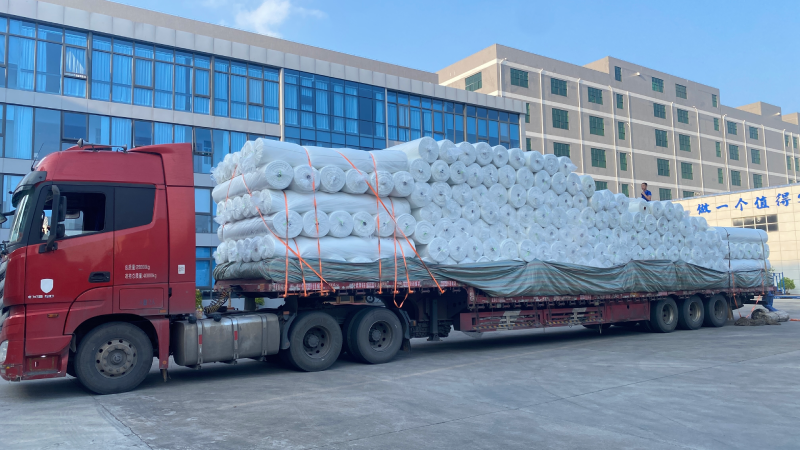
HuiZhou JinHaoCheng Nonwovens Co., Ltd. manufactures needle punched nonwoven geotextile and related nonwoven materials, with customization services available. Overseas buyers can first submit the project application, available technical requirements, estimated order quantity, and delivery information, then proceed to confirm suitable product options, specifications, and required technical documents.
For long-term procurement projects, it is advisable to document the final approved specifications and acceptance requirements in writing. These records can serve as a common reference for subsequent sample approval, order execution, and bulk supply.
Conclusion: You Do Not Need Every Specification Finalized, but You Must Identify What Is Confirmed
The key to requesting a geotextile quotation is not requiring every buyer to know all the technical parameters before contacting a supplier for the first time.
What matters more is providing sufficient project background and available technical information, while clearly distinguishing confirmed requirements, parameters awaiting engineering approval, and items for which supplier evaluation is requested.
A clear RFQ should include the project application, design specifications, performance requirements, known material specifications, order quantity, roll dimensions, delivery destination, and documentation requirements. For unresolved conditions, buyers should ask suppliers to state the basis of their quotations and identify outstanding items.
This allows different suppliers to understand the purchasing requirements more accurately and makes it easier to compare quotations based on equivalent or clearly stated conditions.
For overseas engineering buyers, geotextile importers, and distributors, this approach reduces repeated communication and helps organize the quotation, technical confirmation, and subsequent purchasing process.
If you have not finalized every geotextile specification, start by organizing the project application, available design documents, and estimated order quantity. You can then send suppliers a clear and actionable request for quotation.




