
How to Specify Foam Laminated Fabric for Your Product
When purchasing foam laminated fabric, overseas importers, wholesalers, and product manufacturers need to provide more than just a material name to receive an accurate quotation.
If you are developing a new product or sourcing materials for an existing production line, you may already know that you need foam laminated fabric. However, you may not yet have confirmed the base fabric, foam type, layer structure, thickness, or other requirements.
This can make it difficult for suppliers to understand your actual needs. Different suppliers may interpret the same inquiry differently, resulting in quotations that are difficult to compare.
Before requesting a quotation, it is important to clarify the information that affects the material structure, production process, and final application.
This guide explains what buyers should prepare when specifying foam laminated fabric, helping you communicate your requirements more clearly before requesting samples or placing a bulk order.
Start with the Final Product Application
Before selecting a foam laminated fabric, identify the product you intend to manufacture and the role the material will play in it.
For example, foam laminated fabric may be considered for applications such as furniture upholstery, automotive interiors, cushioning materials, bags, footwear, protective products, and other composite material applications.
However, different applications may require different combinations of fabric, foam, and bonding methods.
A material designed to provide cushioning may not have the same requirements as one intended for surface protection or a product that needs flexibility during further processing.
When contacting a supplier, explain what the finished product is, where it will be used, and what functions the laminated material needs to provide.
If you are unsure which construction is suitable, you can provide product photos, drawings, or an existing sample for initial evaluation.
Confirm the Base Fabric and Foam Material
Foam laminated fabric combines foam with a fabric or other suitable substrate. The choice of each layer can affect the material's handling characteristics and suitability for the intended application.
Before requesting a quotation, confirm the following information whenever possible.
Base fabric: Identify the fabric material and construction if these are already specified. Depending on the product requirements, the base material may be polyester nonwoven, knitted fabric, woven fabric, or another suitable substrate.
Foam material: If you already know the required foam type, include it in your inquiry. If you do not know which foam is suitable, explain the required functions and ask the supplier to evaluate possible options.
Material composition: If the final product requires a particular fiber composition or material combination, state this clearly rather than assuming the supplier will use the same materials you have in mind.
If your project does not yet have a confirmed material specification, you do not need to guess. Providing the application and expected performance requirements gives the supplier a starting point for discussing possible constructions.
Explain the Required Layer Structure
Foam laminated fabric can have different composite structures depending on the final product.
For example, a product may use a fabric layer combined with a foam layer, while another may require a three-layer construction with foam positioned between two fabric layers.
The required structure can affect the material's appearance, feel, flexibility, thickness, and suitability for subsequent manufacturing processes.
When requesting a quotation, clarify how many layers are required and which materials should be used in each layer.
If you are developing a product based on an existing material, photographs or a physical sample can help communicate the expected structure.
If you are starting a new project and have not yet determined the layer arrangement, describe the product's function and construction requirements so the supplier can discuss possible options with you.
Specify Thickness, Width, Length, and Tolerances
Dimensions are essential information when purchasing foam laminated fabric, particularly when the material will be supplied in rolls or used in further manufacturing.
Before requesting a quotation, confirm the following details whenever they apply to your project.
Total thickness: Specify the required thickness of the complete laminated material, not just the foam layer. If thickness tolerance is important, state the acceptable range.
Width: Confirm the required roll width and whether the material must fit a particular production line or cutting process.
Length: If the material will be supplied in rolls, indicate the preferred length per roll when known.
Dimensional tolerance: Explain the allowable variation in thickness, width, or other dimensions if your product requires consistent specifications.
GSM or weight: If your purchasing specification includes a target weight per square metre, provide the target value and tolerance where applicable.
These details help suppliers understand the material requirements more accurately and reduce the risk of receiving quotations based on different assumptions.
If you do not yet know the appropriate thickness or weight, explain the intended application first and ask the supplier to discuss suitable options.
Clarify the Lamination and Bonding Requirements
The way the foam and fabric layers are bonded is another important consideration when specifying foam laminated fabric.
Different lamination methods may be suitable for different material combinations and applications. The appropriate method depends on factors such as the substrate, foam material, required flexibility, bonding performance, and subsequent processing conditions.
When requesting a quotation, explain whether you already have a specified lamination method or whether you need the supplier to evaluate a suitable approach.
If the finished product will be bent, cut, sewn, or subjected to repeated handling, discuss whether the bond needs to remain stable during those processes.
If your product has specific requirements for bonding strength or resistance to separation, state them clearly and confirm how the requirements will be evaluated.
Do not assume that two materials with similar appearances will provide the same bonding performance. Samples should be assessed according to the actual application and processing conditions.
Describe the Required Surface and Functional Properties
In addition to the material structure, foam laminated fabric may need to meet specific surface or functional requirements.
Depending on the application, these requirements may include softness, flexibility, cushioning, breathability, surface appearance, color, or other characteristics.
For example, a product used in furniture upholstery may have different surface and handling requirements from a material used for protective padding or automotive interior components.
When describing your requirements, avoid relying only on general expressions such as “good quality” or “soft material.” Explain what the material needs to do in the finished product.
If a specific performance level is required, identify the relevant test method or acceptance criteria whenever possible.
This helps the supplier understand which properties are essential and which can be adjusted during material development.
Confirm the Further Processing Requirements
For many buyers, foam laminated fabric is an intermediate material rather than a finished product. It may need to undergo additional processing before it can be used in the final application.
Depending on the product design, further processing may include cutting, die-cutting, sewing, shaping, or other converting operations.
These processes can influence which material construction is suitable.
For example, a material that performs adequately as a flat sheet may require further evaluation if it will be cut into complex shapes or sewn into a finished product.
When requesting a quotation, explain how the material will be processed after delivery. If possible, provide product drawings, sample photographs, or details of the production process.
This information helps the supplier evaluate whether the proposed material is appropriate for your manufacturing requirements.
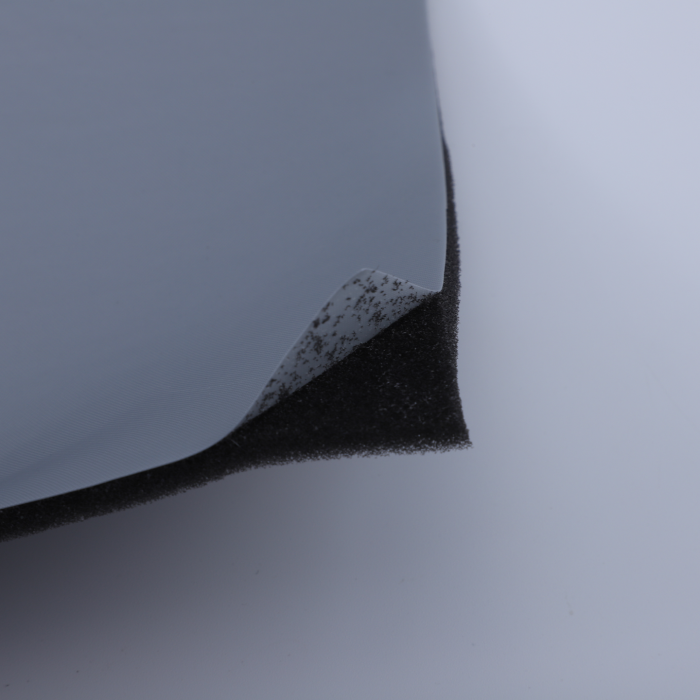
Prepare Samples and Performance Requirements Before Bulk Purchasing
A quotation alone cannot confirm whether a foam laminated fabric is suitable for your finished product.
Before placing a bulk order, request a sample for evaluation whenever possible.
The sample should be reviewed according to the requirements of the intended application. Depending on your product, the evaluation may include checking the material structure, surface appearance, thickness, flexibility, bonding condition, and compatibility with further processing.
If your product has specific performance requirements, agree on the relevant evaluation methods and acceptance criteria before mass production.
For example, if the material must maintain its bonded structure during a particular manufacturing process, the sample should be assessed under conditions that reasonably represent that process.
If a reference sample is used for approval, make sure that the approved construction and key specifications are clearly recorded.
Sample approval should establish what material is acceptable for production rather than relying only on photographs or a general description.
What Information Should You Include in a Foam Laminated Fabric RFQ?
Before contacting a foam lamination manufacturer, prepare as much of the following information as you can.
Product application: Explain what the finished product is and how the laminated material will be used.
Base fabric: Provide the fabric material and construction if known.
Foam type: Specify the required foam material if already determined, or describe the intended function if you need guidance.
Layer structure: Explain the required number and arrangement of layers.
Dimensions: Provide the target thickness, width, roll length, and relevant tolerances.
Weight: Include the target GSM or other weight requirements if applicable.
Surface and functional requirements: Describe the required appearance, softness, flexibility, cushioning, or other product-specific properties.
Lamination requirements: State any known bonding method or bonding performance requirements.
Further processing: Explain whether the material will be cut, die-cut, sewn, shaped, or processed in another way.
Order quantity: Provide the estimated sample quantity, initial order quantity, or expected production demand.
Packaging and delivery: State any special packaging requirements and your expected delivery schedule.
Testing and compliance: Identify any applicable performance tests, standards, or documentation requirements.
You do not need to have every detail finalized before making an inquiry. However, providing the information you already have can help the supplier identify what still needs to be confirmed and prepare a more relevant quotation.
How to Compare Quotations from Different Foam Laminated Fabric Suppliers
When comparing quotations, make sure the suppliers are quoting against the same material requirements.
Two quotations may appear to cover the same foam laminated fabric, but the actual constructions may differ in base fabric, foam type, layer arrangement, thickness, weight, or bonding method.
If these differences are not identified, comparing prices alone may lead to an inaccurate purchasing decision.
Before comparing the quoted prices, confirm that the main specifications are consistent.
Check the base fabric and foam composition, the number and arrangement of layers, the total thickness and dimensional tolerances, the required functional properties, and the packaging and delivery conditions.
If one supplier proposes an alternative construction, ask for the differences to be clearly explained rather than treating the two quotations as directly equivalent.
For long-term purchasing, also consider whether the supplier can maintain the approved material specifications and production consistency across repeat orders.
How Can a Foam Laminated Fabric Manufacturer Support Custom Projects?
For OEM and ODM projects, buyers may not have a complete material specification at the beginning of product development.
In this situation, the supplier's ability to understand the application, discuss possible material constructions, and support sample evaluation becomes important.
HuiZhou JinHaoCheng Nonwovens Co., Ltd. provides needle-punched nonwoven materials and composite material solutions for different product applications, with customization and further-processing options depending on project requirements.
When discussing a custom foam laminated fabric project, provide the intended application, available drawings or samples, required functions, target dimensions, processing method, and estimated quantity.
The supplier can then evaluate the information available and discuss possible material solutions with you.
The final construction should be confirmed through specification review and sample evaluation before bulk production.
Conclusion: Prepare Clear Specifications Before Requesting a Quotation
When purchasing foam laminated fabric, providing only the material name is often insufficient for an accurate quotation.
Buyers should clarify the final product application, base fabric, foam material, layer structure, dimensions, weight requirements, bonding expectations, surface properties, and further-processing needs wherever possible.
If specific performance standards apply, these should also be communicated and confirmed through appropriate evaluation.
A clear inquiry helps suppliers understand the project, makes quotations easier to compare, and provides a more reliable starting point for sample approval and bulk purchasing.
If you are not sure about every specification, start by explaining the finished product and its intended use. You can then work with the supplier to identify the material details that need to be confirmed before production.




