What Are the Uses of Nonwoven Fabric? A Practical Guide for Buyers and Distributors
Nonwoven fabric, also known as nonwoven material, is now widely used across construction, automotive, filtration, medical, agriculture, furniture, packaging and industrial applications.
For consumers, nonwoven fabric may simply be another type of fabric. For importers, wholesalers, distributors and industrial buyers, however, the more important questions are:
What type of nonwoven fabric is suitable for a specific application? What production process should be used? Which properties should buyers compare before placing a bulk order? And how can a buyer find a supplier capable of maintaining stable quality and production capacity?
Unlike traditional woven or knitted fabrics, nonwoven materials are produced by forming fibers into a web and then bonding or entangling them through different processes. This allows manufacturers to adjust fiber type, GSM, thickness, density, strength, softness, absorbency and other properties according to the intended application.
For buyers sourcing nonwoven materials internationally, working with an experienced needle punched nonwoven felt manufacturer can also provide greater control over specifications, customization and long-term supply.
What Is Nonwoven Fabric?
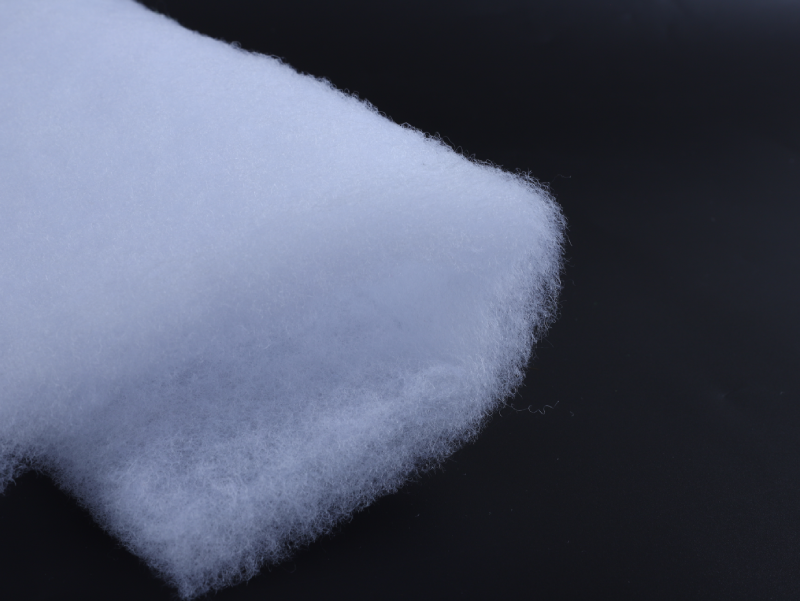
Nonwoven fabric is a sheet-like material made from fibers without the traditional spinning and weaving processes.
Natural fibers, synthetic fibers or specially engineered fibers can be formed into a web through different methods, including carding, air laying, spunbonding and wet laying. The fiber web is then strengthened through needle punching, thermal bonding, hydroentanglement or other bonding methods.
Common raw materials include polyester (PET), polypropylene (PP), viscose and other functional fibers.
Because manufacturers can combine different fibers and production technologies, nonwoven fabric is not a single standardized material. Its properties can vary significantly depending on how it is manufactured.
This flexibility is one of the main reasons nonwoven fabric can be used in products ranging from floor protection rolls and painter cover fleece to automotive components, filtration media and industrial felt.
Why Is Nonwoven Fabric Used in So Many Industries?
One of the biggest advantages of nonwoven materials is their design flexibility.
A manufacturer can modify the fiber composition, web structure, bonding method, GSM and thickness to achieve different performance characteristics.
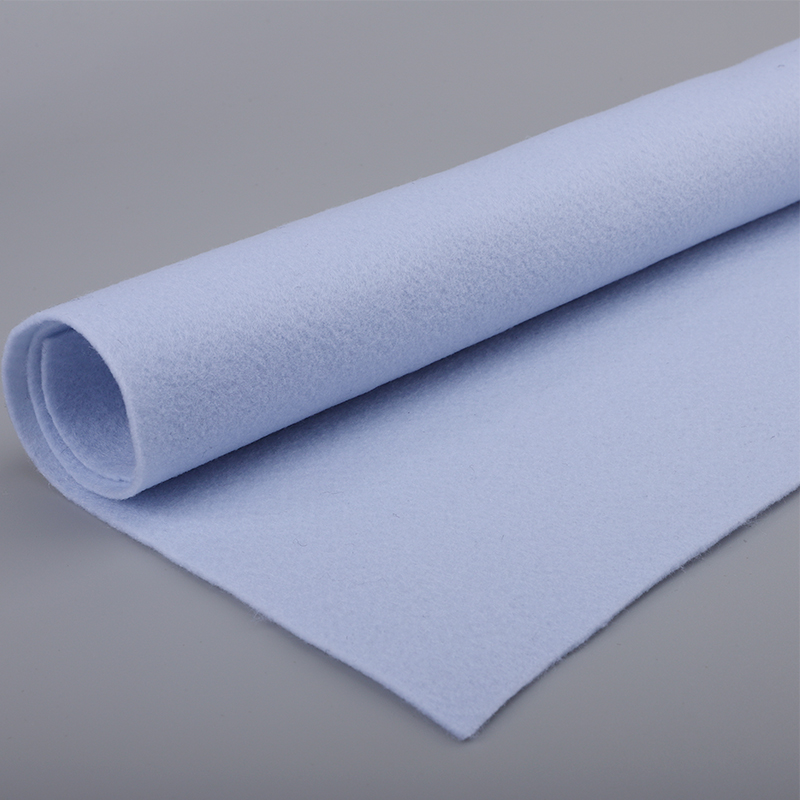
For example, needle punched nonwoven is mechanically strengthened by repeatedly passing barbed needles through the fiber web. The resulting three-dimensional fiber structure can provide good mechanical strength, abrasion resistance, air permeability, moisture absorption and structural stability.
This makes needle punched materials particularly suitable for applications that require durability and a certain level of thickness.
For buyers, this is an important point to understand: two products may both be called "nonwoven fabric" while having completely different structures and performance.
Therefore, material selection should begin with the final application, rather than simply comparing prices.
What Are the Main Applications of Nonwoven Fabric?
1. Construction and Floor Protection
Construction and renovation are important application areas for nonwoven materials.
During painting, flooring installation and remodeling projects, floors can be exposed to paint, dust, tools, construction debris and repeated foot traffic.
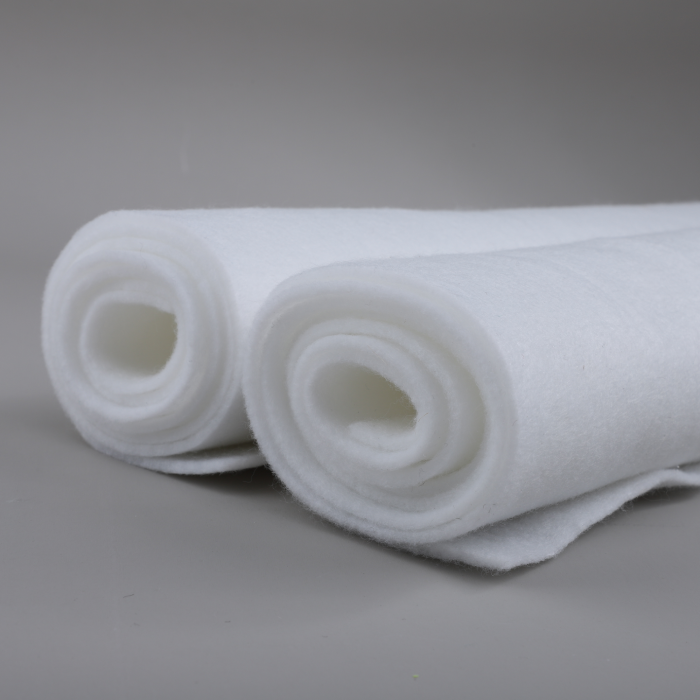
Needle punched nonwoven can be processed into floor protection rolls, painter cover fleece and protective fleece to help protect hardwood, tile, stone and other finished surfaces during construction.
For importers, wholesalers and distributors, important purchasing factors may include:
GSM, thickness, abrasion resistance, slip resistance, absorbency, roll size and customization options.
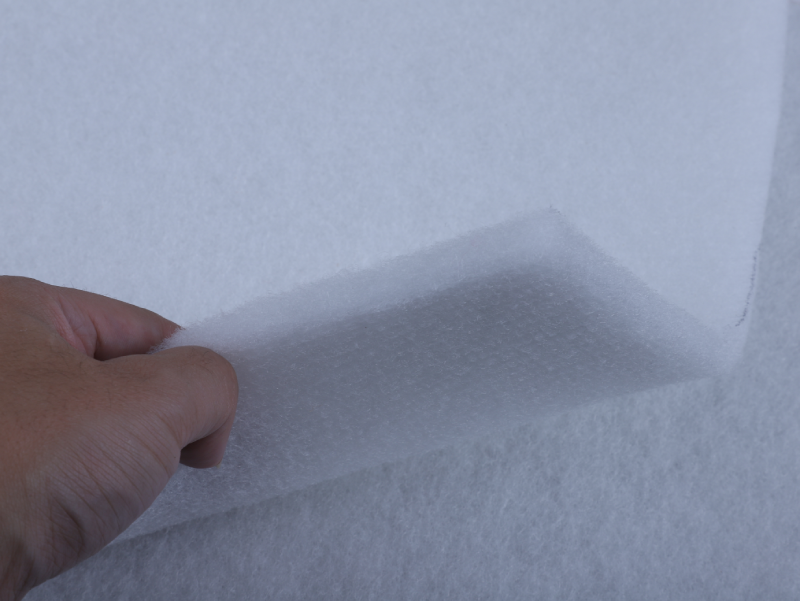
For painting applications, PE-backed construction can also be used to improve resistance to liquid penetration. The absorbent fleece layer helps collect spills, while the PE backing provides an additional barrier between liquids and the protected surface.
This is one reason why buyers looking for a floor protection roll manufacturer or painter felt manufacturer often compare both the fleece structure and backing construction before making a purchasing decision.
2. Automotive Applications
The automotive industry uses nonwoven materials in many interior and functional components.
Depending on the required performance, needle punched felt can be used for automotive carpets, trunk liners, door panels, interior backing materials, cushioning and sound insulation applications.
Automotive buyers typically pay close attention to dimensional stability, abrasion resistance, thickness consistency, mechanical strength and processing performance.
For long-term projects, stable mass production is often more important than simply obtaining the lowest sample price.
An experienced industrial felt factory with established production capabilities can provide greater flexibility when developing materials for different automotive applications.
3. Filtration Materials
Nonwoven materials can also be used as filtration media because of their interconnected fiber structure.
By adjusting fiber type, fiber diameter, density, GSM and web structure, manufacturers can develop materials with different levels of permeability and filtration performance.
Different filtration applications have different priorities. Some require higher air permeability, while others may focus more on filtration efficiency, strength or service life.
Therefore, filtration material buyers should evaluate the complete material structure rather than selecting products based only on thickness or weight.
4. Medical and Hygiene Products
Nonwoven fabrics are widely used in medical and hygiene-related products.
Applications can include disposable protective products, hygiene materials, care products and other healthcare-related items.
These applications may require specific combinations of softness, cleanliness, breathability, absorbency and material safety.
For buyers sourcing materials for medical-related applications, consistent production quality and an appropriate quality management system are also important considerations.
5. Agriculture and Horticulture
Nonwoven fabric has also become useful in agricultural applications.
It can be used for crop covering, seedling protection, insulation, plant protection and agricultural separation.
Compared with some conventional materials, nonwoven products can offer advantages such as low weight, breathability and easy processing.
Agricultural product wholesalers may select different GSM levels, widths and colors depending on the requirements of their local markets.
6. Furniture and Home Furnishings
Nonwoven materials are also commonly found inside furniture and household products.
Typical applications include sofa backing fabric, mattress components, furniture lining, filling materials and sound insulation materials.
These applications may require different combinations of softness, thickness, elasticity, breathability and abrasion resistance.
For furniture manufacturers and distributors, selecting the right material grade can help balance product performance with overall manufacturing cost.
7. Industrial and Acoustic Applications
Industrial applications represent another important market for nonwoven materials.
Depending on the structure and fiber composition, nonwoven felt can be used for industrial wiping materials, acoustic felt, cushioning, insulation, sealing substrates and other industrial components.
Needle punched nonwoven is particularly useful when the application requires adjustable thickness, density and mechanical properties.
For industrial buyers, consistent GSM, thickness and density are often critical for maintaining stable downstream processing and finished-product quality.
8. Packaging and Protective Materials
Nonwoven materials can also be converted into packaging liners, bag linings, protective layers and industrial packaging materials.
Their flexibility and cushioning properties make them suitable for applications where products need additional protection during storage or transportation.
For packaging manufacturers purchasing in bulk, factors such as roll width, GSM, color, packaging method and customized specifications can all be important.
Why Do Different Applications Require Different Nonwoven Materials?
This is one of the most important questions for professional buyers.
Higher GSM does not automatically mean a better product.
A floor protection material may need abrasion resistance, absorbency and slip resistance. Automotive materials may require strength, thickness stability and good processing performance. Filtration materials may prioritize fiber structure, permeability and filtration efficiency.
Therefore, a professional needle punched felt manufacturer should be able to adjust material specifications according to the customer's application.
For importers and wholesalers, this flexibility also makes it possible to develop different product specifications for different markets instead of relying on one standard product.
Why Choose Needle Punched Nonwoven?
Among the different nonwoven production technologies, needle punching is especially suitable for materials that require thickness, durability and mechanical strength.
During needle punching, barbed needles repeatedly penetrate the fiber web, causing the fibers to mechanically interlock.
This process can provide the finished material with good:
Strength
Abrasion Resistance
Air Permeability
Moisture Absorption
Thickness Stability
By selecting different fiber types and adjusting production parameters, manufacturers can further modify the performance of the finished material.
As a result, needle punched nonwoven is widely used in floor protection, painting, automotive, industrial, filtration, acoustic and other applications.
For buyers who require durable felt materials, working directly with a specialized needle punched felt manufacturer can make specification development and bulk production easier.
What Should Buyers Check When Sourcing Nonwoven Fabric?
For importers, wholesalers and project buyers, it is better to define the required specifications before requesting quotations.
GSM and Thickness
GSM affects the material's weight and is often related to thickness and mechanical performance.
Different applications require different GSM levels. A heavier material is not necessarily the most suitable option.
Raw Material
Common raw materials include PET, PP and other functional fibers.
If the application requires specific characteristics such as abrasion resistance, flame retardancy, absorbency or other performance requirements, the fiber composition should be discussed with the manufacturer in advance.
Width and Roll Length
For roll products, width and roll length directly affect transportation, storage and application efficiency.
Bulk buyers should therefore select dimensions according to the requirements of their target market and downstream customers.
Surface and Composite Structure
Some nonwoven products require additional treatments or composite layers.
For example, PE-backed cover fleece combines an absorbent nonwoven layer with a PE film barrier, making it particularly suitable for painting and renovation applications where protection against liquid penetration is important.
Customization Capability
For brands, importers and large distributors, customization may include GSM, width, thickness, color, packaging, labeling and product structure.
A supplier with OEM and ODM capabilities can make it easier to develop products for different markets.
Why Work With an Experienced Nonwoven Manufacturer?
For large-volume buyers, working directly with a manufacturer can provide more direct communication regarding specifications, production schedules and quality control.
Jinhaocheng is based in Guangdong, China, with more than 20 years of nonwoven manufacturing experience.
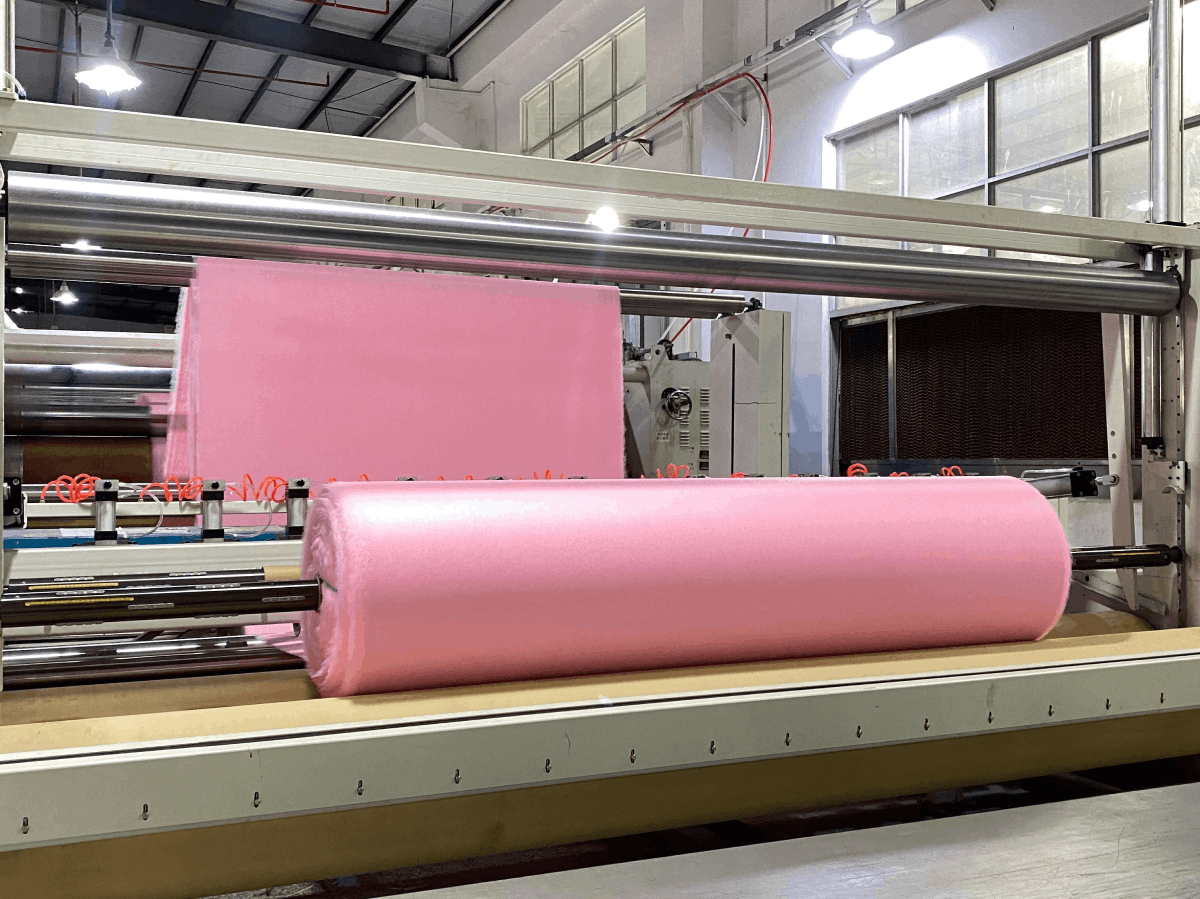
The company operates a 26,000㎡ factory, with 15 automated needle punched nonwoven production lines and an annual production capacity of more than 10,000 tons.
In addition to standard needle punched nonwoven materials, Jinhaocheng provides OEM, ODM and custom nonwoven felt solutions, allowing specifications such as GSM, width, thickness, color and product structure to be developed according to customer requirements.
Our products serve applications including floor protection, painting and renovation, automotive, home furnishing and industrial manufacturing.
This production capability allows Jinhaocheng to serve not only as a needle punched nonwoven felt manufacturer, but also as an OEM needle punched felt factory for customers looking for stable long-term supply and customized material solutions.
How to Choose the Right Nonwoven Fabric for Your Application?
The most effective way to source nonwoven fabric is to start with the final application rather than simply asking for the lowest price.
For floor protection and renovation, focus on abrasion resistance, absorbency, slip resistance and whether PE backing is required.
For automotive interiors, consider strength, thickness stability, abrasion resistance and processing performance.
For filtration, evaluate fiber structure, permeability, pore characteristics and filtration requirements.
For furniture and home furnishing, consider softness, thickness, elasticity and cost efficiency.
For industrial acoustic or cushioning applications, evaluate thickness, density, sound absorption and mechanical properties.
The value of a professional supplier is therefore not simply the ability to manufacture nonwoven fabric. It is the ability to match the right material structure to the customer's application and production requirements.
Conclusion
Nonwoven fabric is not a single product. It is a broad category of materials covering different fibers, production technologies and performance characteristics.
From floor protection and painting to automotive, filtration, medical, agriculture and industrial applications, each end use requires a different material solution.
If you are looking for an experienced needle punched nonwoven felt manufacturer in China, or need floor protection rolls, painter cover fleece or other customized nonwoven products, Jinhaocheng provides OEM, ODM and bulk production solutions.
Choose the material according to the application, and choose a manufacturer that can keep your specifications and supply consistent.