How Breathable Is Needle Punched Felt? A Buyer’s Guide to GSM, Thickness and Fiber Structure
When sourcing needle punched felt or needle punched cotton for bulk production, buyers often focus on GSM, thickness and price. However, for applications involving filling, filtration, insulation, moisture absorption or products that require air circulation, breathability is also an important performance factor.
So, how breathable is needle punched felt?
The answer depends on more than the material name. Fiber type, GSM, thickness, needle punching density, surface treatment and overall fiber structure can all affect air permeability.
In general, needle punched felt made from polyester or other suitable fibers can maintain good air permeability when its fiber structure remains sufficiently open and has not been excessively compressed or heavily surface-treated.
For importers, wholesalers and manufacturers, understanding these factors can make it easier to select the right specification instead of simply choosing the highest or lowest GSM.
What Is Needle Punched Felt?
Needle punched felt is a type of nonwoven material manufactured through a mechanical needle punching process.
During production, fibers are opened, blended, carded and formed into a web. Barbed needles then repeatedly penetrate the web, causing the fibers to mechanically entangle with each other.
Unlike traditional woven fabrics, needle punched materials do not require conventional spinning and weaving. This allows manufacturers to adjust fiber type, GSM, thickness, needle density, softness and surface structure according to the intended application.
Common raw materials include polyester (PET), polypropylene (PP) and other functional fibers.
This flexibility makes needle punched felt suitable for a wide range of applications, including filling, automotive interiors, filtration, insulation, floor protection and industrial products.
Is Needle Punched Felt Breathable?
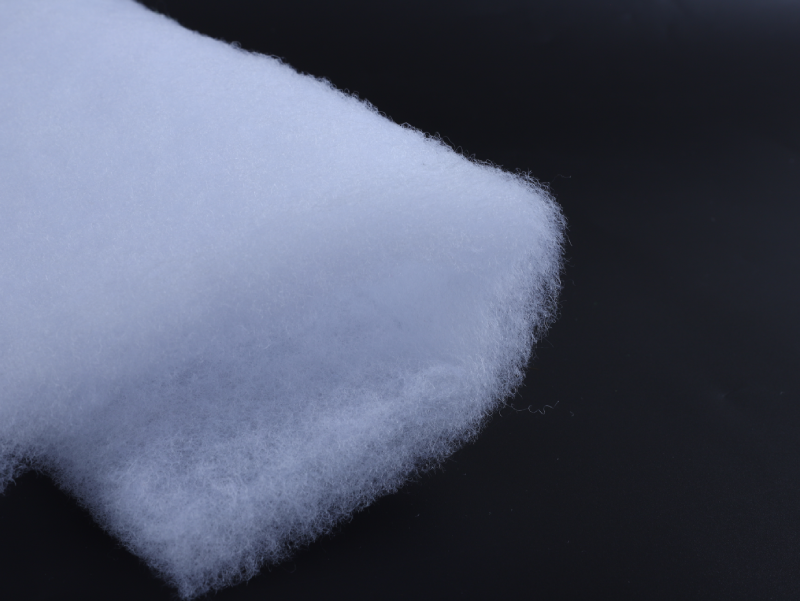
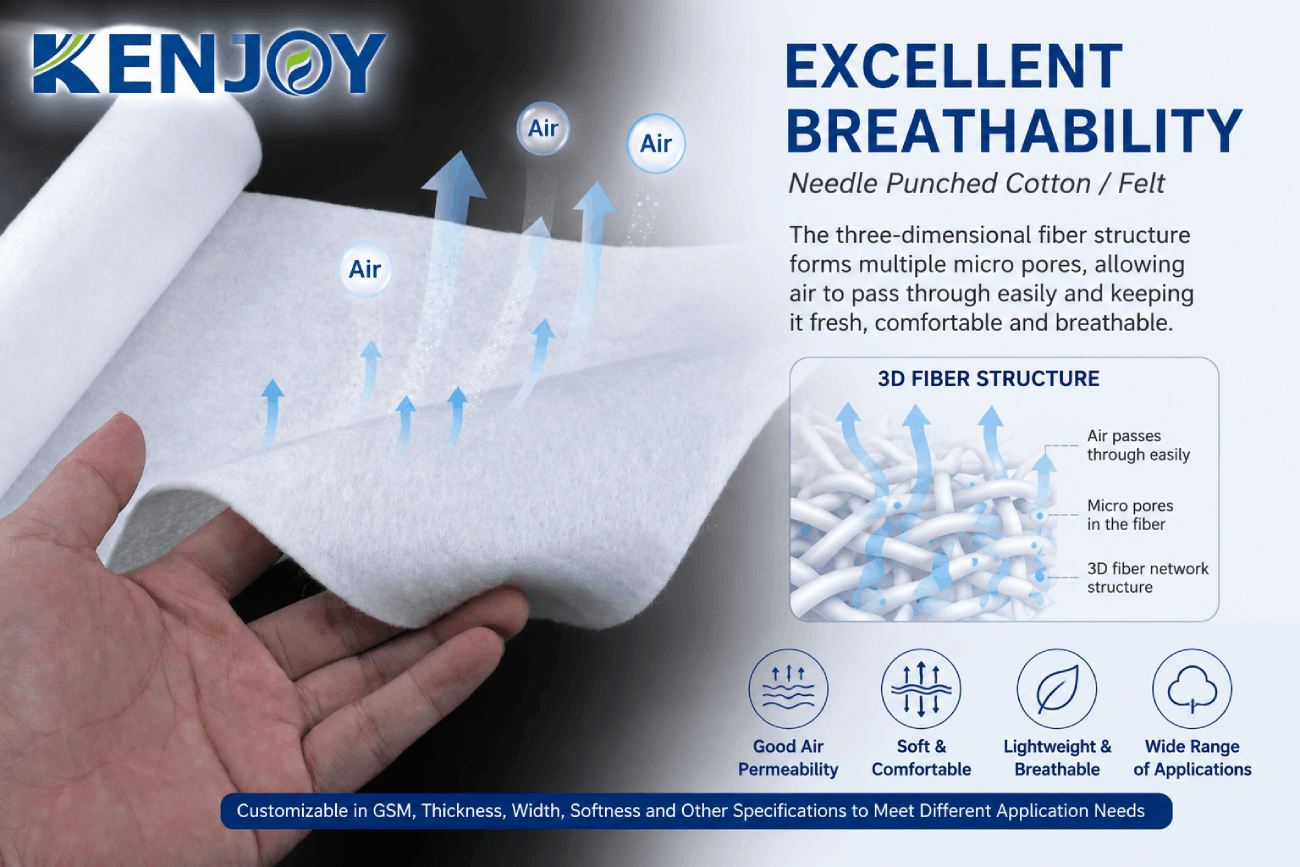
In general, needle punched felt can provide good air permeability, particularly when the material has a soft and relatively open fiber structure.
The reason is related to its three-dimensional fiber network.
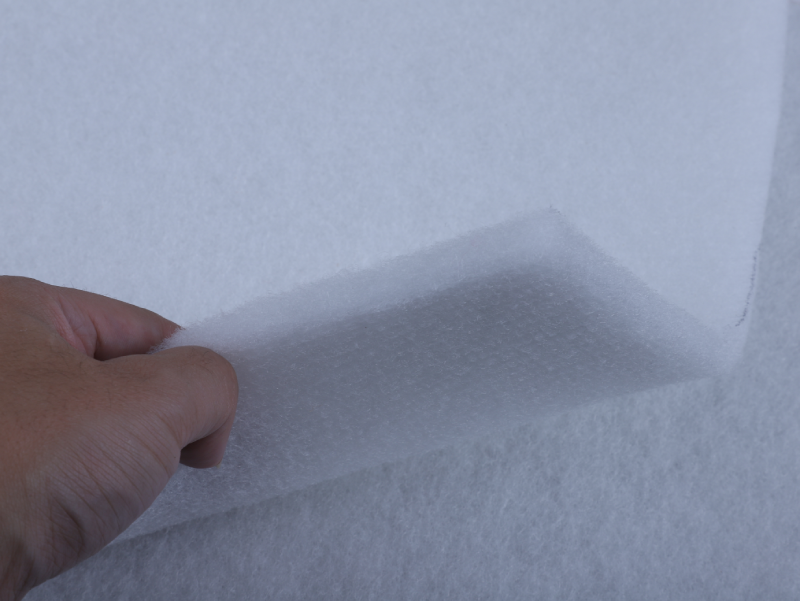
During needle punching, individual fibers become mechanically entangled rather than being compressed into a completely solid layer. Spaces remain between the fibers, creating pathways through which air can move.
However, breathability is not a fixed characteristic of every needle punched felt product.
Two products with the same GSM can have different air permeability because their fiber composition, thickness, density and needle punching parameters may be different.
Therefore, professional buyers should evaluate the complete material structure instead of judging breathability from GSM alone.
What Factors Affect the Breathability of Needle Punched Felt?
1. GSM and Thickness
GSM is one of the first specifications buyers usually compare.
As GSM increases, the amount of fiber within a given area also increases. Depending on the production structure, this can affect the pathways available for air to pass through the material.
However, higher GSM does not automatically mean lower breathability.
A 300 GSM needle punched felt, for example, may have different air permeability from another 300 GSM material because of differences in fiber fineness, thickness, loft and needle punching conditions.
For this reason, buyers should consider GSM together with thickness and the intended application.
2. Needle Punching Density
Needle punching is one of the most important manufacturing factors affecting the internal structure of the material.
A relatively open fiber structure can retain more internal space, which may support better air movement.
Increasing the degree of needle entanglement can improve mechanical stability and strength, but excessive consolidation may change the pore structure and affect air permeability.
A professional needle punched felt manufacturer therefore needs to balance strength, thickness, density and breathability during production.
3. Surface Treatment
The surface condition of needle punched felt can also influence its performance.
Some products are processed to create a smoother or more compact surface, while others retain a softer and more open surface.
If the end application requires good air circulation, buyers should clearly communicate whether they need a soft surface, lofted structure, smooth surface or other finishing treatment.
This is particularly important for customized bulk orders because surface requirements can affect the final production parameters.
4. Fiber Type
The raw material also influences the characteristics of needle punched felt.
PET polyester fiber, for example, is widely used in nonwoven applications because of its durability and dimensional stability.
Other fiber types can be selected when specific properties are required.
By adjusting fiber composition and production parameters, manufacturers can develop materials with different combinations of softness, strength, loft, absorbency and air permeability.
This is one of the advantages of working directly with a specialized needle punched nonwoven felt manufacturer.
Where Can Breathable Needle Punched Felt Be Used?
The value of needle punched felt is not limited to breathability.
Depending on its fiber composition and structure, it can also provide properties such as softness, absorbency, thermal insulation, cushioning, filtration and abrasion resistance.
Mattress and Furniture Filling
Soft needle punched felt can be used in mattress, sofa and furniture filling applications.
For these products, buyers may need to balance softness, loft, thickness, resilience and air circulation.
The appropriate specification depends on the final construction of the product.
Clothing and Thermal Insulation
Needle punched materials can also be used as filling or insulating layers in clothing and other textile products.
For these applications, buyers often look for a combination of light weight, softness, warmth and breathability.
A suitable fiber structure can help maintain loft while allowing some air movement through the material.
Automotive Interiors
Needle punched nonwoven materials are widely used in automotive interiors and related components.
Potential applications include interior backing, door panels, trunk areas, cushioning, carpets and acoustic materials.
Automotive buyers typically place greater emphasis on abrasion resistance, thickness consistency, dimensional stability and batch-to-batch quality.
For large automotive programs, production consistency is often as important as the initial material price.
Filtration Materials
The three-dimensional fiber network of needle punched materials can also be engineered for certain filtration applications.
For filtration, however, maximum breathability is not always the goal.
Buyers need to consider airflow, filtration efficiency, fiber structure, thickness, density and the operating environment together.
The right specification is therefore determined by the filtration requirement rather than simply selecting the most breathable material.
Absorbent and Oil-Absorbing Materials
Certain needle punched fiber materials can be designed for absorbent applications.
Their fiber network provides internal space that can help retain water, oil or other liquids, depending on the raw material and product structure.
For these applications, buyers should discuss absorption capacity, absorption speed, GSM, thickness and fiber composition with the manufacturer.
Does Higher GSM Mean Better Needle Punched Felt?
Not necessarily.
This is an important point for importers and wholesalers.
Higher GSM does not automatically mean better performance.
GSM is only one specification.
For filling applications, buyers may prioritize softness, loft and breathability.
For absorbent materials, fiber structure and absorption capacity may be more important.
For automotive or industrial applications, strength, abrasion resistance and dimensional stability may have greater importance.
For filtration, pore structure, airflow and filtration efficiency need to be considered together.
Therefore, the best needle punched felt is not necessarily the heaviest one. It is the material whose specifications match the final application.
What Specifications Should Buyers Confirm Before Ordering?
If you are an importer, wholesaler, distributor or product manufacturer, it is useful to confirm the following specifications before requesting a quotation:
GSM: Unit weight of the material.
Thickness: Important for filling, cushioning and insulation applications.
Width: Should match the customer's processing equipment or finished product dimensions.
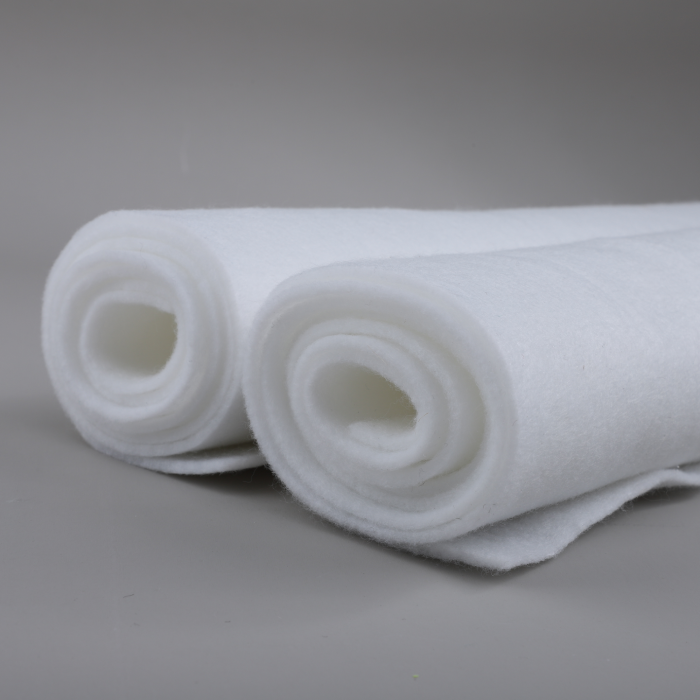
Roll Length: Affects packaging, transportation and production efficiency.
Softness / Hardness: Should be selected according to the final application.
Needle Density: Influences fiber entanglement, strength and internal structure.
Surface Finish: Can be selected according to whether a soft, hairy or relatively smooth surface is required.
Air Permeability: Important for products requiring airflow or ventilation.
Absorbency: Relevant for water-absorbing and oil-absorbing applications.
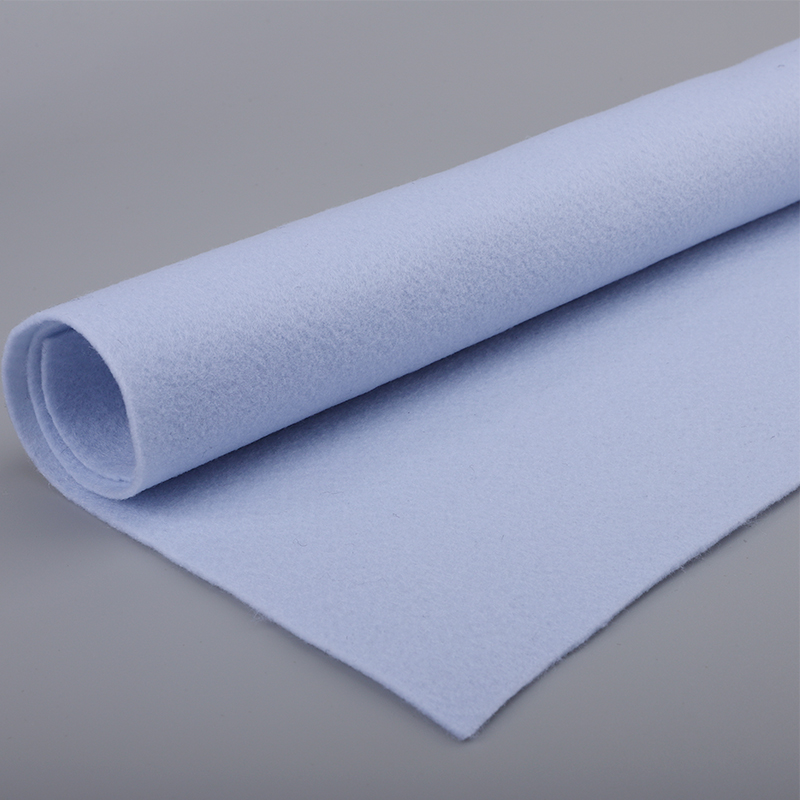
For customized projects, buyers should also confirm color, packing method, roll diameter and other special requirements.
Why Is Customized Needle Punched Felt Better for Bulk Buyers?
A single standard specification cannot meet every application.
Mattress filling may require softness and loft. Automotive materials may need higher structural stability and abrasion resistance. Filtration materials may require a carefully controlled pore structure.
This is why working with a custom nonwoven felt manufacturer can be valuable for importers and wholesalers.
A manufacturer can adjust fiber composition, GSM, thickness, width, softness, hardness and surface finish according to the customer's requirements.
For distributors, customized specifications can also help create differentiated products for specific markets instead of relying entirely on generic materials.
Jinhaocheng: Flexible Needle Punched Nonwoven Solutions for Different Applications
Jinhaocheng focuses on the manufacturing of needle punched nonwoven materials and provides flexible specifications for customers with different application requirements.
Instead of offering only one standard product, our production capabilities allow key parameters such as GSM, thickness, width, roll length, softness, hardness and surface finish to be adjusted according to the intended use.
With an integrated production system and multiple automated needle punching lines, we support both standard materials and customized orders for importers, wholesalers, distributors and manufacturers.
Our nonwoven materials are used in applications including floor protection, painting protection, automotive interiors, home textiles and industrial products.
For customers with their own product specifications or private-label requirements, OEM and ODM cooperation is also available.
As an experienced needle punched felt manufacturer, we focus on consistent material structure and repeatable production, helping customers maintain stable specifications across bulk orders.
How Should Buyers Choose Needle Punched Felt for Different Applications?
If the material is mainly used for filling, focus on thickness, loft, softness and breathability.
For water or oil absorption, pay closer attention to fiber structure, GSM and absorption performance.
For filtration, evaluate airflow, density, pore structure and filtration requirements.
For thermal insulation or acoustic applications, consider thickness, density and the overall product construction.
For automotive and industrial applications, focus on strength, abrasion resistance, dimensional stability and batch consistency.
In other words, there is no single needle punched felt specification that is ideal for every application.
A professional supplier should first understand the customer's application and then recommend a suitable material structure.
Conclusion
Needle punched felt can provide good breathability, but its actual air permeability depends on fiber type, GSM, thickness, needle punching density and surface treatment.
For buyers sourcing needle punched felt in bulk, selecting the right specification is more important than simply choosing the highest GSM or lowest price.
If you are looking for an experienced needle punched nonwoven felt manufacturer in China, Jinhaocheng can provide customized materials, OEM and ODM solutions for different applications.
Contact Jinhaocheng to discuss your needle punched felt requirements and develop the right specification for your market.