Needle Punched Nonwoven vs Spunlace Nonwoven: Which Should Buyers Choose?
For importers, wholesalers, distributors, and industrial material buyers, choosing the right nonwoven material can have a direct impact on product performance, durability, and overall purchasing cost.
Two commonly used nonwoven materials are needle punched nonwoven and spunlace nonwoven.
Although both are nonwoven materials, they are produced using completely different fiber bonding methods. These differences can affect their structure, strength, abrasion resistance, softness, absorbency, thickness, and suitability for different applications.
For buyers sourcing nonwoven materials from China, the key question is not simply which material is better.
The more important question is:
Which nonwoven structure is better suited to your application?
If the final product requires durability, mechanical strength, thickness options, and protection performance, needle punched nonwoven felt can be a particularly suitable choice.
What Is the Main Difference Between Needle Punched and Spunlace Nonwoven?
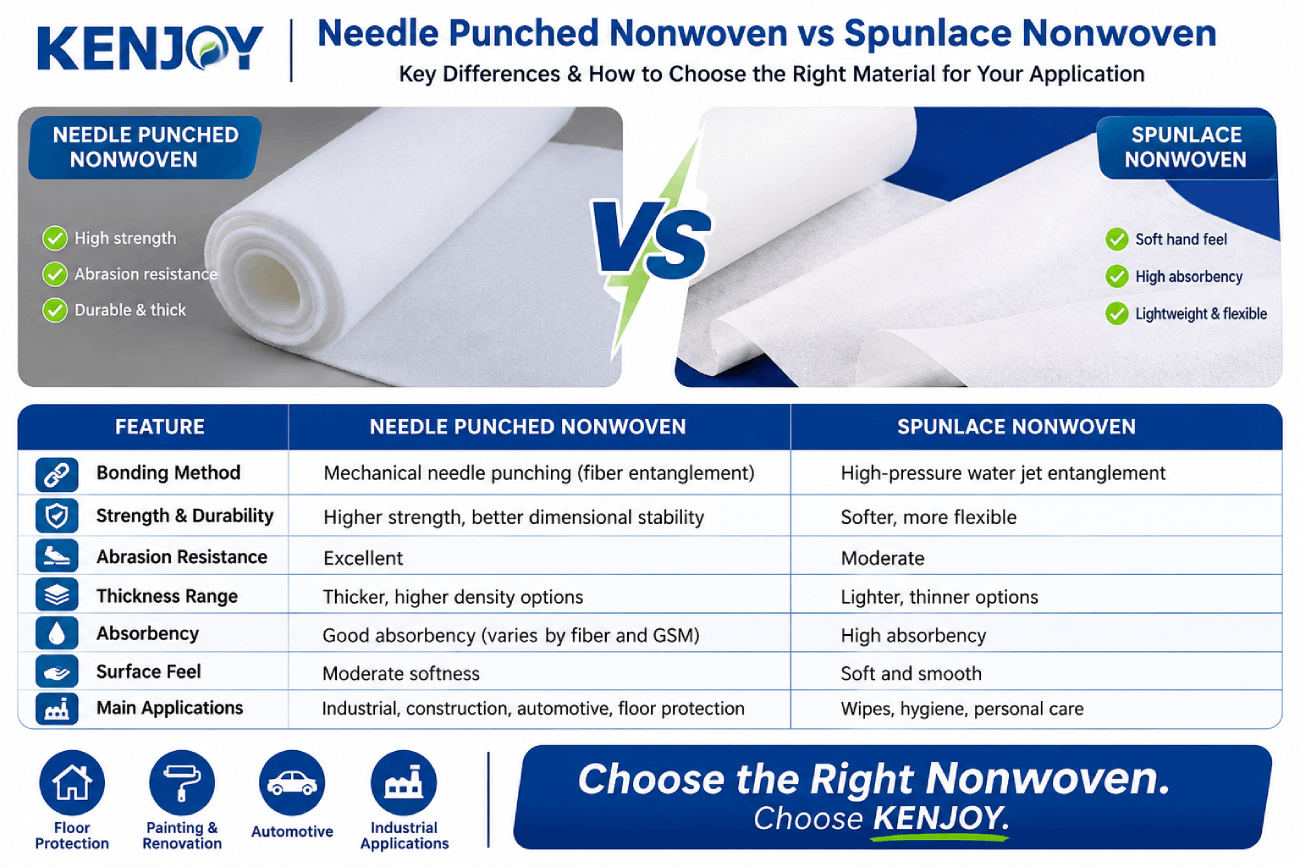
The fundamental difference is how the fibers are bonded together.
Needle punched nonwoven is produced by mechanically entangling fibers with barbed needles.
Spunlace nonwoven uses high-pressure water jets to entangle and consolidate the fibers.
Both methods create a stable nonwoven structure, but the resulting fiber structures can have different characteristics.
Needle punched materials are commonly selected when buyers require properties such as abrasion resistance, structural stability, thickness, cushioning, and mechanical strength.
Spunlace materials are widely used where softness, surface feel, absorbency, and flexibility are more important.
However, actual performance depends on the fiber type, GSM, density, thickness, finishing treatment, and product design.
Therefore, professional buyers should evaluate the complete specification rather than selecting a material based only on its manufacturing method.
What Is Needle Punched Nonwoven Felt?
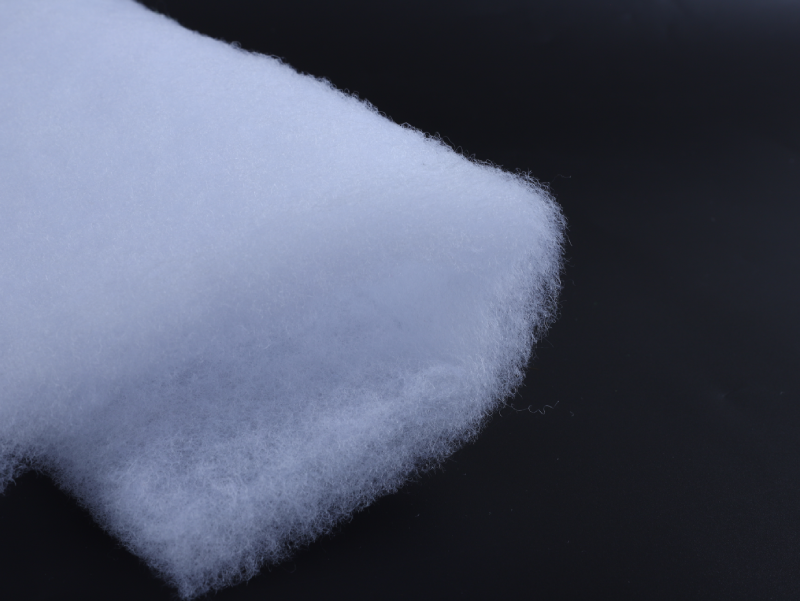
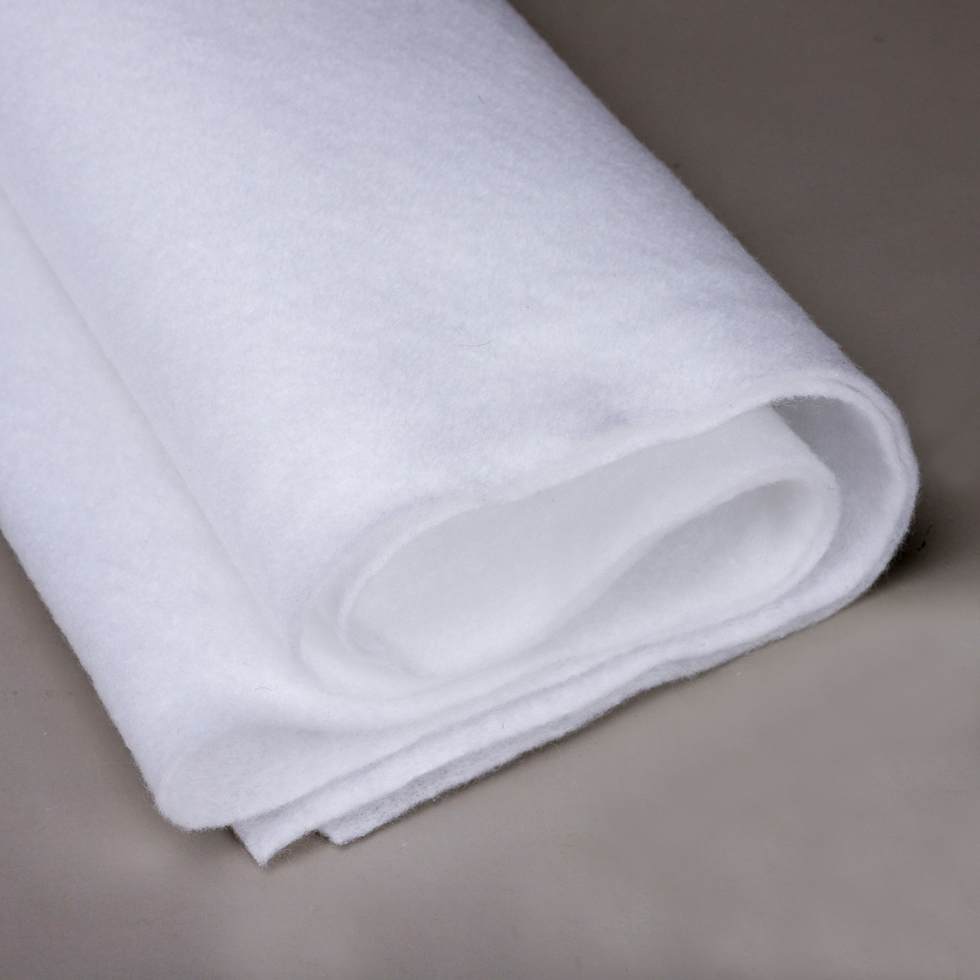
Needle punched nonwoven felt is a nonwoven material produced by mechanically interlocking fibers through a needle punching process.
After the fibers are prepared, carded, and formed into a web, specially designed barbed needles repeatedly penetrate the fiber layer.
As the needles move through the web, individual fibers become entangled with one another, creating a three-dimensional structure with specific thickness, density, flexibility, and mechanical strength.
The final properties can be adjusted through factors such as:
Fiber type
GSM
Thickness
Needle punching density
Fiber composition
Finishing process
This flexibility allows a needle punched felt manufacturer to develop different grades for construction, floor protection, automotive, industrial, and other applications.
What Is Spunlace Nonwoven?
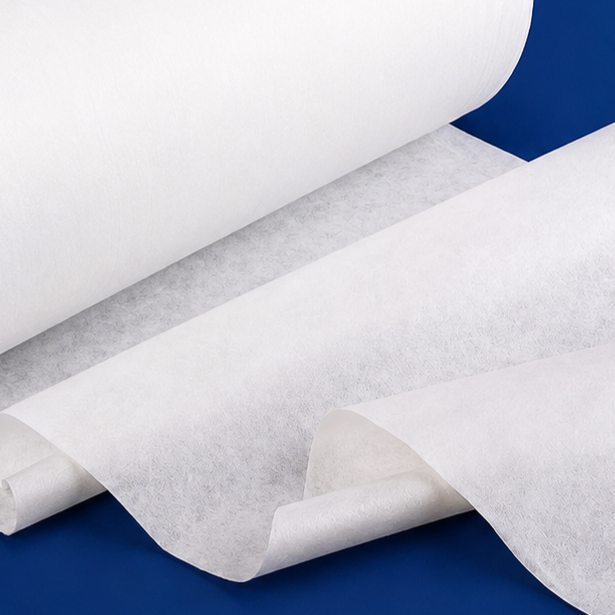
Spunlace nonwoven, also known as hydroentangled nonwoven, is produced by using high-pressure water jets to entangle fibers within a web.
The water jets repeatedly impact the fiber web and cause the fibers to interlock.
This process can create a soft and flexible material with a pleasant surface feel, which is why spunlace is widely used for applications such as:
Wet wipes
Cleaning wipes
Personal care products
Hygiene products
Some medical products
Household cleaning materials
For these applications, softness, absorbency, flexibility, and surface touch can be more important than high abrasion resistance or heavy-duty protection.
Needle Punched vs Spunlace: What Are the Main Performance Differences?
For buyers, understanding the manufacturing process is only the first step.
The more important consideration is how the two materials perform in actual applications.
1. Strength and Structural Stability
Needle punched nonwoven develops a three-dimensional fiber structure through repeated mechanical needling.
This interconnected structure can provide good mechanical stability and strength, depending on the fiber type, GSM, and production parameters.
For applications such as industrial protection, floor protection, automotive interiors, and construction materials, structural stability can be an important purchasing requirement.
Spunlace nonwoven can also achieve good strength, but its product design is often focused more heavily on softness, flexibility, absorbency, and surface characteristics.
2. Abrasion Resistance
Abrasion resistance becomes particularly important when protective materials are exposed to repeated foot traffic, equipment movement, dragging, folding, or handling.
Needle punched nonwoven can be engineered with different fiber compositions, GSM levels, and densities to meet different durability requirements.
This makes it suitable for products such as:
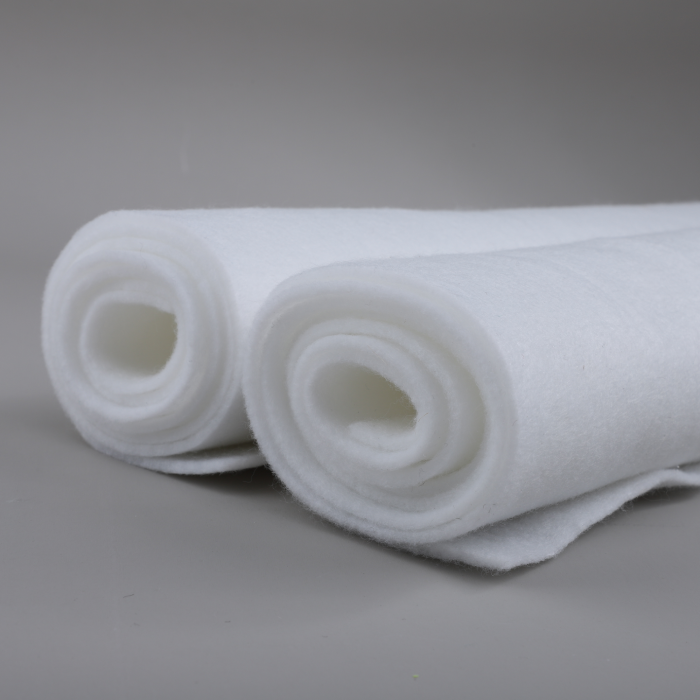
Floor Protection Roll
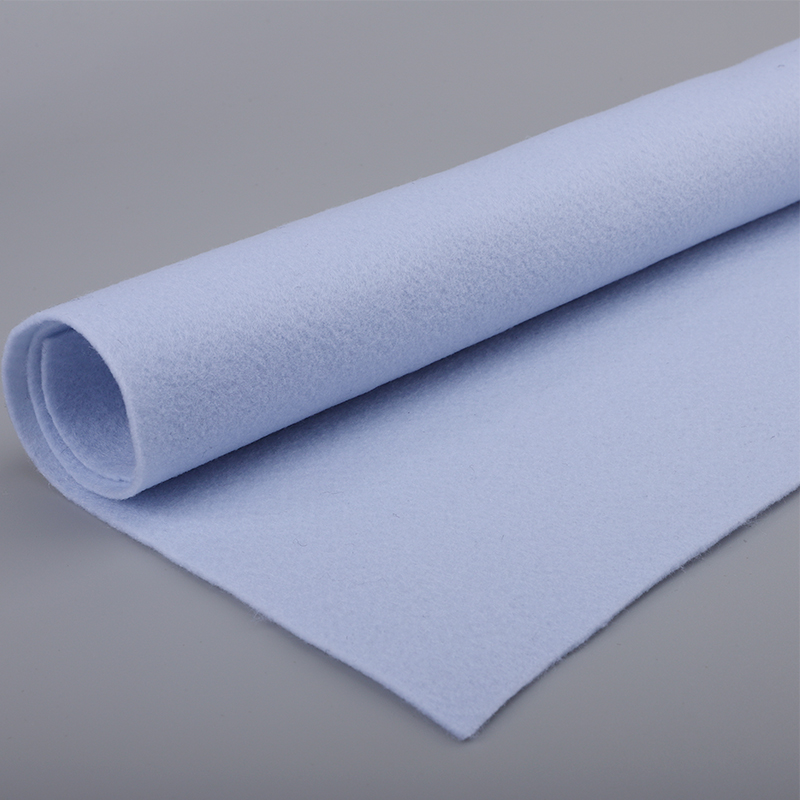
Painter Felt
Painter Cover Fleece
Automotive interior materials
Industrial protective materials
For construction and renovation projects where protective material may remain on the floor for days or weeks, durability can be more valuable than simply choosing the lowest-cost material.
3. Softness and Surface Feel
Spunlace nonwoven is often selected for applications where softness and surface feel are important.
This is one reason why it is commonly used in wipes, cleaning products, hygiene products, and certain medical or personal-care applications.
Needle punched nonwoven can also be produced with different levels of softness, but its major advantages are often associated with structure, thickness, strength, abrasion resistance, cushioning, and application flexibility.
Therefore, buyers should first define the product's purpose before choosing between the two materials.
How Do Their Water Absorption and Liquid Handling Properties Compare?
Absorbency is another factor that often creates confusion during nonwoven material sourcing.
It is not accurate to say that all spunlace nonwoven is highly absorbent or that needle punched felt cannot absorb liquids.
Actual absorbency depends on the fiber type, GSM, thickness, density, pore structure, and finishing treatment.
Certain needle punched nonwoven products can provide useful liquid absorption and retention because of the spaces within their interconnected fiber structure.
This makes absorbent needle felt suitable for applications such as:
Painting protection
Renovation projects
Liquid absorption
Cleaning materials
Industrial spill control
Floor protection
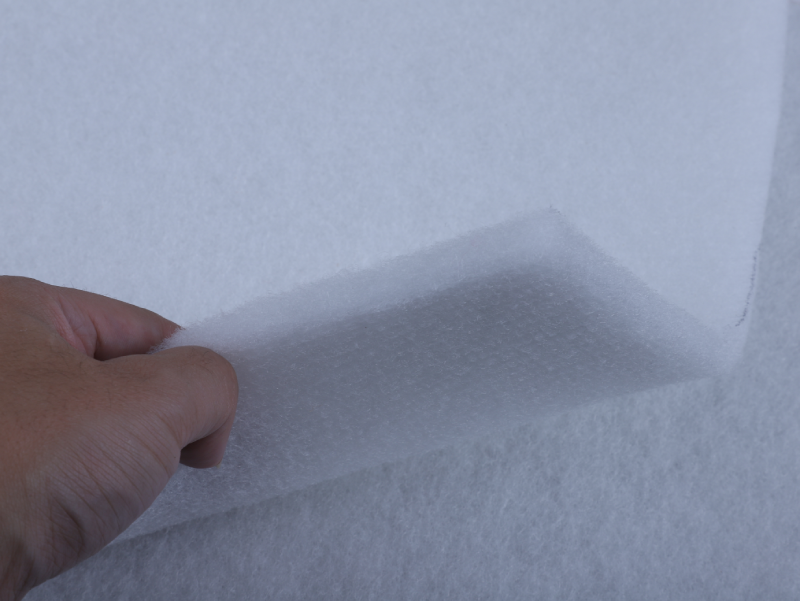
For Painter Felt and Painter Cover Fleece, absorbency can help capture paint, water, and other liquids during construction and renovation.
When buyers also need to reduce liquid penetration toward the floor, a PE-backed cover fleece can provide an additional barrier.
The fleece layer can absorb liquids while the PE backing helps reduce penetration through the bottom of the protective material.
This structure is particularly useful for painting contractors, renovation companies, and buyers supplying floor protection products.
Where Are Needle Punched and Spunlace Nonwovens Used?
The application difference between the two materials is often more important than their names.
Where Is Needle Punched Nonwoven Used?
Needle punched nonwoven offers a wide range of specification options, making it suitable for many industrial and protective applications.
Common uses include:
Floor Protection Roll
Painter Felt
Painter Cover Fleece
Automotive interiors
Construction materials
Industrial protection
Cushioning materials
Filtration materials
Separation materials
Absorbent materials
For applications requiring a combination of durability, thickness, cushioning, abrasion resistance, and structural stability, needle punched nonwoven is often a practical option.
This is also why many buyers looking for a needle punched nonwoven felt manufacturer focus on production capability and specification control rather than simply comparing material prices.
Where Is Spunlace Nonwoven Used?
Spunlace materials are commonly used in applications where softness, absorbency, and flexibility are important.
Typical applications include:
Wet wipes
Cleaning wipes
Hygiene products
Personal care products
Some medical products
Household cleaning materials
For products that require a soft surface or frequent skin contact, spunlace can be a more appropriate material choice.
Which Material Is More Cost-Effective for Buyers?
For importers and wholesalers, the lowest material price does not necessarily mean the lowest overall purchasing cost.
A better way to evaluate cost is to consider:
Material price + service life + performance + consumption + packaging + transportation + customer experience.
For example, in a construction project, an extremely low-cost protective material may appear attractive at the quotation stage.
But if it tears easily, wears through quickly, or needs frequent replacement, the actual cost of using the material can become higher.
For Floor Protection Roll and Painter Cover Fleece, buyers should therefore select GSM, thickness, and structure according to the expected working environment and protection period.
The right specification is often more valuable than the lowest unit price.
What Should Buyers Check When Sourcing Needle Punched Nonwoven?
When requesting quotations from a needle punched felt supplier, buyers should provide specific product requirements rather than simply asking for “needle felt.”
GSM
GSM affects the weight, thickness, coverage, durability, and cost of the material.
Different applications require different GSM ranges.
A professional custom nonwoven felt manufacturer should be able to provide different specifications according to the target market and application.
Thickness
Thickness affects cushioning, protection, handling, and the overall performance of the finished product.
For floor protection, thickness should be selected according to the floor type, construction environment, and expected usage period.
Fiber Material
Buyers should confirm the fiber material used in the product.
Different fiber types can affect strength, softness, abrasion resistance, absorbency, durability, and cost.
For long-term OEM cooperation, consistent raw material quality is particularly important.
PE Backing
If the product will be used for painting, renovation, or other applications involving liquids, buyers may require PE backing.
A PE-backed structure can combine the absorbency of the fleece layer with an additional barrier against liquid penetration.
This is especially useful for Painter Cover Fleece and floor protection applications.
Flame-Retardant Requirements
Automotive, construction, and industrial projects may have specific flame-retardant requirements.
If flame resistance is required, buyers should specify the target standard and testing requirements before production.
Rather than simply asking for “fire-resistant felt,” providing the required standard allows the manufacturer to evaluate the appropriate material and treatment.
Why Does the Manufacturer Matter More Than Price?
Two products with the same listed GSM may not perform identically.
Actual differences can come from:
Raw material quality
Fiber composition
Carding uniformity
Web formation
Needle punching density
GSM control
Thickness consistency
Slitting accuracy
Quality inspection
Packaging
For importers, wholesalers, and distributors purchasing several tons or full-container quantities, these factors can directly affect product consistency and customer satisfaction.
This is why choosing an experienced needle punched felt manufacturer is often more important than simply selecting the lowest quotation.
A reliable factory should be able to provide stable production, repeatable specifications, customization support, and clear quality requirements.
Why Choose Jinhaocheng for Needle Punched Nonwoven?
HUIZHOU JINHAOCHENG NONWOVENS CO., LTD. is a professional nonwoven manufacturer based in Guangdong, China, with manufacturing experience since 2005.
Our manufacturing facility covers approximately 26,000 square meters, with 15 automated production lines and annual production capacity exceeding 10,000 tons.
As a needle punched nonwoven felt manufacturer, Jinhaocheng provides standard nonwoven materials as well as OEM, ODM, and customized production solutions for international buyers.
Depending on the application, buyers can customize:
GSM
Thickness
Width
Color
Fiber material
Density
PE backing
Flame-retardant requirements
Packaging
For construction and renovation markets, we also supply Floor Protection Roll, Painter Felt, and Painter Cover Fleece for protecting hardwood, tile, carpet, marble, and other finished surfaces.
Our certification and compliance portfolio includes OEKO-TEX STANDARD 100, ISO9001, ISO13485, ISO14001, ISO45001, IATF16949, GRS, and BSCI, with product-related compliance support including UL94, REACH, RoHS, and MSDS where applicable.
With raw material management, production, quality control, and finishing handled through an integrated manufacturing system, Jinhaocheng can support buyers looking for a reliable needle punched felt factory in China.
Needle Punched or Spunlace Nonwoven: Which Should You Choose?
There is no universal answer to which material is better.
The right choice depends on the product's application, required performance, working environment, and target cost.
If your product prioritizes softness, surface feel, and certain absorbency requirements, spunlace nonwoven may be suitable for specific applications.
If your product requires abrasion resistance, mechanical strength, thickness options, cushioning, structural stability, and long-lasting protection, needle punched nonwoven is often a more suitable choice.
This makes needle punched felt particularly valuable for floor protection, painting, renovation, automotive, construction, and industrial applications.
If you are sourcing needle punched felt from China and need stable specifications, OEM/ODM support, or customized nonwoven solutions, Jinhaocheng can provide a production solution based on your requirements.
Contact Jinhaocheng for OEM, ODM and customized needle punched nonwoven felt solutions.