
How Should Mattress Manufacturers Evaluate Needle Punched Felt for Mattress Padding?
For mattress manufacturers, bedding brands, material importers, and OEM purchasing teams, one important question when selecting internal mattress materials is often overlooked: Even if a material can be used in a mattress, does that mean it is suitable for every position within the mattress structure?
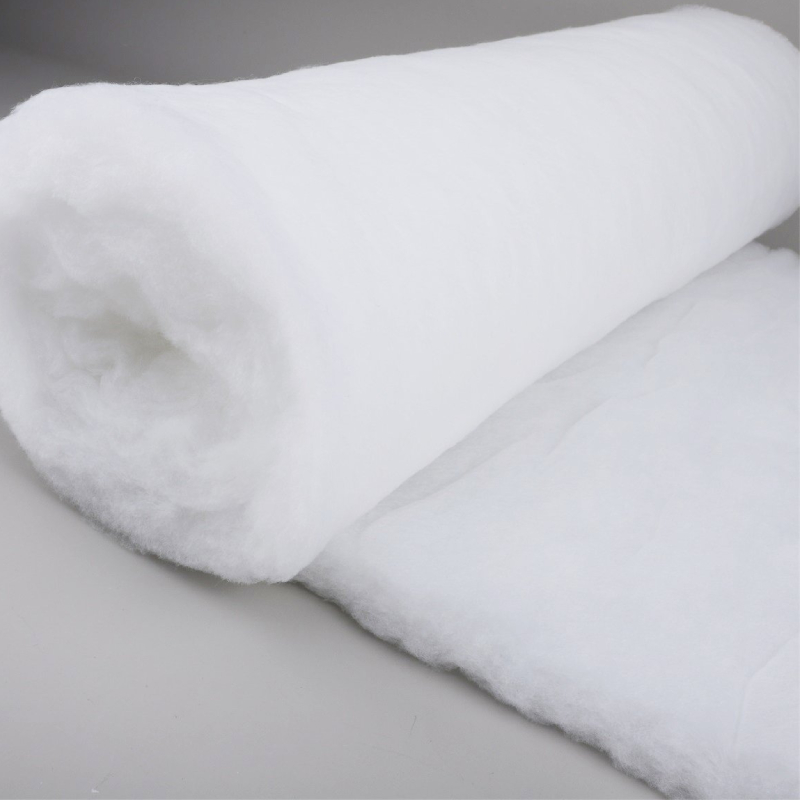
Needle punched felt is a nonwoven material made by mechanically entangling fibers through a needle punching process. Depending on the fiber type, fiber structure, and manufacturing process, it can have different levels of softness, thickness, structural stability, and compression behavior. This makes it a potential inner-layer material for certain mattress designs.
However, a mattress may contain fabric covers, comfort layers, foam, spring systems, separation layers, and other structural components. Each layer serves a different purpose and may require different material characteristics.
Therefore, the real question for buyers is not simply, “Can needle punched felt be used in a mattress?” It is:
Is needle punched felt suitable for a specific layer in my mattress design? Will it meet the actual manufacturing and performance requirements when combined with adjacent materials?
This guide helps mattress manufacturers evaluate needle punched felt by examining its position within the mattress structure, compatibility with adjacent materials, compression behavior, potential long-term issues, and sample validation.
Why Is the Material Name “Mattress Felt” Not Enough?
During procurement, mattress manufacturers may receive needle punched felt products from different suppliers. Even when the products are all called needle punched felt, they may differ in fiber composition, degree of fiber entanglement, surface characteristics, softness, and structural stability.
These differences can affect how the material performs inside a mattress.
For example, if the material is primarily used to separate two structural layers, buyers may focus on whether it maintains its integrity, reduces direct contact between the layers, and fits the existing manufacturing process.
If the material needs to withstand continuous body pressure or repeated compression, purchasing teams should further evaluate thickness changes, structural stability, and long-term performance under the intended compression conditions.
If the material is located near the comfort layer, softness, surface characteristics, compatibility with other filling materials, and the feel of the finished mattress may also need to be considered.
This means that mattress material suitability cannot be determined by the material name or appearance alone. Buyers should first identify where the material will be placed and then define the function that the layer needs to perform.
What Functions Can Needle Punched Felt Serve Inside a Mattress?
Needle punched felt is not a universal solution for every mattress construction requirement. However, depending on the design, it can be evaluated as a potential inner-layer material for certain mattress structures.
As a separation layer
In some mattress designs, a material may be placed between two different structural layers. Buyers should confirm whether needle punched felt meets the required separation, coverage, and processing needs, and whether it affects how the adjacent layers fit together.
As a protective layer
If a layer needs to reduce direct friction or contact between adjacent materials, needle punched felt may be considered as a candidate material. Its actual protective performance, however, depends on the material structure, contact conditions, and overall mattress design. Thickness alone is not enough to establish its suitability.
As an auxiliary support or transition layer
Some mattress constructions may require a material with a certain thickness and degree of structural stability to provide a transition between different layers.
In this situation, buyers should determine whether the needle punched felt can meet the design requirements under actual compression conditions. A material should not be assumed to provide the required support simply because it feels thick or firm.
As part of a functional layer
Depending on the mattress design, needle punched felt may also be combined with foam, fiber filling, or other materials. Its role should be determined by the specific construction rather than by assuming it can replace every type of filling material.
These are potential application functions to evaluate, not a guarantee that every needle punched felt product is suitable for every mattress structure. Final suitability must be established through specification review and actual sample validation.
How Should Buyers Evaluate Needle Punched Felt Based on Its Position in the Mattress?
Before requesting a quotation, mattress manufacturers should identify where the material will be installed rather than simply asking a supplier to recommend a general-purpose mattress felt.
If the material is near the comfort layer
Buyers should determine whether the material affects the softness, thickness distribution, or overall feel of the adjacent comfort materials.
If the felt will be combined with other filling layers, the materials should be evaluated together rather than judging the hand feel of the needle punched felt in isolation.
If the material is near a spring system or foam structure
Buyers should confirm whether the felt is suitable for the contact conditions, structural requirements, and manufacturing process at that location.
For example, they should check whether the material deforms noticeably during assembly, develops uneven or weak areas, or affects the stability of adjacent layers.
If the material serves a separation or coverage function
The evaluation should focus on whether the material provides uniform coverage, stays in position, resists unwanted edge deformation, and can be positioned consistently through the existing production process.
If the material needs to withstand continuous or repeated compression
Buyers should understand how its thickness, structural integrity, and recovery behavior change under the intended compression conditions. Test conditions should be as close as practical to actual use conditions. Conclusions should not be based only on the material's appearance before compression.
These considerations are not a general mattress material specification chart. They help buyers translate a material name into the actual function required at a specific position within the mattress.
What Should Buyers Confirm About Needle Punched Felt and Adjacent Materials?
A mattress is not a product in which each material works independently. Even if a material performs well on its own, the result may change when it is combined with other layers.
Therefore, the suitability of needle punched felt should be evaluated in combination with adjacent materials.
When used with foam
Buyers should confirm whether the contact condition, bonding method, and compression behavior of the felt are compatible with the foam.
If the two materials have substantially different compression characteristics, further checks may be needed to identify uneven areas, layer movement, or other structural changes in the combined assembly.
When used with a spring system
The specific spring construction should be considered when determining whether needle punched felt can perform the required separation, coverage, or other function.
If the felt is exposed to localized contact or repeated pressure, its performance should be evaluated in a representative assembly rather than concluded from a flat, standalone material sample.
When used with fiber filling or other soft materials
Buyers should check whether the felt affects the distribution of adjacent materials, overall thickness, feel, or assembly stability.
For mattresses with multiple material layers, the combined structure should be checked for layer movement, localized bunching, and other issues that could affect product consistency.
When used with mattress fabric or other outer layers
If the felt's position could indirectly affect the appearance, flatness, or sewing performance of the outer fabric, these factors should be included in the sample evaluation.
For constructions involving sewing, bonding, or other fixing methods, buyers should also confirm whether the felt is suitable for the intended process.
These checks do not mean that every material combination will have problems. They highlight why mattress manufacturers need to evaluate the final material assembly rather than only the individual felt.
Why Are Thickness Consistency and Compression Behavior Important?
For internal mattress materials, buyers should not focus only on the initial thickness or hand feel of a sample.
Thickness uniformity across the material, changes under pressure, and performance after repeated compression may all affect suitability in the finished product.
Thickness consistency
If a roll has significant local thickness variations, cutting, assembly, and finished-product consistency may become more difficult to control.
Mattress manufacturers should therefore confirm whether the material meets the project's thickness consistency requirements and measure different areas when necessary.
Thickness changes under compression
If the material needs to withstand continuous pressure, buyers should define the pressure, degree of compression, holding time, and measurement method used during testing.
Comparing thickness only in an uncompressed state does not fully explain how the material will perform in the actual mattress structure.
Structural changes after repeated compression
For mattress structures exposed to repeated pressure, buyers can establish compression-cycle tests based on the product design. These tests can help identify structural damage, permanent thickness reduction, or other changes that may affect use.
The test method and acceptance criteria should be defined according to the final product requirements. Without supporting test data, it is not appropriate to promise that a particular needle punched felt will have superior resilience or durability.
How Should Buyers Evaluate Potential Long-Term Issues with Needle Punched Felt?
Mattress materials need to be suitable not only for manufacturing but also for the intended conditions of use.
For manufacturers planning long-term purchases of needle punched felt, the following areas are worth considering during material evaluation.
Structural integrity
Check whether the material develops noticeable damage, loose edges, or other issues that could affect the finished product during cutting, sewing, assembly, or other actual processing operations.
Thickness and dimensional stability
If the material undergoes significant thickness changes under compression, it may affect the internal mattress structure. Confirm the acceptable range of change according to the design requirements.
Fiber shedding or surface changes
If the material may experience continued friction against adjacent layers during processing or use, check whether fiber shedding, pilling, or other surface changes occur to an extent that could affect product quality.
Long-term compatibility with adjacent materials
For multilayer structures, confirm through suitable simulated-use or durability testing whether significant layer movement, separation, or other structural changes occur.
Final product requirements
If the mattress has specific flame-retardant, chemical-substance restriction, hygiene, or other market-access requirements, verify the material and finished product against the applicable standards for the intended sales market.
The purpose of these checks is not to assume that needle punched felt will develop these problems. It is to determine through appropriate validation whether a specific material is suitable for the intended mattress structure and operating environment.
Why Must Material Samples Be Tested in the Actual Mattress Structure?
A standalone needle punched felt sample can help buyers initially evaluate color, hand feel, surface condition, and basic dimensions. However, it cannot fully represent how the material will perform once installed inside a mattress.
The final result may be influenced by adjacent materials, layer combinations, fixing methods, assembly processes, and actual pressure conditions.
For this reason, mattress manufacturers should validate the material in stages.
Step 1: Confirm the material itself
Check the material composition, specifications, surface condition, thickness consistency, and other agreed basic requirements.
Step 2: Prepare a combined sample
Combine the needle punched felt with the actual adjacent materials for the project and prepare a sample using the intended construction and processing methods.
Step 3: Check processing suitability
Observe whether the material is suitable for cutting, sewing, bonding, or other production operations, and check whether it affects the assembly of adjacent materials.
Step 4: Verify the intended function
Based on the felt's position in the mattress, check whether it performs the intended separation, protection, or other design function.
Step 5: Conduct appropriate compression or durability testing
If the product needs to withstand continuous pressure or repeated use, test it under predefined conditions and record the changes before and after testing.
Step 6: Evaluate a complete mattress sample when necessary
If the material may affect the overall structure, feel, or performance of the finished product, further evaluation using a complete mattress sample may be necessary.
Test results should be assessed against the project's requirements. The short-term performance of one material sample should not be used to predict the long-term comfort, support, or service life of the entire mattress.
What Should Mattress Manufacturers Confirm Before Purchasing?
Before requesting a quotation or sample from a needle punched felt supplier, prepare the following information.
Final product and application position: Explain which layer of the mattress will contain the material and what function it needs to perform.
Adjacent materials: Provide information about the foam, spring system, fiber filling, fabric, or other relevant components.
Existing material sample: If you are looking for a replacement, provide the current material sample, known specifications, or a description of the problem that needs to be solved.
Confirmed technical specifications: Provide known requirements for fiber composition, GSM, thickness, width, and other project parameters. Clearly mark specifications that still need discussion rather than entering arbitrary values.
Processing method: Explain whether the material needs cutting, sewing, bonding, heat pressing, or other processing.
Target performance: Describe the function required from the layer and any confirmed test requirements or acceptance criteria.
Estimated order quantity and delivery requirements: Provide the estimated initial order quantity, potential repeat-order plans, and target delivery date so the supplier can assess the order conditions.
Sample validation method: Explain how you intend to evaluate the material and which results the project must meet.
This information helps the manufacturer understand the actual requirements within the mattress structure and discuss suitable material options instead of recommending a product based on a single thickness value.
How Should Buyers Discuss Mattress Material Solutions with a Needle Punched Felt Manufacturer?
For overseas mattress manufacturers, bedding brands, and material importers, choosing a needle punched felt supplier involves more than comparing the price per roll. Buyers should also determine whether the supplier understands the material's role in the finished product and can provide suitable specifications and samples according to the project requirements.
Established in 2005, HuiZhou JinHaoCheng Nonwovens Co., Ltd. specializes in nonwoven material development and manufacturing. The company can discuss needle punched nonwoven and customized material solutions for different product applications.
If you are developing a new mattress construction, start by providing an internal structure drawing, the material's intended position, information about adjacent materials, and the functions that need to be verified. Even if all specifications have not been finalized, you can discuss the material options first and then confirm the specifications through sample evaluation and testing in the actual structure.
For projects involving long-term bulk purchasing, confirm the material specifications, acceptance requirements, and batch consistency requirements after sample approval. This helps establish a clear standard for subsequent production.
Conclusion: Verify the Function of the Layer Before Deciding Whether to Purchase Needle Punched Felt
Needle punched felt can be a potential inner-layer material for certain mattress constructions. However, its suitability should not be determined solely by its name, thickness, or hand feel.
Mattress manufacturers should first identify the layer's position and function, then consider its compatibility with adjacent materials such as foam, spring systems, fiber filling, and mattress fabric.
For structures exposed to pressure or repeated compression, buyers should also verify thickness changes, structural integrity, and long-term performance according to the intended use conditions.
Most importantly, material samples should be evaluated in a representative mattress structure whenever practical, rather than testing the standalone material alone.
The right mattress padding material is not necessarily the thickest, softest, or firmest option. It is the material that meets the requirements of its specific position after validation in the actual structure.
If you are sourcing needle punched felt or other customized nonwoven materials for a mattress project, start by defining the mattress construction, the intended position of the material, and its required function. Discuss a sample plan with the manufacturer before deciding whether to proceed with bulk purchasing.




