Jute Grow Mats in Rolls or Pre-Cut Pads? What Commercial Growers Should Know
For commercial microgreens growers, purchasing jute grow mats involves more than comparing material prices and dimensions. Buyers also need to decide how the material should be supplied: in continuous rolls or as individual pre-cut pads.
For growing facilities that prepare large numbers of trays every day, this decision can affect labor requirements, feeding methods, cutting operations, inventory management, and production workflow. If a facility uses automated equipment, the supply format must also match the machine’s actual feeding requirements.
Therefore, jute grow mats in rolls and pre-cut pads are not universally interchangeable options. The more practical approach is to evaluate the existing production process before deciding which supply format is better suited to long-term use.
Why Should Commercial Growers Look Beyond the Price per Pad?
When comparing quotations, purchasing teams often focus on the price per square meter, price per pad, or total price per roll. However, different supply formats involve different processing and handling steps. Comparing quoted prices alone may not reflect the actual cost of production.
When purchasing rolls, a growing facility may need to unwind, position, cut, and organize the material before use. If suitable feeding and cutting equipment is already available, these steps can be integrated into the existing workflow. Without appropriate equipment, additional labor and workspace may be required.
Pre-cut pads can usually enter the relevant preparation process after delivery, reducing the need for on-site measuring and cutting. However, buyers still need to confirm that each pad matches the intended growing tray, that the package quantity supports convenient handling, and that the agreed specifications can be maintained across batches.
The key question is therefore not simply which format has the lower quoted price. It is which format fits the entire process, from material delivery and preparation to actual use.
What Production Workflows Suit Jute Grow Mats in Rolls or Pre-Cut Pads?
Jute Grow Mats in Rolls: Suitable for Workflows That Handle Continuous Material
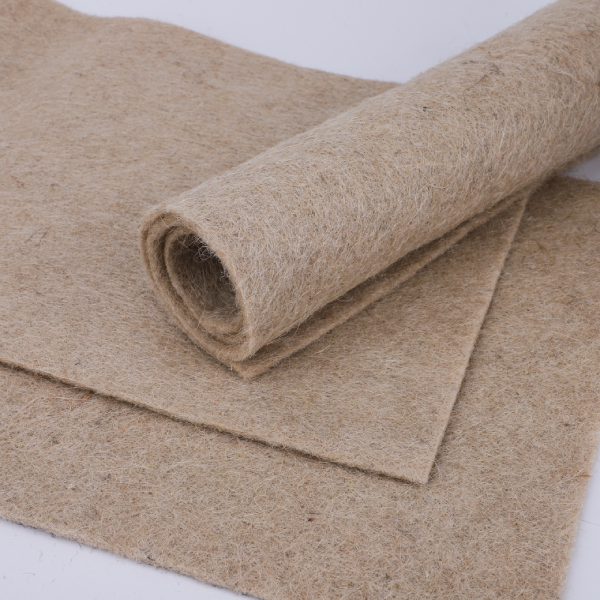
Roll-format material can be unwound continuously. It is suitable for growing facilities that prepare mats according to a consistent production schedule and have unwinding, feeding, or cutting equipment.
When tray dimensions are standardized and the production line can control feeding length and cutting position consistently, rolls may reduce the need to position and organize individual pads manually. For facilities with ongoing production requirements, standardized roll specifications can also support a more consistent replenishment plan.
However, a roll format does not automatically mean the material can be used with every automated machine. Material width, roll diameter, core dimensions, roll weight, and feeding tension may all affect machine operation. Before purchasing, buyers should confirm that the equipment can handle the proposed roll specifications reliably.
If a facility does not have suitable feeding and cutting equipment, rolls may increase manual handling instead. A large production volume alone is not enough to establish that roll-format material is the better choice.
Pre-Cut Jute Grow Mats: Suitable for Workflows Organized Around Individual Trays
Pre-cut grow mats are supplied in specified lengths and widths. They are suitable for manual placement, tray-by-tray preparation, or production systems that require individual pads to be fed into equipment.
If a facility uses multiple tray sizes or requires different pad dimensions in different production areas, pre-cut pads can reduce on-site measuring and cutting. Staff can also distribute the material more easily according to each growing batch.
Pre-cut pads still require clear specifications. In addition to length and width, buyers should confirm dimensional tolerances, edge condition, quantity per package, and packaging method. For automated pick-and-place or individual feeding systems, they should also check flatness, separation between pads, and whether the equipment can grip or convey the material consistently.
Pre-cut pads are not necessarily suitable for every automated production line. If a machine relies on continuous feeding, individual pads may introduce additional manual loading or positioning steps.
What Equipment Parameters Should Buyers Confirm Before Ordering Rolls for an Automated Seeding Line?
For commercial growers using automated equipment, purchasing decisions should begin with the machine interface and operating conditions rather than a preferred material width alone.
Available Equipment Width
First, confirm the material width that the feeding mechanism can accommodate and any requirements for edge alignment and positioning. The usable machine width may differ from the external width of a growing tray because of guides, cutting positions, and feeding mechanisms.
If the roll will be cut into multiple strips or individual pads, buyers should also specify the final cutting dimensions and intended cutting layout. Confirming roll width without considering the actual cutting process may lead to inefficient material use.
Feeding Method and Operating Requirements
Buyers should specify whether the equipment uses continuous feeding, intermittent feeding, or individual-pad feeding. If rollers pull the material through the machine, they should also understand the requirements for feeding tension, flatness, and material stability.
The fiber structure, thickness, and edge condition of jute material may affect feeding performance. Compatibility should therefore be verified through sample testing rather than assumed from the material name alone.
Cutting Dimensions and Tolerances
If the production line cuts the material automatically, buyers should specify the target length, width, cutting position, and acceptable dimensional tolerances. If several cutting sizes are required, they should also confirm how the machine changes between sizes and whether feeding or cutting settings must be adjusted.
When mats need to fit specific growing trays, the final dimensions should be checked against the actual internal tray dimensions, edge structure, and placement method. A mat should not automatically be made as large as the tray’s external dimensions.
Core Dimensions, Roll Diameter, and Roll Weight
Automatic unwinding equipment may have specific limits for core inner diameter, maximum roll diameter, roll weight, and mounting method. The supplier needs these requirements to determine which roll specifications can be supplied.
If the facility does not have complete equipment specifications, buyers should obtain the relevant information from the machine manufacturer before requesting quotations. This is more efficient than repeatedly changing core or roll dimensions after pricing has been provided.
Actual Production Cycle
Production-line speed, feeding length per cycle, and throughput also influence the choice of supply format.
Buyers should explain how the line operates and whether roll replacement, material positioning, or cutting interrupts normal production. For ongoing purchasing projects, it is advisable to test samples under continuous operating conditions, record any issues during feeding, cutting, and roll replacement, and then confirm the specifications for bulk orders.
How Do Manual Handling, Storage, and Packaging Affect the Choice?
The supply format affects not only production equipment but also daily storage and material management.
For facilities that rely mainly on manual operations, pre-cut pads are often easier to distribute by tray or production batch. Staff do not need to measure and cut each piece themselves, but clear package labels are important for distinguishing sizes and batches.
Facilities that can centralize cutting may prefer rolls because material can be issued and processed according to a production plan. Storage arrangements should account for roll dimensions, handling methods, available space, and the risk of compression, contamination, or moisture exposure during storage and transportation.
If a facility uses several grow mat specifications, buyers should also consider the inventory-management implications. Multiple pre-cut sizes may require separate stock and labeling, while rolls may require dedicated on-site cutting and organizing processes.
Packaging should match the way the material will be handled and issued. Buyers can specify the target length per roll, quantity per package for pre-cut pads, outer-package labels, and batch identification requirements. These details can reduce communication and handling costs during warehouse picking, on-site counting, and replenishment.
For commercial growers with continuous production, consistent specifications and clear packaging labels are often more important than the convenience of a single purchase because they affect material management and workflow continuity across future batches.
How Can Buyers Compare the Actual Costs of Rolls and Pre-Cut Pads?
A cost comparison between rolls and pre-cut pads should include the practical handling steps beyond the purchase price.
For rolls, growing facilities should consider material costs, feeding and cutting costs, cutting waste, equipment use, and the preparation time required from operators.
For pre-cut pads, relevant factors include the extent to which cutting is included in the quoted price, packaging and sorting costs, inventory management when specifications change, and any additional individual-pad loading costs.
The following formulas provide a practical starting point:
Actual cost of roll-format material = Material purchase cost + Feeding and cutting costs + Waste handling costs + Relevant equipment and labor costs
Actual cost of pre-cut pads = Pre-cut material purchase cost + Additional packaging or sorting costs + Inventory management costs for different sizes + Additional loading costs
Not every facility will incur every cost listed above. Buyers should select the relevant items according to their actual workflow and compare them over a consistent period and production volume.
For example, a facility that already has reliable feeding and cutting equipment may find it easier to integrate roll-format material into its existing workflow. A facility without cutting equipment, where workers must prepare each pad manually, may reduce on-site handling by purchasing pre-cut pads.
Buyers can request quotations for both formats and compare them against actual production volume, labor requirements, equipment conditions, and material utilization rather than making a decision based solely on the quoted price per pad.
What Information Should Buyers Prepare Before Requesting a Quotation?
Clear purchasing information helps suppliers evaluate the appropriate supply format and reduces repeated clarification during the ordering process.
First, describe the intended application, tray type, and target finished dimensions. For roll orders, provide the usable equipment width, feeding method, cutting dimensions, core inner diameter, maximum roll diameter, and roll-weight limitations.
Next, explain the expected order quantity and replenishment schedule. For example, will the material be purchased as a one-time batch, or will it be replenished according to a regular production cycle? For pre-cut pads, specify individual dimensions, dimensional tolerances, quantity per package, and packaging requirements. For rolls, specify the target width, roll length, and required material structure.
If the material will be used on an automated production line, provide the relevant specifications from the equipment manufacturer. Where necessary, arrange sample testing to verify actual feeding and cutting performance. Record the results in the purchasing specifications so they can be used as a reference for subsequent bulk production.
Buyers should also confirm consistency between samples and bulk orders, including material composition, GSM, thickness, roll width or individual-pad dimensions, and the agreed acceptance criteria.
When selecting a supplier, price should not be the only consideration. A supplier with experience in needle-punched nonwoven manufacturing, specification control, and consistent bulk production can help commercial growing facilities establish clear purchasing requirements for repeat orders. HuiZhou JinHaoCheng Nonwovens Co., Ltd. specializes in nonwoven and related materials and can discuss grow mat supply formats and specifications according to the customer's application requirements. Sample evaluation can help support subsequent purchasing decisions.
If you are looking for custom growing mat rolls that fit your production workflow, provide equipment parameters, target dimensions, and estimated usage when requesting a quotation. This information makes it easier to evaluate whether a roll-format solution is suitable.
Commercial growers with ongoing purchasing requirements can also visit the jute grow mats manufacturer product page to review the available jute grow mat information and discuss the specific delivery requirements for rolls or pre-cut pads with the supplier.
Conclusion: Match the Supply Format to Your Production Workflow First
Roll-format jute grow mats are generally better suited to growing facilities that can handle continuous feeding, unwinding, or cutting. Pre-cut grow mats are more suitable for workflows organized around individual trays or production systems that feed individual pads into equipment.
However, the final decision still depends on equipment compatibility, labor requirements, inventory management, packaging, and actual production costs. For automated growing facilities in particular, buyers should confirm equipment width, feeding method, cutting dimensions, core requirements, and production cycle before placing a bulk order. Sample testing should be used to verify material compatibility with the equipment.
Including these requirements in the purchasing specifications from the beginning helps commercial growers select the supply format that best fits their production workflow and provides a clearer basis for repeat orders and bulk purchasing.