
How Can Overseas Buyers Verify a Real Nonwoven Factory in China?
For overseas buyers purchasing nonwoven materials from China for the first time, finding a supplier does not mean the supplier evaluation is complete. A supplier may have a professional website, product catalog, and factory photos, but these materials alone cannot prove that the company is the actual manufacturer.
What buyers really need to confirm is whether the company providing the quotation, the contracting entity, the payment recipient, and the actual manufacturing factory belong to the same supply chain entity.
This is particularly important for importers, wholesalers, brand buyers, and long-term industrial customers. If the supplier is actually a trading intermediary, product quality, lead time, customization communication, and after-sales responsibility may depend on another factory.
Therefore, before making payment or placing a large order, overseas buyers can build a complete supplier verification chain by checking the company identity, factory location, production evidence, order documents, and third-party factory audits instead of relying only on the word “Factory” on a website.
Why Does Having a Factory Website Not Prove That a Supplier Is a Manufacturer?
Today, many Chinese suppliers have independent websites, upload production workshop photos, and display various products and certificates.
This information can help buyers understand the supplier, but it should only be treated as an initial reference.
A genuine manufacturer should normally be able to answer more questions related to actual production. For example, where is the product manufactured? What production equipment is used? Which processes are completed in-house? How do raw materials enter the production process? How is product quality inspected? Who manages production scheduling and delivery when a bulk order is placed?
If a supplier can only provide product photos and prices but cannot clearly explain the actual production location, manufacturing process, and how an order enters the factory, buyers should carry out further verification.
This does not mean that trading companies cannot be suitable business partners. A trading company may have stable factory resources and extensive export experience. What really matters is whether the supplier clearly and transparently explains its role and identifies which entity is ultimately responsible for manufacturing the products.
For long-term purchasing, a transparent supply chain relationship is often more important than simply deciding whether a supplier is a “factory” or a “trading company.”
Verify the Company Entity Before Looking at Factory Photos
When conducting due diligence on a Chinese supplier, overseas buyers can start with commercial documents rather than factory promotional photos.
The supplier's official company name, registered address, contact information, and the entity shown on the quotation should correspond with each other.
If the website shows one company name, the quotation uses another, the contract is signed by a third company, and the payment account belongs to a different entity, the buyer should ask the supplier to explain the relationship between these entities.
For normal situations such as group companies, export companies, or affiliated companies, this does not necessarily indicate a problem. However, buyers should clearly understand:
Who manufactures the product? Who signs the contract? Who receives the payment? Who is responsible for quality? Who is responsible for delivery?
Clarifying these questions before placing an order makes the commercial relationship much clearer and also helps establish responsibility if quality or delivery issues occur later.
Therefore, the first step in supplier verification is not determining whether a factory “looks large enough,” but confirming whether the transaction structure is clear.
How Can Production Lines and Manufacturing Records Confirm Actual Production Capability?
When verifying whether a supplier has genuine manufacturing capability, simply looking at a photo of a machine has limited value.
A more useful approach is to connect the products being sold with the supplier's actual production capabilities.
For example, if a supplier sells needle punched nonwoven materials, buyers can ask about its actual manufacturing process, including fiber preparation, opening and blending, carding, web formation, needle punching, finishing, slitting, and packaging.
If the supplier also sells composite materials, buyers can further confirm whether processes such as lamination, coating, cutting, or other processing are completed within its own manufacturing system or outsourced to another supplier.
During a live video factory inspection, buyers can also ask the supplier to show equipment and production areas related to the actual products being purchased rather than simply playing an edited promotional video.
For long-term purchasing projects, buyers can also learn more about production scheduling, the relationship between samples and bulk production, and the quality inspection process.
Taken together, this information provides a more meaningful indication of whether a supplier has the relevant manufacturing capability than a single “factory overview” photo.
Why Should Quotations, Contracts, Payment Accounts and Export Documents Be Consistent?
This is an often-overlooked part of international sourcing.
A buyer may initially contact a Chinese company through Google, a B2B platform, or the supplier's website and then receive a quotation. When the order moves forward, however, the buyer may receive a contract, invoice, or payment instruction under a different company name.
If these documents contain different entities, the buyer should not simply assume that the difference is only a variation in company naming.
A better approach is to ask the supplier to explain the relationship between the entities and confirm the final transaction structure.
For example, the buyer can confirm:
Which company issues the quotation?
Which company signs the contract?
Which company receives the payment?
Which company manufactures the products?
Which entity appears on the export documents?
Which company is responsible for quality issues?
If these questions can be clearly connected, the buyer can better understand who they are actually doing business with.
For first-time purchases, high-value orders, or OEM projects, this step is particularly important.
The purpose of supplier due diligence is not simply to confirm that “the company has a factory,” but to confirm that the entire commercial transaction chain is transparent and traceable.
What Can Factory Videos, Live Video Inspections and Third-Party Audits Actually Prove?
Different verification methods can answer different questions.
Factory photos and recorded videos are useful for an initial assessment. They can help buyers see the production environment, equipment, and manufacturing activities, but their evidentiary value is limited because buyers cannot always confirm when the video was recorded or whether the factory shown is the actual production location for their order.
A live video factory inspection goes one step further.
During a video call, buyers can ask the supplier to show production areas, equipment, warehouses, raw materials, and products currently being manufactured in real time. They can also ask questions directly during the inspection. This can reduce the information gap created by relying only on promotional materials.
For high-value orders or long-term purchasing projects, buyers can also consider a third-party factory audit.
A third-party audit may examine areas such as company information, production facilities, quality management, employee and safety management, and manufacturing capability. It does not replace product testing, but it can provide more independent information about the supplier's actual operating conditions.
Therefore, a reasonable approach is not to rely on one type of evidence, but to make company documents, the production site, and independent verification support each other.
Which Types of Factory Evidence Should Not Be Used Alone?
Overseas buyers should also be careful not to treat one type of information as direct proof that a supplier is a genuine manufacturer.
For example, factory photos alone cannot prove that the buyer's current order will be manufactured at that factory.
A business registration document can verify the existence of a company entity, but it cannot by itself prove that the company owns all the production equipment shown on its website.
A quality management system certificate can indicate a relevant management system or certification scope, but it does not automatically prove that every product sold by the supplier is manufactured in-house.
Likewise, a video showing a large factory does not directly prove that the factory is the actual production location for the buyer's order.
Information such as electricity consumption, factory size, and the number of machines can also be used as supporting evidence, but should not be treated as the sole basis for a final decision.
Effective supplier verification should focus on whether different pieces of evidence correspond with one another.
For example, the company entity should correspond to the factory address, the factory address should correspond to the actual production site, the production site should correspond to the product types being offered, and the products should correspond to the quotation and order. The order should then be connected to the supplier's quality and delivery responsibilities.
This type of cross-verification is more reliable than simply searching for one document that supposedly “proves” a factory is genuine.
What Supplier Verification Chain Should Overseas Buyers Build Before Payment?
For a China nonwoven purchasing project, supplier verification can be viewed as a process that moves from “identity” to “production” and then to “transaction.”
First, confirm the supplier's official company entity and contact information.
Then confirm the actual production address and the main products manufactured there.
Next, use factory photos, live video inspections, or an on-site audit to verify the production environment and equipment.
For key suppliers, a third-party factory audit can provide additional verification.
Before placing the formal order, verify the quotation, contract, payment entity, product specifications, and quality responsibilities.
If possible, buyers can also use a sample order to verify whether the supplier can manufacture according to the confirmed specifications and observe how the supplier handles the transition from sample approval to bulk production.
The final verification logic can be summarized as:
Company Identity → Factory Location → Production Evidence → Product Capability → Commercial Documents → Sample Verification → Bulk Order
The purpose is not to require every supplier to go through a complicated investigation. Instead, the depth of verification should depend on the order value, purchasing frequency, and importance of the product.
For a small one-time purchase, basic company verification and sample testing may be sufficient. For long-term OEM projects or large-volume imports, an on-site or third-party supplier audit may be more appropriate.
How Can JHC Support Overseas Buyers in Verifying Manufacturing Capability?
For overseas buyers, what matters is not only what products a supplier can offer, but also whether the supplier can consistently manage the process from sample development to bulk production.
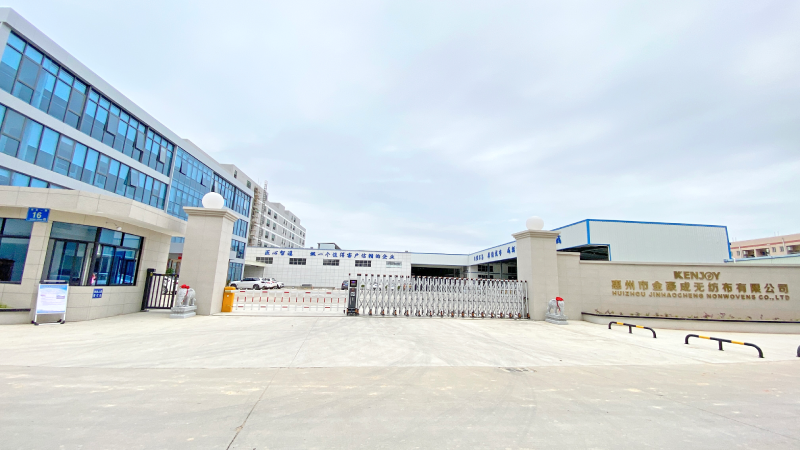
HuiZhou JinHaoCheng Nonwoven Co., Ltd. specializes in nonwoven manufacturing and has more than 20 years of industry experience, providing needle punched nonwoven, needle punched felt, and various customized nonwoven materials.
For overseas importers, wholesalers, and OEM customers, its manufacturing capabilities can be matched to actual product requirements, including different materials, GSM, thicknesses, widths, and further processing requirements.
For long-term purchasing projects, OEM, ODM, and customized manufacturing capabilities can also help buyers move from sample approval to bulk production with the same supplier instead of having to find a different manufacturer for every order.
For buyers, the ultimate purpose of a factory audit is not simply to prove that a supplier “looks like a factory,” but to confirm whether it has the actual manufacturing, quality control, and continuous supply capabilities required for the project.
Conclusion
When verifying a Chinese nonwoven supplier, overseas buyers should not simply ask one question: “Are you a factory?”
More useful questions are: Who is the company? Where is the actual production site? Who manufactures the products? Who signs the contract? Who receives the payment? Who is responsible for quality and delivery? Can these pieces of information be verified against each other?
By cross-checking the company entity, production site, product capability, commercial documents, samples, and third-party audits, buyers can better understand whether they are dealing with an actual manufacturer, a trading company, or a supply chain involving multiple entities.
For long-term purchasing, the key is not how a supplier presents itself, but whether its identity, manufacturing capability, and commercial responsibilities can be clearly verified.




