
How Can Overseas Buyers Verify a Floor Protection Roll Supplier’s Bulk Production Capability?
For overseas importers, wholesalers, distributors, and flooring protection material brands, one common situation when purchasing Floor Protection Roll for the first time is:
The supplier’s sample looks good and passes basic evaluation, but the real question is not whether the supplier can make one good sample.
The more important question is whether the supplier can consistently reproduce the approved sample during actual bulk production.
Sample production and mass production are not always the same process.
Therefore, after sample approval, overseas buyers should not directly move from “Sample Approved” to large-volume purchasing. A supplier qualification stage is still necessary.
The key purchasing question is:
Can this Floor Protection Roll supplier consistently manufacture the first bulk order according to the approved sample, product specifications, and packaging requirements?
This is one of the most important factors when selecting a reliable floor protection roll manufacturer.
Why Is an Approved Sample Not Enough Before Placing a Bulk Order?
A qualified sample only proves that a supplier can produce one product that meets the buyer’s requirements.
However, overseas buyers are not purchasing one sample. They are purchasing dozens, hundreds, or even full container quantities of Floor Protection Roll.
When production volume increases, factors such as raw material preparation, continuous production, roll specifications, packaging, and batch consistency become much more important.
For example, a supplier’s sample may have the expected:
GSM
Thickness
Width
Surface condition
Composite performance
However, if these requirements are not officially recorded as production specifications, the bulk order may have differences caused by misunderstanding.
Another important factor is that samples are usually carefully managed by sales teams, engineers, or sample departments, while bulk production enters the supplier’s normal manufacturing process.
Therefore, buyers should not only ask:
“Can you make this sample?”
The more important question is:
“Can you consistently produce this approved sample for the entire bulk order?”
This is the key point when evaluating a floor protection roll supplier.
Step One: Convert the Approved Sample into Clear Production Specifications
Many purchasing problems do not happen because suppliers lack production capability.
They happen because buyers and suppliers have different understandings of what the sample standard actually means.
For example, a buyer may simply say:
“Please produce the same as the sample.”
However, “same” is not a complete production requirement for a factory.
Before the first bulk production, buyers should clearly define the key specifications based on the approved sample.
Important details may include:
GSM
Thickness
Width
Roll Length
Material Structure
Backing Layer
Color
Packaging
And depending on the application, required performance such as:
Water resistance
Slip resistance
Absorption performance
For PE laminated Floor Protection Roll, buyers should also confirm the composite structure and packaging requirements.
For long-term purchasing projects, this confirmed specification document can become the reference standard for future repeat orders.
Step Two: Why Should Buyers Keep a Golden Sample?
Before the first bulk production, overseas buyers should keep a physical sample that has been approved by both sides, commonly known as a Golden Sample or Approved Sample.
The purpose is not to test the product again, but to create a clear physical reference.
For example, during future production, issues may appear such as:
Surface texture changes
Color differences
Material structure variation
Different PE layer performance
Different roll appearance
In these situations, both parties can compare the production batch with the approved sample.
This is much clearer than relying only on product photos or statements such as:
“Same as previous order.”
For Floor Protection Roll products, buyers should also keep product labels, specification sheets, and sample photos.
If possible, important data such as GSM, thickness, width, and roll length should also be recorded.
This gives buyers a clear reference when checking the first bulk shipment.
Step Three: Why Is a Trial Order Valuable Before the First Large Shipment?
For a first-time cooperation with a Floor Protection Roll supplier, especially when the order quantity is large, buyers may consider a reasonable Trial Order before full-scale purchasing.
The purpose of a Trial Order is not only to check the product.
It is to verify whether the supplier can successfully move from sample production to normal bulk manufacturing.
Buyers can evaluate:
Whether the supplier follows the approved specifications
Whether the production matches the Approved Sample
Whether roll dimensions meet the order requirements
Whether packaging follows the confirmed standard
Whether labels and product information are correct
Whether production and delivery progress follow the agreed schedule
If the Trial Order is completed successfully, buyers can gradually increase purchasing volume and reduce the risks associated with the first large order.
However, not every project requires a Trial Order.
If a supplier already has stable production experience and the specifications are clearly confirmed, buyers can decide based on their own risk management requirements.
Step Four: How Should Buyers Confirm Production Consistency?
For Floor Protection Roll purchasing, production capability is not only about whether a supplier owns manufacturing equipment.
The more important question is:
Can the factory consistently produce the same specification?
A reliable supplier should clearly understand the material structure, production requirements, and roll specifications, and these requirements should be transferred into the normal production process.
If every repeat order requires explanations such as:
“What width do we need?”
“What GSM was used last time?”
“Is this the same color?”
“Should packaging follow the previous order?”
Long-term purchasing may easily face communication errors.
A better purchasing method is to establish a clear product specification record after the first approved order.
Future repeat orders can then directly follow the confirmed product standard.
This is especially important for overseas wholesalers and distributors because they usually need stable products for long-term market sales rather than developing a new product every time.
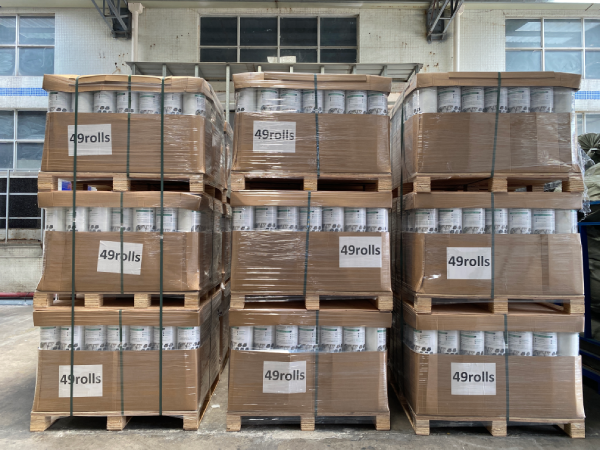
Step Five: Why Should Packaging Be Confirmed Before Bulk Production?
Many buyers focus mainly on the material itself but overlook packaging requirements.
However, Floor Protection Roll is a roll product, and packaging directly affects transportation, storage, handling, and final sales.
Before the first bulk order, buyers should confirm:
Roll Width
Roll Length
Roll Diameter
Roll Weight
Individual Packaging
Outer Packaging
Pallet Requirement
And whether they require:
Private Label
Logo
Custom Label
For importers and distributors, packaging dimensions should also match their warehouse and sales requirements.
For example, two Floor Protection Roll products with the same length may have different roll diameters depending on packaging methods.
Therefore, packaging should not be confirmed only before shipment.
Locking these details before production helps prevent problems after manufacturing is completed.
Step Six: How Can Buyers Reduce First Bulk Order Risks?
Before production starts, buyers should ask suppliers to reconfirm the order specifications.
The purpose is to ensure that:
Sales → Production → QC → Packing
are all following the same order information.
Buyers should confirm:
Whether product specifications are finalized
Whether the approved sample is used as the production reference
Whether quantity is correct
Whether packaging requirements are correct
Whether delivery schedule is confirmed
Whether customized requirements are communicated to production
After production completion, buyers can perform pre-shipment confirmation based on the agreed quality requirements.
The goal is not to create an unnecessarily complicated inspection system, but to confirm that the final goods are produced according to the approved product standard.
If the first bulk order matches the Approved Sample, this shipment can become the reference for future repeat orders.
The supplier relationship can gradually develop from:
Sample Supplier
to:
Qualified Bulk Supplier
and finally:
Long-Term Floor Protection Roll Supplier
What Signs Show That a Floor Protection Roll Supplier Is Not Ready for Bulk Orders?
During first cooperation, buyers should carefully evaluate suppliers if they notice the following situations:
The supplier cannot clearly explain the sample specifications.
The supplier only says “production will be the same as the sample” but has no formal specification record.
The approved sample and quoted product specifications are different.
Roll width, length, GSM, or packaging requirements keep changing.
The supplier cannot confirm who controls the final production specifications.
The supplier does not want to use the Approved Sample as the bulk production reference.
Sales, production, and purchasing teams have inconsistent information before production.
These issues do not always mean the supplier lacks manufacturing capability, but they indicate that the order management process may not be clear enough.
For first-time large-volume purchases, buyers should solve these issues before confirming the order quantity.
How Does JHC Support Long-Term Floor Protection Roll Purchasing?
For overseas importers, wholesalers, distributors, and building material brands, choosing a floor protection roll manufacturer requires more than comparing prices.
Buyers should also evaluate whether the supplier can support the complete process from sample development to stable bulk production.
HuiZhou JinHaoCheng Nonwovens Co., Ltd. has more than 20 years of nonwoven manufacturing experience and provides Floor Protection Roll, Painter Felt, Protective Fleece, and other customized nonwoven products with OEM/ODM support.
Based on customer market requirements and product applications, the company can support confirmation of:
GSM
Thickness
Width
Roll Length
Color
Backing
Packaging
and other customized requirements.
For long-term purchasing projects, clear product specifications, sample approval procedures, and production quality control help overseas buyers reduce repeated communication and establish reliable references for future orders.
For importers and wholesalers searching for a floor protection roll supplier China, the most important question is not only whether a supplier can provide a good sample.
The real question is whether the supplier can consistently turn that approved sample into every future bulk order.
Conclusion: Do Not Judge a Floor Protection Roll Supplier Only by Samples
For overseas buyers purchasing Floor Protection Roll for the first time, an approved sample is only the beginning of supplier evaluation.
The key process is:
Approved Sample → Product Specification → Trial Order → Bulk Production → Pre-Shipment Confirmation
A reliable supplier should be able to convert the approved sample into a clear production standard and maintain consistency in:
Product specifications
Roll dimensions
Packaging requirements
during bulk manufacturing.
Therefore, when selecting a floor protection roll supplier, buyers should not only ask:
“What is your price?”
They should also ask:
“Can you consistently reproduce my approved sample in bulk production?”
This is the key question for identifying a supplier suitable for long-term cooperation.




