
What Specifications Should Buyers Confirm Before Ordering Floor Protection Roll from China?
For overseas importers, wholesalers, distributors, and building material brands, one of the most common challenges when purchasing Floor Protection Roll from China is not the price negotiation, but incomplete product specification confirmation.
Many buyers contact suppliers with only:
“Need floor protection roll.”
Or:
“Please send your best price.”
However, for roll-type protection materials, different material structures, GSM, thickness, width, length, and packaging methods can directly affect the final price, shipping cost, and actual performance.
Therefore, before requesting a quotation from a floor protection roll manufacturer China, buyers should first understand:
What specifications does my project actually require for Floor Protection Roll?
Complete specification information helps suppliers provide accurate quotations and reduces communication problems during sample approval and bulk production
Why Can’t Buyers Provide Only Size Information When Requesting a Floor Protection Roll Quotation?
Floor Protection Roll is not a single standard product.
Different markets and application scenarios may require different material structures and performance.
For example:
Painting projects may focus more on absorption capability and liquid protection.
Commercial renovation projects may require better abrasion resistance, anti-slip performance, and longer covering time.
Distributors may pay more attention to packaging, roll dimensions, and market sales requirements.
Therefore, even for the same Floor Protection Roll product, different customers may require different solutions.
When requesting a quotation, buyers should confirm more than:
Length
Width
Quantity
They should also define:
Material structure
GSM
Thickness
Backing type
Color
Packaging method
Application environment
These details allow suppliers to provide a more accurate solution instead of only offering a simple price.
Material Structure: Should Buyers Choose Needle Punched Felt or Other Structures?
Common Floor Protection Roll structures include:
Needle Punched Nonwoven Felt
PE Laminated Felt
PVC Backed Felt
or other composite structures.
Different structures influence:
Absorption capability
Water resistance
Abrasion resistance
Flexibility
Reusable performance
For example, needle punched nonwoven felt usually provides good flexibility and absorption performance, making it suitable for painting, renovation, and construction protection applications.
If a project requires better protection against liquid penetration, buyers may need a laminated structure with a waterproof film layer.
Therefore, before requesting a quotation, buyers should clarify:
Do they need a standard absorbent protective fleece?
Or a composite Floor Protection Roll with waterproof and anti-slip performance?
This decision directly affects material selection.
How Do GSM and Thickness Affect Floor Protection Performance?
GSM (grams per square meter) and Thickness are two important specifications when purchasing Floor Protection Roll.
GSM represents the weight of the material per unit area.
Generally:
Lower GSM products:
Suitable for light-duty protection
Short-term renovation work
Low traffic environments
Higher GSM products:
Provide better cushioning capability
Suitable for frequent construction areas
Heavy-duty renovation projects
However, buyers should not evaluate products only by GSM.
Products with the same GSM may have different performance because of differences in:
Fiber structure
Needling density
Lamination method
Material composition
Therefore, buyers should confirm:
GSM range
Thickness
Material structure
Actual application conditions
Instead of simply requesting:
“Higher GSM is better.”
Why Do Roll Width and Roll Length Affect Transportation and Sales?
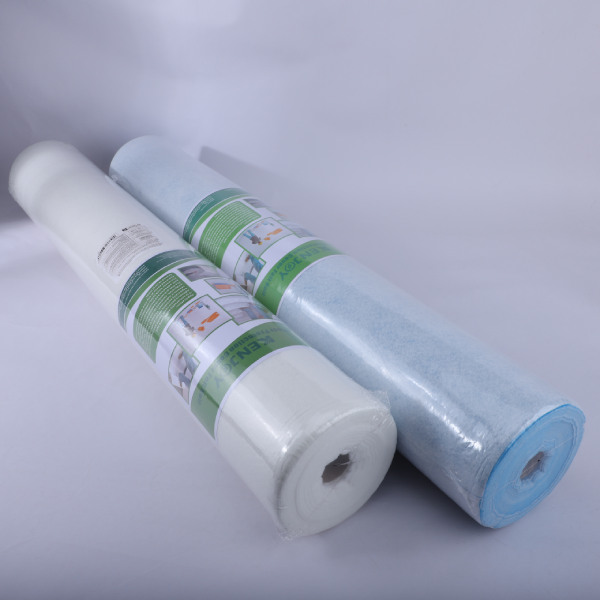
Floor Protection Roll is usually supplied in roll form, so:
Roll Width
and
Roll Length
not only affect installation efficiency but also influence packaging and logistics costs.
For example:
Wider rolls:
Provide higher coverage efficiency
Reduce installation joints
But may increase transportation dimensions.
Longer rolls:
Reduce replacement frequency
Suitable for large projects
But may increase roll diameter and weight.
For importers and distributors, local market requirements should also be considered.
For example:
Retail customers may prefer smaller packages.
Construction projects may require larger industrial rolls.
Therefore, buyers should confirm:
Roll width
Roll length
Roll diameter
Roll weight
Packaging method
during the quotation stage.
This helps suppliers develop products that are more suitable for transportation and sales.
Should Buyers Confirm Waterproof, Anti-Slip, and Absorption Requirements Before Ordering?
Different working environments require different Floor Protection Roll performance.
Buyers should clearly define what problem the product needs to solve.
For example:
Painting projects:
Main requirements are absorption and leakage protection.
Commercial renovation:
Main requirements are abrasion resistance, anti-slip performance, and surface protection.
Hardwood floor protection:
Main requirements include breathability, moisture control, and surface protection.
Therefore, buyers should confirm:
Is a PE waterproof film required?
Is an anti-slip backing required?
Is higher absorption performance needed?
Will the material be used for long-term covering?
These requirements directly affect product structure and manufacturing options.
When Should Packaging and Private Label Requirements Be Confirmed?
For overseas importers, wholesalers, and brand customers, packaging is also an important part of the product.
Buyers should confirm:
Outer packaging
Individual roll packaging
Pallet requirements
Label design
Logo
Private Label
If packaging requirements are not confirmed early, problems may occur with:
Transportation space
Warehouse storage
Market sales packaging
For long-term sales products, it is recommended to confirm the complete packaging solution before the first order.
This helps maintain consistency for future repeat orders.
What Information Should Buyers Provide for OEM Floor Protection Roll Development?
If buyers want to develop their own Floor Protection Roll products, they should provide:
Application scenario
Target market
Material requirements
Width
Length
GSM
Thickness
Color
Backing requirements
Packaging design
Estimated order quantity
Reference samples or existing products
These details help suppliers develop a more suitable solution.
A professional manufacturer should not only provide standard products but also support OEM/ODM development according to customer requirements.
How Does JHC Support Customized Floor Protection Roll Projects?
For overseas importers, wholesalers, distributors, and building material brands, choosing a suitable supplier requires more than comparing prices.
Buyers should also evaluate customization capability and long-term supply ability.
HuiZhou JinHaoCheng Nonwovens Co., Ltd. specializes in nonwoven material manufacturing and provides OEM/ODM solutions for Floor Protection Roll, Painter Felt, Protective Fleece, and other customized nonwoven products.
Based on customer requirements, the company can support:
GSM customization
Thickness adjustment
Width and length customization
Color development
Backing lamination
Packaging customization
With complete nonwoven production capability, overseas customers can develop products from initial samples to stable bulk production.
For buyers searching for a floor protection roll manufacturer China, confirming complete specifications before inquiry can improve quotation accuracy, reduce communication problems, and build a more stable long-term supply relationship.
Conclusion: Clear Specifications Are the Foundation of Successful Floor Protection Roll Purchasing
When purchasing Floor Protection Roll from China, price is not the only factor.
An accurate quotation should be based on clear product specifications.
Before contacting suppliers, buyers should confirm:
Material structure
GSM
Thickness
Width
Roll length
Performance requirements
Packaging method
OEM requirements
Complete specification information helps suppliers provide accurate quotations and reduces risks during future production.
For long-term purchasing projects, a clear product specification standard is an important foundation for building a stable supplier relationship.




