
How to Choose Geotextile for Drainage Pipe Wrap: Filtration Requirements Buyers Should Confirm
When sourcing geotextile filter fabric for drainage pipe wrap, overseas importers, distributors, contractors, and project buyers should evaluate more than the fabric’s weight or thickness. The material needs to be suitable for the surrounding soil, drainage structure, filtration requirements, and installation conditions.
A geotextile that works in one drainage project may not be suitable for another. If the material does not retain soil particles effectively or allow sufficient water to pass through, the drainage system may not perform as intended.
Before requesting quotations or placing a bulk order, buyers should first understand the actual requirements of the drainage system and confirm whether the proposed nonwoven geotextile for drainage is suitable for the application.
1. What Does Geotextile for Drainage Pipe Wrap Need to Do?
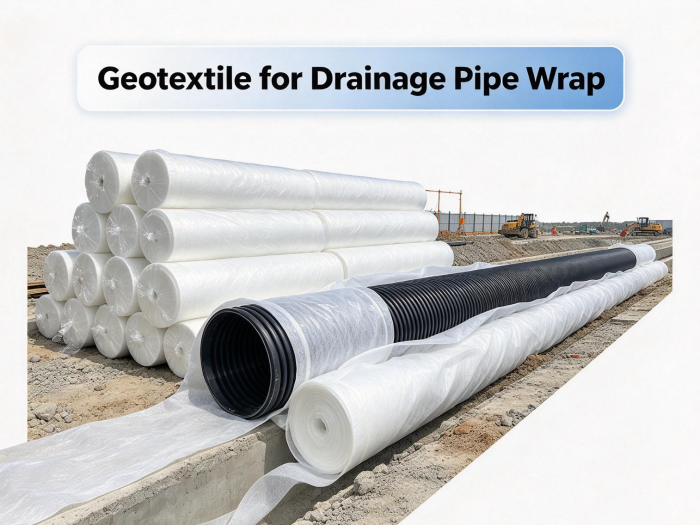
In a drainage system, geotextile is often used as a filter layer around a perforated drainage pipe or drainage aggregate.
Its main function is to allow water to pass through while helping prevent surrounding soil particles from entering the drainage structure. This helps reduce the risk of soil migration and the accumulation of fine particles inside the drainage system.
However, the geotextile is only one component of the overall drainage system. Its performance also depends on the surrounding soil, drainage structure, installation method, and project requirements.
For buyers, the key question is not simply whether a material is called geotextile filter fabric for drainage, but whether its filtration characteristics are appropriate for the specific project.
2. Why Should Buyers Look Beyond Geotextile GSM and Water Permeability?
GSM, or grams per square meter, is an important specification when purchasing nonwoven geotextile. However, GSM alone cannot determine whether a material is suitable for drainage pipe wrapping.
Two geotextiles with the same GSM may differ in fiber material, fiber structure, thickness, pore characteristics, and other physical properties. These differences can affect how the material retains soil particles and allows water to pass through.
Water permeability is another important consideration, but it should not be evaluated in isolation. The filter needs to balance soil retention with water flow under the actual project conditions.
Buyers should also consider whether the material can withstand the mechanical stresses associated with handling and installation.
Therefore, selecting drainage geotextile based only on GSM, thickness, or a simple water-flow demonstration may not provide enough information to confirm its suitability.
3. What Soil and Drainage Conditions Should Buyers Confirm Before Purchasing?
Before selecting nonwoven geotextile for drainage, buyers should gather information about the surrounding soil and the drainage system.
Soil Conditions
The soil type and particle-size distribution are important because the geotextile needs to retain soil particles while allowing water to pass through. Different soil conditions may require different filtration characteristics.
Drainage Structure
Buyers should clarify whether the geotextile will wrap a perforated drainage pipe, surround drainage aggregate, or form part of another drainage structure. The location and function of the filter layer can affect the material requirements.
Water Conditions
The expected water flow and the operating conditions of the drainage system should also be considered. A material that allows sufficient water to pass through in one application may not automatically meet the requirements of another project.
Installation Environment
The installation method, surrounding materials, and potential mechanical stresses should be identified before material selection. These factors help determine which material properties need to be confirmed.
If the project has specific engineering drawings, technical specifications, or applicable standards, buyers should provide them to the supplier whenever possible.
4. How Should Buyers Check Filtration Performance Against Project Requirements?
When evaluating geotextile filter fabric for drainage, buyers should review the technical properties relevant to the project's requirements rather than relying on a single specification.
Filtration Performance
The material should be suitable for retaining soil particles under the intended operating conditions. Pore characteristics and soil particle-size distribution are important considerations when evaluating this requirement.
Hydraulic Permeability
The material needs to allow water to pass through at a rate appropriate for the drainage system. Buyers should confirm the relevant permeability or water-flow data and the associated test methods.
Mechanical Properties
The geotextile may experience handling, installation, or contact stresses. Its relevant mechanical properties should therefore be checked against the project requirements.
Durability Requirements
Depending on the application, buyers may also need to consider the material’s expected service environment and any project-specific durability requirements.
There is no single GSM value or universal specification that can establish suitability for every drainage project. Final selection should follow the applicable project specifications and, where necessary, evaluation by the responsible engineering team.
5. What Should Buyers Request from Suppliers Before Sample Approval and Bulk Purchasing?
Before placing a bulk order, buyers should request the technical information needed to evaluate the proposed material.
Depending on the project, this may include:
The product specification and GSM;
The fiber material and relevant structural information;
Available filtration and hydraulic performance data;
Relevant mechanical property data;
Test methods and applicable test reports;
Roll dimensions and manufacturing tolerances;
Sample information and confirmation of the proposed production specifications.
The sample used for evaluation should represent the material being quoted for bulk production. Buyers should also record the specifications of the approved sample so they can compare them with the material supplied later.
A simple demonstration, such as pouring water onto a fabric sample, may show that water can pass through the material, but it cannot independently establish whether the geotextile meets the project's filtration requirements.
For this reason, buyers should review the available technical data and conduct appropriate testing when required by the project.
6. What Information Should Buyers Provide When Requesting a Quote for Drainage Pipe Wrap Geotextile?
A clear inquiry helps suppliers understand the application and evaluate which material options may be suitable.
When requesting a quotation for geotextile filter fabric for drainage, buyers should provide as much of the following information as possible:
Intended Application: Explain whether the material will be used to wrap perforated drainage pipes, surround drainage aggregate, or serve another drainage function.
Soil Conditions: Provide available information about the soil type and particle-size distribution.
Drainage Structure: Share relevant drawings, pipe details, or information about the surrounding drainage materials.
Installation Conditions: Describe how the material will be installed and any relevant operating or environmental conditions.
Technical Requirements: Specify the required GSM, dimensions, applicable standards, and filtration or hydraulic performance requirements, if known.
Order Requirements: Include the estimated quantity, roll dimensions, packaging requirements, delivery destination, and expected purchasing schedule.
If you do not yet know the exact material specification, you can begin by sharing the project application, available drawings, and required functions. The supplier can then discuss potential material options based on the information provided.
HuiZhou JinHaoCheng Nonwovens Co., Ltd. manufactures needle-punched nonwoven and felt materials and can discuss customized material options according to different application requirements. For drainage projects, buyers should provide the relevant technical specifications and performance requirements so that the proposed material can be evaluated appropriately.
7. From Material Selection to a Suitable Drainage Solution
Choosing geotextile for drainage pipe wrapping should begin with the requirements of the complete drainage structure, not simply a GSM number or the lowest quotation.
The surrounding soil, drainage configuration, filtration requirements, installation conditions, and applicable project standards all help determine whether a proposed material is suitable.
Once these requirements are understood, buyers can compare the available technical data, request representative samples, confirm the specifications, and proceed with bulk purchasing.
This approach helps overseas buyers make more informed purchasing decisions and reduces the risk of selecting a material based only on price or a single specification.
If you are sourcing geotextile filter fabric for drainage, start by defining the soil conditions, drainage structure, and required filtration performance. These details provide a more useful foundation for discussing material options with a supplier.




