
High-Density Polyester Felt: What to Confirm Before Bulk Ordering
For overseas importers, industrial material buyers, wholesalers, and product manufacturers, purchasing high density polyester felt involves more than confirming a product name and quotation.
When order quantities increase or the same material needs to be purchased repeatedly, a more important question arises:
Does the bulk material supplied meet the agreed requirements for polyester fiber composition, material declarations, appearance, and consistency with the approved sample?
Even when two materials are both called Polyester Felt, they may differ in fiber source, fiber composition, surface condition, and production requirements. For businesses that depend on a stable supply, unclear requirements can lead to misunderstandings about material identity, differences between production batches, or disputes over acceptance criteria.
Therefore, when purchasing high-density polyester needle punched felt, buyers should not rely solely on the product name, verbal assurances, or the appearance of a single sample. Instead, they should establish clear material requirements and acceptance criteria before bulk production begins.
This guide focuses on material verification, material declarations, sample control, and bulk consistency. It does not repeat general guidance on selecting GSM, thickness, or density.
1. Why Should Buyers Confirm More Than the Product Name Before Bulk Ordering?
A product name helps buyers and suppliers identify a material, but it does not necessarily describe its complete fiber composition.
For example, a quotation that lists High-Density Polyester Felt does not mean that every material detail has already been confirmed.
Buyers still need to understand whether the product is made from polyester fibers, whether other fibers are included, whether virgin or recycled polyester is used, and whether both parties have clearly agreed on the material source and related declarations.
If these requirements are mentioned only in a brief email or confirmed verbally, misunderstandings may arise when production batches change, repeat orders are placed, or different people manage the account.
Before bulk ordering, buyers should therefore answer three questions.
First, what is the actual material?
Confirm the fiber composition and whether other fibers or functional materials are included.
Second, what material has the supplier committed to providing?
Clarify the agreed material declarations, applicable documents, and any required supporting evidence.
Third, how will the bulk goods be evaluated?
Agree in advance on the approved sample, key specifications, surface condition, and acceptance methods instead of deciding on the criteria only after delivery.
For long-term purchasing projects, these details should form part of the order requirements rather than remain only in sales communications.
2. Confirm Whether the Polyester Felt Uses Virgin Polyester, Recycled Polyester, or a Fiber Blend
Fiber composition is one of the first material details buyers should confirm when sourcing high-density polyester needle punched felt.
Virgin Polyester and Recycled Polyester are different material declarations and should not be treated as interchangeable.
If a project specifically requires virgin polyester, buyers should state this requirement in the inquiry, product specification, or purchase order and ask the supplier to confirm that the actual goods will comply.
If a project requires recycled polyester, buyers should clarify the relevant material requirements and whether a recycled-content declaration or specific certification documents are necessary.
Some needle punched felt products may also contain a blend of different fibers. Therefore, even when the product name includes “Polyester,” buyers should not assume that it is necessarily made from 100% polyester fibers.
Depending on the project, buyers should confirm the following information:
Fiber Composition: The fiber composition and whether other fibers are permitted.
Material Type: Whether the product must use virgin polyester, recycled polyester, or another specifically agreed material type.
Material Declaration: What material declarations or supporting documents the supplier can provide.
Special Requirements: Whether the project has specific requirements for recycled content, material origin, or customer compliance.
These requirements should be confirmed for the actual product and purchase order.
One important distinction is that virgin versus recycled polyester describes the material source, while high density describes a material or product characteristic. They are not the same thing. Density alone cannot establish whether a material is made from virgin or recycled polyester.
3. Put Material Composition Requirements into the Written Order
When material composition is important to the product's intended use, brand claims, or customer compliance requirements, buyers should not rely on verbal discussions during the quotation stage.
A more reliable approach is to state the requirements in the purchase order or in a product specification document approved by both parties.
For example, if the project requires virgin polyester, the order should explicitly state the virgin polyester requirement and the material composition that the supplier must confirm.
If blended fibers are permitted, buyers should clarify which materials are acceptable and which changes require prior approval.
If specific material declarations or supporting documents are required, buyers should also confirm the document names, applicable products, submission timing, and each party's responsibilities.
The purpose is not to require complicated documentation for every needle punched felt order. It is to ensure that important material requirements are clear, traceable, and usable during later inspection and acceptance.
For repeat orders, buyers can use a fixed product code or internal specification revision to associate the material composition requirements with the relevant product.
When placing another order for the same product, both parties can then refer to the confirmed documents instead of starting the discussion again from a vague product name.
4. Make Sure the Material Documents Refer to the Product You Are Actually Buying
Before bulk ordering, buyers should also verify whether material declarations and supporting documents apply to the specific product being purchased.
A document may confirm that a supplier holds a particular certification, or it may describe the composition or origin of a material. However, this does not automatically mean that every product supplied by that company is covered by the same information.
Buyers should therefore confirm the relationship between the documents and the actual order.
First, check whether the supplier's name matches the entity identified in the document. If an affiliated company, trading company, or different production entity is involved, ask the supplier to explain the relationship rather than assuming that one company's documents prove the status of another company's products.
Second, check the product category, material type, and scope covered by the document. If the document uses a product name that differs from the purchase order, ask the supplier to explain how the two are related.
Finally, confirm that the document meets the actual requirements of the project. Material declarations, management system certificates, product test reports, and recycled-material certification documents may serve different purposes. They should not be treated as interchangeable simply because they all relate to the material.
If a project involves recycled polyester and the customer requires GRS-related documentation, buyers should separately confirm the applicable certification and document requirements for the specific product and order. A supplier's possession of a certification does not mean that every product it supplies is automatically covered by it.
For these projects, buyers can refer to a dedicated guide on GRS documentation for recycled polyester felt orders to review the documentation requirements for recycled-material purchasing.
For standard polyester needle punched felt orders that do not require recycled-material certification, the same set of documents should not automatically be assumed necessary. Buyers should determine the required information according to the actual product composition, customer requirements, and purchase agreement.
5. Use the Approved Sample as a Clear Reference for Bulk Production
The purpose of sample approval is not simply to let buyers judge whether the material feels right. It is also to establish a product reference that both parties recognize.
For high-density polyester felt, a sample can help buyers and suppliers confirm the material's appearance, color, surface condition, and relevant handling characteristics.
However, a sample alone cannot automatically prove the complete material composition or certification status. If virgin polyester, recycled polyester, or a specific fiber ratio is a critical purchasing requirement, it must also be verified through the agreed material declarations and applicable documents.
When approving a sample, buyers should clearly record the following information:
Sample Identification: The sample number, date, and corresponding product name.
Material Requirements: The agreed fiber composition and material declarations.
Product Specifications: The applicable product specifications and tolerances agreed by both parties.
Color and Surface: The approved color, surface appearance, and acceptable range of normal variation.
Approval Record: The sample approval date, approving person, and corresponding product specification revision.
For long-term orders, buyers can retain an approved physical reference sample and, where necessary, keep clear photographs and written records.
If a later order requires changes to the fiber composition, color, or surface treatment, the changes should be confirmed before deciding whether a new sample needs to be submitted for approval.
This process helps prevent situations in which both parties discover after bulk delivery that they had different interpretations of what constituted the same product.
6. Confirm Color and Surface Appearance Before Production
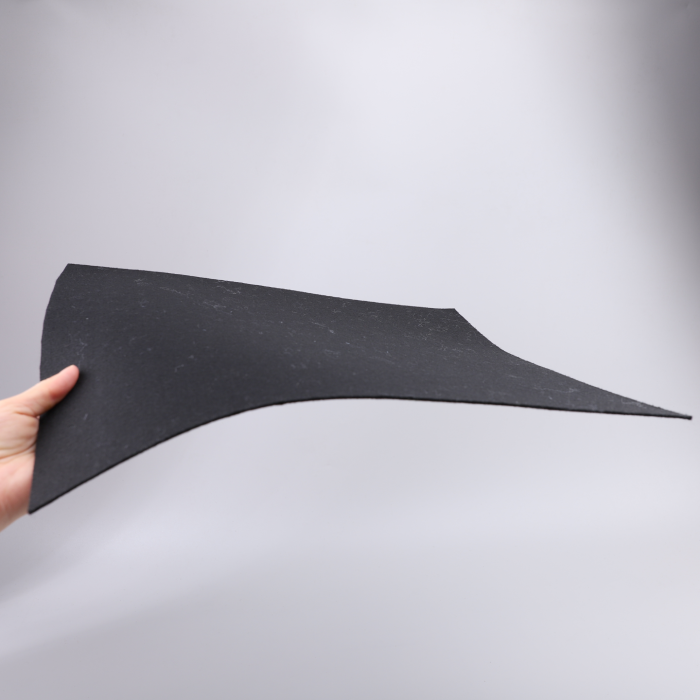
For high-density polyester felt, color and surface condition may directly affect the finished product's appearance, downstream processing, or the customer's assessment of consistency.
Buyers should therefore confirm during the sample stage which appearance characteristics must remain consistent and which differences fall within an acceptable range.
For color, confirm the target color, reference sample, or applicable color standard. If the project has strict color requirements, both parties should also agree on the method used for comparison.
For surface condition, confirm whether the product needs relatively uniform fiber distribution, a particular surface texture, or a clearly defined appearance after processing.
Depending on the intended use, buyers may also specify visible issues that need to be checked, such as obvious stains, foreign particles, localized structural irregularities, or other visible defects that affect usability.
However, acceptance requirements should not rely on vague statements such as “the surface must be perfect.” A better approach is to use the approved sample, clearly defined defect descriptions, or inspection methods agreed by both parties.
For products that are purchased repeatedly, the color and surface reference standards should be linked to the product code and specification revision. This helps ensure that future orders are evaluated against the same criteria.
7. Define What Will Be Checked During Bulk Order Acceptance
For bulk purchasing, acceptance criteria should be established before production rather than discussed for the first time after the goods arrive.
For high-density polyester needle punched felt, the specific acceptance items should depend on the product application, purchase contract, and buyer's quality requirements.
Material Identity: Verify that the supplied goods meet the agreed polyester fiber composition and material declarations.
Specification Compliance: Check the key specifications agreed by both parties and evaluate them against the tolerances stated in the order.
Color and Surface Condition: Inspect the goods against the approved sample, color reference, and appearance criteria.
Roll or Sheet Condition: If the product is supplied in rolls or sheets, check whether the delivery format, identification, and visible condition meet the order requirements.
Packaging and Identification: Confirm that product labels, batch identification, and packaging information comply with the agreement and allow the goods to be linked to the correct purchase order and product specification.
Required Documents: Check whether the material declarations and other applicable documents required by the order have been provided and whether they correspond to the actual product being purchased.
Buyers should also define the sampling method, inspection quantity, inspection procedure, and process for handling nonconforming goods in advance. Different products and orders may require different inspection arrangements, so a single sampling percentage should not be assumed to apply to every high-density polyester felt order.
Similarly, one visual inspection result cannot establish that the material composition is correct. Material identity, specifications, appearance, and documentation should each be verified using the appropriate method.
If the project has specific performance requirements, the order should state the relevant test method or acceptance criteria, and buyers should confirm whether the supplier can support the required testing.
8. What Should Buyers Do If Bulk Goods Differ from the Approved Sample?
If the bulk goods differ from the approved sample or order requirements, buyers should first identify the specific discrepancy and then address it according to the agreement between both parties.
Step 1: Record the issue.
Identify whether the difference concerns the material declaration, product specifications, color, surface condition, labels, packaging, or another agreed requirement. Where necessary, retain photographs, samples, and batch information.
Step 2: Check the order requirements.
Compare the delivered goods with the purchase order, confirmed specification documents, approved sample, and relevant material declarations. Determine whether the difference falls outside the agreed acceptance range.
Step 3: Request a written explanation from the supplier.
Ask the supplier to explain the cause of the difference and whether it involves a material change, production adjustment, or another factor that may affect product conformity.
Step 4: Agree on an appropriate solution.
Depending on the contract, purchasing requirements, and actual impact of the issue, both parties may discuss additional inspection, reconfirmation, rework, replacement, or another appropriate solution. The final arrangement should be based on the circumstances and the parties' agreement.
Step 5: Keep a record of the resolution.
If the issue leads to changes in product specifications or acceptance criteria, clearly record the revised requirements and approval. This helps prevent the same problem from recurring in future orders.
Not every appearance difference means that a material is nonconforming. However, if the difference concerns the agreed fiber composition, material declaration, or a critical specification, buyers should not accept it solely on the basis of a verbal explanation.
For long-term purchasing projects, maintaining clear records of discrepancies and their resolution helps both parties apply the agreed standards more consistently to future orders.
9. What Information Should Buyers Provide When Requesting High-Density Polyester Felt?
If buyers provide only the name “High-Density Polyester Felt,” the supplier may still lack the information needed to understand the project's material requirements accurately.
To make inquiries and order confirmation clearer, buyers should provide as much of the following information as possible.
Product Application: Explain what the material will be used for and whether there are specific operating conditions or processing requirements.
Fiber Composition: Specify whether virgin polyester, recycled polyester, or other fiber compositions are required or permitted.
Material Declaration: State whether a material declaration, supporting documentation, or specific certification documents are needed.
Product Specifications: Provide the specifications that have already been confirmed and the applicable tolerances. Clearly identify any items that remain undecided.
Color and Surface Requirements: Provide a reference sample, color requirement, or description of the required surface condition.
Sample Approval Requirements: Explain whether sample approval is required before bulk production and how the approved sample will be used as a reference for subsequent production.
Bulk Acceptance Requirements: State the key acceptance items, required documents, sampling requirements, and procedures for handling nonconforming goods.
Order Quantity and Repeat Purchase Plans: Provide the estimated purchase quantity and indicate whether the project involves long-term or repeat orders, allowing the supplier to understand the supply requirements.
If buyers already have an existing product, drawing, or sample, they can also provide the relevant materials to help the supplier understand the requirements more accurately.
The goal is not to require buyers to know every technical parameter from the beginning. It is to communicate the material declarations, quality requirements, and acceptance conditions that matter most.
10. Why Should Buyers Confirm Material Requirements Before Comparing Bulk Prices?
For businesses that purchase high-density polyester needle punched felt regularly, quotation comparisons should be based on clear and comparable product requirements.
If different suppliers interpret fiber composition, material declarations, surface requirements, or acceptance criteria differently, products with the same name on a quotation may not be directly comparable.
Buyers should therefore establish consistent material requirements and acceptance criteria before comparing supplier quotations, supply capabilities, and commercial terms.
A practical purchasing sequence is:
Material Requirements → Written Confirmation → Sample Approval → Bulk Acceptance Criteria → Quotation Comparison → Order Placement
This does not mean that every order requires complicated document reviews. It means that requirements that could materially affect the purchasing result should be clarified in advance.
For long-term importers, wholesalers, and industrial product manufacturers, clear material declarations and workable acceptance criteria can reduce communication costs caused by misunderstandings and support more consistent repeat purchasing.
11. How Can a Nonwoven Manufacturer Support Consistent Polyester Felt Purchasing?
Buyers need more than a single delivery that meets their requirements. They also need a supplier that understands the agreed order standards and can continue to follow them during repeat purchases.
When evaluating a supplier, buyers can ask whether it has stable needle punched nonwoven production capabilities, can confirm material composition, can support sample approval, and has clear product specification and quality inspection procedures.
For projects with special material declarations or customer compliance requirements, buyers should confirm during the inquiry stage whether the supplier can provide the necessary information and applicable documents. Any specific certification or material-origin declaration must be evaluated according to the actual product, document scope, and order agreement.
HuiZhou JinHaoCheng Nonwovens Co., Ltd. was established in 2005 and focuses on nonwoven material research and manufacturing. The company can discuss specifications and processing requirements for needle punched felt and related nonwoven materials according to individual project needs. For overseas importers, wholesalers, and product manufacturers, providing fiber composition requirements, samples, acceptance criteria, and estimated order quantities in advance helps both parties clarify the product requirements before bulk production.
Regardless of which supplier they choose, buyers should ensure that the material declarations, order specifications, and bulk acceptance criteria are clearly linked rather than relying solely on the product name or a single sample to judge the reliability of long-term supply.
Conclusion: Confirm the Material, Then Confirm the Bulk Order
When purchasing high-density polyester needle punched felt, the product name and quotation alone cannot fully establish whether the material meets the purchasing requirements.
Buyers should verify the actual fiber composition, distinguish virgin polyester from recycled polyester, clarify material declarations and document requirements, and establish a shared product reference through approved samples, written specifications, and bulk acceptance criteria.
For repeat purchasing projects, buyers should also record specification revisions, sample approvals, and batch inspection results so that subsequent orders can follow clear and verifiable standards.
The key question is not simply, “Is this high-density polyester felt?” but, “Does this batch meet the material and quality requirements we have agreed on in writing?”
Clarifying these requirements before placing a bulk order can help overseas buyers reduce the risk of misunderstandings about material identity and establish a clearer foundation for long-term, consistent industrial material purchasing.




