Flame, Adhesive or Hot Melt? How to Choose a Foam Fabric Lamination Process
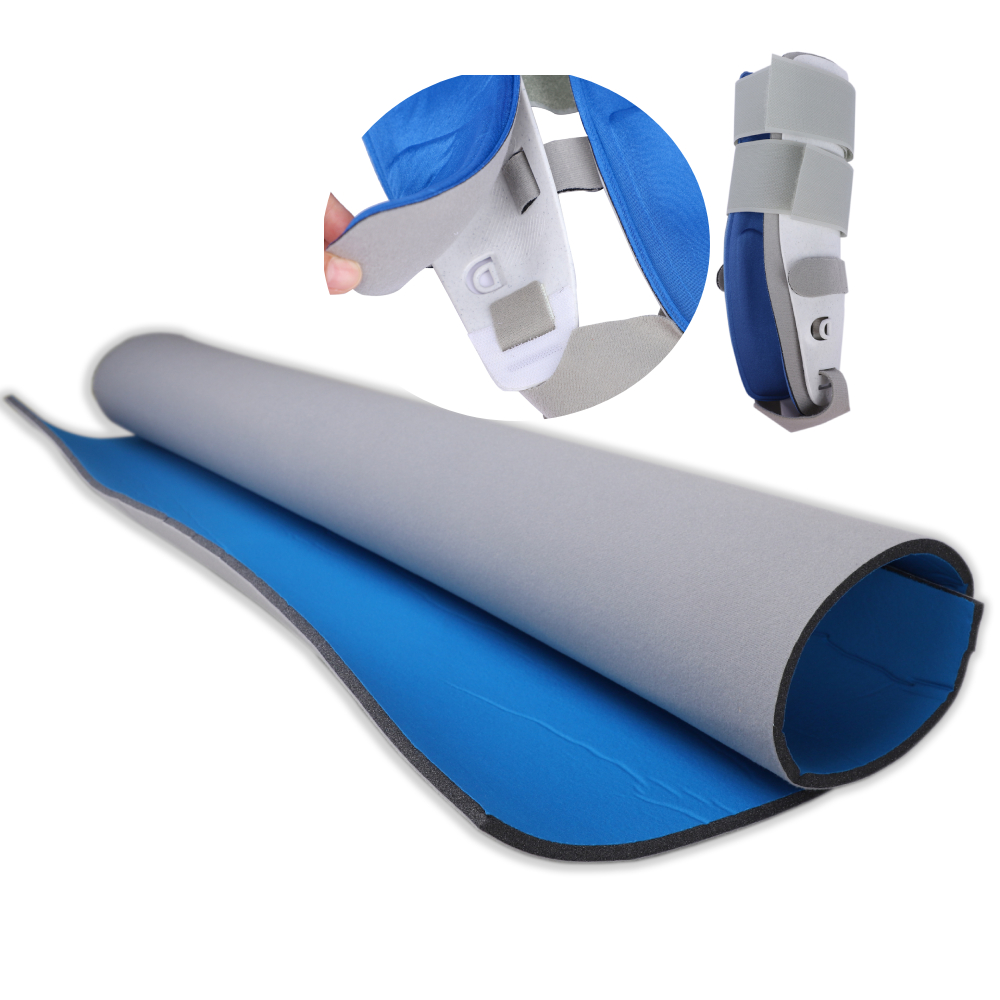
Foam laminated fabric is a composite material made by bonding foam with textile fabrics or other materials. It is commonly used in footwear, bags, automotive interiors, furniture, and other products that require cushioning, support, or surface coverage.
During product development, buyers need to select not only the foam type and fabric but also a suitable lamination process. Flame lamination, adhesive lamination, and hot melt lamination are common methods for bonding foam with fabric.
Each process has different bonding principles, material compatibility requirements, and production conditions. Buyers should not decide which method is better based only on its name. Instead, they should evaluate the foam material, fabric properties, composite structure, and final application.
For foam lamination projects, HuiZhou JinHaoCheng Nonwovens Co., Ltd. has confirmed experience involving flame lamination, adhesive lamination, and hot melt lamination. The foam materials confirmed for actual lamination include PU foam and EVA foam. Depending on the project, processing may be carried out in-house or through external processing partners. Material combinations, processing arrangements, and sample results therefore need to be confirmed for each specific order.
What Is Foam Fabric Lamination?
Foam fabric lamination is the process of bonding foam with fabric or other materials to create a composite structure.
Depending on the product design, common structures include:
Foam + Fabric: Foam is bonded with one layer of fabric to create a two-layer structure.
Fabric + Foam + Fabric: Foam is placed between two fabric layers to create a three-layer structure.
Foam + Fabric + Film: Foam, fabric, and film are combined to meet specific structural or surface requirements.
Foam can provide cushioning, thickness, and support, while fabric can offer different surface appearances, textures, and functional properties. The actual performance depends on the selected materials and composite structure. The finished result cannot be determined simply by the number of layers or the material names.
Before choosing a lamination method, buyers should define the required material combination, final application, and processing requirements. The suitable bonding process can then be evaluated.
If you are developing a product that requires different combinations of foam, fabric, and bonding methods, you can learn more about our foam laminated fabric with customized bonding methods.
For more material combinations and product types, you can also explore our category of foam and textile composite materials.
Flame Lamination: How Does Flame Lamination Bond Foam and Fabric?
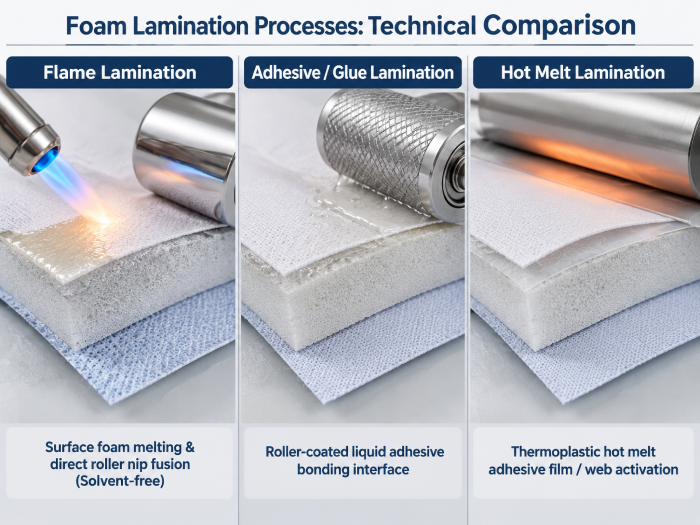
Flame lamination is a process that uses heat to soften or melt the surface of suitable foam before bonding it with fabric.
During this process, the foam surface forms a bonding layer through heating. It is then brought into contact with the fabric and bonded under suitable processing conditions, including pressure. This method does not necessarily require an additional conventional liquid adhesive, but the bonding result depends on the foam material and processing conditions.
Flame lamination is not suitable for every type of foam. The foam composition, surface properties, heat resistance, and the fabric's ability to withstand heat can all affect process compatibility.
When developing a product, buyers should pay attention to the following factors:
Foam heat response: The foam must be able to form a suitable surface condition for bonding when heated. This needs to be evaluated using the actual material.
Fabric heat resistance: Samples should be checked to determine whether the fabric may discolor, shrink, or suffer surface damage during lamination.
Composite thickness and surface condition: Heating and bonding conditions may affect the foam surface and final thickness. Buyers should confirm whether the finished material meets the product requirements.
Further processing requirements: If the laminated material will undergo cutting, die cutting, or other processing, its suitability for these operations should be confirmed during product development.
Flame lamination is a material bonding process and should not be confused with flame-retardant treatment. Undergoing flame lamination does not automatically give the finished material flame-retardant properties.
Adhesive Lamination: How Does Adhesive Lamination Bond Different Materials?
Adhesive lamination is a bonding method that uses an additional adhesive between materials to join foam and fabric into a composite structure.
Unlike flame lamination, adhesive lamination requires an additional adhesive. The type of adhesive, application method, amount applied, and subsequent drying or curing conditions can all affect the final bonding result.
When developing foam laminated fabric, buyers should consider the following factors:
Material compatibility: The adhesive must be compatible with the foam and fabric surfaces. Different materials have different surface properties, so one adhesive should not be assumed to work with every material combination.
Adhesive application method: The coverage and distribution of the adhesive can affect the flexibility, surface condition, and breathability of the composite material.
Drying or curing conditions: Different adhesives may require different processing conditions. Actual production should follow the requirements of the adhesive being used.
Final product requirements: If the product needs to remain soft, flexible, or breathable to a certain extent, the adhesive and application method should be evaluated during sample development.
It is important to note that adhesive lamination does not necessarily make a material non-breathable. The final breathability depends on factors such as the adhesive type, application coverage, and material structure.
JHC has confirmed its involvement in adhesive lamination processing. However, the specific adhesive types and application methods still need to be confirmed by the production department. For each project, the feasible material combination and processing arrangement should therefore be evaluated according to the foam, fabric, and finished-product requirements.
Hot Melt Lamination: How Does Hot Melt Adhesive Bond Materials Through Heating?
Hot melt lamination is a process that uses hot melt adhesive to bond materials. The adhesive is heated until it reaches a suitable application state and then forms a bonding layer during the material lamination process.
Common hot melt adhesive formats include adhesive films, adhesive webs, and adhesive powders. Different formats may vary in coverage, bonding distribution, and their effects on the finished material.
Hot melt lamination should be evaluated based on the following factors:
Compatibility between the hot melt adhesive and materials: The adhesive must be suitable for the foam and fabric to avoid problems such as insufficient bonding or damage to the material surface.
Activation temperature and processing conditions: The hot melt adhesive needs to reach suitable temperature conditions to provide bonding. The actual temperature, pressure, and processing speed should be determined according to the material and adhesive requirements.
Adhesive coverage: Different hot melt adhesive formats may create different bonding coverage structures, which can affect the flexibility, breathability, and performance of the composite material.
Post-lamination stability: Samples and relevant tests should be used to check whether the material can meet the requirements of subsequent processing and actual use.
It is important to understand that hot melt lamination is a specific type of adhesive lamination. These are not completely separate technical categories. Their main differences lie in the adhesive system used and the way it is applied and bonded.
JHC has confirmed its involvement in hot melt lamination processing. However, whether the actual adhesive format is film, web, powder, or another type still needs to be confirmed by the production department. Without confirmation of the actual materials and process, a specific hot melt adhesive format should not be presented as a standard supply capability.
How Do the Three Lamination Processes Affect Finished Materials?
Flame lamination, adhesive lamination, and hot melt lamination can all be used to bond certain foam and fabric combinations, but their working principles and processing conditions are different.
When selecting a process, buyers can compare the following factors:
Comparison | Flame Lamination | Adhesive Lamination | Hot Melt Lamination |
Basic principle | Uses heat to create a bonding layer on the surface of suitable foam | Uses an additional adhesive to bond materials | Uses heated hot melt adhesive to form a bonding layer |
Additional adhesive required | Usually does not require conventional externally applied adhesive | Yes | Yes |
Key influencing factors | Foam heat response, fabric heat resistance, and processing conditions | Adhesive compatibility, application method, and drying or curing conditions | Hot melt adhesive type, activation temperature, application format, and processing conditions |
Possible material effects | May affect foam surface condition and thickness | Depends on the adhesive and its coverage method | Depends on the hot melt adhesive format and coverage |
Compatibility assessment | Requires confirmation that the foam is suitable for heat bonding | Requires confirmation that the adhesive is compatible with the materials | Requires confirmation that the hot melt adhesive matches the materials and processing conditions |
Key points for sample validation | Surface condition, thickness changes, and bonding between layers | Adhesive layer condition, bonding performance, and flexibility | Adhesive distribution, bonding performance, and flexibility |
It is important not to assume that one process always provides higher bonding strength, better breathability, or a longer service life. The final performance depends on the specific foam, fabric, adhesive, and production conditions.
In addition, hot melt lamination is a type of adhesive lamination. Therefore, adhesive lamination and hot melt lamination have an inclusive relationship in technical classification. They are listed separately here mainly to help buyers compare different bonding options.
How Should Different Foam and Fabric Combinations Be Matched with a Lamination Process?
Foam type is an important factor when selecting a lamination process. However, the suitable bonding method cannot be determined from material names such as PU, EVA, or PE alone.
Different foam formulations, densities, surface conditions, and heat resistance properties may require different processing conditions. Even foam materials within the same category may need different approaches depending on their specifications.
When developing foam laminated fabric, the following factors should be considered:
PU Foam: PU foam can be used in various laminated material structures. However, whether it is suitable for flame lamination, adhesive lamination, or hot melt lamination needs to be evaluated according to the actual foam properties and fabric requirements.
EVA Foam: EVA foam can also be used in laminated fabric development. The process selection needs to consider its surface condition, response to heat, and final product requirements.
PE Foam: The lamination compatibility of PE foam needs to be evaluated according to its specifications and actual processing conditions. A specific lamination method should not be promised based only on the material name.
Other Foam Materials: For other foam types, the material composition, specifications, and surface properties should first be confirmed. The suitable lamination method can then be evaluated through sample testing.
JHC has confirmed actual lamination experience with PU and EVA foam, involving flame lamination, adhesive lamination, and hot melt lamination. The suitability of PE and other foam materials still needs to be evaluated according to the specific material and production requirements.
JHC's related production arrangements involve both in-house processing and external processing. Buyers are therefore advised to specify the required materials, composite structure, and processing requirements when requesting a quotation. This helps confirm the production arrangement for each order.
If you also need to define material thickness, layer structure, width, and other development specifications, refer to our guide to foam laminated fabric specifications for product development.
How Should Buyers Verify the Bonding Quality of Foam Fabric Lamination?
Whether you choose flame lamination, adhesive lamination, or hot melt lamination, the finished material quality cannot be judged by the process name alone. Before placing a bulk order, buyers should evaluate the material combination, lamination results, and further processing performance through sample validation.
The following points should be checked:
Confirm the composite structure: Define the types, arrangement, and specifications of the foam, fabric, and any additional layers. This helps prevent differences between the approved sample and the bulk order.
Check the surface condition: Inspect the material for visible wrinkles, deformation, bubbles, areas of incomplete bonding, or other surface defects.
Check bonding between layers: Appropriate peel or bonding tests can be used to evaluate the adhesion between different material layers. The test method and acceptance criteria should be determined according to the product application and customer requirements.
Evaluate flexibility: For products that need to bend, fold, or be used repeatedly, check whether the laminated material develops delamination, wrinkles, or other abnormalities under the relevant conditions.
Verify further processing: If the product requires cutting, die cutting, sewing, or other processing, confirm that the laminated material is suitable for these operations.
Confirm consistency between samples and bulk production: During sample approval, record the material specifications, composite structure, and key processing requirements. These records can serve as a reference for subsequent bulk production.
For more information about evaluating bonding quality in composite materials, refer to our guide to peel strength and bonding quality evaluation for laminated nonwoven fabric.
For foam laminated fabric buyers, selecting a suitable lamination process is not simply a matter of choosing flame, adhesive, or hot melt lamination. The process should be determined according to the actual materials, product application, and quality requirements. Sample validation and clearly defined production requirements can help reduce material compatibility and bonding quality risks during bulk production.