Fire Resistant Needle Punched Felt for Automotive Interiors: Benefits, Applications and Buyer Guide
Automotive interior materials are expected to do much more than provide a finished appearance. As vehicle manufacturers continue to focus on lightweight design, passenger comfort, acoustic performance and safety, interior components increasingly require materials with a combination of flame resistance, abrasion resistance, sound absorption, dimensional stability and forming flexibility.
For automotive interior manufacturers and automotive parts suppliers, selecting the right nonwoven material can directly affect production efficiency, component performance and long-term product reliability.
Fire resistant needle punched felt is increasingly used as a functional material for automotive interiors because its fibrous structure can be engineered for different thicknesses, weights, densities and mechanical properties. Depending on the application, it can be cut, laminated, molded or combined with other materials to create customized interior components.
For buyers looking for a reliable needle punched felt manufacturer, the key question is not simply whether a felt is flame resistant. The supplier must also be able to provide consistent GSM, thickness, density, hardness and processing performance for repeat production.
With extensive nonwoven manufacturing experience, HUIZHOU JINHAOCHENG NONWOVENS CO., LTD. provides needle punched nonwoven materials for industrial and automotive applications, with OEM and ODM capabilities for customers requiring customized specifications.
What Is Fire Resistant Needle Punched Felt for Automotive Applications?
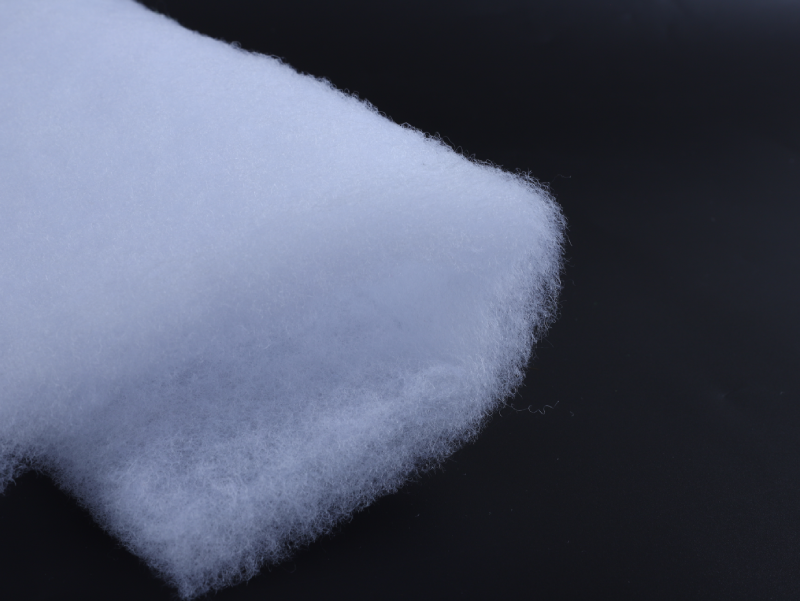
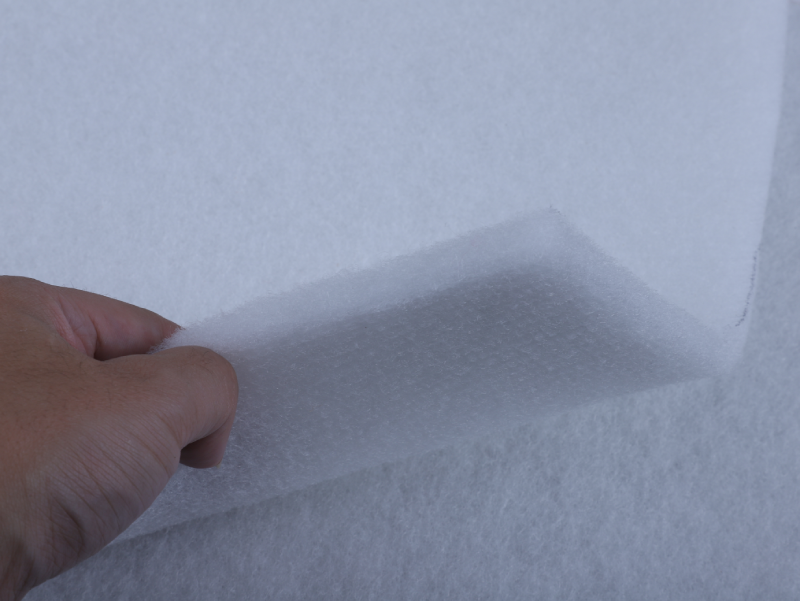
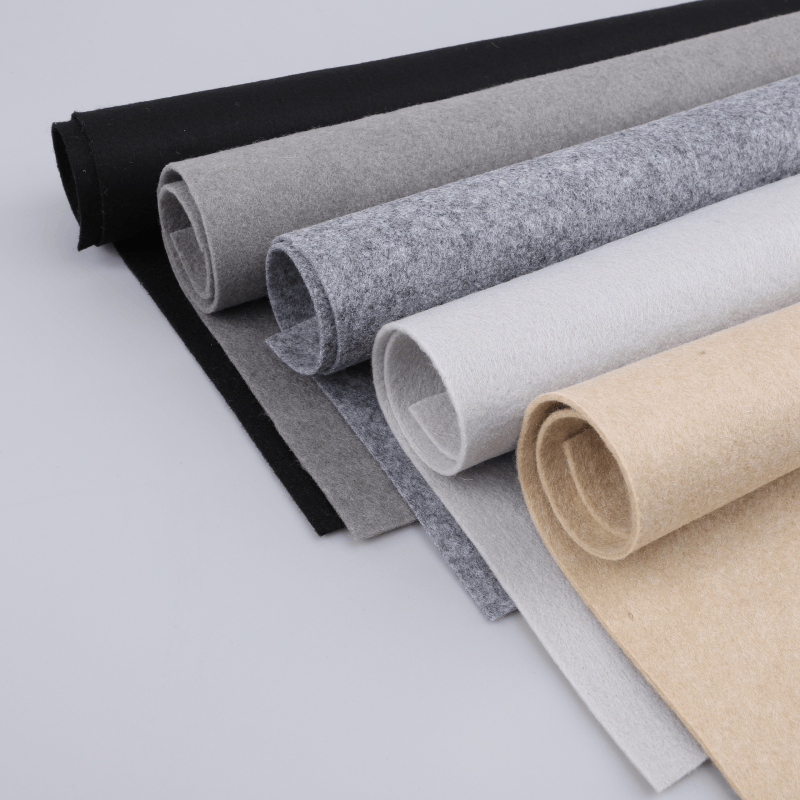
Fire resistant needle punched felt is a nonwoven material produced by mechanically entangling fibers through a needle punching process. Polyester and other synthetic fibers can be selected according to the required mechanical and functional properties.
The typical production process includes fiber opening, carding, web formation and needle punching. Depending on the final application, additional treatments or material modifications may be introduced to improve flame resistance, dimensional stability, surface characteristics or forming performance.
Unlike woven fabrics, needle punched materials do not depend on conventional warp-and-weft construction. Instead, the fibers form an interconnected three-dimensional structure.
This structure can provide a useful balance of flexibility, mechanical strength and porosity. For automotive applications, these characteristics make needle punched nonwoven suitable for components where a combination of surface protection, cushioning, acoustic absorption or structural support is required.
For automotive parts manufacturers purchasing material in volume, production consistency is equally important. Working with an experienced nonwoven felt manufacturer China can help reduce variation between production batches and provide greater control over GSM, thickness and material construction.
Why Is Fire Resistant Needle Punched Felt Suitable for Automotive Interiors?
Automotive interior components operate in demanding environments. Materials may be exposed to repeated friction, pressure, vibration, temperature fluctuations and continuous use.
A suitable felt therefore needs to provide more than one functional benefit.
Flame Resistance Supports Automotive Interior Safety
Fire performance is an important consideration for materials used inside vehicles.
Depending on the fiber composition and treatment method, fire resistant felt can be engineered to reduce the material's tendency to ignite or sustain combustion. However, the actual fire performance required depends on the specific vehicle component, application and target market.
For this reason, buyers should not select a material simply because it is marketed as "flame resistant." They should confirm the required test method, flame-retardant grade and applicable customer or regulatory specifications before mass production.
An experienced needle punched nonwoven felt manufacturer can help customers evaluate material composition and production requirements at the product-development stage.
Lightweight Construction Helps Automotive Manufacturers Control Material Weight
Vehicle manufacturers continue to optimize every component for weight efficiency.
For interior materials, the objective is not simply to reduce GSM. A successful lightweight material needs to maintain an appropriate balance between weight, thickness, strength, stiffness, acoustic performance and forming capability.
Needle punched nonwoven can be manufactured in different weights and thicknesses, allowing automotive parts manufacturers to select a construction appropriate for the intended component.
Potential applications include trunk interiors, floor coverings, door panels, interior liners and other nonwoven-based automotive components.
This flexibility makes needle punched felt an attractive material for manufacturers seeking to optimize both performance and material consumption.
Abrasion Resistance Supports Long-Term Interior Durability
Automotive interiors experience continuous mechanical stress.
Floor coverings are exposed to repeated foot traffic. Trunk liners may come into contact with luggage and tools. Door and interior panels can experience friction during installation and daily use.
A well-engineered needle punched structure can provide good mechanical integrity and resistance to everyday wear.
For demanding industrial applications, industrial felt can be designed with different fiber blends, densities and thicknesses to meet specific durability requirements.
For high-volume automotive programs, consistent abrasion performance is particularly important because material variation can affect component quality and downstream processing.
Can Needle Punched Felt Help Reduce Automotive Interior Noise?
Yes, needle punched felt can play a role in automotive acoustic management, particularly where sound absorption is required.
The three-dimensional fibrous structure contains interconnected air spaces. When sound waves enter the porous material, part of the acoustic energy can be dissipated through friction and interaction with the fibers.
This makes certain needle punched nonwoven structures suitable for use as part of automotive acoustic absorption and noise reduction systems.
However, buyers should distinguish between sound absorption and complete sound insulation. The final acoustic performance depends on multiple factors, including:
Material thickness
Fiber structure
Density
Airflow resistance
Installation position
Backing materials
Composite construction
Therefore, automotive acoustic projects should evaluate the complete component rather than selecting a felt based only on thickness or GSM.
For automotive parts manufacturers, this creates an opportunity to use one material as part of a multifunctional interior construction that contributes to both mechanical performance and acoustic comfort.
Where Can Fire Resistant Needle Punched Felt Be Used in Automotive Interiors?
One of the main advantages of needle punched nonwoven materials is their processing flexibility.
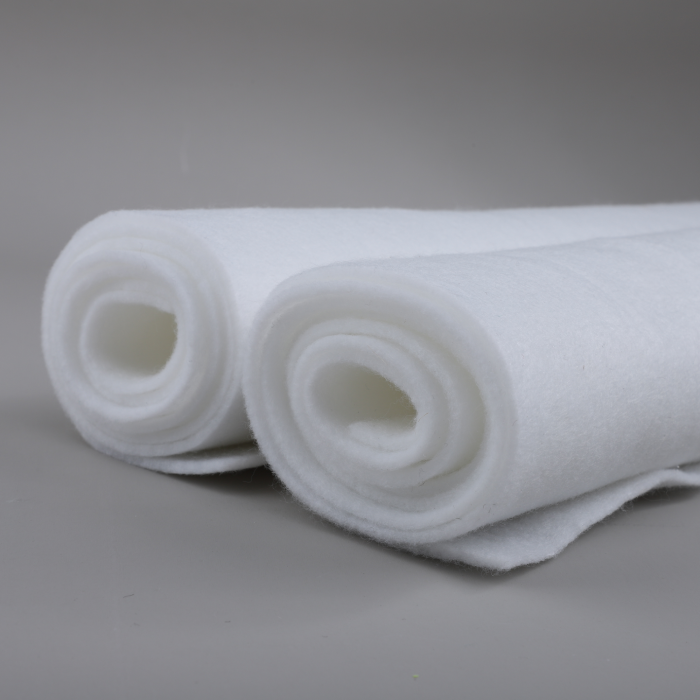
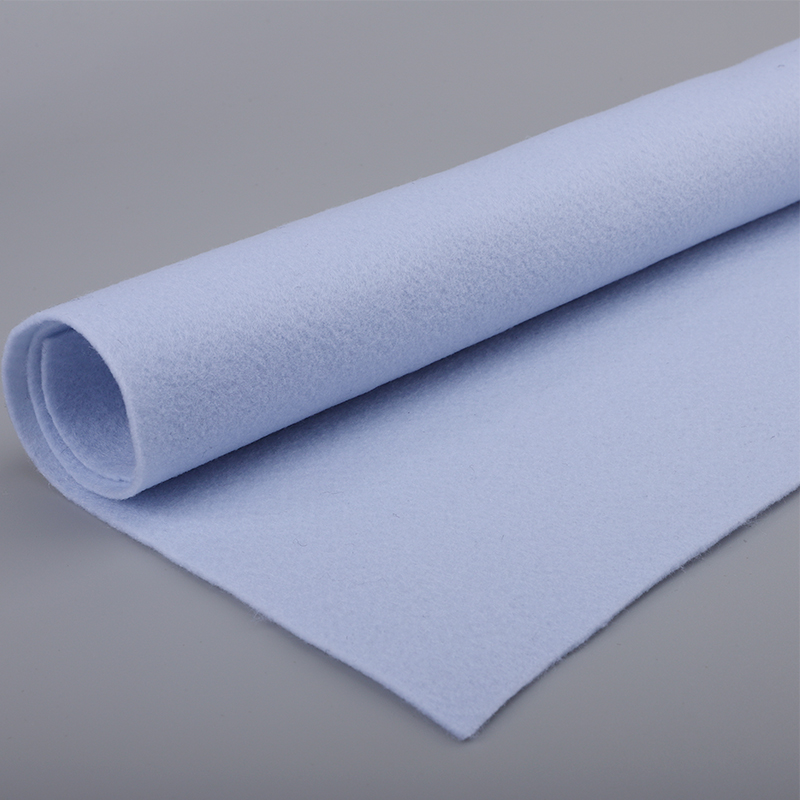
Depending on the material construction, automotive felt can be supplied in rolls or sheets and subsequently cut, laminated, molded or combined with other materials.
Automotive Carpet and Floor Lining
Automotive floor areas are exposed to continuous pressure, friction, dust and contamination.
Needle punched felt can be incorporated into certain carpet backing, floor lining and underlay structures where abrasion resistance, dimensional stability and acoustic absorption are required.
For buyers, the appropriate GSM and thickness should be determined according to the vehicle model, component structure and downstream forming process.
Trunk Liners and Luggage Compartment Components
Trunk areas frequently come into contact with luggage, tools and other heavy objects.
A suitable needle punched felt can provide a combination of surface durability and structural flexibility while allowing manufacturers to create components with different shapes.
Through die cutting or molding processes, customized felt components can be developed for specific trunk geometries.
Door Panels and Interior Liners
Door panels require materials that can work within relatively compact structures while contributing to cushioning and acoustic management.
The porous structure of needle punched nonwoven makes it suitable for certain interior liners, cushioning layers and acoustic components.
Depending on the application, the felt can also be laminated with other materials to create a composite structure with additional functionality.
Headliners and Acoustic Components
Vehicle manufacturers are paying increasing attention to cabin acoustic comfort.
Needle punched felt with suitable thickness and fiber structure can be incorporated into selected acoustic components and interior insulation systems.
When combined with other materials, it can form a multilayer construction designed to improve overall acoustic performance while maintaining reasonable weight.
Why Is Molding Performance Important for Automotive Needle Punched Felt?
Many automotive interior components are not flat.
They may include curves, recesses, edges and three-dimensional contours designed around the vehicle's interior architecture.
For these applications, the ability to process felt into a defined shape can be just as important as the basic material properties.
A suitable custom needle punched felt can be developed around parameters such as:
Fiber composition
GSM
Thickness
Density
Hardness
Thermal bonding conditions
Molding temperature
Component geometry
By controlling these factors, manufacturers can develop materials with different levels of flexibility and formability.
This is particularly valuable for automotive parts manufacturers because the material can be developed according to the actual component instead of forcing the component design to fit a standard felt specification.
Working with a custom nonwoven manufacturer also allows buyers to discuss material development before moving into large-scale production.
How Should Buyers Select Needle Punched Felt for Automotive Interiors?
Choosing automotive felt based only on price is rarely the best purchasing strategy.
The correct material should be selected according to the complete application and downstream manufacturing process.
Confirm the Required Flame Performance
First, determine the required flame-retardant performance based on the vehicle component, customer specification and target market.
Buyers should request relevant test data and clarify the testing method before approving the material for production.
Select the Appropriate GSM and Thickness
GSM and thickness directly influence the weight, handling characteristics and physical properties of the felt.
A higher GSM does not automatically mean better performance. The ideal specification depends on the intended component and the required balance between weight and functionality.
Evaluate Hardness and Formability
If the felt will be molded, laminated or die-cut, buyers should confirm whether its hardness and dimensional stability are suitable for the intended process.
Samples should ideally be tested using the customer's actual production conditions before mass ordering.
Consider Acoustic Requirements
If the material will contribute to cabin noise management, thickness and density should be evaluated together with the overall component structure.
The supplier should be able to discuss the relationship between material construction and the intended acoustic application.
Check Batch Consistency and Production Capacity
For automotive projects, stable supply is often more important than achieving the lowest initial unit price.
Variations in GSM, thickness, hardness or material structure can create problems during downstream processing.
Therefore, buyers should evaluate the supplier's production capacity, raw material management, quality control procedures and ability to maintain consistent specifications over repeated orders.
Why Work With an Experienced Needle Punched Felt Manufacturer?
Automotive interior materials are often used in high-volume production programs. Once a material has been approved, maintaining consistent specifications throughout the supply period becomes critical.
A professional needle punched felt manufacturer should therefore provide more than a product catalog.
Buyers should consider the manufacturer's production equipment, raw material control, quality management, customization capabilities and ability to support product development.
HUIZHOU JINHAOCHENG NONWOVENS CO., LTD. has more than 20 years of nonwoven manufacturing experience and operates an approximately 26,000㎡ production facility with 15 automated needle punching production lines.
As an experienced needle punched felt manufacturer China and nonwoven manufacturer China, we provide customized nonwoven materials with different GSM, thickness, width and functional requirements.
Our production capabilities support OEM nonwoven manufacturer and ODM projects, allowing customers to develop custom nonwoven products according to their application requirements.
In addition to automotive-related needle punched materials, our product portfolio includes floor protection felt, painter felt, anti-condensation felt, thermal bonded wadding and laminated foam fabric, supporting customers across multiple industrial and commercial applications.
For automotive material buyers looking for direct manufacturing support, working with an OEM needle punched felt factory can simplify communication from sample development through mass production.
What Certifications Should Automotive Felt Buyers Check?
Certification and compliance requirements should be considered during supplier qualification, particularly for international automotive supply chains.
Depending on the application and target market, buyers may need to evaluate requirements related to flame resistance, chemical compliance, restricted substances, environmental standards and quality management.
When assessing a supplier, buyers can ask for applicable documentation and verify whether the manufacturer's quality management system and product testing capabilities are appropriate for the intended application.
For international procurement, working with a nonwoven manufacturer certifications system and an established quality management process can make supplier evaluation more efficient.
The specific certification or test requirement should always be confirmed according to the final application, customer specification and destination market rather than assuming that one certification applies to every automotive component.
Fire Resistant Needle Punched Felt vs. Standard Felt: What Should Buyers Consider?
Standard needle punched felt can provide useful mechanical and acoustic properties, but automotive applications may require additional flame performance.
The main difference is therefore not simply the appearance of the material, but the fiber composition, treatment system and verified performance characteristics.
For buyers, the decision should be based on the actual requirements of the finished component.
If flame performance is essential, a properly engineered fire resistant felt may provide a more appropriate solution.
If the application focuses mainly on cushioning, abrasion resistance or acoustic absorption, standard needle punched nonwoven may be sufficient.
This application-based approach can help buyers avoid unnecessary material costs while ensuring that the finished component meets its required performance.
Why Choose a China Nonwoven Factory for Custom Automotive Felt?
For international automotive material buyers, supplier location is only one part of the purchasing decision. What matters more is whether the factory can provide stable quality, production capacity, customization and long-term supply support.
A direct China nonwoven factory can offer manufacturers and distributors a more direct communication channel for specification development and production planning.
HUIZHOU JINHAOCHENG NONWOVENS CO., LTD. supports customized nonwoven production for international customers and can work with buyers on specifications such as material type, GSM, thickness, width and functional requirements.
For projects requiring repeated production, direct cooperation with a custom nonwoven manufacturer can also help reduce unnecessary communication layers between the buyer and production team.
Conclusion: Is Fire Resistant Needle Punched Felt a Good Choice for Automotive Interiors?
For automotive interior manufacturers, the ideal material needs to balance several performance requirements rather than focusing on one single characteristic.
Fire resistant needle punched felt can offer a combination of flame resistance, abrasion resistance, lightweight construction, acoustic absorption and processing flexibility, making it suitable for selected automotive carpet, trunk lining, door panel, headliner and other interior applications.
The most important step for buyers is to match the material construction with the actual component requirements. GSM, thickness, density, hardness, fiber composition, flame performance and forming conditions should all be evaluated before mass production.
If you are sourcing needle punched nonwoven, custom needle punched felt, fire resistant felt or other customized nonwoven materials for automotive applications, HUIZHOU JINHAOCHENG NONWOVENS CO., LTD. can support OEM and ODM development with factory-direct manufacturing capabilities.
For automotive parts manufacturers, importers, distributors and industrial material buyers, choosing an experienced needle punched nonwoven felt manufacturer can provide greater control over product specifications, production consistency and long-term supply.