Cast Padding Thickness and GSM: What Matters Beyond Material Weight?
When sourcing orthopedic cast padding, GSM is usually one of the first specifications buyers confirm. However, for needle-punched nonwoven padding, the same GSM does not necessarily mean the same thickness, density, softness, or compression performance.
For example, two materials with a similar basis weight may have different thicknesses, depending on their fiber composition and structural characteristics. Even when their initial thicknesses are similar, they may respond differently to pressure and show different recovery behavior after the pressure is released. Therefore, selecting a material based only on GSM or uncompressed thickness may overlook important factors that affect the final product structure.
For orthopedic cast padding manufacturers and medical consumables buyers, a more reliable approach is to evaluate GSM, thickness, apparent density, compression performance, and the final product structure together. These parameters should be assessed against the requirements of the specific product rather than focusing on one specification in isolation.
Why GSM Alone Is Not Enough for Cast Padding Selection
GSM stands for grams per square meter. It represents the weight of one square meter of material. For needle-punched nonwoven purchasing, it is an important basic specification that helps buyers confirm the material's basis weight and compare the weight of different samples.
However, GSM does not fully describe the material structure.
Even when two needle-punched nonwovens have the same GSM, they may have different thicknesses, surface textures, and structural compactness because of differences in fiber composition, fiber fineness, web structure, and needle-punching characteristics.
This difference is particularly worth considering when sourcing cast padding. The padding material must not only meet the required basis weight but also match the final product's thickness, softness, conformability, and structural requirements.
If buyers only specify a target GSM without confirming thickness and its measurement conditions, they may receive samples that meet the weight requirement but do not match the expected feel or finished-product structure.
Therefore, GSM is best treated as one basic material specification, rather than the only indicator of overall padding performance.
GSM, Thickness and Density: What Is the Difference?
GSM, thickness, and density often appear together in nonwoven material specifications, but they represent different physical properties.
GSM represents mass per unit area. It indicates how much one square meter of material weighs, but it does not directly describe how thick the material is or how tightly its fibers are arranged.
Thickness represents the vertical dimension of a material under specified measurement conditions. For soft needle-punched nonwovens, the pressure applied during measurement may affect the result. Therefore, when comparing thickness data from different suppliers, buyers should confirm whether the measurement methods and applied pressures are consistent.
If one material is measured under a higher pressure and another under a lower pressure, the same reported thickness does not necessarily mean that the two materials have the same actual structure.
Density represents the mass per unit volume of a material. For a relatively uniform material, its apparent density can be understood by considering GSM and thickness together. In simple terms, under consistent measurement conditions, a material with the same GSM but greater thickness generally has a lower apparent density, while a thinner material may have a more compact structure.
However, this does not mean that higher density always makes a material harder, or that lower density necessarily provides better cushioning. Fiber characteristics, needle-punched structure, and changes under compression also influence the final performance.
For buyers, the key is not to compare these three numbers in isolation. Instead, they should ensure that the measurements use clearly defined and consistent conditions and that the specifications correspond to the requirements of the final product.
How Needle-Punched Structure Affects Softness and Cushioning
Needle-punched nonwoven fabric is not simply a layer of fibers piled together to achieve a certain weight. During needle punching, barbed needles repeatedly penetrate the fiber web, mechanically entangling the fibers and forming an integrated material structure.
In needle-punched nonwovens, fiber composition, fiber fineness, web condition, and needle-punched structure all influence the characteristics of the finished material.
When sourcing cast padding, buyers should pay attention to several aspects.
First is softness and hand feel. Material softness does not depend on GSM alone. It is also related to fiber type, fiber fineness, fiber arrangement, and the structure formed during needle punching. Materials with the same basis weight may still feel different when handled.
Second is loft and structural compactness. Different levels of fiber entanglement can affect material thickness and internal structure. For padding that requires a certain thickness and soft feel, buyers should evaluate actual samples rather than judging the material by weight alone.
Third is overall material stability. If the fiber structure does not meet the requirements of the finished product, the material may not perform as expected during slitting, winding, or subsequent processing. Therefore, buyers should evaluate not only hand feel but also whether the material is suitable for the intended converting process.
It is important to note that needle-punched structure can influence softness, thickness, and structural characteristics. However, the name of the needle-punching process alone cannot establish a specific cushioning rate or pressure distribution performance. These properties need to be confirmed through tests designed for the intended application.
Why Compressed Thickness and Recovery Matter
Uncompressed thickness only describes the initial dimension of a material under specific measurement conditions. It does not fully show how the material changes when pressure is applied.
For materials intended to function as padding, buyers should also consider compressed thickness, structural changes under pressure, and recovery after pressure is released.
For example, two needle-punched nonwovens with similar initial thicknesses may show different thickness changes when subjected to pressure under the same test conditions. One material may maintain a relatively stable structure after compression, while the other may show more noticeable thickness reduction.
However, it is not appropriate to assume that a smaller compression amount always indicates a better material. The material must be evaluated against the expected thickness, softness, and support requirements of the finished product.
Buyers can focus on three aspects.
First, thickness under compression. Record the material thickness under an agreed pressure and specified test conditions to determine whether it still meets the structural requirements of the finished product.
Second, recovery after pressure release. After the pressure is removed, observe whether the material recovers its thickness within an agreed period and whether the degree of recovery meets the project requirements.
Third, changes after repeated compression. If the final product may experience repeated pressure changes during use or processing, buyers can evaluate whether multiple compression cycles cause noticeable permanent deformation or structural changes.
It is important to understand that compression performance, recovery performance, and cushioning performance are not exactly the same indicators. Good thickness recovery does not automatically mean that a material provides better cushioning. If buyers need to evaluate actual cushioning capability, the test method must also consider the specified loading conditions and the structure of the final product.
Therefore, when comparing samples from different suppliers, buyers should use consistent sample dimensions, test pressure, holding time, observation time after pressure release, and test environment. Only results obtained under consistent conditions can be meaningfully compared.
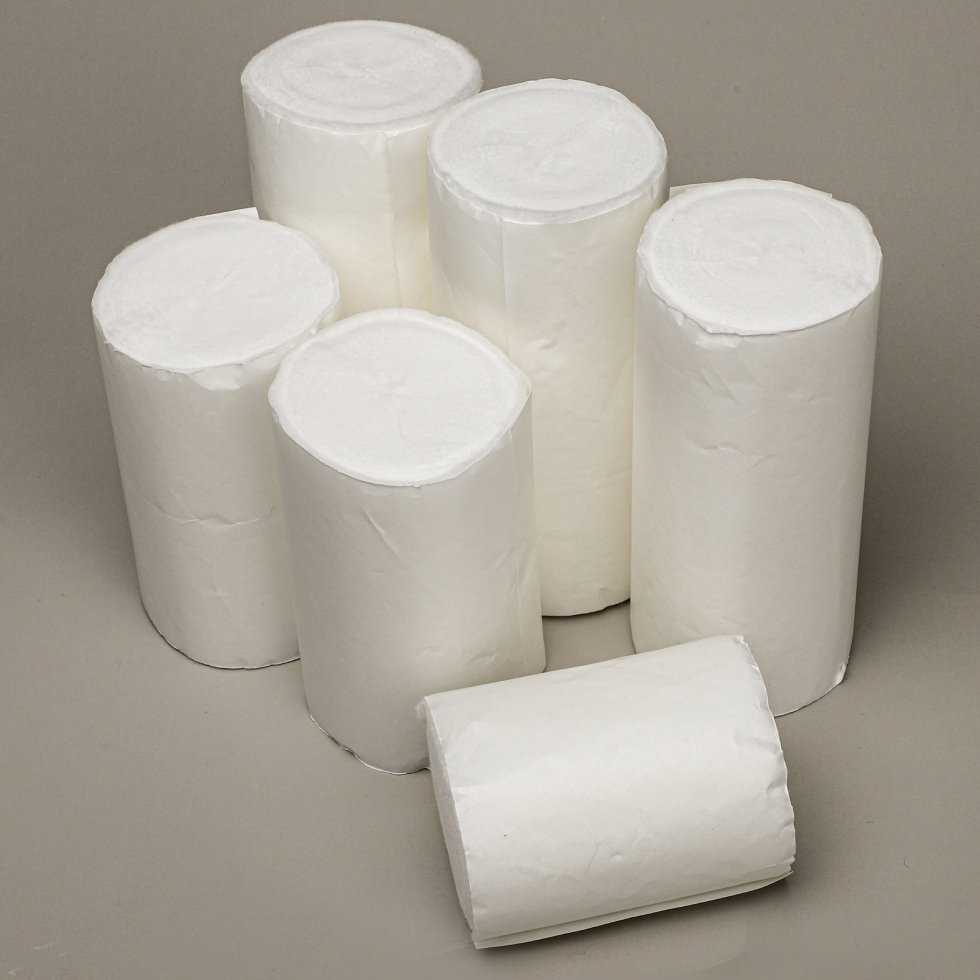
How Finished Product Design Changes Material Requirements
The selection of cast padding material should not be separated from the structure of the final product.
Different products may have different requirements for finished width, winding method, number of layers, application position, and subsequent processing. Therefore, even when buyers use the same type of fiber, they may not need exactly the same combination of GSM, thickness, and density.
For example, a finished product that requires good conformability may place greater emphasis on material softness, flexibility, and overall thickness. A product with a specific finished-thickness requirement needs to have both uncompressed thickness and thickness changes under pressure evaluated.
If the product involves slitting, winding, or other subsequent processing, buyers should also consider structural stability during processing, edge condition, and dimensional consistency.
In addition, the number of layers and other components in the final product can affect its overall structure. Evaluating the thickness of a single layer of nonwoven material does not fully represent the finished thickness or compression performance of a multilayer product.
Therefore, buyers should provide information about the actual finished-product structure and key specifications. This allows the material supplier to evaluate suitable material options for the specific project instead of directly applying specifications from another product.
This discussion concerns material sourcing and finished-product structure evaluation. It is not a clinical recommendation for cast padding thickness on different body parts. Actual medical-use requirements should be confirmed by the relevant medical product designers, regulatory specialists, and clinical professionals.
How Buyers Should Evaluate Cast Padding Samples
If buyers want to compare cast padding materials from different suppliers, it is advisable to establish consistent specifications and evaluation conditions before sample testing.
First, confirm the basic material specifications, including fiber composition, GSM, thickness, width, roll length, and supply form. Samples made from different fiber combinations should be recorded separately to avoid confusing differences in fiber composition with differences in processing or structure.
Next, define the thickness measurement conditions. Buyers should agree with the supplier on the measuring instrument, applied pressure, measurement locations, and recording method. For soft needle-punched nonwovens, the influence of measurement pressure on thickness should not be overlooked.
Then, determine the compression test conditions according to the product requirements. The agreed conditions may include sample dimensions, applied pressure or pressure range, holding time under pressure, observation time after pressure release, and whether repeated compression testing is required.
For the test results, it is advisable to record at least the initial thickness, thickness under compression, and thickness changes after pressure release. If a more detailed evaluation is required, the force-displacement changes during compression can also be considered to analyze how the material responds at different loading stages.
In addition to quantitative indicators, buyers should inspect the actual samples for surface uniformity, softness, material integrity, edge condition, and suitability for subsequent slitting, winding, or finished-product processing.
Finally, compare the test results with the requirements of the target finished product. A sample should not be considered more suitable simply because it has a higher GSM or greater thickness.
If buyers do not have an established compression test method, they can first discuss the actual project requirements with the supplier and then define a sample evaluation procedure that both parties can follow. Test conditions and acceptance criteria should be agreed upon before sample approval to avoid different interpretations of specifications after bulk production begins.
What Should Be Confirmed Before Bulk Production?
After sample approval, buyers still need to convert the key parameters into clear bulk purchasing specifications.
For needle-punched nonwoven cast padding, the following details should be confirmed at a minimum.
Fiber composition: Specify whether the material is 100% Polyester, 100% Cotton, Polyester-Viscose, or another confirmed fiber blend.
GSM: Define the target basis weight and the acceptable tolerance agreed upon by both parties.
Thickness: Confirm the target thickness, measurement method, and applied measurement pressure to ensure that data from different batches or suppliers can be compared consistently.
Density or structural requirements: If the project requires control of material compactness, specify the calculation or measurement method and ensure that the data corresponds to the thickness measurement conditions.
Softness and compression performance: Establish mutually agreed sample standards or test methods for key performance requirements. Subjective descriptions such as "Soft" or "Good Cushioning" should not be the only acceptance criteria.
Supply form and dimensions: Confirm whether the material is supplied in rolls or sheets, together with width, roll length, packaging, and subsequent processing requirements.
Sample-to-bulk consistency: Keep approved samples, specification records, and necessary test results as references for bulk production and subsequent quality inspections.
For medical-related products, buyers should also confirm the applicable regulatory, testing, and quality documentation requirements according to the target market and intended application. Fiber composition or general material specifications supplied by a material manufacturer do not automatically mean that the final medical product complies with the relevant regulations.
HuiZhou JinHaoCheng Nonwovens Co., Ltd. can discuss different fiber compositions, GSM, thickness, density, softness, and roll or sheet supply requirements for cast padding projects. Specific specifications need to be further confirmed according to the customer's finished-product structure, sample evaluation, and project requirements. Current cast padding products are supplied in non-sterile form. Projects requiring sterile materials should clarify this requirement during the inquiry stage.
When requesting a quotation, buyers are advised to provide the target GSM, thickness requirements, measurement conditions, finished-product dimensions, fiber composition, and key performance requirements. If the final specifications have not yet been determined, buyers can first explain the finished-product structure and intended application, then gradually establish suitable material specifications through sample evaluation.
For cast padding, the most important comparison is not which material has the highest GSM or the greatest thickness. It is which combination of material parameters meets the structural and performance requirements of the final product under consistent testing conditions.