
Can Recycled PET Felt Enter the Automotive Supply Chain? How Should Buyers Evaluate It?
For automotive interior manufacturers, automotive component suppliers, and material buyers, Recycled PET Felt cannot enter the automotive supply chain simply because it is made from recycled PET. What automotive projects actually require is confirmation that the material meets the technical requirements of the specific component and that the supplier can develop, validate, and consistently manufacture the material according to the OEM specification.
Therefore, the real purchasing question is not “Can recycled PET felt be used in automotive applications?” but: Does this Recycled PET Felt have the basic conditions to enter my automotive project for sample development and material validation?
Once the use of recycled PET has been established, buyers should evaluate the material based on OEM requirements, material specifications, project testing, supplier capabilities, and sample validation rather than focusing first on the recycled nature of the material.
How Is Automotive Interior Sourcing Different from General Recycled PET Felt Purchasing?
General Recycled PET Felt purchasing usually focuses on GSM, thickness, color, width, hand feel, and price. As long as the material meets the requirements of a general industrial or consumer product, the purchasing process may proceed to quotation and sampling.
Automotive interior projects are different. The material ultimately becomes part of a specific automotive component, so buyers need to confirm not only the material itself but also whether it can match the design, processing, and validation system of the downstream component. A recycled PET felt that performs well in furniture, packaging, or general acoustic products does not automatically meet automotive project requirements.
For example, the same needle punched PET material may be used for automotive door panels, headliners, trunk areas, carpet backings, or other interior components, but the function required from the material can be completely different. The project may specify different requirements for weight, thickness, dimensional stability, flame performance, acoustic performance, or odor control.
Therefore, the first question in automotive sourcing should not simply be, “Do you have automotive felt?” Instead, buyers should clarify: What component will this material be used in, what function will it perform, and what specific requirements does the OEM have for the material?
Step One: Confirm Whether the Automotive Project Allows Recycled PET Material
When buyers plan to use Recycled PET Felt, the first question is not the material price. It is whether the target automotive project allows the use of recycled PET.
Different automakers, Tier 1 suppliers, and Tier 2 suppliers may have their own material specifications, purchasing standards, and validation procedures. Even if a particular recycled PET felt can meet general performance requirements, this does not automatically mean that it complies with the internal material requirements of a specific automotive project.
Therefore, during the early project stage, buyers should first confirm whether the OEM or Tier 1 material specification permits recycled PET, recycled polyester, or the corresponding recycled fiber system. If the project already has an approved material list, drawing, technical specification, or material standard, these documents should take priority when evaluating the material.
If the project permits recycled PET, buyers can then confirm the specific technical requirements the material must meet. This prevents a supplier from quoting a standard recycled PET felt first and only discovering during sample validation that the material system itself does not meet the project requirements.
This step is essentially about deciding whether the project is worth developing further, rather than determining whether recycled PET is “environmentally friendly.”
For automotive purchasing, recycled content is a material attribute, while OEM approval is a project qualification requirement. The two should not be treated as the same thing.
Step Two: Do Not Ask Only Whether It Is “Automotive Grade”; Confirm the OEM Specification
“Automotive Grade” is a common expression in supplier communication, but for an actual automotive project, this term cannot replace a technical specification.
A more effective purchasing approach is to ask the supplier to confirm the material specification based on the specific project. For example, buyers can provide the target component, product drawing, existing sample, material standard, or project technical document so that the supplier can develop the material according to the actual requirements.
If the project already specifies requirements for Density, Thickness, Weight, Flame Performance, Acoustic Performance, VOC, Odor, or other properties, these requirements should be incorporated directly into material development and sample approval.
The supplier can then discuss the appropriate fiber structure, needle punched structure, material thickness, and other production parameters based on these conditions. However, the final decision should always return to the customer's OEM Specification.
Therefore, buyers should not ask only:
“Is this automotive grade?”
A more useful question is:
“Can this recycled PET felt be developed according to our automotive specification?”
The difference between these two questions is important. The first focuses on how the supplier describes the product. The second focuses on whether the material can meet the requirements of the actual automotive project.
How Should Density, Thickness, and Weight Be Included in an Automotive Project Specification?
Density, Thickness, and Weight can all be important parameters in automotive material purchasing, but they should not be used independently to determine whether a material is suitable for an automotive project.
For example, a buyer may already have a thickness and weight requirement from the OEM. The supplier then needs to determine whether the appropriate material structure can be achieved within those requirements rather than simply offering a “5mm automotive felt.”
Density should also not be interpreted as “higher is always better.” Different components have different requirements for structural stability, flexibility, compression performance, and processing. High density PET felt may be suitable for certain applications that require a more stable structure, but it does not automatically fit every automotive interior application.
Thickness also needs to be considered together with the final component structure. If the material needs to be laminated with other materials, die-cut, or formed, thickness stability and dimensional behavior after processing may be more important than the nominal thickness alone.
Weight can also be directly related to automotive lightweighting requirements. For large-area interior components, even a relatively small change in weight per unit area can affect the overall component weight. Therefore, buyers should work within the weight range allowed by the OEM and the design requirements of the final component rather than simply pursuing a lighter or thicker material.
The correct way to use these three parameters in an automotive project is therefore:
OEM Requirement → Material Specification → Sample Validation
rather than:
Recycled PET Felt → Choose a common thickness → Purchase directly.
How Should Flame, Acoustic, VOC, and Odor Requirements Be Matched to the Specific Project?
Flame, Acoustic, VOC, and Odor requirements in automotive projects do not necessarily use exactly the same criteria for every material.
For example, if recycled PET felt is used in an automotive acoustic structure, buyers need to confirm its specific function within the complete component rather than assuming that a product labeled “Acoustic” automatically meets the project requirements.
If the material is used for an automotive interior application, Flame Performance, VOC, or Odor may become part of the project validation process. However, the exact testing requirements should be determined according to the target vehicle, component location, and the project specification provided by the OEM or Tier 1 supplier.
Likewise, if the material is laminated with adhesives, foam, textiles, plastics, or other materials, the performance of the final component may differ from that of the raw material tested separately. Buyers should therefore clarify early whether the test object is the single-layer recycled PET felt or the final composite structure.
The key point is not to ask the supplier for as many test reports as possible. It is to confirm whether the supplier's test data corresponds to the actual material and structure that the current project needs to validate.
Therefore, this article does not treat one particular automotive testing standard as a universal qualification requirement for every project. For overseas buyers, the more important approach is to obtain the OEM requirements first and then ask the supplier to confirm the applicable tests and samples according to the project.
Why Is the OEM Specification More Important Than the “Automotive Grade” Label?
For automotive buyers, “Automotive Grade” is more of a product description, while the OEM Specification is the actual purchasing basis that can be implemented and verified.
Suppose two suppliers both offer Automotive Recycled PET Felt. One supplier labels its product “automotive grade,” while the other does not use this label but can develop the specified GSM, thickness, density, color, structure, and testing requirements according to the buyer's material specification. The second supplier may actually be more suitable for the project.
This is because the automotive supply chain requires material requirements that can be verified and reproduced, rather than a broad product name.
Buyers can divide the OEM Specification into several levels: material system, physical specifications, functional performance, processing requirements, testing requirements, and sample approval conditions. The supplier should clearly identify which requirements can be met directly, which require development, and which need further sample validation.
This approach helps prevent different interpretations of the term “Automotive Grade.”
For Recycled PET Felt in particular, buyers should also manage “using recycled PET” separately from “meeting automotive technical requirements.” Recycled content can be one purchasing requirement, but whether the material can actually enter the automotive project still depends on the complete technical specification and validation results.
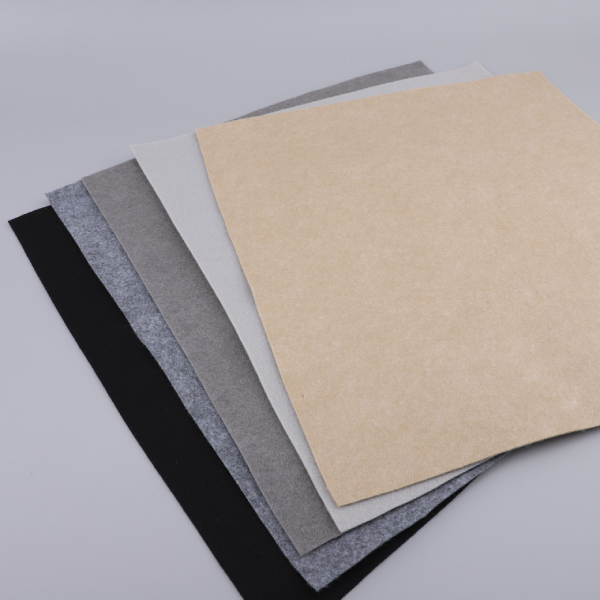
When Is a Recycled PET Felt Sample Ready to Enter Automotive Project Validation?
A sample is ready for automotive project validation not simply because it feels good or because the supplier says it has already been used in automotive applications.
A more reliable approach is to confirm whether the supplier understands the final application and can provide a sample with clearly defined specifications based on the project requirements.
For example, the sample should at least correspond to the required material system, target GSM, thickness, density or structure, and other performance requirements that have already been established. Without these basic details, even a passing test result can be difficult to interpret because it may not represent the material intended for final production.
Buyers also need to confirm whether the sample can be evaluated using the same processing method as the final component. If the final product requires die cutting, lamination, forming, or another process, testing a piece of raw material alone may not fully represent its final application.
Therefore, the key question at the sample stage is not simply “Is this felt good?” but:
Does this sample represent the material we actually intend to purchase and mass-produce in the future?
If the answer is yes, the sample is worth moving to the next stage of project validation.
How Can Buyers Evaluate Whether a Supplier Can Support an Automotive Project?
Automotive projects generally require more from a supplier than simply being able to produce a roll of felt. The supplier needs to support the material throughout the product development process and continue meeting project requirements.
First, buyers should confirm whether the supplier has stable needle punched nonwoven manufacturing capabilities and can control raw materials, fiber structures, and production parameters. For automotive projects, there needs to be a clear specification relationship between the material developed at the sample stage and the material produced later in volume.
Second, buyers should confirm the supplier's customization capability. If the OEM requires a non-standard material specification, can the supplier develop the material according to GSM, thickness, width, hardness, structure, and subsequent processing requirements?
Third, buyers should confirm whether the supplier can support sample development and technical communication. Automotive projects rarely move directly from quotation to mass production. They usually involve specification confirmation, sampling, testing, modification, and final approval. Therefore, the supplier's technical communication capability is also part of its project development capability.
Finally, buyers should consider long-term production capability. Once an automotive project enters mass production, supply stability becomes particularly important. The supplier needs to consistently manufacture according to the approved specification rather than simply provide one qualified sample.
Therefore, buyers should evaluate:
Material Capability + Development Capability + Quality Control + Production Stability
rather than comparing only a one-time product quotation.
When Should Buyers Not Introduce Standard Recycled PET Felt Directly into an Automotive Project?
If a supplier can only provide a standard recycled PET felt product name but cannot confirm the material structure, specifications, or project requirements, buyers should not directly treat it as an automotive project material for bulk purchasing.
If the supplier cannot adjust the material according to the OEM Specification or cannot explain the relationship between the sample and future mass-production material, buyers should remain cautious even if the product has an attractive price.
If the project clearly requires specific Flame, Acoustic, VOC, Odor, or other performance requirements, but the supplier can only provide broad promotional descriptions such as “automotive grade” or “low VOC” without being able to validate the material according to the project requirements, the material should not move directly to the final purchasing stage.
Likewise, if the supplier cannot provide stable sample development and subsequent production support, there may be significant supply risks for an automotive project requiring long-term supply.
Therefore, buyers should not simply ask:
“Can this recycled PET felt be used in automotive applications?”
A more accurate question is:
“Can this recycled PET felt be developed and validated according to my automotive project specification and then consistently supplied during mass production?”
That is the real question when evaluating automotive supply chain readiness.
How Can HuiZhou JinHaoCheng Nonwovens Co., Ltd. Support Automotive Recycled PET Felt Projects?
For overseas automotive component manufacturers, Tier 1 and Tier 2 suppliers, and importers developing Automotive Recycled PET Felt, HuiZhou JinHaoCheng Nonwovens Co., Ltd. can participate in material development according to the customer's final application and project technical requirements.
With more than 20 years of nonwoven R&D and manufacturing experience, the company has production capabilities in needle punched nonwoven, automotive interior materials, and customized nonwoven products. Material specifications such as GSM, thickness, width, hardness, structure, and subsequent processing methods can be discussed according to project requirements.
For automotive projects, buyers can provide the target component, OEM Specification, existing sample, product drawing, or target performance requirements during the inquiry stage. This allows the supplier to more accurately determine what type of automotive recycled PET felt should be developed rather than offering a standard product first and repeatedly modifying it during later testing.
As a needle punched nonwoven felt manufacturer and custom nonwoven products manufacturer, the company can also customize material specifications according to customer project requirements and support the purchasing process from sample development through bulk production.
For automotive supply chain projects, the use of recycled PET is only one requirement. More importantly, the material structure, technical specification, project validation, and production capability need to form a complete and consistent relationship.
Conclusion
Recycled PET Felt can be a candidate material for automotive interior projects, but whether it can actually enter the Automotive Supply Chain cannot be determined simply by product descriptions such as “recycled PET” or “automotive grade.”
Buyers should first confirm whether the target automotive project permits the use of Recycled PET materials, then obtain the specific technical requirements from the OEM or Tier 1 supplier, and match requirements such as Density, Thickness, Weight, Flame, Acoustic, VOC, Odor, and Dimensional Stability with the corresponding material specifications and validation conditions.
Next, buyers need to confirm whether the supplier can develop samples according to these requirements and whether the sample genuinely represents the material intended for future mass production.
For automotive projects, the key is not whether the material “sounds like an automotive material,” but whether there is a complete match between:
OEM Specification → Material Development → Sample Validation → Supplier Capability → Production Readiness
Therefore, for automotive projects, recycled PET felt should be selected according to the required technical specification rather than recycled content alone.
Only when the material requirements, project validation requirements, and supplier production capabilities are properly matched does Recycled PET Felt have a solid basis for further development and purchasing within the automotive supply chain.




