Wool Fire Blanket vs Fiberglass Fire Blanket: What Is the Difference?
Fire protection materials are widely used in industrial equipment, maintenance work, welding areas, thermal insulation systems and other high-temperature applications. However, choosing the right fire blanket is not simply a matter of selecting the material with the highest temperature rating.
Among the commonly used options, wool fire blankets and fiberglass fire blankets have very different material characteristics. Fiberglass is known for its excellent high-temperature resistance, while wool offers a combination of natural flame resistance, softness, thermal insulation and flexibility.
For manufacturers, industrial distributors and companies sourcing fire-resistant materials, the right choice depends on the actual working temperature, flame exposure, installation method, flexibility requirements and applicable safety standards.
As an experienced needle punched felt manufacturer and nonwoven felt manufacturer China, Jinhaocheng can develop customized wool needle felt and wool-based fire-resistant materials according to specific application requirements.
What Is the Difference Between Wool Fire Blanket and Fiberglass Fire Blanket?
Although both materials can be used for fire protection, their fiber structures and thermal characteristics are fundamentally different.
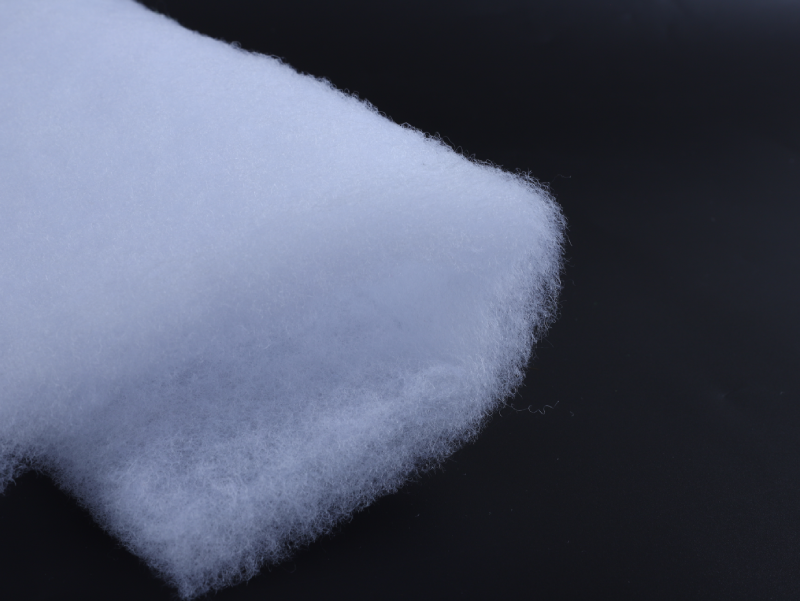
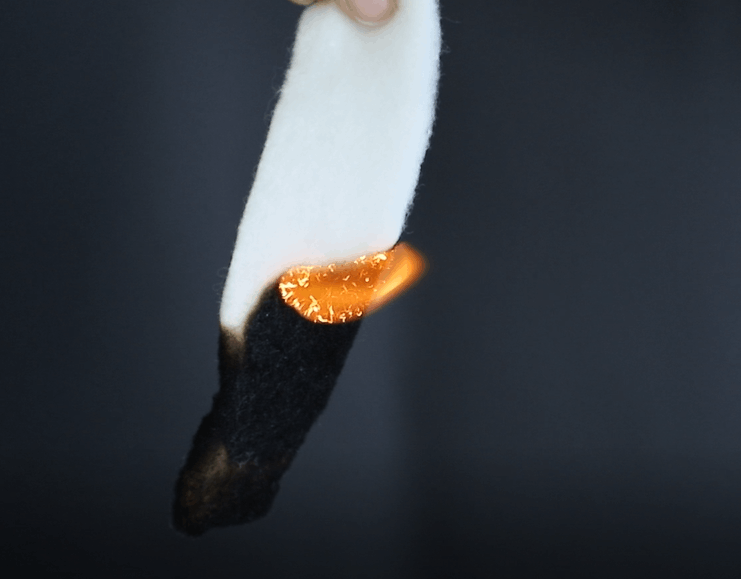
A wool fire blanket is generally made from wool or a wool-blend fiber structure and can be further treated or engineered for improved flame resistance. Wool naturally has relatively good resistance to ignition compared with many common textile fibers. It also tends to char rather than melt and drip when exposed to flame.
A fiberglass fire blanket, on the other hand, is manufactured from inorganic glass fibers. Fiberglass does not burn like conventional organic textile fibers and is therefore widely used in applications involving high temperatures and direct heat exposure.
In simple terms, wool fire blanket is particularly attractive when softness, flexibility, thermal insulation and flame resistance are required, while fiberglass fire blanket is generally better suited to more severe high-temperature environments.
The best material should therefore be selected according to the complete application rather than the material name alone.
Why Does Wool Have Natural Flame-Resistant Properties?
Wool has several characteristics that contribute to its relatively high resistance to ignition.
According to wool industry research, wool has an ignition temperature of approximately 570–600°C, which is higher than many commonly used textile fibers. Wool also contains naturally occurring nitrogen and moisture, which contribute to its combustion behavior.
When exposed to flame, wool tends to form a carbonized layer that can slow the further spread of combustion. Unlike many thermoplastic synthetic fibers, wool does not readily melt and form burning droplets.
However, natural flame resistance does not mean that wool is completely fireproof.
The actual performance of a finished wool fire blanket depends on its fiber composition, GSM, thickness, density, needle punching structure, flame-retardant treatment and manufacturing process.
For applications involving strict fire-safety requirements, the finished product should always be tested according to the relevant standards rather than relying only on the inherent characteristics of the raw fiber.
Why Do Industrial Customers Choose Wool Fire-Resistant Felt?
Soft and Flexible for Irregular Equipment
Industrial equipment rarely has a completely flat surface.
Pipes, valves, machinery components and thermal sources often have curved or irregular shapes. A flexible material can therefore be easier to cut, wrap and install around these structures.
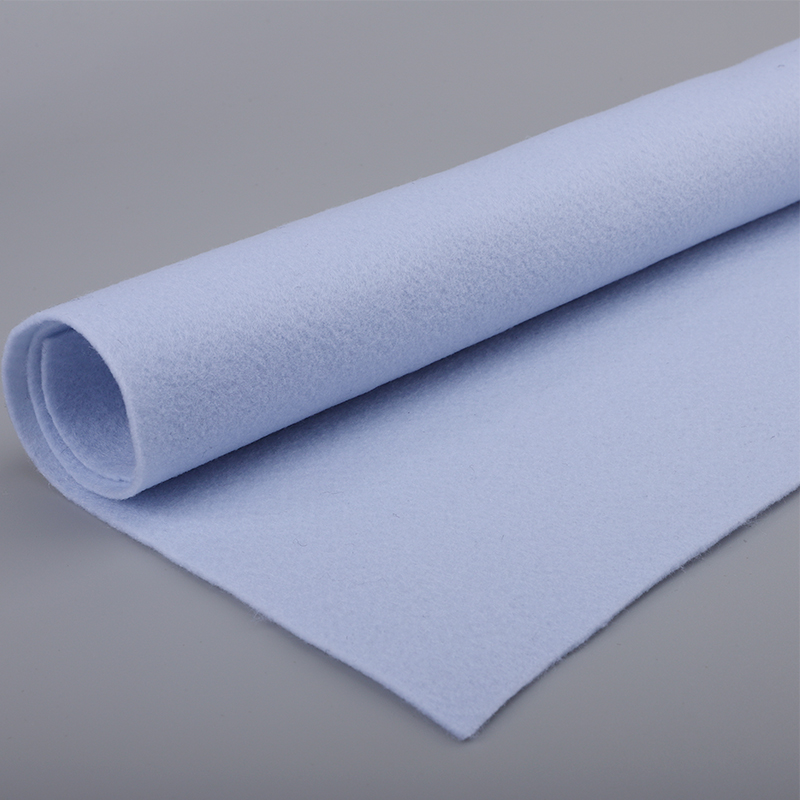
Compared with some rigid high-temperature materials, wool needle felt can provide greater flexibility for applications where the insulation layer needs to conform to the shape of equipment.
This can be especially useful when protective materials need to be removed and reinstalled during equipment maintenance.
Combines Thermal Insulation and Flame Resistance
Industrial fire protection is not only about preventing ignition.
In many applications, the material also needs to help reduce heat transfer from a hot surface to surrounding components.
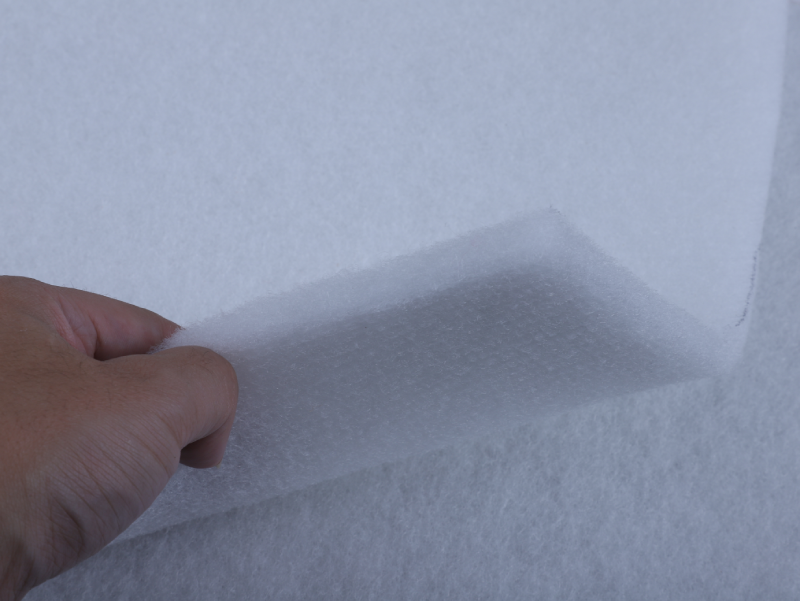
The fibrous structure of needle felt contains numerous spaces between fibers, which can contribute to thermal insulation.
When appropriately designed, wool fire resistant felt can therefore provide both thermal insulation and flame-resistant properties.
The actual insulation performance will depend on factors such as thickness, density, fiber composition and installation conditions.
Suitable for Flexible Insulation Applications
Some industrial components require materials that can be folded, wrapped or shaped around the equipment.
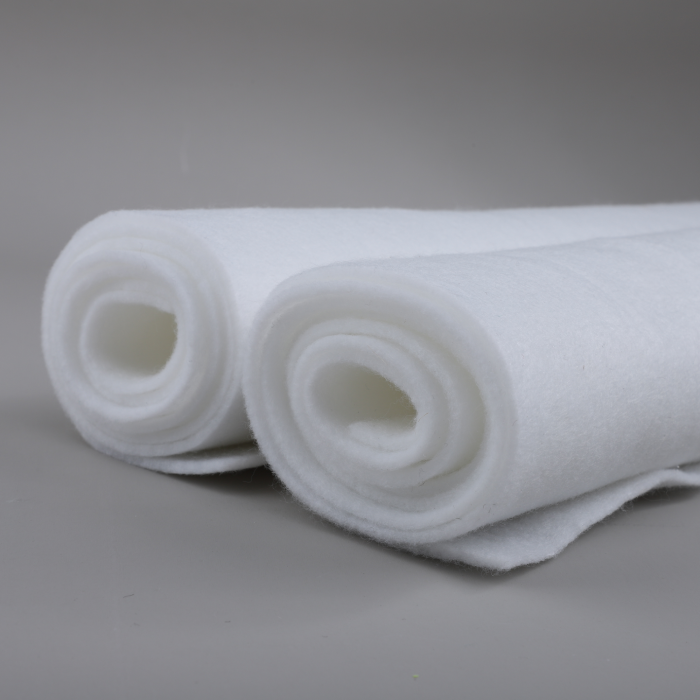
Wool needle felt can be converted into different sizes and thicknesses and can be customized according to the shape and installation requirements of the finished product.
For companies requiring non-standard dimensions, custom wool felt can reduce additional processing requirements at the installation site.
What Are the Advantages of Fiberglass Fire Blankets?
The primary advantage of fiberglass fire blankets is their ability to withstand elevated temperatures.
Because fiberglass is an inorganic material, it does not behave like conventional combustible organic fibers when exposed to heat. Depending on the fiber type, fabric construction and finishing process, certain fiberglass materials can withstand continuous service temperatures around 540°C, with some specialized products capable of handling higher temperatures for specific applications.
This makes fiberglass fire blankets suitable for demanding environments such as:
Welding operations
Metal processing
High-temperature equipment
Industrial furnace areas
Spark protection
Hot maintenance operations
High-temperature thermal shielding
For applications involving intense heat, welding sparks or prolonged exposure to high temperatures, fiberglass can be a more appropriate choice than conventional wool materials.
However, fiberglass products may have different handling characteristics. Certain glass fiber structures can release small fibers during handling, which may cause skin irritation. Appropriate protective measures should therefore be considered during industrial use.
Wool Fire Blanket vs Fiberglass Fire Blanket: Which One Should You Choose?
The answer depends primarily on the working environment.
If your main requirements are softness, flexibility, thermal insulation and flame resistance, a wool fire blanket may be worth considering.
If the application involves very high temperatures, direct flame exposure, welding sparks or molten metal, fiberglass or another specialized high-temperature material may be more appropriate.
For curved pipes and irregular machinery, the flexibility of wool needle felt can be advantageous.
For welding areas and high-temperature industrial operations, fiberglass fire blankets are often more suitable.
For applications where the material may come into close contact with workers, softness, fiber irritation and relevant safety requirements should also be evaluated.
Therefore, industrial buyers should consider temperature, flame exposure, thickness, GSM, density, fiber composition and installation conditions before selecting the final material.
Where Can Wool Fire-Resistant Felt Be Used?
Industrial Equipment Insulation
Industrial machinery can generate significant heat during operation.
Wool-based fire-resistant felt can be considered for certain external insulation and heat-shielding structures, helping reduce heat transfer to surrounding components.
The specific material must be selected according to the operating temperature and required safety performance.
Pipe and Heat Source Protection
Flexible wool needle felt can be cut and wrapped around certain pipes, hot-air ducts and equipment components.
For high-temperature applications, the actual continuous and short-term temperature resistance of the selected material should be confirmed before use.
Automotive Interior and Acoustic Applications
Wool and wool-blend needle punched materials can provide a combination of thermal insulation, acoustic absorption and flame resistance, making them potentially useful in selected automotive interior applications.
Automotive applications may also require additional testing for flame resistance, odor, VOC emissions and other industry-specific requirements.
Industrial Protective and Thermal Pads
Wool fire-resistant felt can also be converted into thermal pads, protective pads and equipment shielding materials.
For manufacturers that require customized dimensions and repeated bulk production, custom needle punched felt provides greater flexibility than standard off-the-shelf materials.
What Should You Check When Buying Wool Fire Blankets?
When sourcing wool fire-resistant materials, simply asking whether a product is “fireproof” is not enough.
Several technical specifications should be considered.
Fiber Composition determines the basic characteristics of the material.
Wool Content affects the natural properties and overall material cost.
GSM determines the weight of the material per unit area and influences the overall material structure.
Thickness is important for thermal insulation and protective performance.
Density affects structural stability and the relationship between thickness and weight.
Flame-Retardant Treatment can further improve the flame-resistant performance of the finished material.
Temperature Resistance determines whether the material is suitable for the actual operating environment.
Width and Size affect cutting, installation and downstream processing efficiency.
If you can provide the working temperature, contact conditions, required thickness and final application, a professional needle felt supplier can provide a more suitable material recommendation.
Why Is Customized Wool Felt Better for Industrial Applications?
Industrial applications rarely have identical requirements.
One customer may need a thin and flexible insulation layer, while another may require a thicker protective blanket.
Some projects prioritize softness and flexibility, while others require improved temperature resistance and flame-retardant performance.
The fiber composition may also need to be adjusted to achieve the required balance between performance, processing and cost.
This is why custom nonwoven products can provide greater value than standard materials.
Jinhaocheng has more than 20 years of nonwoven manufacturing experience, with an approximately 26,000㎡ production facility and 15 automated needle punching production lines.
As a professional needle punched felt manufacturer China, nonwoven felt manufacturer China and custom nonwoven manufacturer, we can customize fiber composition, GSM, thickness, density, hardness, width and other specifications according to customer requirements.
We support OEM and ODM nonwoven manufacturing for industrial material applications.
In addition to wool fire-resistant materials, our product range includes needle punched felt, industrial felt, floor protection felt, painter felt, anti-condensation felt and thermal bonded wadding.
Wool Fire Blanket or Fiberglass Fire Blanket? Start With the Application
There is no universal answer to whether wool or fiberglass is the better fire blanket material.
Wool fire blankets offer a combination of natural flame resistance, softness, flexibility and thermal insulation potential, making them attractive for selected thermal protection and industrial insulation applications.
Fiberglass fire blankets are generally better suited to severe high-temperature environments, welding operations and applications involving intense heat or direct flame exposure.
The key is to match the material with the actual temperature, fire exposure, thickness, structure and safety requirements of the application.
If you are looking for a professional wool felt manufacturer, needle punched felt manufacturer, custom wool felt manufacturer or OEM nonwoven manufacturer, Jinhaocheng can provide customized wool needle felt and nonwoven material solutions based on your product requirements.