Why Is Needle Punched Felt Widely Used for Industrial Filtration? Key Performance and Applications Explained
Industrial filtration systems continuously deal with dust, smoke, oil mist, and other airborne particles. When the wrong filter material is selected, common problems can include high pressure drop, filter clogging, poor cleaning performance, reduced filtration efficiency, and short service life.
For industries such as cement, steel, metallurgy, chemicals, power generation, food processing, and mechanical manufacturing, filter media need to provide more than basic filtration. They must also maintain stable air permeability, mechanical strength, wear resistance, filtration efficiency, and dust release performance during continuous operation.
Among different types of felt filter media, needle punched felt has become a widely used solution because of its three-dimensional fiber structure, interconnected pore network, and good air permeability.
For companies purchasing industrial filter media on a regular basis, the most important question is not simply whether a product is called needle felt. The real concern is whether the material can maintain stable filtration performance under actual operating conditions while helping control maintenance and replacement costs.
As an experienced needle punched felt manufacturer and nonwoven felt manufacturer China, Kenjoy can provide needle punched nonwoven materials with different fiber compositions, GSM, thicknesses, and functional treatments for various industrial filtration applications.
What Is Needle Punched Felt Filter Media and Why Is It Suitable for Industrial Filtration?
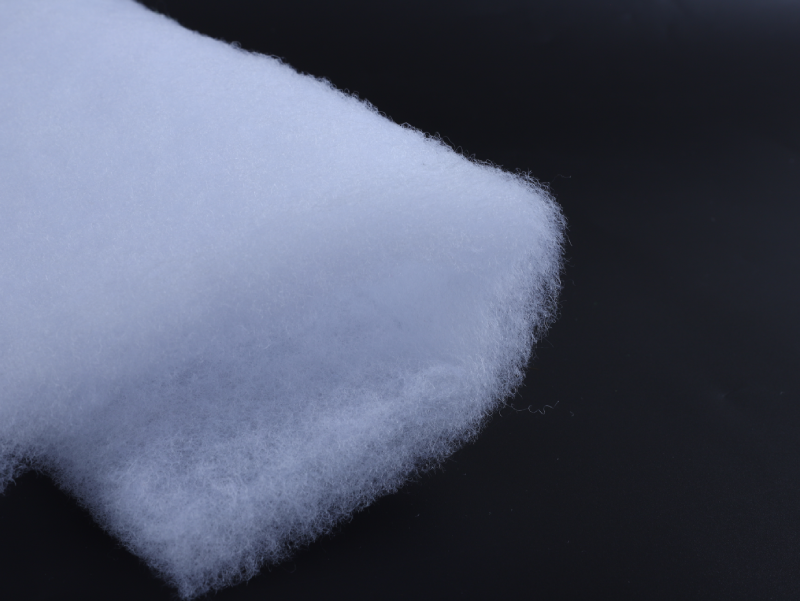
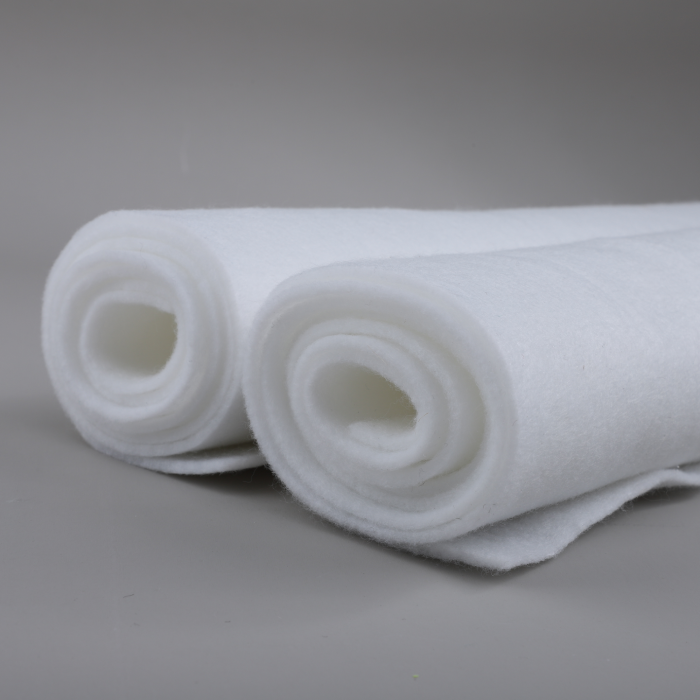
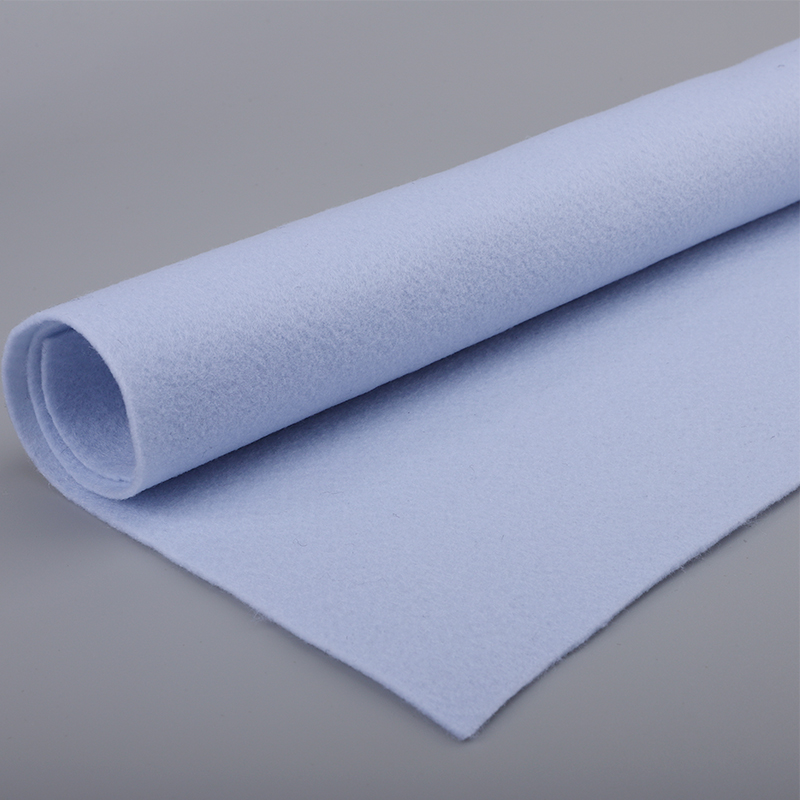
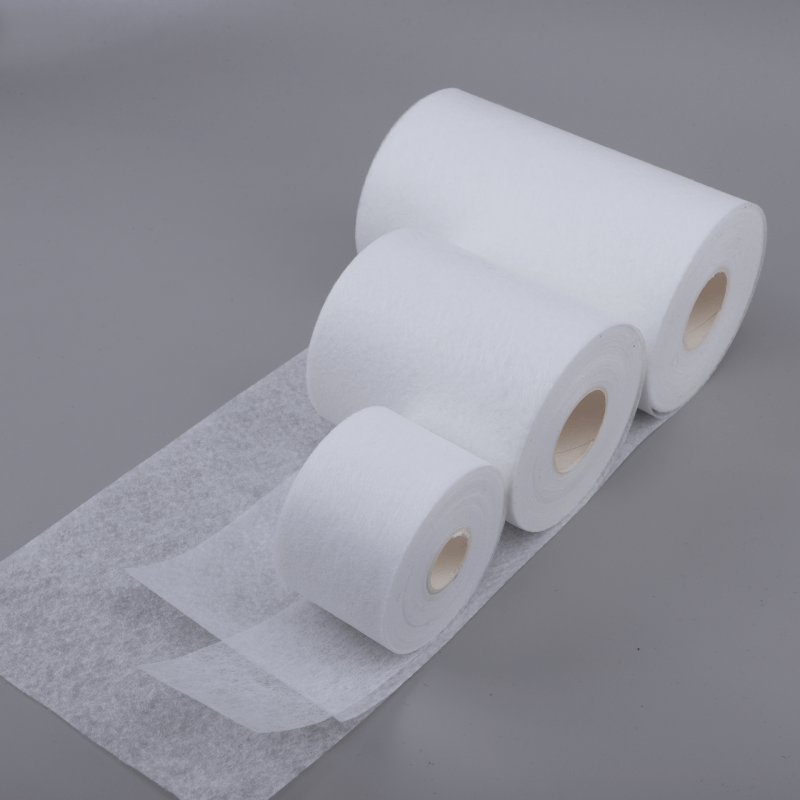
Needle punched felt is a nonwoven filtration material manufactured through a mechanical needle punching process.
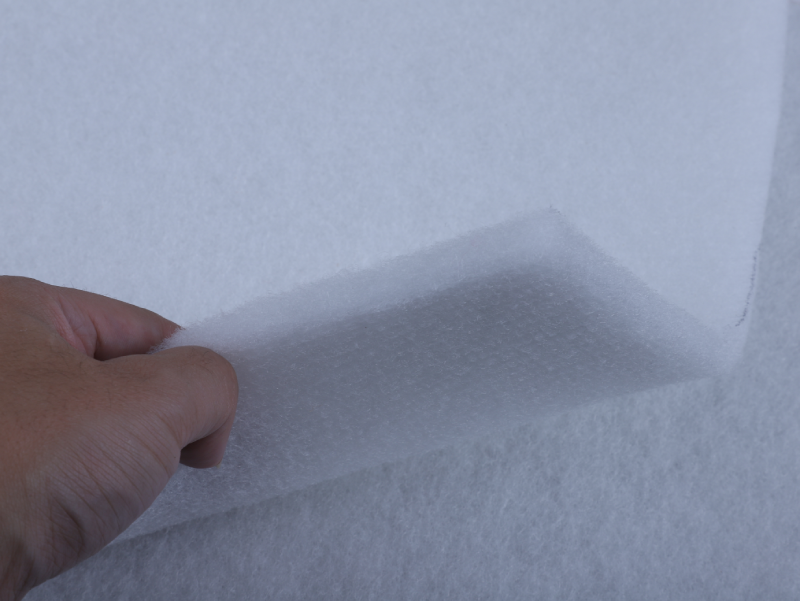
During production, fibers are opened, blended, carded, and formed into a fiber web. Specialized needles then repeatedly penetrate the web, causing the fibers to interlock and entangle with each other. This creates a stable three-dimensional felt structure.
Unlike traditional woven filter fabrics, needle punched felt does not rely primarily on a regular warp-and-weft structure. Instead, filtration takes place through the complex network of fibers and pores within the nonwoven structure.
This structure gives needle punched nonwoven good air permeability while providing a large internal surface area for particle capture.
During industrial filtration, dust particles are captured by the fiber structure and gradually accumulate on the surface of the filter media. With appropriate material design, needle punched felt can maintain a balance between filtration efficiency and airflow resistance.
This is one of the reasons why needle punched felt has become a common filter media for industrial baghouse filtration systems.
What Are the Key Filtration Properties of Needle Punched Felt?
Different industrial applications require different filter media specifications. However, high-quality needle punched felt generally needs to achieve a suitable balance between filtration efficiency, air permeability, mechanical strength, and cleaning performance.
High Filtration Efficiency Helps Control Dust Emissions
One of the primary functions of an industrial dust collection system is to control particulate emissions.
When dust-laden air passes through needle felt, particles can be captured by the fibers through mechanisms such as interception and inertial impaction.
As filtration continues, a dust cake gradually forms on the surface of the filter media. Under suitable operating conditions, this dust layer can further improve the capture of smaller particles.
Therefore, properly designed needle punched felt can provide effective dust filtration for a wide range of industrial applications.
However, filtration efficiency is not determined by the product name alone. It can be influenced by fiber fineness, GSM, thickness, density, surface treatment, and operating conditions.
Good Air Permeability Helps Control Operating Resistance
Industrial dust collection systems often process large volumes of contaminated air, making the air permeability of filter media particularly important.
If the filter material is too dense or becomes rapidly clogged with dust, the pressure drop across the system may increase. This can place a greater load on the fan and increase energy consumption.
The three-dimensional structure of needle punched nonwoven can create a relatively open pore network. With the appropriate specification, the material can maintain good air permeability while providing effective filtration.
This is why choosing industrial filter media should not simply focus on achieving the highest possible filtration efficiency.
The practical goal is to establish an appropriate balance between particle capture and airflow resistance, allowing the filtration system to operate efficiently over an extended period.
Good Dust Release Performance Can Extend Filter Service Life
During continuous operation, dust gradually accumulates on the surface of filter bags.
If the accumulated dust cannot be removed effectively, filtration resistance may increase and eventually cause serious clogging.
Needle punched felt can undergo processes such as heat setting, singeing, calendering, or other surface treatments to create a smoother and more stable surface.
A properly finished surface can reduce deep penetration of dust into the filter structure, allowing accumulated dust to be released more effectively during pulse-jet cleaning or other cleaning processes.
Therefore, good dust release and cleaning performance are important considerations when selecting industrial filter media.
Why Is Needle Punched Felt Suitable for High-Dust Industrial Environments?
Industrial filtration environments are often much more demanding than ordinary air filtration applications.
For example, cement production can generate large quantities of fine dust, steel and metallurgical processes may involve high-temperature gases and abrasive particles, chemical manufacturing can involve corrosive gases, and food processing can generate large amounts of lightweight particulate matter.
These different conditions require different filter media characteristics.
A standard filter fabric may experience increased wear, clogging, or performance degradation when continuously exposed to high dust concentrations, mechanical abrasion, moisture, or chemically aggressive environments.
With different fiber compositions and surface treatments, needle punched felt can be engineered for specific operating conditions.
Depending on the application, customers may select materials such as polyester needle punched felt, anti-static needle felt, or water and oil repellent needle felt.
This makes needle punched felt more than a standard product. It can also be developed into a functional filtration material according to specific industrial requirements.
What Problems Can Functional Needle Punched Felt Solve?
Industrial filtration conditions vary significantly from one application to another. As a result, one standard needle felt specification cannot meet every requirement.
A professional needle punched felt manufacturer can adjust the fiber composition, GSM, thickness, and finishing process according to the customer's operating environment.
Anti-Static Needle Felt for Applications With Static Electricity Risks
Certain industrial dusts can create static electricity during transportation and filtration, including some types of coal dust, cement dust, and fine particulate materials.
For these applications, controlling static charge within the filter media can be an important consideration.
Anti-static needle punched felt can be manufactured using functional fibers or appropriate treatments to improve the material's electrostatic properties and reduce the potential accumulation of static charge.
The appropriate material should always be selected according to the dust characteristics, equipment design, and actual operating conditions.
Water and Oil Repellent Needle Felt for Moist or Oily Gas Streams
When industrial gases contain moisture or oil mist, ordinary filter media may be more susceptible to particle adhesion and clogging.
A suitably treated water and oil repellent needle felt can reduce the influence of moisture and oil contamination on the filter structure.
For applications involving high humidity or small amounts of oil mist, this type of material can help reduce the risk of filter bag blinding and support more stable filtration performance.
Different Fiber Types for Different Industrial Filtration Conditions
Needle punched felt is not limited to one fiber composition.
Polyester needle punched felt provides a good combination of mechanical performance, processability, and cost efficiency and is suitable for many normal-temperature industrial filtration applications.
For higher-temperature or chemically demanding environments, other fiber systems may need to be considered based on the actual operating temperature and chemical exposure.
Therefore, industrial filter media selection should begin with the operating conditions, including working temperature, dust characteristics, gas composition, humidity, oil content, and cleaning method.
Where Is Needle Punched Felt Used in Industrial Filtration?
Because of its combination of filtration performance and mechanical stability, needle punched felt can be used across a wide range of industrial filtration applications.
In the cement industry, it can be used in dust collection systems associated with cement grinding, raw material processing, clinker production, and other dust-generating operations.
In the steel and metallurgy industries, suitable filter media can be selected according to gas temperature, particulate characteristics, and other operating conditions.
In the chemical industry, the chemical properties of the filtration medium need to be evaluated carefully, with fiber selection based on the required chemical resistance.
In power generation and energy-related applications, needle felt can be used in selected industrial gas and dust filtration systems.
Needle punched filter materials can also be found in applications involving food processing, woodworking, mining, mechanical manufacturing, and general industrial dust collection.
As a result, industrial needle felt has a broad potential application range.
How Can You Determine Whether Needle Punched Felt Is Suitable for Your Filtration Equipment?
Many industrial buyers focus primarily on GSM, price, and dimensions when purchasing filter media. However, these specifications alone cannot determine whether a material is suitable for a specific filtration system.
The first consideration should be the operating temperature.
The next step is to understand the characteristics of the dust, including particle size, concentration, hardness, and whether it has corrosive properties.
If moisture or oil is present in the gas stream, buyers should also determine whether water and oil repellent treatment is required.
The equipment's cleaning method should also be considered, such as pulse-jet cleaning, mechanical shaking, or another cleaning system.
Finally, buyers should evaluate GSM, thickness, air permeability, filtration efficiency, mechanical strength, and surface treatment together rather than focusing on one specification.
For long-term industrial filter bag projects, it is generally more useful to evaluate the material based on the overall operating cost of the filtration system instead of comparing the purchase price alone.
Why Choose a Professional Needle Punched Felt Manufacturer?
Industrial filter media are functional materials, and their consistency can directly influence the performance of the filtration system.
If different production batches have significant variations in GSM, thickness, air permeability, or mechanical strength, these differences may affect filter bag manufacturing and the final operating performance of the dust collection equipment.
For this reason, long-term buyers should pay close attention to a supplier's production capacity, raw material management, quality control, and batch-to-batch consistency.
Kenjoy is an experienced needle punched felt manufacturer and nonwoven felt manufacturer with approximately 26,000 square meters of production facilities, 15 automated needle punching production lines, and annual production capacity exceeding 10,000 tons.
From raw material processing and fiber web formation to needle punching, heat setting, and functional finishing, we can adjust material specifications according to customer requirements.
As a nonwoven manufacturer China, we manufacture industrial needle felt as well as provide custom nonwoven products and OEM/ODM services.
For companies requiring stable long-term supply, direct manufacturing capability can provide better control over product consistency, lead times, customization, and production capacity.
What Is the Future of Needle Punched Felt in Industrial Filtration?
As environmental requirements for industrial emissions continue to develop, filtration materials are moving beyond basic particle capture toward higher efficiency, lower pressure drop, longer service life, and functional performance.
Future developments in needle punched filter media are likely to focus increasingly on fiber structure design, surface engineering, and functional treatments.
For example, functional needle felt with anti-static, water and oil repellent, heat-resistant, chemical-resistant, and enhanced filtration properties can provide more targeted solutions for demanding industrial environments.
At the same time, industrial users are paying greater attention to the total lifecycle cost of filter media rather than simply the initial purchasing price.
A filter material with a lower initial price but a short service life or rapidly increasing pressure drop may not be the most economical choice in actual operation.
Therefore, stable filtration performance, operating resistance, cleaning efficiency, and service life will remain important factors when evaluating industrial filter media.
Conclusion: Choosing the Right Needle Punched Felt Can Improve Filtration Performance
The popularity of needle punched felt in industrial filtration is not simply because it is an economical filter material. Its three-dimensional fiber structure provides a useful balance between filtration efficiency, air permeability, mechanical strength, and dust cleaning performance.
Through different fiber combinations, GSM, thicknesses, and surface treatments, needle punched felt can also be developed into functional filtration materials for different industrial environments.
For companies looking for a reliable needle punched felt manufacturer, needle felt supplier, industrial felt manufacturer, custom needle punched felt manufacturer, or nonwoven manufacturer China, choosing a supplier with genuine manufacturing and customization capabilities is more valuable than simply comparing quotations.
Kenjoy continues to focus on needle punched nonwoven and other nonwoven materials, providing stable material solutions for industrial filtration, automotive interiors, floor protection, and other applications.