Needle Punched Felt Manufacturing Process: From Fiber to Finished Nonwoven Felt
What Should Buyers Look for When Sourcing Needle Punched Felt?
When importers, wholesalers, distributors, and industrial buyers source needle punched felt, price is often one of the first factors they compare.
However, price alone does not tell you whether a product will perform consistently over repeated orders.
Why can needle punched felt with the same stated thickness and GSM perform differently between suppliers? Why do some rolls have a more uniform structure, while others may show variations from batch to batch?
The answer often lies in the manufacturing process and quality control behind the product.
From fiber preparation and opening to carding, web formation, needle punching, finishing, and final inspection, every stage can affect the thickness, density, strength, surface structure, and consistency of needle punched felt.
For buyers looking for a reliable supplier, understanding the needle punched felt manufacturing process is therefore a useful way to evaluate both the product and the manufacturer's production capabilities.
What Is Needle Punched Felt?
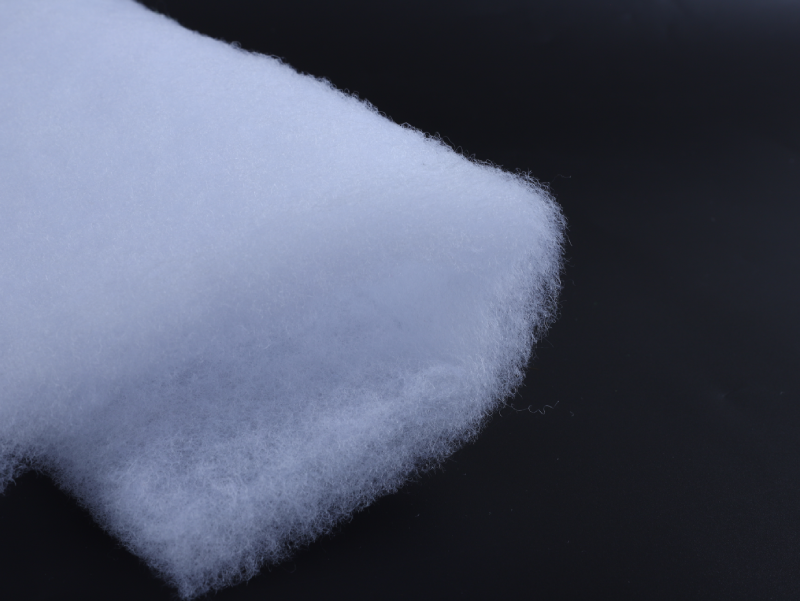
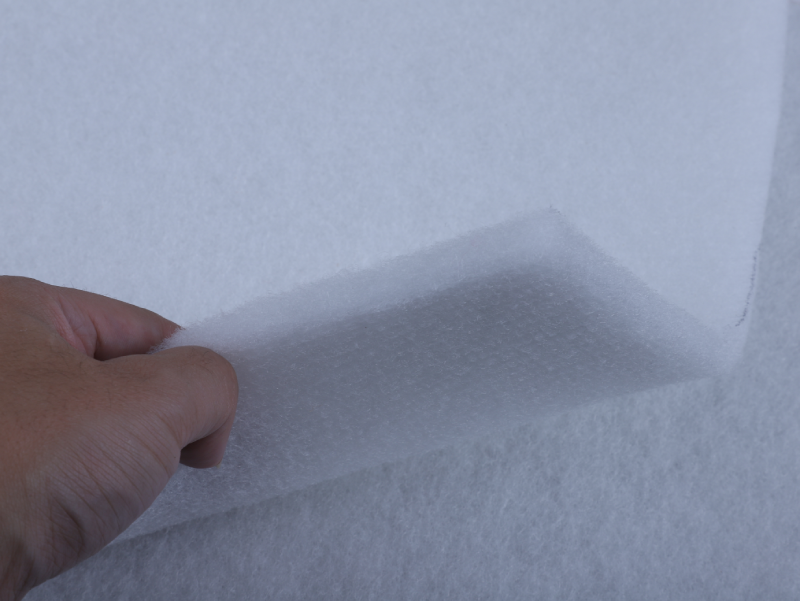
Needle punched felt is a type of nonwoven material manufactured through a mechanical needle punching process.
Unlike woven fabrics, which are produced by interlacing warp and weft yarns, needle punched felt is formed by repeatedly passing specially designed barbed needles through a layer of fibers.
The needles push and entangle the fibers with each other, creating a three-dimensional fiber structure with specific thickness, density, and strength.
Depending on the fiber type, GSM, thickness, density, and manufacturing parameters, needle punched felt can be produced with different levels of softness, firmness, flexibility, and abrasion resistance.
Where Is Needle Punched Felt Used?
Floor Protection
Needle punched nonwoven material can be used to protect floors during renovation, construction, painting, and remodeling projects.
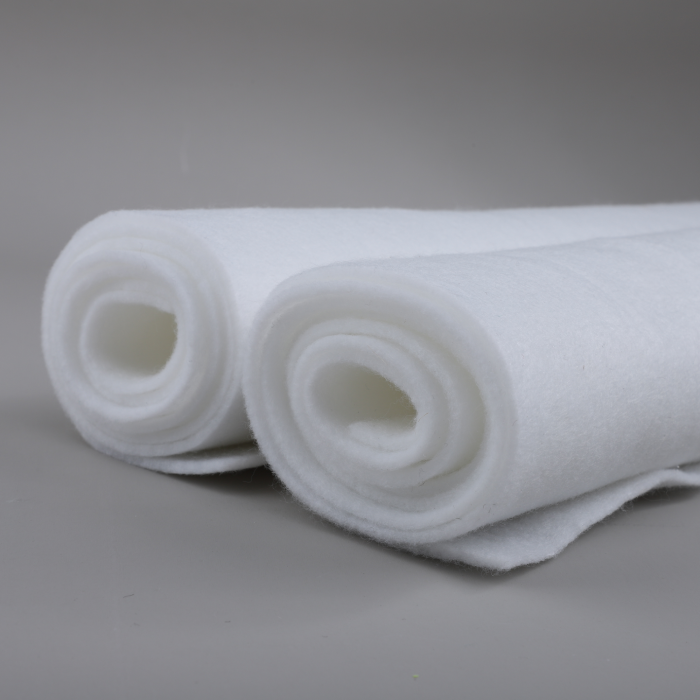
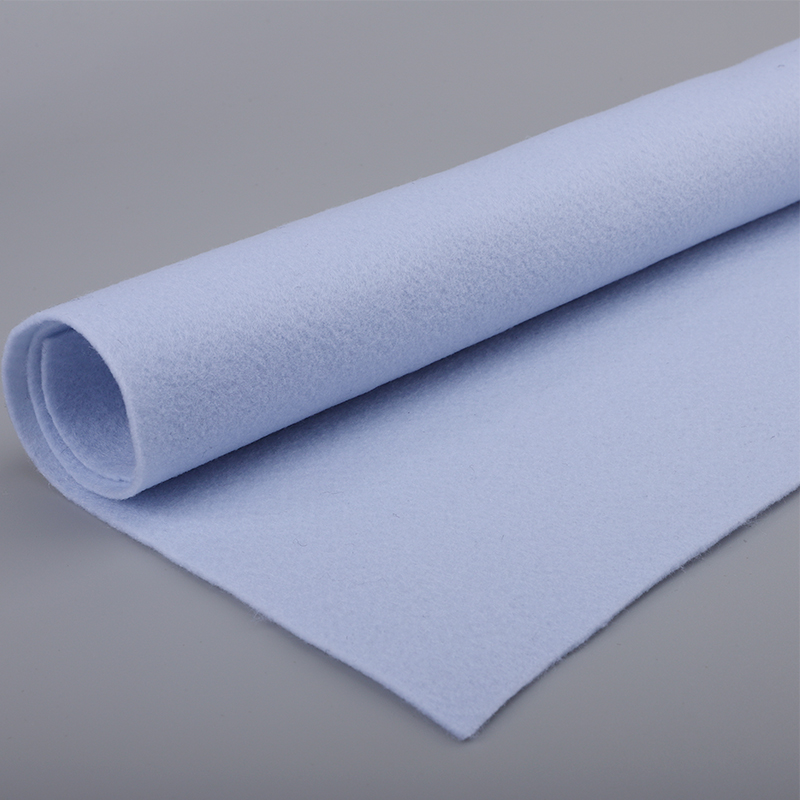
According to project requirements, it can be converted into different widths, GSMs, and roll specifications for floor protection roll applications.
Painting and Renovation Protection
During painting and interior renovation, needle punched felt can be used as a protective covering to help reduce the impact of paint, dust, and construction activities on floor surfaces.
This makes painter felt and painter cover fleece important applications of needle punched nonwoven materials.
Automotive Applications
Needle punched nonwoven materials can also be manufactured for automotive interiors and other vehicle-related components.
By adjusting fiber type, GSM, thickness, and needle punching parameters, manufacturers can develop materials with different strength, flexibility, and surface characteristics.
Industrial Applications
Needle punched felt is also used for industrial protection, cushioning, separation, and other material-related applications.
Because industrial requirements can vary significantly, the material specifications and manufacturing parameters need to be adjusted according to the intended use.
How Is Needle Punched Felt Manufactured?
Needle punched felt is not produced through a single manufacturing step.
A typical production process includes:
Raw Material Preparation → Fiber Opening & Blending → Carding → Web Formation → Needle Punching → Finishing → Quality Inspection → Cutting, Rolling & Packaging
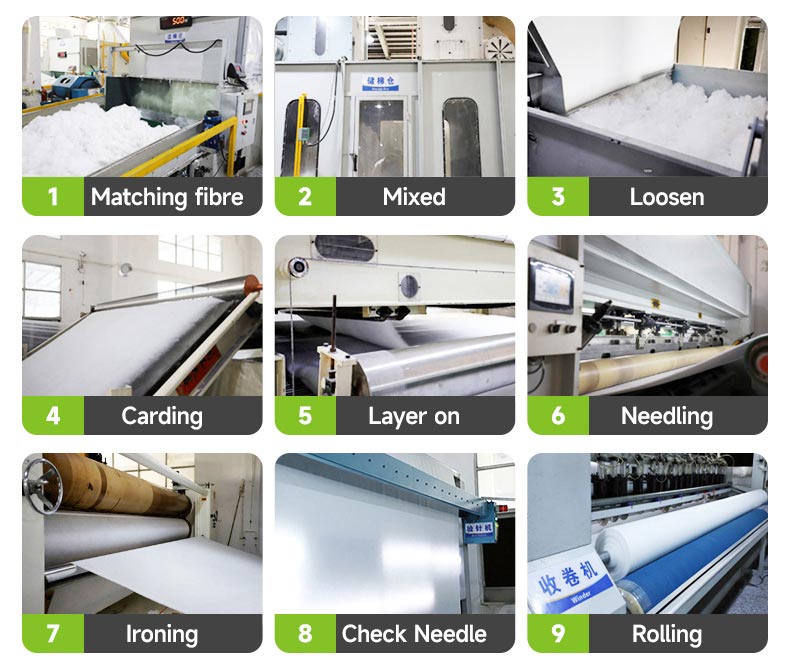
Step 1: Raw Material Preparation
The manufacturing process begins with selecting suitable fiber materials according to the required product performance and application.
Before production, manufacturers may consider:
Fiber type
Fiber length
Fiber characteristics
Color
Target GSM
Thickness
Final application
Different fibers can behave differently during opening, carding, web formation, and needle punching. Therefore, raw material preparation provides the foundation for the entire manufacturing process.
For a professional needle punched felt manufacturer, controlled raw material management is an important part of maintaining production consistency.
Step 2: Fiber Opening and Blending
Prepared fibers are often compressed before entering the production line. They need to be opened and loosened so that the fibers can become sufficiently separated.
The opening process helps reduce fiber clumps and creates a more suitable fiber condition for subsequent processing.
When different fibers or colors are required, they can also be blended according to the product specification.
Proper opening and blending help create a more uniform fiber distribution and provide a stable foundation for the following processes.
Step 3: Carding
After opening and blending, the fibers enter the carding stage.
Carding equipment further separates and organizes the fibers, helping distribute them more evenly and forming a fiber layer suitable for subsequent web formation.
Carding has an important influence on fiber distribution and uniformity.
If the fibers are not distributed consistently, the finished felt may also show differences in thickness, density, or surface structure.
Step 4: Web Formation
The carded fibers are formed into a continuous fiber web.
At this stage, manufacturers need to control factors such as fiber distribution, web weight, thickness, and overall uniformity.
The quality of the fiber web directly affects the following needle punching process.
If some areas of the web are too thick or too thin, the final felt structure may become inconsistent even after needle punching.
For this reason, stable web formation is an important foundation for producing consistent needle punched felt.
Step 5: Needle Punching
Needle punching is the core stage of the manufacturing process.
Inside the needle punching machine, a large number of specially designed barbed needles repeatedly move through the fiber web.
As the needles penetrate the fiber layers, some fibers are carried into different layers by the barbs. This creates mechanical entanglement between the fibers.
After repeated needle punching, the fibers form a more stable three-dimensional structure, creating the required thickness, density, and strength of the finished needle punched felt.
Manufacturing parameters during this stage can directly influence the final product.
For example:
Needle penetration depth affects the degree of fiber entanglement.
Needle punching density influences the compactness and structure of the material.
Production speed affects the overall processing condition.
Number of punching passes can influence thickness, density, and surface appearance.
Different applications therefore require different needle punching conditions.
Step 6: Finishing and Surface Treatment
After needle punching, some products may require additional finishing according to their intended application and customer specifications.
Depending on the product, finishing processes may include:
Calendering
Heat treatment
Lamination
Coating
Cutting
Other customized processing
The specific finishing method depends on the required surface appearance, thickness, firmness, and other performance characteristics.
Step 7: Quality Inspection
After production, the finished material is inspected according to internal quality requirements and customer specifications.
Typical inspection items may include:
Thickness
GSM
Width
Density
Surface appearance
Strength
Product uniformity
For products with specific performance requirements, additional testing can also be carried out according to the intended application.
Step 8: Cutting, Rolling and Packaging
After inspection, the material enters the final processing and packaging stage.
Depending on customer requirements, the felt can be cut, slit, rolled, labeled, and packaged according to different specifications.
For export orders, packaging and labeling can also be prepared according to the customer's requirements and transportation conditions.
Once packaging is completed, the finished rolls are ready for storage, container loading, and shipment.
What Factors Affect the Quality of Needle Punched Felt?
The quality of needle punched felt is not determined by a single manufacturing step. It is the result of multiple processes working together.
Raw materials provide the foundation for the product's characteristics.
Fiber opening and blending affect fiber dispersion and uniformity.
Carding and web formation influence the structure of the fiber web.
Needle punching parameters determine the degree of fiber entanglement and have a direct effect on thickness, density, and mechanical properties.
Finishing and quality inspection help ensure that the finished material meets the required specifications.
High-quality needle punched felt is therefore not simply the result of having a needle punching machine. Consistent production requires control throughout the entire manufacturing process.
How Does Jinhaocheng Support Consistent Needle Punched Felt Production?
For buyers, manufacturing capability is not simply about how many machines a factory has. More importantly, it is about whether the manufacturer can maintain consistent specifications during long-term and large-volume production.
HUIZHOU JINHAOCHENG NONWOVENS CO., LTD has more than 20 years of nonwoven manufacturing experience.
Its 26,000㎡ production facility, 15 automated production lines, and annual production capacity of more than 10,000 tons provide a strong production base for continuous manufacturing of different needle punched nonwoven products.
This manufacturing capacity supports bulk production of floor protection rolls, painter felt, and other customized nonwoven materials for different markets and applications.
Why Choose Jinhaocheng as Your Needle Punched Felt Manufacturer?
Jinhaocheng provides standard needle punched nonwoven products as well as OEM and ODM manufacturing based on specific customer requirements.
Product specifications such as material, GSM, thickness, width, color, and roll format can be customized according to the intended application.
The company maintains quality, environmental, and production management systems, with certifications and compliance covering:
OEKO-TEX STANDARD 100, ISO9001, ISO13485, ISO14001, ISO45001, IATF16949, GRS, and BSCI
as well as:
UL94, REACH, RoHS, and MSDS requirements.
For importers, wholesalers, distributors, and industrial buyers, stable production capacity, controlled quality, and flexible customization provide a practical foundation for long-term supply.
From Fiber to Finished Needle Punched Felt
From raw material preparation and web formation to needle punching, finishing, and final inspection, every stage can influence the consistency and performance of needle punched felt.
If you are sourcing needle punched felt for floor protection, painting, or industrial applications, Jinhaocheng provides OEM, ODM, and customized manufacturing solutions.
Contact Jinhaocheng for your needle punched felt requirements.