Why Is Natural Wool Felt Becoming a New Material for Sustainable Products?
As global manufacturers and brands place greater emphasis on sustainable materials, low-carbon manufacturing and circular product design, material selection is no longer based only on price and basic performance.
For manufacturers of furniture, home products, footwear, automotive interiors, acoustic materials, industrial protection products and other nonwoven applications, an important challenge is finding materials that can combine environmental considerations with practical performance.
Against this background, natural wool felt is receiving increasing attention.
Wool is a renewable natural protein fiber with properties including thermal insulation, sound absorption, resilience, abrasion resistance and inherent flame resistance. However, its overall environmental impact still depends on factors such as farming, processing, transportation and product lifetime. Therefore, “natural” should not automatically be interpreted as “completely sustainable.”
For companies developing sustainable products, the real value lies in finding the right balance between environmental attributes, product performance, processing requirements and cost.
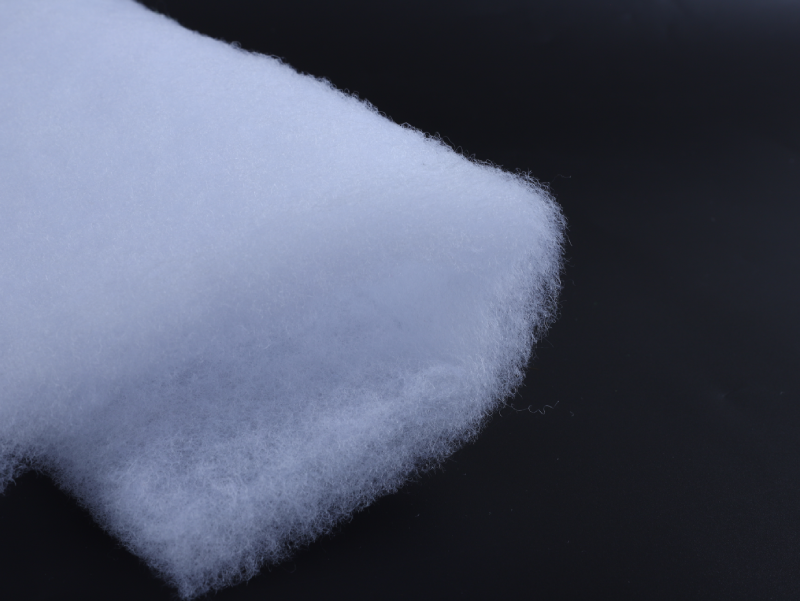
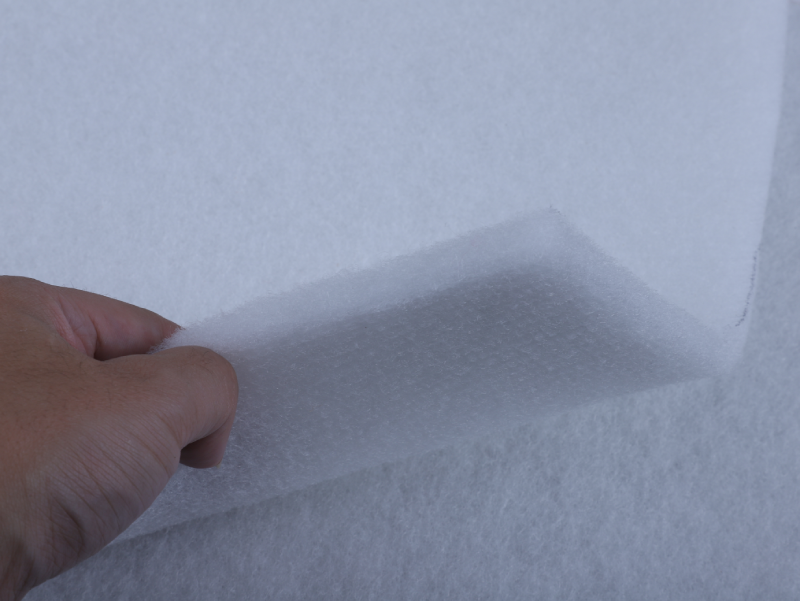
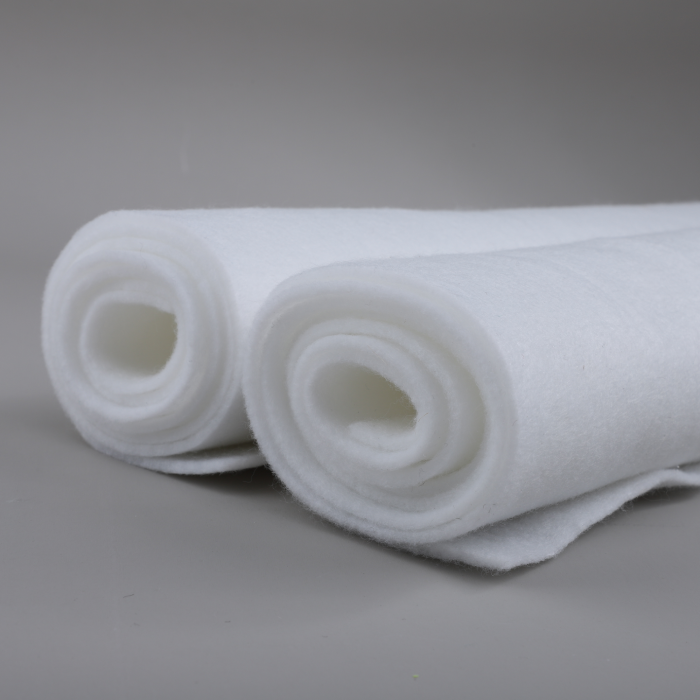
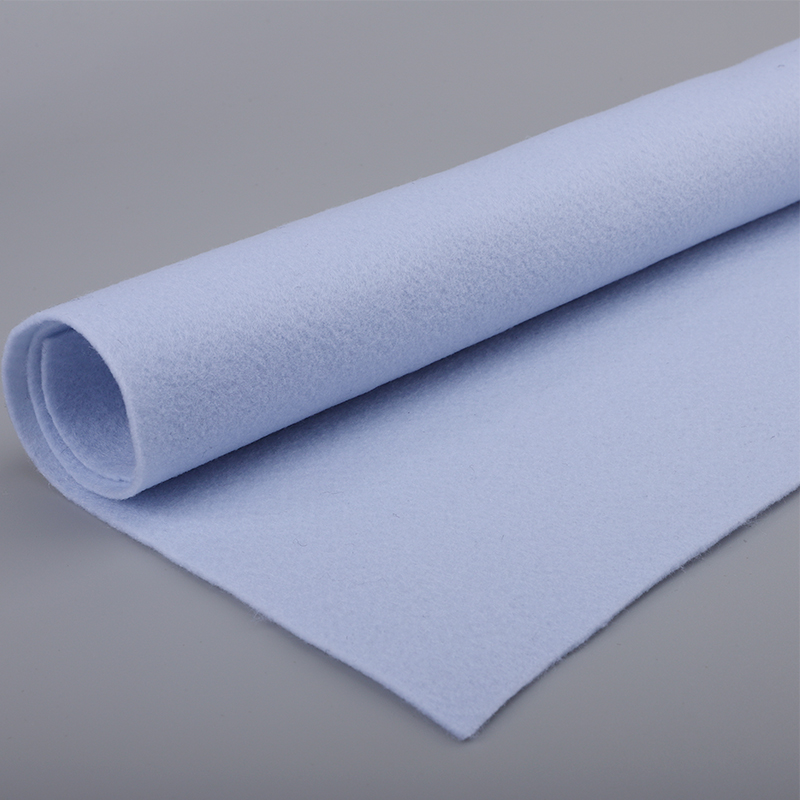
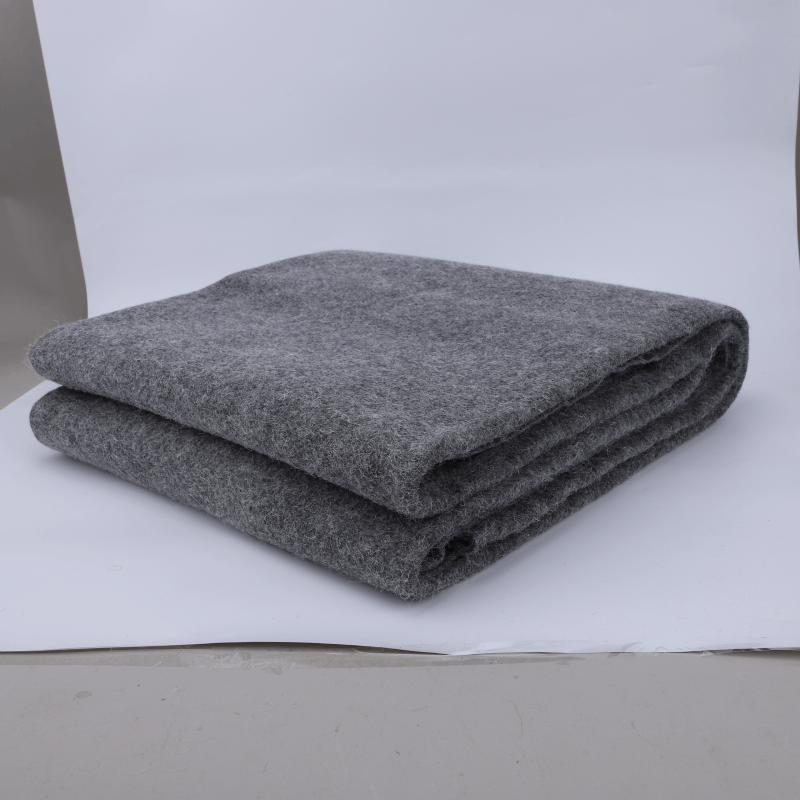
As an experienced needle punched felt manufacturer and nonwoven felt manufacturer China, Jinhaocheng can provide wool blend needle punched felt made from wool and polyester fibers. Fiber ratio, GSM, thickness and structure can be customized according to different applications.
Why Are More Manufacturers Paying Attention to Natural Wool Felt?
A large proportion of conventional industrial materials rely on polyester, polypropylene and other synthetic fibers derived from petrochemical resources.
These materials continue to play an important role because they offer predictable performance, cost efficiency and mature processing technology.
However, when brands and manufacturers develop a sustainable product strategy, initial material cost is no longer the only consideration.
Companies increasingly evaluate where materials come from, how long products can be used, how materials can be handled at the end of their service life and whether renewable resources can replace part of the conventional raw material portfolio.
Wool has an important difference in this respect. It is a natural fiber that grows again on sheep and, under appropriate environmental conditions, can biodegrade more readily than conventional synthetic fibers.
This makes natural wool felt an interesting material for sustainable product development.
What Makes Natural Wool Felt a Sustainable Material Option?
Wool Comes from a Renewable Natural Fiber Source
Wool is obtained from sheep and naturally regrows, giving it a different resource profile from finite fossil-based raw materials.
This is one reason wool is widely recognized as a renewable natural fiber.
For brands developing environmentally conscious products, incorporating wool into a product can increase the proportion of natural materials and provide an alternative to products made entirely from synthetic fibers.
However, wool sustainability should be evaluated across the complete supply chain. Farming practices, processing, transportation and manufacturing can all influence the environmental footprint of the final product.
Therefore, a more accurate approach is to consider wool as a material with renewable and natural advantages, while evaluating its sustainability through the entire product lifecycle.
Wool Has Biodegradation Potential
Unlike most conventional synthetic fibers, wool is a natural protein fiber primarily composed of keratin.
Under suitable environmental conditions, wool can biodegrade naturally. This gives wool a different end-of-life profile compared with many petroleum-based synthetic fibers.
For companies developing eco-friendly products, this characteristic can be particularly relevant.
It can be considered for applications such as home products, decorative materials, footwear components, packaging and selected nonwoven products where end-of-life material considerations are becoming increasingly important.
Natural Fiber Can Reduce Dependence on Conventional Synthetic Materials
Synthetic fibers offer excellent performance and remain essential for many industrial applications.
However, companies seeking to increase the use of natural materials may consider wool as part of a broader material strategy.
For products designed around natural materials, low-impact materials and circular design, wool can provide an additional material option.
When wool is blended with synthetic fibers, however, the final environmental characteristics depend on the actual fiber ratio and finishing processes.
Why Is Natural Wool Felt More Than Just an Eco-Friendly Material?
For industrial buyers, environmental positioning alone is not enough to justify changing materials.
The material must also meet practical requirements such as:
Environmental considerations + product performance + processability + supply stability
If a material has strong environmental characteristics but cannot provide adequate durability, resilience or processing performance, large-scale substitution becomes difficult.
One advantage of wool felt is that it combines natural fiber characteristics with useful functional properties.
Wool fibers have a naturally crimped structure, which can contribute to the resilience, softness and thermal insulation of wool-based felt.
Wool also has moisture-management characteristics and can contribute to thermal comfort in selected applications.
These characteristics allow wool felt to function as more than a decorative material. It can also be considered a natural nonwoven material for selected functional applications.
Where Can Natural Wool Felt Be Used?
The application of wool felt is no longer limited to traditional clothing and household products.
As sustainable material development becomes more important, wool felt can be explored in a wider range of products.
Home Furnishings and Interior Products
Wool felt can offer softness, thermal insulation, acoustic properties and a distinctive natural appearance.
It can therefore be considered for selected applications such as home decoration, furniture components, table mats, acoustic panels, wall decoration and storage products.
For home brands emphasizing natural materials and sustainable design, wool felt can provide a distinctive material choice.
Footwear and Apparel Components
Wool provides natural warmth and softness, making wool-based needle punched materials suitable for selected footwear components, insoles and cold-weather products.
For footwear applications, however, thermal comfort alone is not enough. The material may also need to provide adequate resilience, abrasion resistance and dimensional stability.
This is where wool blend felt can offer greater flexibility for product development.
Automotive Interior and Acoustic Materials
The automotive industry continues to focus on lightweight construction, passenger comfort and more sustainable material solutions.
Wool and wool-blend nonwoven materials can be evaluated for selected automotive interior, acoustic and sound-absorbing structures.
Automotive applications generally require stricter testing for flame resistance, VOC emissions, abrasion resistance and dimensional stability. Therefore, actual material performance must be verified according to the specific automotive project.
For automotive suppliers, custom needle punched felt can provide greater flexibility when adjusting fiber composition and material structure.
Thermal Insulation and Functional Industrial Materials
Wool fibers naturally provide a degree of thermal insulation, which makes wool felt worth considering for selected thermal protection and industrial applications.
Where higher flame resistance is required, suitable fire resistant felt or wool-blend functional felt can be developed according to the application.
This creates opportunities for wool-based nonwoven materials in machinery, industrial equipment and specialized thermal protection products.
Natural Wool Felt vs Polyester Felt: Which Is Better for Sustainable Products?
There is no universal answer that wool is always better than polyester.
The two materials have different advantages.
Natural wool felt is particularly attractive for products emphasizing natural fibers, renewable resources, biodegradability and sustainable design.
Polyester needle punched felt offers advantages such as predictable specifications, abrasion resistance, cost control and mature large-scale manufacturing. It remains widely used in automotive, industrial, floor protection and filtration applications.
Therefore, industrial buyers should not automatically eliminate synthetic fibers. A better approach is to select materials according to the product's actual function and lifecycle requirements.
For example, a home product emphasizing natural materials may benefit from a higher wool content.
An industrial product requiring high strength, abrasion resistance and cost efficiency may be better suited to polyester needle punched felt.
For products requiring a balance between natural fiber content and mechanical performance, wool and polyester blend felt can provide another practical option.
This is also an important customization direction offered by Jinhaocheng.
Why Can Wool and Polyester Blend Needle Punched Felt Be a Practical Solution?
Pure wool is not necessarily suitable for every industrial application.
Some products require higher mechanical strength, dimensional stability, abrasion resistance and consistent mass production performance.
For these applications, wool polyester blend felt can provide a balanced material solution.
By adjusting the wool-to-polyester ratio, manufacturers can develop different combinations of:
Natural fiber content
Strength
Abrasion resistance
Elasticity
Thickness
GSM
Formability
Cost
For companies that want to introduce sustainable materials without sacrificing too much product performance, wool-blend needle punched felt offers significant development potential.
It is important to note that a wool-polyester blend should not be marketed as a 100% biodegradable material, because the final product contains synthetic fibers. Environmental claims should always be based on the actual composition, certifications and available lifecycle data.
How Are Sustainable Materials Changing Nonwoven Product Development?
In the past, companies selecting nonwoven materials often focused primarily on price, GSM, thickness and supply capacity.
Today, product development increasingly considers additional factors such as:
Material origin
Recyclability
Biodegradability
Product lifetime
Carbon footprint
Production efficiency
This means future nonwoven manufacturers need to do more than simply manufacture materials. They increasingly need to provide material development and application solutions.
For brands, importers and product manufacturers, a supplier capable of offering different fiber combinations, GSM options, thicknesses and functional treatments can become involved earlier in the product development process.
Why Work with a Professional Needle Punched Felt Manufacturer?
Sustainable product development is not simply a matter of replacing one fiber with another.
Fiber composition, needle punching structure, GSM, thickness and finishing processes can all affect the final product's performance.
Jinhaocheng has more than 20 years of nonwoven manufacturing experience, with an approximately 26,000㎡ production facility and 15 automated needle punching production lines.
As a professional needle punched felt manufacturer, needle punched felt manufacturer China and nonwoven felt manufacturer China, we can provide wool blend needle punched felt, polyester needle punched felt, fire resistant felt and industrial felt for different applications.
For overseas brands, importers, wholesalers and manufacturers developing sustainable products, we support OEM, ODM and custom nonwoven products. Fiber ratio, GSM, thickness, width and other specifications can be developed according to the final application.
In addition to wool-based needle punched felt, our product range also includes thermal bonded wadding, anti-condensation felt, floor protection felt, painter felt and laminated foam fabric.
Working directly with an OEM needle punched felt factory allows customers to discuss material structure during the sample development stage and then move efficiently toward mass production.
Will Natural Wool Felt Become an Important Material for Sustainable Products?
As companies pay greater attention to material sourcing and product lifecycle, natural fibers are receiving increasing attention.
Wool offers characteristics such as natural origin, renewability and biodegradability, together with useful properties including thermal insulation, sound absorption, abrasion resistance and inherent flame resistance. These characteristics create opportunities for wool felt in sustainable home products, footwear, automotive interiors, acoustic materials and selected industrial applications.
However, sustainable material selection should not be based on the assumption that every natural material is automatically more environmentally friendly.
Wool farming, processing, transportation and blending ratios can all affect the environmental performance of the final product. Companies developing sustainable products should therefore evaluate materials from a lifecycle perspective.
For manufacturers looking to balance sustainability goals with practical product performance, wool blend needle punched felt provides a material solution worth exploring.
If you are looking for a reliable needle punched felt manufacturer, nonwoven felt manufacturer China or custom needle punched felt manufacturer, or need to develop wool and polyester blend needle punched felt, Jinhaocheng can provide customized nonwoven material solutions based on your application and technical requirements.