
How Can Buyers Confirm That Recycled PET Felt Is Actually Made with Recycled PET Fiber?
When overseas buyers search for a recycled PET felt supplier, they often see descriptions such as “Recycled PET Felt,” “Recycled Polyester Felt,” or “Bottle-to-Fiber Recycled PET.” However, for buyers preparing to purchase in bulk, the product name itself does not prove what raw material is actually used to make the finished needle punched felt.
The real question is whether the supplier’s recycled PET claim is supported by a clear raw material definition, relevant documentation, and supply chain records. Buyers need to determine whether the finished product can be linked to the recycled PET fiber declared by the supplier.
If a supplier claims that the product is made from recycled PET bottles, the material chain can generally be understood as: Post-consumer PET bottles → recycled PET raw material → recycled PET fiber → needle punched felt. Buyers should not simply verify whether the supplier says “recycled PET,” but whether this material chain is supported by sufficient information and documentation.
Why Is It Not Enough for a Supplier to Simply Say “Recycled PET Felt”?
“Recycled PET Felt” is first of all a product description, not a complete proof of the raw material source. Different suppliers may use different recycled polyester feedstocks and may apply different definitions to recycled content, material source, and product certification. Therefore, buyers should not assume that a product is necessarily made from post-consumer PET bottles simply because “recycled PET” appears in the product name.
For overseas importers, distributors, and brand purchasing teams, the more important task is to connect the supplier’s product claim with the actual raw material. For example, the supplier should be able to clearly state whether the material is recycled PET fiber or another type of recycled polyester fiber. If the supplier claims that the product is bottle-to-fiber recycled PET, the buyer should also confirm whether the stated feedstock is post-consumer PET bottles.
This does not mean that buyers need to investigate the entire recycling industry themselves. Instead, they should ask the supplier for sufficiently clear raw material information so that the product description, raw material specification, and supporting documentation can be matched with each other.
Therefore, instead of asking only, “Is this recycled PET felt?” during an inquiry, buyers can ask more specific questions such as, “What recycled feedstock is used?” and “What type of recycled PET fiber is used in the finished felt?”
What Exactly Should Buyers Confirm When a Supplier Says “Recycled PET”?
When sourcing recycled PET needle felt, the first step is not to discuss GSM, thickness, or price immediately. Buyers should first clarify what “recycled PET” actually refers to as a raw material.
If the supplier states that the product is made with recycled PET fiber, buyers can ask the supplier to specify the material type, fiber composition, and recycled content. If the supplier claims that the product is bottle-to-fiber recycled PET, buyers can further confirm whether the feedstock comes from post-consumer PET bottles rather than relying on the broader term “recycled polyester.”
This is important because “recycled polyester,” “recycled PET,” “post-consumer PET,” and “bottle-to-fiber” should not automatically be treated as exactly the same description in procurement communication. When the supplier can clearly explain the raw material source and fiber form, buyers can more easily match the information with their purchasing specifications.
For long-term purchasing projects, it is recommended to include the confirmed raw material requirements directly in the RFQ, sample approval document, or purchasing specification. For example, the buyer may specify:
Material: Recycled PET fiber
Feedstock: Post-consumer PET bottles, if required
Recycled content: As agreed in the specification
Product: Recycled PET needle punched felt
This helps prevent a supplier from using a broad “recycled” description during quotation and then using a different material structure during bulk production.
From PET Bottles to Needle Punched Felt, Which Raw Material Stages Should Buyers Focus On?
If a supplier claims that the product is bottle-to-fiber recycled PET, buyers can understand and verify the material chain step by step instead of relying on the appearance of the finished felt.
A typical material pathway can be represented as:
Post-consumer PET bottles → recycled PET raw material → recycled PET fiber → needle punched felt
The first stage is the recycled PET feedstock. Buyers should confirm whether the declared feedstock belongs to the required recycled source, such as post-consumer PET bottles.
The second stage is the conversion of recycled PET raw material into material suitable for fiber production. At this stage, buyers can further confirm the raw material name, supplier information, or relevant material documentation within the supply chain.
The third stage is recycled PET fiber. This stage is particularly important for needle felt buyers because the fiber composition of the final needle punched felt is directly related to the material claim. Buyers should confirm that the fiber actually used to manufacture the needle punched felt matches the previously agreed recycled PET specification.
Only after these stages comes the needle punched felt. The needle punching process forms the final nonwoven structure, but the needle punching process itself cannot prove that the fiber came from recycled PET bottles. Therefore, raw material verification should take place alongside production information rather than relying only on the appearance of the finished product.
What Documents Can Help Buyers Verify a Recycled PET Raw Material Claim?
Buyers should not rely only on a supplier’s verbal statement, nor should they assume that all questions have been answered simply because the supplier provides one document. A more practical approach is to use different documents to verify different types of information and check whether they correspond with each other.
First, buyers can request the material specification or raw material declaration for the recycled PET fiber to confirm whether the fiber name, material composition, and recycled content meet the purchasing requirements.
If the supplier claims that the feedstock comes from post-consumer PET bottles, buyers can further ask for feedstock information or relevant supply chain documentation from the supplier’s raw material source to determine whether the claim has supporting evidence.
If the project requires third-party certification, buyers can request certification documents related to the specific product and supply chain. However, certification documents should be understood as supporting evidence for relevant compliance or supply chain requirements. They do not replace the buyer’s need to confirm the product specification and the actual material being purchased.
For long-term purchasing, buyers can also ask the supplier to maintain raw material records corresponding to production batches. This can help identify which raw materials were used for a specific batch of recycled PET felt if quality complaints, customer audits, or material traceability requirements arise.
Therefore, the real value is not having “more documents,” but having different documents form a reasonable information chain:
Feedstock information → Recycled PET raw material → Recycled PET fiber → Production batch → Finished felt
Why Can’t Buyers Simply Look at the Finished Needle Punched Felt to Determine Whether It Is Recycled PET?
This is a common misconception in international purchasing.
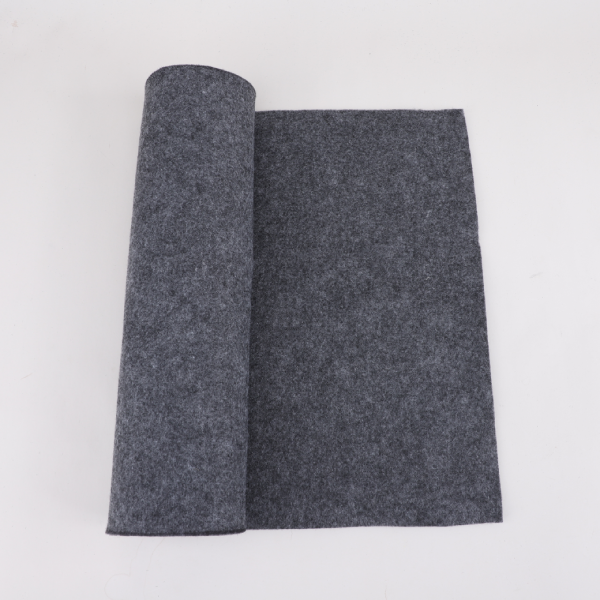
In terms of appearance, color, softness, or surface structure, recycled PET needle punched felt may look similar to other polyester needle punched felts. The needle punching process creates the final nonwoven structure, but it is not a method for proving the original source of the raw material.
Therefore, buyers cannot accurately determine whether a piece of felt was made from post-consumer PET bottles simply by looking at the finished product.
Sample testing is still important, but the purpose of the testing should be determined according to the purchasing project. If the buyer needs to verify material composition and recycled content, the relevant material declaration, supply chain documentation, certification requirements, and supplier-provided batch information should be considered together rather than relying only on visual inspection or basic physical performance testing.
For bulk purchasing, a more reliable approach is to establish the written raw material requirements first, ask the supplier to produce according to the confirmed material specification, and retain the relevant material records for future orders. This creates a clear material basis between sample approval and bulk production.
What Questions Should Overseas Buyers Ask Suppliers During an Inquiry?
If you are looking for a recycled PET felt manufacturer or recycled PET felt factory, you can ask several simple but important questions about the raw material source during the inquiry process.
First, you can ask:
What is the recycled feedstock?
This question helps clarify exactly where the supplier’s recycled material comes from.
If the supplier claims that the product is bottle-to-fiber recycled PET, you can continue with:
Is the feedstock post-consumer PET bottles?
This helps confirm what type of raw material the supplier means by “bottle-to-fiber.”
Next, you can ask:
What type of recycled PET fiber is used in the finished felt?
This question helps connect the recycled feedstock with the actual fiber used to manufacture the needle punched felt.
If the project has a specific recycled content requirement, you can ask:
What is the recycled content of the material?
Finally, you can ask:
Can you provide supporting certification or raw material documentation?
And:
Can the material be traced through the supply chain?
If these questions receive clear and consistent answers, buyers can obtain much more useful procurement information than by simply asking, “Is this recycled PET?”
When Should Buyers Further Verify the Production Batch and Supply Chain Traceability?
For a one-time sample purchase, the supplier’s material declaration and relevant documentation may be sufficient for an initial evaluation. However, if the product will be sold over the long term, used in branded products, or supplied to an end customer requiring recycled content documentation, a one-time material confirmation is usually not enough.
For long-term purchasing, buyers should pay particular attention to whether the same product continues to use the confirmed recycled PET fiber in different production batches. The actual purchasing risk may not appear during the initial sample stage, but during later bulk production or repeat orders.
Therefore, buyers can retain the confirmed material specification, raw material requirements, supplier documents, and approved sample as part of their long-term purchasing records. Subsequent orders should be produced according to the same material requirements. If the raw material source, fiber type, or recycled content changes, the supplier should be required to disclose the change before production.
If the brand customer or importer requires more detailed supply chain evidence, the buyer can further confirm relevant certification, transaction documentation, or supply chain records according to the project requirements.
In other words, raw material verification should not be treated as a one-time process of “checking a certificate.” It should gradually form a purchasing record such as:
Approved Material Requirement → Supplier Documentation → Sample → Bulk Production → Batch Record
How Can Buyers Determine Whether the Supplier’s Raw Material Information Is Sufficient for Bulk Purchasing?
Determining whether a supplier is ready for bulk purchasing should not depend only on whether the supplier can answer “yes.”
More importantly, buyers should check whether the different pieces of information are consistent with each other.
For example, the supplier’s product name may say recycled PET felt, while the raw material specification does not clearly identify recycled PET fiber. Or the supplier may claim that the product is bottle-to-fiber recycled PET but cannot explain the feedstock further. Another example is when the approved sample is described as recycled PET material while the quotation document only states “polyester felt.” These situations should be clarified before moving forward.
For a formal RFQ, it is recommended to clearly specify at least the following information:
Product: Recycled PET Needle Punched Felt
Fiber: Recycled PET / Recycled Polyester
Feedstock: Post-consumer PET bottles, if specifically required
Recycled content: As agreed
GSM and thickness: As specified
Width and roll length: As specified
Certification or documentation: As required by the project
These details are not intended to make the purchasing documents unnecessarily complicated. Their purpose is to prevent suppliers, buyers, and end customers from having different interpretations of “recycled PET.”
If the supplier can keep the product specification, raw material declaration, sample, and supporting documents consistent, the buyer has a more reliable basis for bulk purchasing.
How Can HuiZhou JinHaoCheng Nonwovens Co., Ltd. Support Recycled PET Needle Punched Felt Purchasing?
For overseas buyers looking for a recycled PET felt supplier, raw material requirements should be clarified as early as possible during the inquiry and product development stage rather than after bulk production has already started.
HuiZhou JinHaoCheng Nonwovens Co., Ltd. specializes in needle punched nonwoven manufacturing and can provide customized solutions based on different material, GSM, thickness, width, and roll specifications. For recycled PET needle punched felt projects, buyers can specify the application, recycled PET fiber requirements, feedstock requirements, recycled content, product specifications, and documentation requirements during the inquiry stage.
As a recycled PET felt manufacturer, the company can support sample confirmation, product specification development, and bulk production, helping overseas importers, distributors, and product manufacturers confirm material requirements before moving into bulk purchasing.
If the project specifically requires GRS certified recycled PET nonwoven, this requirement should also be stated in advance during quotation and order confirmation rather than being added after production has been completed.
For long-term OEM/ODM projects, defining the recycled PET raw material requirements in advance can reduce the risk of different material definitions being used between orders and help establish a clearer long-term purchasing standard.
Conclusion
When purchasing recycled PET needle punched felt, the most important question is not whether the supplier uses the word “recycled” in the product name. The key is whether the supplier can clearly identify the recycled PET fiber actually used and whether the material claim is supported by relevant feedstock information, supply chain documentation, and production records.
If a supplier claims that the product is bottle-to-fiber recycled PET, buyers can verify the chain from Post-consumer PET bottles → recycled PET raw material → recycled PET fiber → needle punched felt and include the confirmed raw material requirements in the RFQ, sample approval, and bulk order.
At the same time, buyers should understand that the appearance of finished needle punched felt cannot prove that the raw material came from recycled PET bottles. For long-term purchasing or branded projects, a more reliable approach is to verify the material specification, supplier declaration, relevant documents, and batch records together.
For overseas buyers, the product worth purchasing is not simply a product labeled “recycled PET,” but a recycled PET felt with a clearly defined raw material, clearly confirmed purchasing specifications, traceable supply chain information, and the ability to maintain stable bulk production.




