
How to Choose Needle Punched Felt Density and Hardness for Industrial Gaskets and Seals
For buyers sourcing Needle Punched Felt for machinery, dust seals, cushioning pads, and vibration-damping components, one question comes up repeatedly:
Does higher density and greater hardness always create a better gasket material?
The answer is no.
In industrial gasket applications, material performance is determined less by density alone and more by compression behavior, recovery, and long-term dimensional stability. Two polyester needle punched felts with similar GSM and thickness may perform very differently because of their fiber structure and manufacturing process.
Instead of comparing “high-density” materials, engineering buyers should select felt based on the actual assembly gap, compression ratio, and operating conditions.
1. Why Density and Hardness Cannot Define Sealing Performance Alone
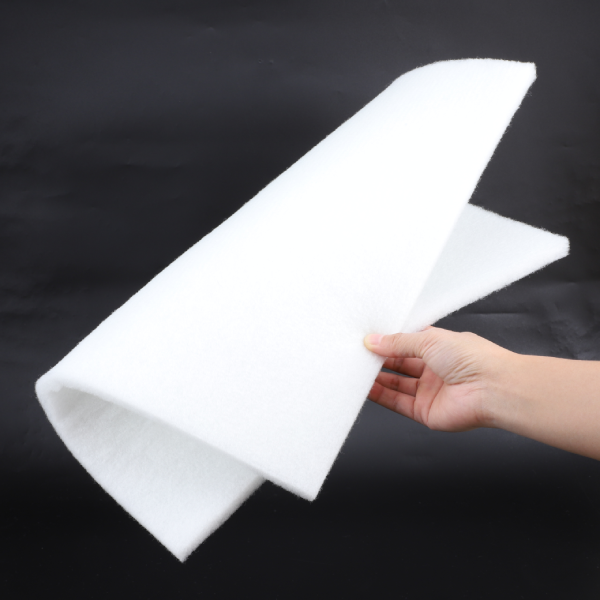
Needle punched felt is a compressible fiber material. Apparent density describes how much fiber is packed into a given volume, but it does not directly indicate sealing capability.
For example, two Polyester Needle Punched Felt materials may have similar GSM and nominal thickness, yet different fiber fineness, needling density, heat setting, or finishing processes can produce completely different compression force, resilience, and wear resistance.
For low-pressure dust sealing, cushioning, and anti-rattle applications, the ability to conform to assembly surfaces is often more important than achieving the highest possible density.
If the application must withstand liquid or gas pressure, needle punched felt should not be considered the primary sealing material without further engineering validation.
2. Why Compression Performance Matters More Than Hardness
The real function of an industrial gasket is to maintain consistent contact after assembly.
A felt that feels firm by hand may lose thickness after long-term compression, while an overly soft material may permanently deform and reduce sealing effectiveness.
Instead of requesting only hardness, buyers should evaluate:
Compression thickness after assembly
Thickness recovery after unloading
Permanent deformation after long-term compression
Consistency under repeated compression cycles
For needle punched felt, these measurements provide much more meaningful purchasing data than a single hardness value.
3. How Should Different Industrial Gaskets Use Needle Punched Felt?
Different applications require different material priorities.
Low-pressure dust seals usually need good flexibility and recovery to compensate for assembly gaps.
Anti-vibration and anti-rattle gaskets require stable resilience to prevent looseness and unwanted noise during continuous operation.
Die-cut spacers and washers benefit from better dimensional stability and clean cutting quality for repeatable assembly.
Light sliding contact components should also be evaluated for wear resistance to reduce fiber shedding during service.
During the RFQ stage, describing the actual function of the gasket is much more valuable than simply requesting “high-density felt.”
4. What Specifications Should Be Confirmed Before RFQ?
A complete RFQ for industrial needle punched felt should include:
Application function (dust sealing, cushioning, vibration damping, anti-rattle)
Operating temperature and contact media
Assembly gap before and after compression
Nominal thickness and allowable tolerance
Target GSM or apparent density range
Required compression ratio or compressed thickness
Processing method (roll, sheet, or die-cut parts)
Sample quantity and estimated production volume
This information allows suppliers to recommend materials that match the actual working conditions rather than existing stock specifications.
5. How Should Samples Be Validated Instead of Judging by Hand Feel?
Sample approval should never rely on whether a material simply feels “hard” or “soft.”
First, measure GSM, thickness, and dimensional tolerance to verify consistency.
Next, simulate the real assembly condition and record the force required to reach the target compression ratio.
Then evaluate thickness recovery after unloading to determine whether the material can maintain long-term contact.
Finally, perform component-level assembly testing to inspect edge quality, fiber shedding, assembly force, and actual dust-sealing performance.
Only after component validation can buyers determine whether the felt is suitable for long-term industrial production.
6. How Can JHC Support Custom Industrial Needle Punched Felt Projects?
For industrial gaskets, cushioning, dust protection, and vibration control applications, HuiZhou JinHaoCheng Nonwoven Co., Ltd. provides custom manufacturing solutions for needle punched nonwoven materials, including different GSM, thickness, width, and die-cut processing options.
For OEM and ODM projects, buyers are encouraged to provide drawings, existing samples, assembly gaps, operating temperatures, and compression requirements so that a more accurate sample validation and production specification can be established.
Conclusion
When selecting needle punched felt for industrial gaskets and seals, the first question should not be “Which material has the highest density?”
The better question is “What compression behavior does my application require?”
Compression performance, recovery, assembly gap, and long-term stability have a greater impact on sealing and cushioning performance than density or hardness alone.
For engineering procurement, a detailed RFQ and component-level sample validation will always provide a more reliable path to mass production than comparing density values by themselves.




